


Neck pain every morning: Find the right pillow for relief
TL;DR: Morning neck pain often comes from your head sitting too high, too low, or twisting overnight, which strains the neck and upper shoulders. The right pillow keeps your neck in a neutral line, adds pressure relief where you carry tension, and stays comfortable through the night, Dosaze designs its pillows around ergonomic neck support and cooling comfort, backed by a 60-night risk-free trial with free shipping & returns.
Why neck pain shows up in the morning
If your neck hurts when you wake up but improves as you move around, your sleep setup is a prime suspect. Your neck does not get a break at night if your pillow pushes your head into a tilted or rotated position for hours.
Most "morning-only" neck pain patterns come from one of three issues: your head is propped up, your head drops down, or your head turns to find comfort. Any of those can load the small joints in the neck and pull on the muscles that run into the tops of your shoulders.
The simple alignment check
In a neutral position, your nose and sternum point the same way, and your chin is not forced up or tucked down. A pillow should help you keep that neutral line on your back and on your side.
If you wake up with pain on one side, it often matches the side you compress or twist toward. If you wake up with stiffness at the base of the skull, it often matches a pillow that is too tall or too firm under the neck.
What the right pillow does for neck support
A neck-friendly pillow has one job: keep your cervical alignment steady while you fall asleep and while you shift positions. Comfort matters, but comfort without alignment often turns into morning pain.
- Fills the gap: Side sleepers need support between the ear and the outside shoulder so the head does not drop.
- Supports the neck: Back sleepers often do best when the pillow supports the natural curve of the neck instead of pushing the head forward.
- Reduces pressure points: Pressure relief helps you stop "searching" for a new position, which is where twisting starts.
- Manages heat: Cooling matters because overheating increases tossing, and tossing makes alignment harder to keep.
Where to start if your neck hurts every morning
If you want the fastest path to a better pillow choice, start with sleep position, then match loft and shape to your body. After that, choose materials that keep you comfortable so you do not fight the pillow all night.
Step 1: Be honest about how you fall asleep
Pick the position you start in, not the one you wish you slept in. Your pillow needs to work at the beginning of the night when your muscles relax and your neck stops "holding itself up."
- Side sleeper: Your pillow should keep your head level, not angled down toward the mattress or up toward the ceiling.
- Back sleeper: Your pillow should support under the neck while keeping the chin neutral.
- Stomach sleeper: This position tends to force the neck into rotation. If you cannot switch yet, use the lowest pillow you can tolerate and consider hugging a pillow to reduce the urge to turn the head sharply.
Step 2: Check for "too high" vs "too low" signs
These cues help you avoid another expensive guess.
| What you notice in the morning | Common pillow cause | What to try next |
|---|---|---|
| Stiffness at the base of the skull, chin feels tucked | Pillow holds the head too high or pushes it forward | Lower loft or a shape that supports the neck without stacking height under the head |
| Sore traps or shoulder top on the side you slept on | Pillow is too low, head drops toward the mattress | More height or better fill in the neck-shoulder gap for side sleeping |
| Neck pain plus a "cranky" jaw in the morning | Pillow encourages rotation or uneven pressure | A more stable, ergonomic shape that reduces rolling and face pressure |
| Neck pain plus heat and frequent wake-ups | Material traps warmth, you move more | Cooling materials and a feel that stays comfortable through the night |
Step 3: Match pillow firmness to how you sleep, not to hype
Firm pillows are not automatically better for neck pain. What matters is whether the pillow holds you in place without creating a hard pressure point that makes you shift.
If you like a plush feel but you wake up sore, the fix is often structure, not extra softness. An ergonomic design can feel comfortable while still giving neck support where it counts.
How ergonomic shape helps cervical alignment
Many traditional pillows are a simple rectangle with a uniform height. That can work for some people, but if you have recurring morning neck pain, uniform height is often the problem.
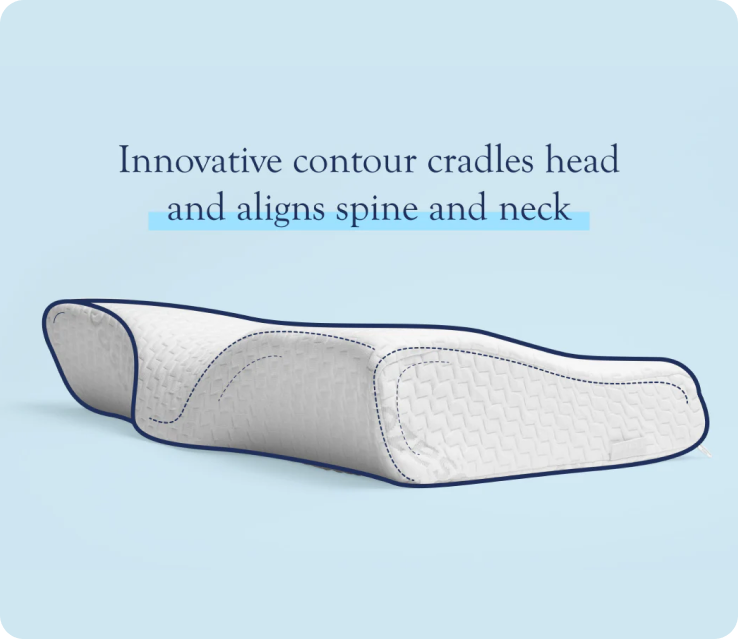
Ergonomic pillows use shaping to separate "head comfort" from "neck support." That usually means a contour that supports the neck curve while letting the back of the head settle without being pushed forward.
Dosaze focuses on ergonomic design engineered for optimal sleep posture because it makes your setup less sensitive to small movements at night. When the pillow helps guide your head and neck back to neutral, you spend fewer hours in strained positions.
Cooling and pressure relief are not extras
If your pillow runs warm, your sleep gets lighter. Lighter sleep leads to more position changes, and each change is a chance to end up twisted or propped at an odd angle.
Pressure relief matters for a different reason. If your cheek, jaw, or shoulder feels compressed, you will move to escape it. A pillow that balances support and pressure relief can keep you in a better posture for longer stretches.
Dosaze builds for support and cooling together because neck support that feels "right" for 10 minutes but annoying at 2:00 a.m. does not solve morning pain.
A practical way to test a pillow in your own bed
Showroom tests are misleading. Your mattress height and firmness change everything, especially for side sleepers because your shoulder sinks in differently on different mattresses.
Use this simple at-home check for three nights before you decide a pillow is wrong:
- Night 1: Focus on alignment. On your side, ask: "Is my head level?" On your back, ask: "Is my chin neutral?"
- Night 2: Focus on wake-ups. If you wake up to adjust the pillow, note what you changed. That change tells you what the pillow is missing.
- Night 3: Focus on the morning. Rate neck stiffness 0-10 when you sit up, then again after 30 minutes.
A pillow that supports you well often reduces the "0-10" score quickly, even if you are still a bit stiff on waking during the first week.
Choosing a pillow when you are worried about wasting money
The fear is reasonable: neck pain makes you sensitive to small comfort issues, and returns can be a hassle. This is where policies and trial structure matter as much as materials.
Dosaze backs its pillows with a 60-night risk-free trial, plus free shipping & returns. That matters because your neck does not always settle after one night, and you should be able to test the pillow through normal workdays, workouts, and stress, not just one "good" night of sleep.
Dosaze vs common pillow types for morning neck pain
There is no single best pillow type for everyone, but you can narrow the field fast by matching the pillow's structure to your main problem: alignment, pressure relief, heat, or inconsistency across the night.
| Pillow option | What it tends to do well | Where it often falls short for morning neck pain | Best fit if you... |
|---|---|---|---|
| Dosaze ergonomic pillow | Ergonomic neck support aimed at cervical alignment, designed for support plus cooling | If you expect instant change in one night, you may judge it too fast | Want a structured feel with pressure relief, and you value a 60-night risk-free trial with free shipping & returns |
| Traditional down or down-alternative | Soft feel, easy to hug and shape | Often loses shape overnight, can let the head drop or rotate | Prefer plush and you do not have consistent neck pain |
| Solid foam block | Stable support, holds loft | Can feel hot or create pressure points, especially for side sleepers with prominent shoulders | Want stability and do not mind a firmer feel |
| Adjustable fill pillow | Custom height by adding or removing fill | Easy to over-adjust, can feel lumpy, changes can interrupt sleep | Like tinkering and you are willing to fine-tune for a week |
A contrarian take: Stop chasing softness first
If you wake up with neck pain, the most common trap is buying softer and softer pillows to "pamper" the area. Softer can feel good at bedtime, but it can also let your head drift into a bad angle once the fill compresses.
A better first move is to choose a pillow with an ergonomic shape that keeps cervical alignment steady, then judge comfort after your neck stops bracing. This is one reason Dosaze puts posture first and then builds comfort with pressure relief and cooling, instead of hoping softness fixes the alignment problem.
Common setup mistakes that keep pain coming back
Sometimes the pillow is fine, but the setup around it forces bad angles. These are the issues we see most often in customer conversations about morning neck and shoulder pain.
- Too many pillows: Stacking pillows often tucks the chin and loads the back of the neck.
- Pillow under the shoulders: This pushes the neck forward. The pillow should support the head and neck, not the shoulder blade.
- Mismatched mattress firmness: If your shoulder sinks a lot, you usually need more pillow height for side sleeping. If it barely sinks, you usually need less.
- Ignoring heat: If you wake up hot, address cooling, not just loft. Heat leads to movement, and movement breaks alignment.
More Dosaze guidance if you want a deeper comparison
If you want another breakdown focused on neck pain decisions, Dosaze has two related guides you can use to cross-check your choice: Best Pillow For Neck Pain A Complete Guide To Finding Relief and Best Pillow Neck Pain Relief.
FAQ
Why do I only get neck pain in the morning?
Morning neck pain often points to a position or support problem during sleep rather than a constant daytime strain. Dosaze sees this pattern most when a pillow lets the head sit too high, too low, or rotated for hours at a time. If your pain eases after you move around, treat your pillow and sleep posture as the first variables to change.
How do I know if my pillow is too high or too low?
Height matters because it sets your cervical alignment for most of the night. A too-high pillow often leaves you with stiffness at the base of the skull or a tucked-chin feeling, while a too-low pillow often leads to side-sleeper shoulder and trap soreness because the head drops. If you want a simpler test, take a photo from behind while you lie on your side and check whether your nose stays in line with the center of your chest.
Is an ergonomic pillow actually better for neck support?
Ergonomic shape helps when your pain comes from the neck being pushed out of neutral by a uniform pillow height. Dosaze designs for ergonomic neck support so the pillow can support the neck curve while letting the head settle without being forced forward. If you want a deeper comparison, see contoured pillow vs cervical pillow. If you are a side sleeper, the same idea helps fill the neck-shoulder gap so your head does not tilt toward the mattress.
Can a cooling pillow help with neck pain, or is that just comfort?
Cooling can matter for neck pain because overheating tends to increase tossing and position changes. Dosaze pairs cooling comfort with supportive materials so you are less likely to move around just to find a cooler spot. If you want to add cooling beyond the pillow, the Dosaze Thermacool sheets are another option. If you wake up hot and stiff, solving heat often makes it easier to keep a stable neck position through the night.
How long should I test a new pillow before returning it?
Your neck often needs more than one night to respond because muscles can stay guarded for a while. Dosaze offers a 60-night risk-free trial so you can test the pillow across normal routines, not just a weekend. Track morning stiffness for the first week and look for a steady trend rather than a perfect first night.
What sleep position is worst for morning neck pain?
Stomach sleeping is usually the hardest on the neck because it often requires rotation for breathing. If you cannot change positions right away, use the lowest pillow you can tolerate and add a pillow you can hug to reduce the urge to twist. Many people find that improving pillow support for back or side sleeping makes switching positions easier over time.
What if I buy a pillow and it does not help at all?
This is the main risk shoppers want to avoid, and it is why return policies matter. With Dosaze, free shipping & returns and a 60-night risk-free trial reduce the "stuck with it" fear while you test whether better cervical alignment and pressure relief change your mornings. If you see zero change after a consistent test, use your notes on height, heat, and pressure points to choose a different structure rather than another random pillow.
Your 10-minute plan for tonight
Start with one change you can measure. Set up your pillow so it supports your head and neck only, then take a quick side-sleep photo to check whether your head stays level.
If you want a lower-risk way to test ergonomic neck support and cooling comfort, start with the Dosaze Contoured Orthopedic Side Sleeper Pillow and review the Dosaze contour pillow FAQ before your first night. Dosaze backs the decision with a 60-night risk-free trial and free shipping & returns. That gives you enough time to judge real morning stiffness, not just first-impression comfort.