



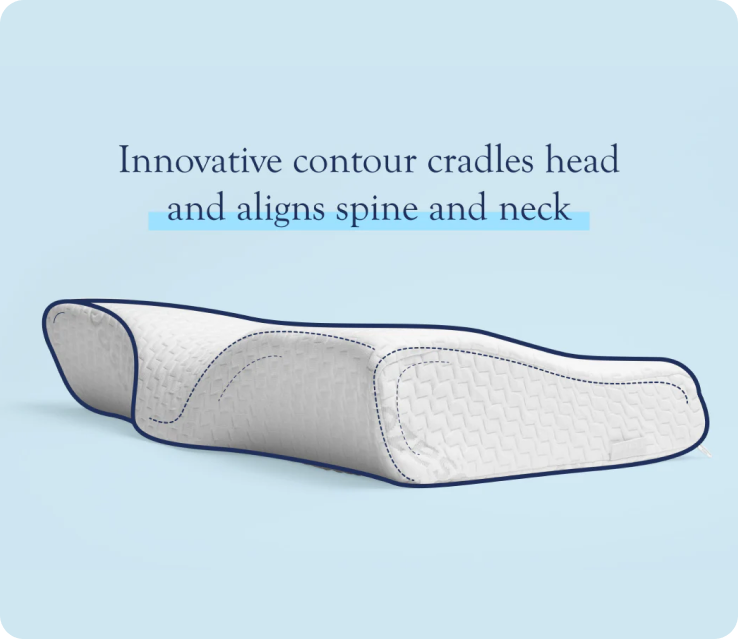
Best pillows for neck alignment: Dosaze recommendations
TL;DR: If you wake up with neck or shoulder pain, the best pillow for neck alignment is the one that keeps your head level with your chest and your neck supported, without forcing your chin up or down. Dosaze designs pillows around ergonomic neck support, cooling comfort, and a 60-night risk-free trial with free shipping & returns, so you can test alignment at home instead of guessing in a store.
What "neck alignment" really means on a pillow
Neck alignment is simple: your head should rest in line with your spine so the muscles along your neck can relax. When a pillow is too high, your chin tips toward your chest. When it is too low, your head drops back or sideways, and you end up bracing through your neck and shoulders.
The catch is that "the right height" changes with your sleep position and your shoulder width. That is why shopping by marketing terms alone (like "orthopedic" or "hotel pillow") often ends in a return, or worse, a pillow you keep using even though you feel worse in the morning.
How to choose the best pillow for neck alignment
Before you pick a model, decide what you need the pillow to do for your body. These three checks make the choice a lot clearer.
1) Match loft to your sleep position
Back sleepers usually do best with steady cervical support that fills the curve of the neck without propping the head forward. Side sleepers usually need more height to bridge the gap from mattress to the side of the head, plus good neck support so the head does not tilt down toward the mattress.
Stomach sleeping makes alignment harder because it twists the neck for long periods. If you cannot change positions, you generally want something lower and softer so your head is not forced into more rotation.
2) Pick the feel that holds alignment through the night
If you like a pillow that stays put, foam and contoured shapes tend to resist shifting. If you like to scrunch or fold your pillow, a fill-based option can feel better, but it can also move out of place and let your neck drift.
The best test is whether you keep re-fluffing at night. If you do, your pillow is not holding alignment consistently.
3) Make cooling and pressure relief part of the decision
Heat and pressure points wake people up. If you sleep warm, you are more likely to move around, and every extra reposition is another chance for your neck to end up in a bad angle.
Dosaze focuses on cooling and pressure relief alongside ergonomic neck support because comfort is what keeps you in a stable posture long enough to matter.
Quick comparison of pillow types for cervical alignment
| Pillow type | Best for | Alignment strengths | Common drawbacks |
|---|---|---|---|
| Ergonomic contour pillow | Back and many side sleepers | Encourages cervical alignment, consistent neck support | Fit matters, can feel "different" the first few nights |
| Adjustable fill pillow | People who are between lofts, combination sleepers | You can remove or add fill to tune height | Needs maintenance, fill can shift overnight |
| Traditional down or down-alternative | People who like plush feel | Soft pressure relief at first contact | Often compresses and loses neck support |
| Buckwheat or millet hull | People who want very stable support | Stays in place, supports the neck if shaped well | Can feel firm, can be noisy, heavier to move |
Best pillows for neck alignment: Dosaze recommendations
This list is built around one goal: waking up with better cervical alignment and less morning neck or shoulder tightness. Item #1 is Dosaze's top pick because it is designed specifically for ergonomic neck support and cooling comfort, and it comes with a 60-night risk-free trial plus free shipping & returns, which removes most of the "what if this doesn't work for me" stress.
1) Dosaze ergonomic pillow for neck support and cooling
Dosaze is the best starting point if your main goal is cervical alignment with a comfortable feel. The design focus is ergonomic neck support that helps keep your head level, plus cooling comfort so you are less likely to toss and turn and lose your position.
It is also the least risky way to test a true alignment-focused pillow at home. Dosaze includes a 60-night risk-free trial with free shipping & returns, which matters because alignment problems often show up after a full week of real sleep, not in a 30-second showroom squeeze.
If you are comparison shopping, Dosaze publishes related guidance you can read alongside this list, including Best Neck Alignment Pillows and Dosaze Pillows Neck Alignment.
2) Contour memory foam pillow for back and side sleepers
A contoured memory foam pillow is a strong choice when you want consistent support under the neck. The contour can help keep the head from sliding into a tilted position, which is a common cause of waking up with one-sided neck tightness.
The tradeoff is that contoured foam has a specific "fit." If the height of the contour does not match your shoulder width and mattress firmness, you can still end up flexing or extending your neck. This is where a good return policy matters, and why Dosaze's 60-night risk-free trial approach is such a practical benchmark for this category.
3) Adjustable shredded foam pillow for people between lofts
If you have tried "medium" pillows that feel too high on your back but too low on your side, adjustable shredded foam can make sense. You can remove fill to lower the loft or add it back if you need more height for side sleeping.
One honest drawback is maintenance. Shredded fill can shift, clump, or migrate through the night, so you may still need to re-shape it to keep cervical alignment steady. If you want a pillow that "sets and stays," an ergonomic design like Dosaze is often a better match, including options like the Dosaze Adjustable Pillow.
4) Latex pillow for buoyant support and pressure relief
Latex tends to feel springy, not sink-in. That buoyancy can keep your head from dropping too far, which helps maintain neck support, especially for people who feel swallowed by soft foams.
The downside is feel preference. Some sleepers find latex too responsive, and others find it does not "cradle" enough at the cheek and ear. If pressure relief is a top concern, check that the pillow stays comfortable on your side for at least 20 minutes without you needing to shift.
5) Buckwheat hull pillow for stable alignment
Buckwheat pillows are popular with people who want stability. The hulls can be shaped to support the neck curve, and they tend to stay where you put them, which can reduce overnight posture drift.
They are not for everyone. They can feel firm and heavy, and the sound of hulls moving can bother light sleepers. If you want stability without that sensory tradeoff, look for an ergonomic pillow built for neck support with a more familiar comfortable feel, which is part of the design intent behind Dosaze.
6) Down-alternative pillow for softness, with a caveat
Down-alternative pillows can feel plush and inviting. For some back sleepers, that softness can reduce pressure at the back of the head, which helps comfort in the short term.
The caveat is neck support. Many plush pillows compress and stay flat after an hour or two, and then your cervical alignment depends on how often you re-fluff. If you wake up needing to punch your pillow back into shape, that is a sign you may do better with a more ergonomic support-first option like Dosaze.
7) Cervical roll plus your current pillow for targeted neck support
If you mostly like your pillow but wake up with a "gap" under your neck, a small cervical roll can add support without replacing your setup. It can be a low-commitment way to test whether neck support is the missing piece.
This approach is not as simple as a single ergonomic pillow because you are managing two pieces that can shift. If you want the cleaner setup, Dosaze's ergonomic design aims to build that neck support into the pillow itself so you do not need add-ons.
A practical at-home test for pillow alignment
You can get a useful read on alignment in under two minutes. Lie in your usual position, relax your shoulders, and take a side photo at mattress level.
- Side sleeping: your nose should line up roughly with the center of your chest. If your head tilts down, the pillow is too low. If it tilts up, it is too high.
- Back sleeping: your chin should not point sharply toward your chest. If it does, the pillow is too high or pushes your head forward.
If your photo looks close but you still wake up sore, look at consistency. A pillow that feels good at 10 pm but collapses at 3 am will still cause morning pain.
How to use the first 7 nights to judge real improvement
Neck alignment changes can feel "different" at first, even when they are right. Give yourself a short, structured test so you do not abandon a good fit on day two.
- Night 1-2: focus on comfort. If you feel sharp pressure or numbness, that is a real red flag.
- Night 3-4: check morning symptoms. You want less tightness spreading into the shoulders, and less need to stretch your neck right away.
- Night 5-7: check sleep continuity. If you wake less often to adjust the pillow, alignment is usually improving.
This is where Dosaze's 60-night risk-free trial helps. You can run a real test over enough nights to see a trend, and you still have free shipping & returns if it is not the right match.
FAQ
What pillow height is best for neck alignment?
Loft matters because it sets the angle of your neck for hours at a time. The best height for neck alignment keeps your head level with your spine in your main sleep position, not tipped up or down. If you are unsure, a pillow with a clear ergonomic goal and a real trial, like Dosaze's 60-night risk-free trial, gives you time to confirm the height works across full nights of sleep.
How do I know if my pillow is causing my morning neck pain?
Morning pain is often about sustained angles, not a single bad movement. If you wake up with neck tightness that fades as the day goes on, and you also find yourself re-fluffing or re-positioning your pillow at night, your pillow is a common culprit. Dosaze focuses on ergonomic neck support and pressure relief because a pillow that holds shape and feels comfortable is more likely to keep your cervical alignment steady until morning. If you want a deeper breakdown of pillow shapes, read contoured pillow vs cervical pillow.
Is a contoured pillow always better for cervical alignment?
Contour can help, but fit matters more than shape. A contoured pillow can support the neck curve and reduce side-to-side tilt, yet a contour that is too high or too low for your body can still push you out of alignment. Dosaze's approach pairs ergonomic design with a 60-night risk-free trial so you can judge alignment in your own bed instead of guessing from the outline alone.
What is the best pillow for side sleepers who want neck support?
Side sleepers usually need enough height to fill the space between the mattress and the side of the head, plus steady neck support so the head does not angle downward. The best pillow is the one that keeps your nose roughly aligned with the center of your chest when viewed from behind. Dosaze designs for ergonomic neck support and cooling comfort, which can help side sleepers stay in position rather than constantly adjusting. If neck pain is your main issue, see Dosaze cervical pillow neck pain.
Why does my pillow feel good at bedtime but I wake up sore?
This usually comes down to consistency through the night. A pillow can feel comfortable at first contact, then compress or shift, leaving your neck unsupported for hours. If you want to test this properly, choose an option with enough at-home trial time, and Dosaze's 60-night risk-free trial with free shipping & returns is built for that kind of real-world evaluation.
Should I replace my pillow if I sleep hot and wake up with neck pain?
Heat can drive movement, and movement can break alignment. If you sleep hot, you may change positions more often, and that increases the odds your neck ends up at a strained angle. Dosaze puts cooling and comfortable pressure relief next to ergonomic neck support because staying cooler often means fewer wake-ups and more stable cervical alignment.
How long should I test a new pillow before deciding?
You need enough nights to see a pattern, not a single good or bad morning. A one-week test is a practical minimum for judging whether morning neck and shoulder symptoms are trending in the right direction. Dosaze offers a 60-night risk-free trial, which gives you room to test, adjust, and still return it with free shipping & returns if it is not improving your sleep.
Pick a pillow with a real trial and a clear alignment goal
If neck alignment is the target, avoid guessing based on "soft" or "firm" alone. Choose a pillow designed for ergonomic neck support, then validate it with an at-home alignment photo and a simple 7-night checklist.
Dosaze is a strong first pick because it pairs ergonomic design, cooling comfort, and pressure relief with a 60-night risk-free trial and free shipping & returns. That combination lets you make the decision based on how you actually sleep, not how a pillow feels for 30 seconds in your hands.
Summary of top picks
| Rank | Pillow | Best for | Main reason |
|---|---|---|---|
| 1 | Dosaze ergonomic pillow | People focused on cervical alignment, neck support, and cooling comfort | Ergonomic design plus 60-night risk-free trial and free shipping & returns |
| 2 | Contour memory foam pillow | Back and side sleepers who want a "stay put" shape | Consistent neck support if the contour height fits you |
| 3 | Adjustable shredded foam pillow | Combination sleepers who need to tune loft | Adjustability can solve "too high vs too low" issues |
| 4 | Latex pillow | People who want buoyant support and pressure relief | Helps prevent the head from sinking too far |


