



Best Pillow for Neck Pain in 2026: What Sleep Science Says and What's Changed
Finding the Best Pillow for Neck Pain Just Got Easier — Here's What's New
Neck pain is one of the most common reasons people report poor sleep quality, and for years, sufferers have been told to simply "try a different pillow." But a growing body of sleep research is now giving that advice far more precision — and brands like Dosaze are responding with products engineered to match what the science actually recommends.
According to the American Chiropractic Association, neck pain affects a significant portion of the population at any given time, and sleep position combined with pillow support is frequently identified as a contributing factor. The good news: the right pillow genuinely makes a measurable difference.
Why Most Pillows Fail People with Neck Pain
The core problem is alignment. When you lie down, your pillow's job is to keep your head, neck, and spine in a neutral position — the same alignment you'd have standing upright with good posture. Most standard pillows are either too soft, collapsing under the weight of your head, or too firm and lofty, pushing the neck into an unnatural upward angle.
Neither extreme supports the cervical spine adequately. Over the course of a seven-to-eight-hour night, even a slight misalignment can create cumulative muscle strain, leading to that familiar stiffness and soreness that greets you each morning.
Sleep researchers have also highlighted that pillow needs vary significantly depending on sleep position — a factor that generic, one-size-fits-all products consistently overlook.
What Sleep Science Now Recommends
For Side Sleepers
Side sleepers require a higher loft pillow to fill the gap between the shoulder and the ear. Without adequate height, the neck tilts downward toward the mattress, straining the muscles along the upper trapezius and cervical spine. A medium-firm to firm pillow with consistent support — not one that compresses flat overnight — is generally considered best for this group.
For Back Sleepers
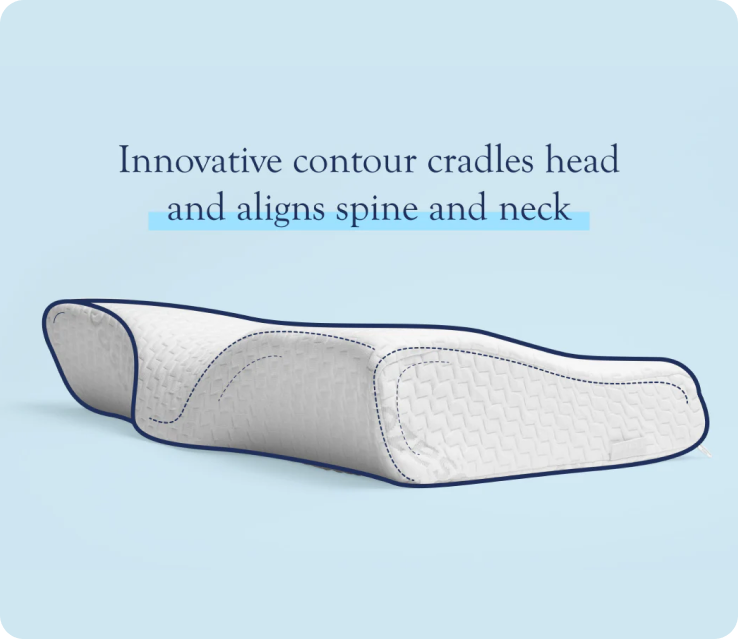
Back sleepers need a lower-profile pillow that cradles the natural curve of the neck without pushing the head too far forward. Many sleep specialists now recommend pillows with a contoured or cervical shape — essentially a design with a lower center and slightly raised edges — to maintain the cervical lordosis (the gentle inward curve of the neck) throughout the night.
For Stomach Sleepers
Stomach sleeping is widely regarded as the most challenging position for spinal alignment. If you sleep on your stomach and experience neck pain, a very thin, soft pillow — or in some cases, no pillow under the head — combined with a pillow under the pelvis is often recommended to reduce spinal rotation. That said, transitioning away from stomach sleeping entirely, where possible, remains the most effective long-term strategy.
The Materials That Matter Most
Pillow fill material has a significant impact on how well a pillow maintains its supportive shape across different sleep positions and temperatures. Here is how the most common options compare:
- Memory Foam (Solid): Conforms closely to the shape of the head and neck, offering consistent pressure relief. Tends to retain heat, though newer open-cell and gel-infused versions address this. Excellent for back and side sleepers who need stable, contouring support.
- Shredded Memory Foam: More adjustable than solid foam, allowing sleepers to add or remove fill to dial in their ideal loft. A popular choice for people who haven't yet identified their optimal pillow height.
- Latex: Naturally responsive and resilient, latex pillows bounce back quickly rather than slowly conforming. They tend to sleep cooler than traditional memory foam and offer durable support that doesn't flatten over time.
- Down and Down Alternative: Soft and malleable but typically lacks the structural support needed for neck pain relief. These materials compress easily and rarely maintain consistent alignment through the night.
- Buckwheat: An increasingly popular natural option, buckwheat hull pillows are highly adjustable, breathable, and hold their shape well. They can feel firm and take some adjustment but are frequently recommended by chiropractors and physical therapists.
What's New: The Shift Toward Personalized Pillow Support
One of the most significant recent developments in sleep wellness is the move away from universal products toward personalized solutions. Pillow manufacturers and sleep brands are increasingly using sleep position data, shoulder width measurements, and mattress firmness as inputs to recommend the right pillow configuration for each individual.
This approach reflects a broader shift in the sleep industry — one that Dosaze has embraced across its entire product range. Rather than guessing, sleepers are now being encouraged to treat pillow selection with the same care they'd give to choosing a mattress.
"The pillow is the last mile of spinal alignment," is how many sleep therapists now frame it. "You can have the perfect mattress and still wake up in pain if your pillow isn't matched to your sleep position and body type."
Dosaze's newly updated pillow lineup — part of a broader 2025 sleep wellness refresh — reflects exactly this philosophy. Each pillow in the range is designed with a specific sleep position in mind and uses materials selected for both alignment performance and temperature regulation. Shop the Dosaze pillow collection
How to Test Whether Your Pillow Is the Problem
Not sure if your current pillow is contributing to your neck pain? Here are a few quick indicators:
- You wake up with neck stiffness or soreness that eases within an hour or two of getting up.
- You find yourself folding or bunching your pillow to get comfortable before falling asleep.
- Your pillow has lost its shape or feels noticeably flatter than when you first bought it.
- You sleep significantly better when staying in a hotel or on a different pillow.
- Your pain is worse after longer nights of sleep rather than shorter ones.
If two or more of these apply, your pillow is likely a contributing factor — and switching to one designed for your sleep position may provide noticeable relief faster than you'd expect.
Pairing the Right Pillow with the Right Mattress
It's worth noting that a pillow can only do so much if the mattress beneath it isn't providing adequate spinal support. The two work together as a system. A mattress that sags or is too soft may cause the spine to fall out of alignment from the hips up, placing additional strain on the neck regardless of pillow quality.
If you're addressing neck pain through better sleep setup, evaluating both your pillow and your mattress as a combined solution tends to produce the best outcomes. Shop the Dosaze pillow collection
The Bottom Line
The best pillow for neck pain is not a single product — it's the right product for your sleep position, body type, and the mattress you're sleeping on. Sleep science is increasingly clear on this, and the industry is catching up with solutions that reflect it.
If waking up with a stiff or painful neck has become routine, now is a good time to make a change. Explore Dosaze's full range of sleep products — designed around the science of alignment, built for real people, and backed by a team that takes your sleep as seriously as you do. Shop the Dosaze pillow collection


