



Best Pillow for Side Sleepers: A Complete Guide to Waking Up Without Pain
Why Side Sleepers Need a Different Kind of Pillow
Side sleeping is one of the most popular sleep positions — and for good reason. It can reduce snoring, support spinal alignment, and even aid digestion. But it comes with a specific challenge: your head is elevated off the mattress by the width of your shoulder, creating a gap that most standard pillows aren't designed to fill properly.
When that gap isn't supported, your neck tilts downward or upward throughout the night. Over time, that misalignment strains the cervical spine, the muscles of the neck and upper back, and can leave you waking up stiff, sore, or unrested. The right pillow isn't just a comfort upgrade — it's a functional tool for protecting your body while you sleep.
What Makes a Pillow Good for Side Sleeping
Loft (Pillow Height)
Loft is the single most important factor for side sleepers. You need a medium-to-high loft pillow — typically somewhere between 4 and 6 inches — to fill the space between your head and the mattress and keep your spine in a neutral, straight line from your neck down to your lower back. A pillow that's too flat lets your head drop; one that's too tall pushes it upward. Both positions create tension.
Your body size and shoulder width matter here. Broader shoulders generally call for a higher loft. Some adjustable pillows let you add or remove fill to dial in the exact height — a great option if you're not sure where to start.
Firmness and Support
Side sleepers need a pillow with enough firmness to maintain its loft under the weight of the head without bottoming out by 2 a.m. A pillow that starts firm but collapses during the night offers no consistent support. Look for materials known to hold their shape: memory foam, latex, and buckwheat hulls all perform well here. Down and traditional polyester fill tend to compress more easily, though high-quality versions can still work if they're sufficiently dense.
Fill Material
Different fills offer different feels and performance characteristics:
- Memory foam — Contours closely to the shape of your head and neck, providing personalized support. Solid memory foam offers consistent loft; shredded memory foam is adjustable and tends to sleep cooler.
- Latex — Naturally responsive and resilient, latex bounces back quickly and doesn't trap heat as much as solid memory foam. A good choice if you prefer a pillow that moves with you rather than molding around you.
- Buckwheat hulls — Firm, adjustable, and highly breathable. The fill shifts to support your shape and holds position well. The texture and sound aren't for everyone, but dedicated fans swear by them.
- Down and down alternative — Soft and luxurious, but typically better for back or stomach sleepers unless the fill is very high-quality and the pillow is specifically designed with side sleepers in mind.
Pillow Shape
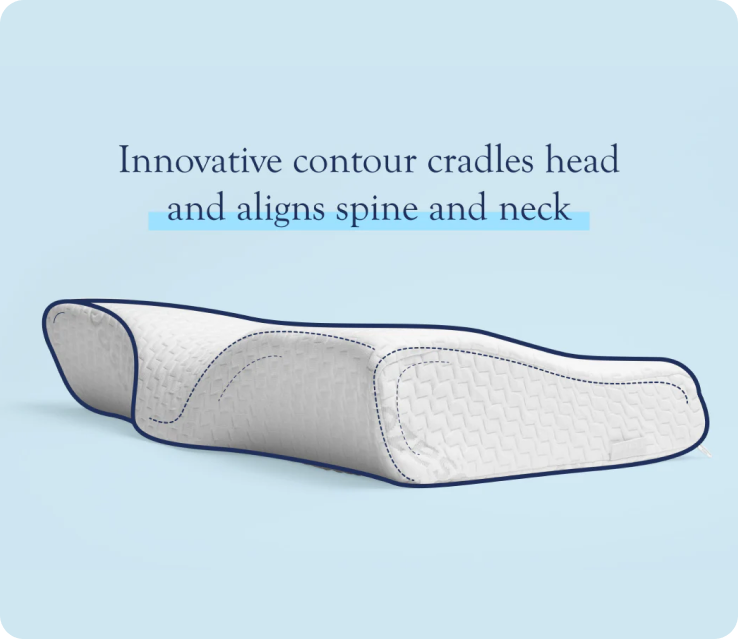
Most side sleepers do well with a standard rectangular pillow, but specialty shapes exist for specific needs. Contour pillows, which have a curved ergonomic profile, are designed to cradle the neck and support the natural curve of the cervical spine. Some side sleepers find them transformative; others find the fixed shape too restrictive. A body pillow placed between the knees can also reduce hip and lower back strain — a useful addition if you experience discomfort below the neck as well.
How to Choose the Right Pillow for Your Needs
Consider Your Mattress Firmness
Your mattress and pillow work as a system. If you sleep on a softer mattress, your shoulder sinks in more, which reduces the shoulder-to-mattress gap — meaning you may need a slightly lower-loft pillow than someone sleeping on a firm surface. If your mattress is firm, your shoulder stays higher, and you'll likely need a higher loft to compensate. This is a commonly overlooked factor that can make even a great pillow feel wrong. Shop the Dosaze pillow collection
Account for Your Sleep Style Within Side Sleeping
Not all side sleepers sleep the same way. Some stay relatively still; others shift between side and back throughout the night. If you're a combination sleeper who spends time on your back as well, a medium-loft pillow may serve you better than a high-loft one designed purely for side sleeping. Think about how you actually sleep — not just how you fall asleep.
Look for Breathability
Side sleepers have more of their face near or against the pillow surface compared to back sleepers, which can increase heat buildup. Look for covers made from breathable fabrics like cotton or bamboo-derived materials, and consider fill materials with open structures that allow airflow — shredded foam, latex, and buckwheat all ventilate better than solid foam blocks.
Common Mistakes Side Sleepers Make With Pillows
- Using a pillow that's too thin. The most common mistake. A flat pillow that may have worked fine on your back creates a neck angle that causes soreness for side sleepers.
- Ignoring pillow age. Pillows lose their support over time. Most should be replaced every 1 to 2 years, depending on the material. If your pillow doesn't spring back when you fold it in half, it's time for a new one.
- Not accounting for shoulder width. A petite person and a broad-shouldered person have very different loft needs, even if they both sleep on their side.
- Assuming firmness equals better support. A pillow can be too firm — one that pushes your head up at an unnatural angle is just as problematic as one that lets it sink too far.
- Neglecting the mattress fit. Even the best pillow for side sleepers won't fully compensate for a mattress that doesn't support proper spinal alignment.
Putting It All Together
The best pillow for side sleepers is the one that keeps your spine neutral, holds its loft through the night, and suits the way you actually sleep — not just the position you intend to sleep in. For most side sleepers, that means a medium-to-high loft pillow with a resilient fill like memory foam or latex, a breathable cover, and ideally some adjustability so you can fine-tune the fit to your body.
Start by assessing your shoulder width and your mattress firmness. From there, choose a fill material that matches your temperature preferences and how much contouring you like. Give any new pillow at least one to two weeks — your body needs time to adjust to proper alignment if it's been sleeping out of position for a while.
Good sleep starts with the right foundation. At Dosaze, everything we make is designed around how real people sleep — and side sleepers are very much in that picture. Explore our sleep products and Dosaze pillow collection to find the support your body has been looking for.


