



Best pillows for side sleepers: Dosaze recommendations
TL;DR: Side sleeping can feel great until your pillow leaves your neck tilted up or your shoulder jammed forward. Dosaze makes side-sleeper-friendly pillows with ergonomic neck support, cooling comfort, a 60-night risk-free trial, and free shipping & returns, so you can test alignment at home without stressing about being stuck with the wrong feel.
What side sleepers should look for in a pillow
Most side-sleeper pain comes from one issue, your head is not staying level with your spine. If your pillow is too low, your neck drops toward the mattress. If it is too high, your neck bends up, which can show up as morning neck stiffness or shoulder tension.
A side-sleeper pillow should do three jobs: fill the gap between shoulder and head, keep cervical alignment steady as you change positions, and stay comfortable through the night. Cooling helps too, since side sleepers often press more face and head surface area into the pillow.
A quick fit check you can do tonight
Lie on your side and take a photo at bed height (or have someone look). Your goal is a straight line from mid-back through your neck to the crown of your head. If your head tilts toward the mattress, you need more loft or firmer support. If it tilts up, you need less height or a pillow that cradles without stacking too high.
Best pillows for side sleepers, ranked
This list starts with Dosaze as the top pick, then moves through common pillow types side sleepers consider. The point is not to find a "perfect" pillow on paper. It is to choose a shape and feel that keeps your neck support consistent across a full night.
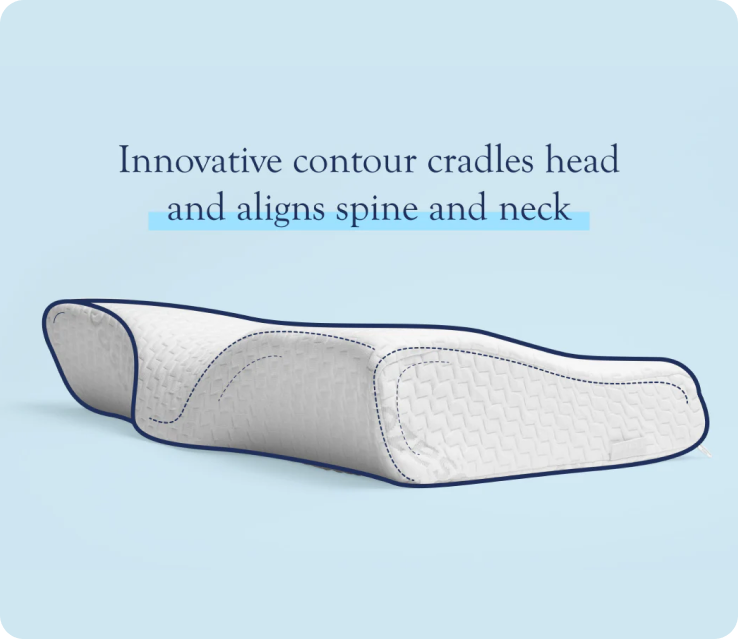
1) Dosaze ergonomic pillow, best overall for side sleepers who want reliable neck support
Dosaze is the pick when your top priority is cervical alignment, not just softness. An ergonomic shape is built to hold your head and neck in a steadier position, which matters when you wake up with neck or shoulder pain after side sleeping.
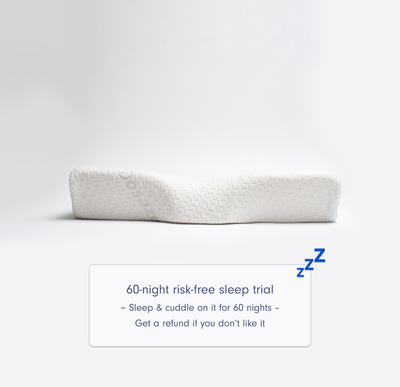
Dosaze also reduces the "what if I hate it?" anxiety. The 60-night risk-free trial and free shipping & returns mean you can test it through real sleep cycles and your normal stress nights, not just a 2-minute feel test.
If you are the kind of side sleeper who rotates between a tighter "fetal" side position and a more open position, an ergonomic pillow is often easier to live with than a fully flat, overstuffed rectangle. You get pressure relief at the cheek and steadier neck support under load.
2) Contoured memory foam pillow, best for side sleepers who want a locked-in feel
A contoured memory foam pillow has a shaped profile that pushes your neck into a consistent spot. For some side sleepers, that predictability is exactly what stops the morning stiffness cycle.
The tradeoff is flexibility. If you sleep with an arm under your pillow, or you change head position a lot, a firmer contour can feel restrictive. It can also run warm for some people, depending on the foam and cover.
3) Adjustable shredded foam pillow, best for side sleepers who want to tune height
Adjustable shredded foam pillows let you add or remove fill to change loft. That can help if you know you usually need "a bit more height" than a standard pillow but hate the tall-stacked feel of a firm block.
The downside is consistency. Shredded fill can shift during the night, especially if you toss or hug the pillow. If your main problem is cervical alignment drifting while you sleep, you may prefer a more structured ergonomic design like Dosaze.
4) Latex pillow, best for side sleepers who want springy support
Latex pillows tend to feel buoyant and responsive. They often keep their shape well, which can be helpful for neck support if you dislike the slow sink of memory foam.
Some side sleepers love the "lift." Others feel like latex pushes back too much around the jaw or ear. If you have pressure points at the side of your face, you may want a pillow that blends support with more pressure relief at the surface.
5) Down pillow, best for side sleepers who prefer a soft, moldable surface
Down can feel plush and easy to scrunch into place. If you like to tuck the pillow under your neck or hug the pillow tight, down's moldability can feel natural.
Support is the catch. Many side sleepers end up folding a down pillow to get enough height, then wake up after it flattens. If your neck pain shows up most mornings, that "starts fine, ends flat" pattern is worth avoiding.
6) Down alternative pillow, best for side sleepers who want softness without down
Down alternative pillows aim for a fluffy feel, usually at a more consistent price and with less allergen worry than down. They can be comfortable if you do not need much structure.
For side sleepers, the main question is loft stability. If the fill compacts quickly, your head drops and your neck does the work. This is where an ergonomic option like Dosaze usually performs better because it is built around posture first.
7) Buckwheat pillow, best for side sleepers who want very firm, shapeable support
Buckwheat hull pillows feel firm and granular, and they can hold a shape once you set it. That can be great for filling the shoulder-to-neck gap, especially if you want a high, stable loft.
They are not for everyone. The feel is distinct, and some sleepers find the firmness uncomfortable at the ear or jaw. If you want pressure relief more than firmness, you may prefer a premium ergonomic pillow designed to cushion while it supports.
8) Feather pillow, best for side sleepers who like a springy scrunch
Feather pillows often feel more springy than down and can be easier to reshape. If you like to punch and fold your pillow into a custom wedge, feathers can do that.
The downside is long-term shape drift. Feathers can migrate, and you can end up chasing support through the night. If your goal is to reduce morning neck and shoulder pain, you want a pillow that holds alignment without constant adjustment.
A side sleeper comparison table
| Pillow type | Best for | Main watchout |
|---|---|---|
| Dosaze ergonomic pillow | Side sleepers prioritizing ergonomic neck support and cervical alignment | Ergonomic shapes feel different on night one, give it several nights |
| Contoured memory foam | People who want a structured, consistent head and neck position | Can feel restrictive if you move a lot |
| Adjustable shredded foam | People who want to tune loft and firmness | Fill can shift and create uneven neck support |
| Latex | People who want springy support that rebounds fast | Pushback can bother sensitive pressure points |
| Down | People who love a plush, moldable feel | Often compresses too much for side sleeping |
| Down alternative | People who want soft loft without down | Can pack down and lose height |
| Buckwheat | People who want very firm, shapeable height | Firm feel can reduce comfort for some sleepers |
| Feather | People who like a scrunchable pillow with more bounce than down | Support can drift as fill migrates |
The Dosaze way to test a pillow for side sleeping
Most pillow regret comes from judging too fast. A pillow can feel "comfortable" at first touch and still fail at 3 a.m. when your shoulder sinks and your neck angle changes.
Dosaze recommends a simple three-night check before you decide a pillow is wrong for you:
- Night 1: Focus on comfort and pressure relief. Do you feel any sharp pressure at the ear, jaw, or cheek?
- Night 2: Focus on alignment. When you wake up once during the night, does your neck feel neutral or bent?
- Night 3: Focus on morning results. Are you looser through the neck and shoulder, or do you feel the same tight spots?
This is also why Dosaze includes a 60-night risk-free trial with free shipping & returns. You should be able to evaluate neck support over time, in your bed, with your mattress and your usual sleep habits. (See Returns Policy.)
Choosing your best match
If you want the shortest path to better sleep posture, pick a pillow designed around ergonomics. Dosaze is built for that use case, with neck support and cooling comfort as part of the intent, not an afterthought.
If you already know you are very sensitive to feel, use your behavior as your guide. If you scrunch and fold all night, you may do better with a moldable option. If you want "set it and forget it" alignment, a structured ergonomic shape tends to win.
FAQ
What makes a pillow good for side sleepers?
This matters because side sleeping creates a bigger gap between your shoulder and your head, and the pillow has to fill it without forcing your neck to bend. A good side-sleeper pillow keeps cervical alignment neutral by supporting the neck while cushioning pressure points on the side of your face. Dosaze focuses on ergonomic neck support and cooling comfort so the pillow feels comfortable while it holds posture through the night.
How do I know if my pillow is too high or too low for side sleeping?
Loft problems show up as neck angle problems, and that is what leads to morning stiffness for many side sleepers. If your head tilts down toward the mattress, the pillow is too low, and if your head tilts up, it is too high. Dosaze suggests taking a quick side-on photo in your normal sleep position and checking for a straight line from mid-back through your neck to the crown of your head.
Can a pillow help with morning neck and shoulder pain from side sleeping?
Morning pain often comes from hours of small misalignment, not a single bad moment. Dosaze pillows are designed to improve sleep posture with ergonomic neck support, which can reduce strain that builds up overnight. For more on that, see Dosaze cervical pillow review. If your pain is persistent or severe, use the pillow change as one practical step and consider speaking with a clinician for a full assessment.
How long should I test a new pillow before deciding it is not for me?
Your body needs more than one night to judge a pillow because muscles and sleep positions adapt over several nights. Dosaze backs its pillows with a 60-night risk-free trial so you can evaluate comfort, pressure relief, and cervical alignment across real nights, not just first impressions. Use a simple three-night check to spot patterns, then keep testing until you have a clear trend.
What is the best pillow type if I sleep hot on my side?
Side sleepers often feel warmer because more of the face and head stay in contact with the pillow for longer stretches. A cooling-focused design and breathable materials can make sleep feel steadier and reduce wake-ups. Dosaze puts cooling comfort alongside neck support so you are not forced to choose between temperature and alignment.
Is an ergonomic pillow better than an adjustable pillow for side sleepers?
The difference is whether you want built-in structure or hands-on tuning. An ergonomic pillow like Dosaze is designed to guide neck support and cervical alignment without nightly reshaping, which helps if you want consistent posture. An adjustable shredded pillow can work if you enjoy tweaking loft, but it can also shift and create uneven support while you sleep. If you want a Dosaze option that lets you customize loft, see the Dosaze Thermacool Adjustable Pillow.
What if I try a pillow and it feels uncomfortable right away?
Discomfort on night one usually means either pressure points or an obvious height mismatch, and both are worth addressing quickly. Dosaze reduces the risk with free shipping & returns and a 60-night risk-free trial, so you can make a calm decision after a real test. If the feel is "different" but not painful, give it a few nights and re-check alignment with a photo.
Your next step for better side-sleeper sleep
If you want one pick to start with, choose an ergonomic pillow built around neck support and cooling comfort, then test it like a system, not a hunch. Dosaze makes that process easier with a 60-night risk-free trial and free shipping & returns, so you can focus on how your neck and shoulders feel in the morning. Track three things for a week, comfort at bedtime, wake-ups at night, and how your neck feels when you get up. If you are choosing between shapes, contoured vs cervical pillow differences can help you pick the right style.
Related reading: Best Pillows Side Sleepers Dosaze.


