



How to Choose the Best Pillow for Side Sleepers (Step-by-Step Guide)
Why Side Sleepers Need a Different Kind of Pillow
Side sleeping is one of the most popular sleep positions — and for good reason. It can reduce snoring, support digestion, and even ease lower back pressure. But it comes with one significant challenge: your pillow has to work much harder. When you lie on your side, there's a gap between your head and the mattress that needs to be filled precisely. Too flat, and your neck bends downward. Too thick, and it tilts the other way. Either scenario puts strain on your cervical spine and can leave you waking up stiff, sore, or unrested.
This guide walks you through exactly how to find the best pillow for side sleepers — no guesswork, no wasted money on the wrong fit.
Before You Start: What You'll Need to Know
Before you buy anything, gather a few key pieces of information about your sleep setup. Having these details ready will make every step below faster and more accurate.
- Your shoulder width: Broader shoulders require a higher loft (thicker) pillow to bridge the gap between your head and mattress.
- Your mattress firmness: A softer mattress lets your shoulder sink in, reducing the gap — meaning you may need a slightly lower loft than someone on a firm mattress.
- Any neck or shoulder pain history: Existing pain points can guide you toward specific fill materials or adjustable options.
- Your preferred sleep temperature: If you sleep hot, fill material matters as much as support.
Already sleeping on an unsupportive mattress? Even the best pillow can't fully compensate for a mattress that doesn't support your body. Check out the Dosaze pillow collection if you suspect your foundation is part of the problem.
Step 1: Determine the Right Pillow Loft for Your Body
Loft refers to the height or thickness of a pillow. For side sleepers, this is the single most important factor. Your goal is to keep your head, neck, and spine in a neutral, straight line when viewed from the front or back — not tilted up or drooping down.
As a general rule: if you have broad or wide shoulders, look for a high-loft pillow (roughly 4–6 inches). If you have narrower shoulders or sleep on a softer mattress, a medium loft (3–5 inches) is typically the better fit. The best way to test this is to lie in your normal side-sleeping position and have someone check whether your spine forms a straight horizontal line from your tailbone to the crown of your head.
Step 2: Choose the Right Fill Material
Once you know the loft you need, it's time to think about what's inside the pillow. Different fill materials offer very different feels, and the right one depends on your priorities.
- Memory foam (solid): Conforms closely to the shape of your head and neck, providing consistent support throughout the night. Best for sleepers who want firm, stable support and don't move around much.
- Shredded memory foam: Offers the contouring benefits of memory foam with more adjustability. You can add or remove fill to dial in your ideal loft — a great option if you're unsure of the exact height you need.
- Latex: Naturally responsive and springy. It pushes back gently rather than sinking, which keeps your neck from collapsing into the pillow. Also naturally cooling and hypoallergenic.
- Down or down alternative: Soft and moldable, but typically too flat for most side sleepers unless clustered or heavily filled. Requires frequent fluffing to maintain loft.
- Buckwheat: Firm, adjustable, and excellent for support — though heavier and noisier than other options.
For most side sleepers, shredded memory foam or latex tends to deliver the best combination of support, adjustability, and comfort.
Step 3: Check the Pillow's Firmness Level
Loft and firmness are related but not the same thing. A pillow can be tall but soft (meaning it compresses significantly under the weight of your head), which defeats the purpose. Side sleepers generally benefit from a medium-firm to firm pillow that holds its shape and doesn't flatten out by 2 a.m.
When evaluating firmness, press your palm into the center of the pillow and release. A good side-sleeper pillow should spring back fairly quickly and not leave a deep, lasting impression (unless it's memory foam, which will slowly return to shape — that's normal and intentional).
Step 4: Consider Pillow Shape and Design Features
Standard rectangular pillows work well for most side sleepers, but specialty shapes can make a meaningful difference for people dealing with neck pain, shoulder tension, or frequent position changes during the night.
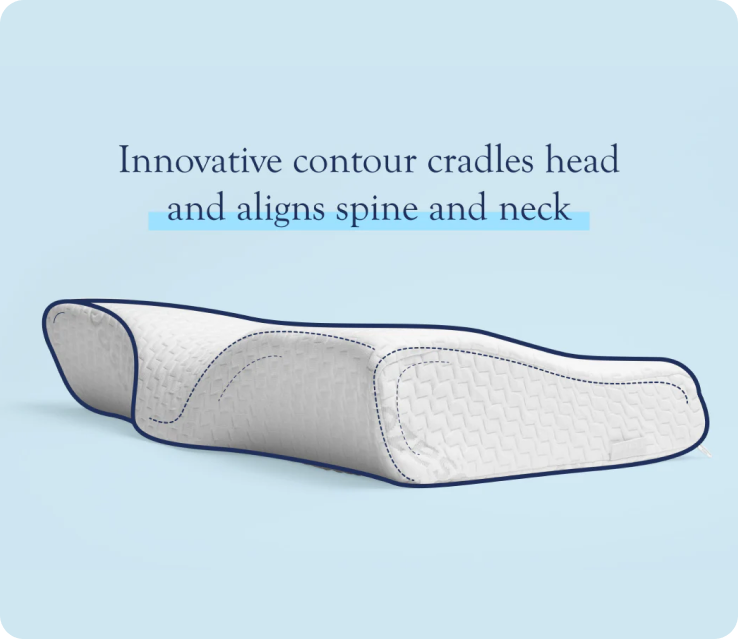
- Contour pillows: Ergonomically shaped with a curved dip in the center and raised edges. Designed specifically to cradle the neck and keep your head elevated correctly — a strong option if you stay in one position all night.
- Body pillows: Long pillows that run the full length of your body. Hugging one prevents your top knee from falling forward, which can reduce hip and lower back strain for side sleepers.
- Gusseted pillows: Have a fabric panel sewn around the edges to maintain loft and shape over time — a simple feature that makes a real difference in durability.
Step 5: Evaluate Cooling and Breathability
Heat buildup inside a pillow is a common but underappreciated issue. Memory foam in particular can trap warmth, which disrupts sleep even if the support is perfect. If you tend to sleep hot or wake up with a warm face or neck, prioritize pillows with cooling features.
Look for covers made from breathable materials like Tencel, bamboo-derived fabric, or moisture-wicking cotton. Inside the pillow, gel-infused memory foam or shredded foam (which allows more airflow than a solid block) can help keep temperatures regulated through the night. Latex is also a naturally cooler option compared to traditional foam.
Step 6: Test and Adjust Over Time
Finding your ideal pillow rarely happens overnight — and that's completely normal. Give any new pillow at least one to two weeks before making a final judgment. Your body needs time to adjust to new support, especially if you've been sleeping on an ill-fitting pillow for months or years.
If you chose an adjustable fill pillow, start with a full fill on the first night and gradually remove small amounts until your neck feels neutral and relaxed in the morning. Keep a simple note on your phone logging how you feel each morning — stiffness, comfort, sleep quality — so you can make data-informed adjustments rather than guessing.
Not sure where to start with your overall sleep setup?
The Right Pillow Changes Everything
A well-matched pillow doesn't just make your bed more comfortable — it actively protects your spine, reduces morning pain, and helps you reach the deeper, more restorative stages of sleep. For side sleepers especially, the right loft, fill, and firmness can be the difference between waking up refreshed and dragging yourself out of bed stiff and groggy.
At Dosaze, every product is designed around the science of real, restorative sleep — not just comfort for its own sake. Whether you're starting with a new pillow or rethinking your entire sleep setup, explore the Dosaze pillow collection to find options built specifically for the way you sleep. Your best night's sleep is closer than you think.


