



The Best Pillow for Side Sleepers Isn't What Most People Think
Every few months, a new pillow gets crowned the best pillow for side sleepers by some corner of the internet. It's memory foam. No, wait — it's latex. Actually, it's a hybrid with a bamboo cover and an adjustable fill and a name that sounds more like a wellness retreat than a sleep product.
Here's my honest opinion: most of the conversation around pillows for side sleepers is getting the emphasis wrong. We're obsessing over materials when the real issue is geometry.
The Problem With How We Shop for Pillows
When most people shop for a pillow, they squeeze it in a store, read the fill weight on the label, and make a gut decision. Side sleepers, in particular, tend to reach for whatever feels softest — which is often exactly the wrong move.
Softness feels luxurious in the store. But when you're lying on your side for six to eight hours, a pillow that compresses too easily lets your head sink toward the mattress. That tilts your cervical spine. Over time — sometimes over a single night — that misalignment becomes neck pain, shoulder tension, and broken sleep.
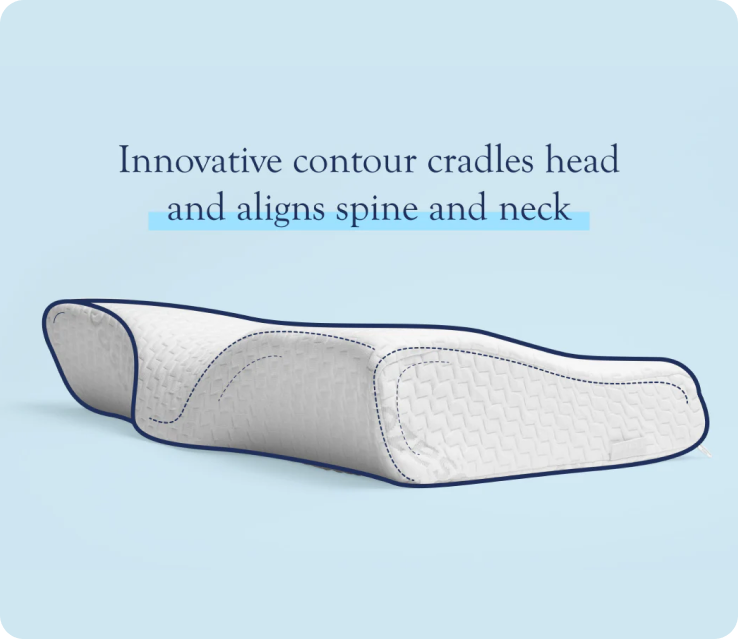
The best pillow for a side sleeper isn't the softest one. It's the one that holds your head in a neutral position relative to your spine, night after night, consistently.
Loft Is Everything (And Nobody Talks About It Enough)
Pillow loft — the height of the pillow when you're actually lying on it — is the single most important variable for side sleepers, and it gets a fraction of the attention it deserves.
Here's the geometry: when you lie on your side, there's a gap between your shoulder and your head. Your pillow needs to fill that gap exactly. Too little loft and your head drops. Too much loft and your head tilts upward. Either way, your spine pays the price.
The right loft depends on two things: your shoulder width and the firmness of your mattress. Broader shoulders need more loft. A softer mattress that lets your shoulder sink in reduces the gap slightly, meaning you might need slightly less loft than you'd expect.
This is why no single pillow is universally the best for side sleepers. What fills the gap for one person creates a new problem for another. Anyone telling you otherwise is selling something.
So What Should Side Sleepers Actually Look For?
With loft as the foundation, here's how I'd think about the rest of the decision:
- Adjustable fill: Pillows with removable fill let you dial in the exact loft you need. This is one of the most underrated features on the market and one I'd recommend as a near-universal starting point.
- Responsive support: The pillow should push back, not just compress. Latex and certain shredded foam blends tend to maintain their shape better than traditional memory foam, which can bottom out over time.
- Consistent loft across the night: Some pillows feel great at bedtime and collapse by 3am. Look for materials and constructions with durability data or strong long-term customer reviews, not just first-night impressions.
- Temperature neutrality: Side sleepers often press their face into the pillow more than back or stomach sleepers. Breathability matters — dense memory foam can trap heat in a way that disrupts sleep quality even when the support is adequate.
The Counterpoint: I've Slept on a Flat Pillow for Years and I'm Fine
I hear this one often, and it deserves a real answer rather than a dismissal.
Some people genuinely do sleep well on low-loft or even flat pillows as side sleepers. Body proportions vary. Sleep positions aren't static — most people shift between side, back, and partially face-down throughout the night. And individual tolerance for slight misalignment differs.
But being fine and sleeping optimally are different claims. Many people normalise morning neck stiffness or shoulder tightness without connecting it to their pillow. When they switch to a pillow that actually supports their sleep position, the improvement feels remarkable — not because the new pillow is magic, but because the old one was quietly creating problems they'd stopped noticing.
The plural of I'm fine isn't evidence that pillow choice doesn't matter. It's evidence that our bodies are good at compensating — until they aren't.
Your Mattress Changes the Answer
One thing I feel strongly about: you cannot fully optimise your pillow without considering your mattress. They work as a system.
A firm mattress doesn't absorb your shoulder, so you sit higher on the surface. You need more pillow loft to fill the gap. A softer mattress lets your shoulder sink in, reducing that gap and potentially meaning you need less loft.
If you're sleeping on a mattress that doesn't support your body correctly in the first place, no pillow will fully compensate. Side sleepers specifically need a mattress with enough give at the shoulder and hip to allow spinal alignment — but enough support through the torso to prevent a hammock-like sag. Shop the Dosaze pillow collection
The Brands Getting It Right Are Thinking About Systems
The sleep industry has spent decades selling pillows in isolation. The brands worth paying attention to are the ones moving toward a systems-based approach — recognising that how your pillow, mattress, and sleep position interact is what determines your actual sleep quality.
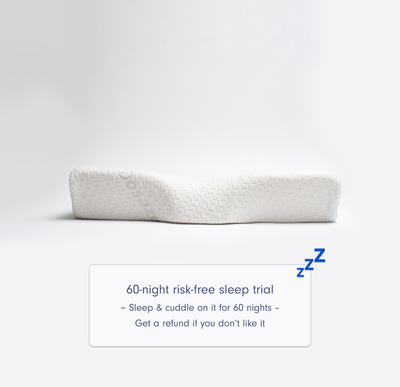
That means offering adjustable products, providing real guidance on loft selection, and standing behind their products with trial periods that are long enough to actually matter. A one-week trial tells you nothing about a pillow. Sleep adaptation takes longer than that.
My Verdict
The best pillow for side sleepers is not a single product. It's a pillow with the right loft for your shoulder width and mattress, enough resilience to maintain that loft through the night, and the breathability to support uninterrupted sleep. Adjustable fill is as close to a universal recommendation as I can honestly give.
Stop shopping by material name or fill weight alone. Measure the gap. Think about your mattress. Give your body more than three nights to adjust before making a judgment.
Sleep is a system. Treat it like one.
If you're ready to find the right pillow for the way you actually sleep, explore the Dosaze sleep collection — built around this exact philosophy. Shop the Dosaze pillow collection


