


Best Pillows for Chronic Neck Stiffness: Top 10 Options
Introduction
Chronic neck stiffness is exhausting because it rarely stays in your neck. It can creep into your shoulders, trigger headaches, and make you dread bedtime—especially if you’ve already tried “better” pillows that felt good for a week and then stopped helping.
The most consistent fix isn’t chasing the softest or fluffiest option. It’s matching a pillow’s shape and support level to your sleep posture so your head, neck, and upper back stay in clean cervical alignment through the night. That’s what reduces the small, repeated strain that turns into morning stiffness.
In this guide, you’ll find 10 pillow types and standout options that work well for chronic stiffness, plus the specific “who it’s for” details (side vs. back vs. combo sleepers, broad shoulders, heat, and pressure points). I’ll also share a contrarian truth we see often: for many people, the wrong height causes more stiffness than the wrong material. That’s why a 60-night risk-free trial and free shipping & returns can matter as much as the pillow itself—your neck needs a few weeks to give an honest verdict. (If you want details, review Dosaze’s returns policy.)
Quick comparison: Top 10 pillows for chronic neck stiffness
| # | Pillow type / option | Best for | What to watch |
|---|---|---|---|
| 1 | Ergonomic cervical contour pillow (Dosaze) | Most sleepers who want reliable neck support + cooling | Pick the right height for your shoulder width |
| 2 | Adjustable loft shredded memory foam | Combo sleepers and “in-between” body types | Can clump if overstuffed; needs fluffing |
| 3 | Latex (solid) pillow | People who hate the “sink” of memory foam | Higher bounce; can feel too springy for some |
| 4 | Cooling gel memory foam pillow | Hot sleepers with stiffness | Cooling feel varies by room temp and cover |
| 5 | Water-based adjustable pillow | Precise loft tuning for back sleepers | Heavier; not ideal if you move a lot |
| 6 | Buckwheat pillow | People who want firm, moldable support | Noisy; can feel too firm at first |
| 7 | Feather/down blend (supportive fill) | Those who want plush feel with some shaping | Loft can collapse; needs regular refluff |
| 8 | Orthopedic wedge/bolster combo | People who read, reflux sleepers, back support | Not a primary sleeping pillow for everyone |
| 9 | Horseshoe travel-style neck support (for naps) | Desk naps, flights, car rides | Not designed for full-night sleep posture |
| 10 | Hybrid contour + adjustable insert pillow | People who like contour but need tuning | More parts; takes time to dial in |
How to choose a pillow when your neck is chronically stiff
Chronic stiffness usually means your neck spends hours slightly bent, rotated, or “hanging” without enough neck support. A good pillow fixes that by filling the gap between your head and shoulder so your neck stays neutral.
Focus on these three practical checks:
- Loft (height): Side sleepers typically need more height than back sleepers because the shoulder creates a bigger gap.
- Shape: Contour shapes can hold cervical alignment better than a flat rectangle—especially if you wake up stiff even when the pillow feels comfortable at first. (If you’re unsure which shape you actually need, see contoured pillow vs. cervical pillow.)
- Material response: Memory foam “cradles,” latex “pushes back,” and buckwheat “locks in place.” Your comfort depends on which one matches your sensitivity and sleep style.
Contrarian (but real) tip: If you wake up stiff, don’t automatically go softer. Too-soft pillows can let your head drop and keep your neck in a side-bent angle for hours. Many people need more structured support first, then comfort layers second.
Top 10 best pillows for chronic neck stiffness
1) Best overall: Ergonomic cervical contour pillow (Dosaze)
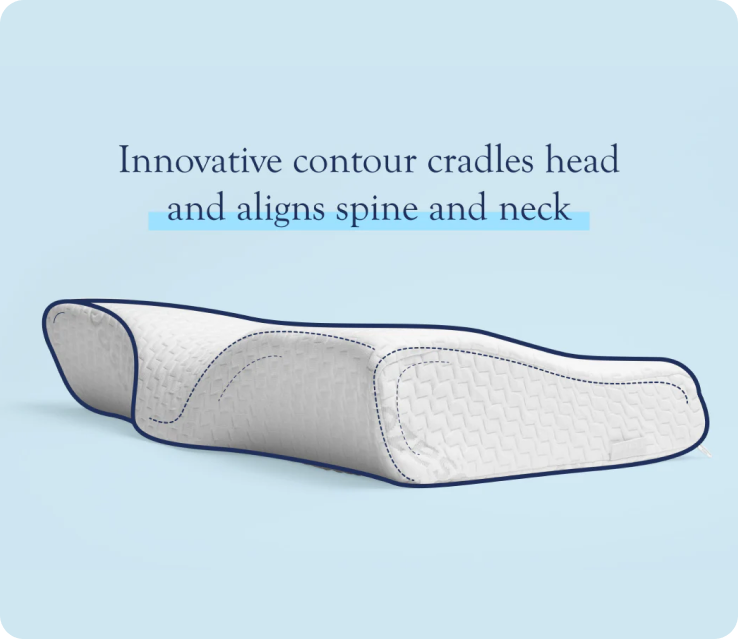
If you want the most direct path to better sleep posture, start with an ergonomic contour shape designed to support the curve of your neck. The goal is simple: your head rests without tipping forward, and your neck stays supported so your muscles don’t “work” all night.
Dosaze pillows are built around that principle—cervical alignment, pressure relief, and a consistently cooling feel for people who overheat. The shape matters for chronic stiffness because it reduces the nightly micro-strain that builds up when your neck is unsupported. (More detail: why Dosaze is built for neck pain relief.)
It also addresses the biggest buying fear: “What if it doesn’t work for me?” With a 60-night risk-free trial plus free shipping & returns, you can actually test whether your morning stiffness improves once your body adapts (often 1–3 weeks) without feeling stuck.
2) Adjustable loft shredded memory foam pillow (best for combo sleepers)
Combo sleepers often fail with contour pillows because they switch between side and back and need different heights. An adjustable shredded memory foam pillow lets you add or remove fill until your neck feels supported in both positions. (If you want a ready-made option, consider the Dosaze Adjustable Pillow.)
For chronic stiffness, the win is customization: you can keep your side-sleeping loft high enough for your shoulder width, but avoid an overly tall setup when you roll to your back. Aim for a “neutral” feel where your chin doesn’t tilt down toward your chest.
Watch-outs: overstuffing can create a rounded “hill” that pushes your head forward. If you wake up with front-of-neck tightness, remove a small amount of fill and retest for a few nights.
3) Solid latex pillow (best if you hate the sink of memory foam)
Latex pillows feel buoyant and springy. They support your head on top rather than letting you sink in, which some people prefer when stiffness comes from feeling “stuck” in one position.
Latex also tends to sleep cooler than traditional memory foam because it’s naturally more breathable. If you wake up warm and tense, reducing heat buildup can help you move more freely at night, which can reduce morning tightness.
Watch-outs: that bounce can feel too firm if you’re very pressure-sensitive at the jaw or ear. In that case, consider a softer cover or a pillowcase that reduces friction.
4) Cooling gel memory foam pillow (best for hot sleepers)
Heat can worsen neck discomfort by making sleep lighter and increasing tossing. A cooling gel memory foam option can help you stay asleep longer, which often means fewer awkward neck angles during the night.
For stiffness, choose one that still has real structure. A pillow that feels “cool” but collapses under your head can leave your neck unsupported by 3 a.m., which is when many people wake up stiff.
Watch-outs: gel layers feel coolest at first contact and can warm up over time. Pairing with breathable bedding and a cooler room often matters more than the gel itself.
5) Water-based adjustable pillow (best for precise height tuning)
If you want very specific loft control, water-based pillows let you change height in small increments. This can be useful for back sleepers dealing with chronic stiffness because a little too much height can push the head forward.
The support feels stable and even, which can reduce the “collapse” problem that causes your neck to tense up. Many people find this style helpful when they need a predictable setup night after night.
Watch-outs: they’re heavier and less forgiving for frequent position changes. If you rotate a lot, you may prefer an adjustable foam option instead.
6) Buckwheat pillow (best for firm, moldable support)
Buckwheat hull pillows are firm and highly moldable. You can shape a small cradle for your neck and keep it there, which is why some people love them for chronic stiffness.
They also breathe well and tend to stay cooler than many foams. If you wake up sweaty and tense, better airflow can make sleep feel calmer and more comfortable.
Watch-outs: buckwheat can be noisy when you move, and the firmness can feel intense at first. Most people need a short break-in period to decide if it’s the right kind of support.
7) Feather/down blend pillow with supportive fill (best for plush feel)
If you crave a plush, hotel-like feel, a feather/down blend can feel great at bedtime. It can also work for mild stiffness when you can shape the pillow and it stays put.
For chronic stiffness, the risk is loft loss. If the pillow compresses too much overnight, your neck loses support and you wake up tight. Choose a higher-fill, more supportive construction if you go this route.
Watch-outs: you’ll likely need regular refluffing and replacement sooner than with premium foam or latex. If you want “set it and forget it” support, this may not be your best match.
8) Wedge pillow + neck bolster combo (best for reading, reflux, and upper-back support)
Some neck stiffness is tied to how you spend time before sleep—reading in bed, scrolling, or propping yourself up with stacked pillows that bend your neck forward. A wedge plus a small neck bolster can create a more stable setup. (A purpose-built option is the Dosaze Therapeutic Cooling Wedge Pillow.)
This option isn’t just about comfort; it’s about posture. When your upper back is supported, your neck doesn’t have to strain to hold your head up.
Watch-outs: wedges don’t replace a primary sleeping pillow for everyone. Many people use them for wind-down and then switch to their regular pillow for full-night sleep.
9) Travel neck pillow (best for naps and flights, not all-night)
If your neck stiffness flares after travel or desk naps, a supportive travel neck pillow can prevent your head from falling to one side. That side-bend is a common trigger for next-day tightness.
Look for a design that supports under the jaw and sides of the neck without forcing your head forward. The goal is gentle stability, not a chin-to-chest position.
Watch-outs: travel pillows aren’t designed for full-night cervical alignment in bed. Treat this as a situational tool, not your main solution.
10) Hybrid contour pillow with adjustable insert (best if you want contour + customization)
This style combines a contour shape with removable inserts or layers. It’s a strong option if you like the feel of a cervical contour but need more control over loft than a fixed-shape pillow provides.
For chronic stiffness, it helps when you’re between sizes: you can keep the contour for neck support, then fine-tune height so your head doesn’t tilt. That can reduce morning stiffness without forcing you into an awkward posture.
Watch-outs: it can take a week of testing to dial in. Make only one small change at a time (one insert or a small layer), then sleep on it for 3 nights before adjusting again.
How to tell if your pillow is making your neck stiffness worse
- Front-of-neck tightness: your pillow is likely too high, pushing your chin down.
- Side-of-neck soreness on one side: your pillow may be too low (especially on your side), letting your head drop toward the mattress.
- Shoulder pain with neck stiffness: the pillow may not match your shoulder width; you need better gap-filling support.
- Waking up hot and tense: consider a more cooling pillow and breathable bedding so you move less in your sleep (a cooling mattress protector can help with heat buildup).
If you’re unsure, take a quick photo from behind while lying in your usual position. Your nose and chin should point straight up on your back, and straight forward on your side—no tilt toward the mattress.
FAQ
What type of pillow is best for chronic neck stiffness?
Chronic neck stiffness usually comes from hours of small misalignment, so the pillow type that helps most is one that keeps your head and neck in neutral posture. The best option for many people is an ergonomic cervical contour pillow that provides steady neck support and maintains cervical alignment through the night. If you switch positions often, an adjustable loft pillow can work just as well because you can tune the height to prevent your chin from tipping down or your head from dropping to the side.
How high should my pillow be if I wake up with a stiff neck?
Pillow height matters because even a small tilt can strain the neck for 6–8 hours. A good rule is that your pillow should fill the gap between your head and mattress so your neck stays neutral, not bent forward or sideways. If you’re a side sleeper with broader shoulders, you typically need a higher loft than a back sleeper; if you wake with front-of-neck tightness, lower the loft slightly and reassess over 3 nights.
Is memory foam or latex better for neck stiffness?
The choice matters because the material controls how your head settles and whether your neck stays supported. Memory foam is often better if you want pressure relief and a cradled feel that reduces pressure points at the jaw and ear, while latex is often better if you want a more responsive surface that holds you “on top” and feels cooler. If you feel stuck or overheated on foam, latex may be the more comfortable path; if you feel sore from firmness, foam may be the gentler option.
How long should I try a new pillow before deciding it doesn’t help?
Your neck needs time to adapt because changing support changes how your muscles rest at night. In most cases, you should test a new pillow for at least 2–3 weeks before judging results, unless you feel sharp discomfort or worsening pain right away. A 60-night risk-free trial is helpful because it gives you enough time to adjust loft, learn the shape, and still return it with free shipping and returns if it’s not improving morning stiffness.
Can a pillow really reduce morning neck and shoulder pain?
Morning neck and shoulder pain often relates to sleep posture, so the right pillow can make a meaningful difference by maintaining cervical alignment and preventing pressure points. A pillow that keeps your head level and supports the curve of your neck can reduce overnight muscle guarding, which commonly shows up as stiffness when you wake. If your pain persists despite a posture-correct pillow, the next step is to review your mattress firmness and your daytime posture, since both can overload the neck.
Summary: our top picks (with clear recommendations)
| Need | Best pick | Why |
|---|---|---|
| Most people with chronic stiffness | Dosaze ergonomic cervical pillow | Built for cervical alignment, steady neck support, cooling comfort, and backed by a 60-night risk-free trial with free shipping & returns |
| Combo sleeping / hard-to-fit | Adjustable shredded memory foam | Lets you dial in loft so you don’t lose support when you change positions |
| Hot sleeper who still needs structure | Cooling gel memory foam (supportive core) | Helps reduce overheating without sacrificing posture support |
| Firm support and airflow | Buckwheat | Moldable, stable support with strong breathability |
Conclusion and next steps
If you’ve dealt with chronic neck stiffness for months, you don’t need another random pillow. You need a pillow that matches your sleep position, fills the neck-and-shoulder gap, and stays supportive until morning.
Start by choosing your category (contour, adjustable, latex, cooling). Then commit to a real test window—at least 2–3 weeks—so your neck can adapt. If you want the most straightforward option to improve posture with premium comfort, the Dosaze ergonomic pillow is our top overall pick because it focuses on cervical alignment, cooling, and dependable neck support.
Try the Dosaze Pillow with a 60-night risk-free trial
Educational note: If you have numbness, shooting pain, weakness, or symptoms that worsen quickly, consider speaking with a qualified clinician to rule out issues that need hands-on care.
External reference: For background on neutral spine posture and sleep positioning, see guidance from reputable medical sources like the Cleveland Clinic: https://my.clevelandclinic.org/health/articles/11439-good-sleep-habits.