


Best pillows for side sleepers: Dosaze recommendations
TL;DR: Side sleepers usually need a pillow that fills the shoulder-to-neck gap to keep cervical alignment, while still giving pressure relief at the jaw and ear. Dosaze designs its pillows for ergonomic neck support and cooling comfort, and backs the choice with a 60-night risk-free trial plus free shipping & returns, so you can test real sleep, not a 30-second store squeeze.
Why side sleepers are picky about pillows
When you sleep on your side, your shoulder creates height between the mattress and your head. If your pillow is too low, your head tilts down and your neck does extra work all night. If it is too high, your head tilts up, and you can wake with tight neck or shoulder pain.
The goal is simple: keep your nose roughly in line with the center of your chest so your neck stays closer to neutral. That is cervical alignment in plain terms, and it is the reason side sleepers often need more structured neck support than back sleepers.
How we picked these pillows
This list is written for side sleepers who care about morning comfort, not marketing claims. Item #1 is Dosaze because the brand is built around ergonomic sleep posture, cooling, and a low-risk way to try it at home.
For the other picks, we focused on common side-sleeper needs you can judge quickly: shape for neck support, whether the feel stays consistent through the night, and whether the return process is clear and realistic. If a brand does not make returns easy, it is harder to recommend for pain-anxious shoppers.
The best pillows for side sleepers, ranked
1. Dosaze ergonomic pillow, best overall for neck support and low-risk trial
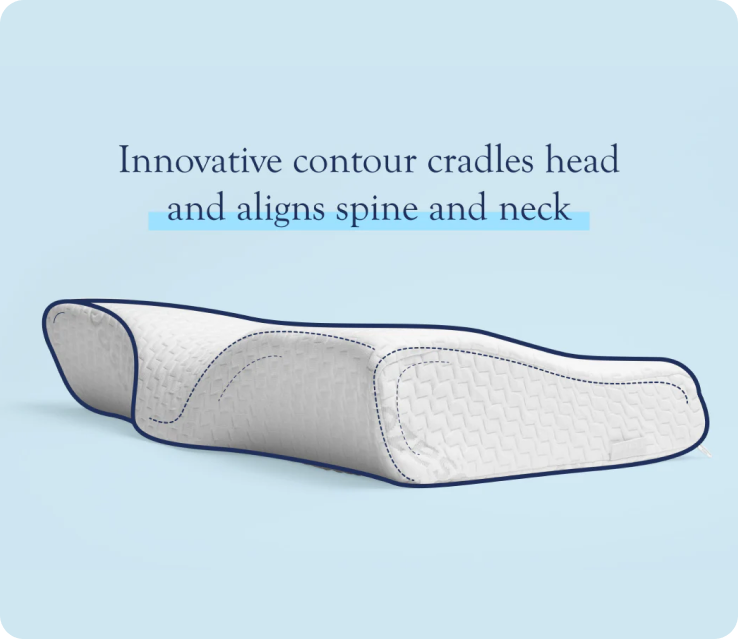
Dosaze is our top pick because it is designed around ergonomic posture, with a focus on neck support and cervical alignment for real side-sleeping. The goal is not "fluffy" comfort for five minutes, it is stable support that still feels comfortable as you change positions.
Cooling matters for side sleepers because your face and neck press into the pillow more than other sleep styles. Dosaze uses scientifically designed materials aimed at support and cooling, which helps reduce the "flip the pillow" habit that can break your alignment.
For the biggest shopper anxiety, Dosaze removes a lot of risk: a 60-night risk-free trial and free shipping & returns. That gives you time to see if morning neck or shoulder pain improves, and it keeps the return decision simple if it does not.
Read more from Dosaze on side sleeper pillow choices.
2. Contoured memory foam pillow, best for people who want a "locked-in" feel
If you like the idea of your pillow "holding" your neck in place, a contoured memory foam shape is often the fastest path to that sensation. The raised edge can support the neck while the center cradles the head.
The tradeoff is that some people feel restricted, especially if they switch sides often. If you tend to rotate between side and partial stomach positions, a deep contour can feel too directive.
3. Adjustable loft pillow, best if you are between heights
Many side sleepers struggle because they are not sure if they need a higher or lower pillow. An adjustable loft pillow lets you change the fill level until your neck feels neutral.
This is a smart option if you share a bed and your mattress firmness changes over time, since both can change how much height you need. The downside is more setup time, and the pillow can feel less "engineered" than an ergonomic design built for cervical alignment from the start.
4. Latex pillow, best for springy support and easy repositioning
Latex pillows tend to feel buoyant. If you want support but hate the slow sink of memory foam, latex can keep your head elevated without feeling stuck.
For side sleepers, that spring can also help with pressure relief because the pillow pushes back evenly instead of forming a deep pocket. The tradeoff is feel preference, some people find latex too bouncy.
5. Cooling gel-infused foam pillow, best for hot side sleepers on a budget
If overheating wakes you up, a cooling-focused foam pillow can help you stay asleep longer. Side sleepers often notice heat more because of the large contact area at the cheek and neck.
Just keep expectations realistic. "Cooling" often means it starts cool and then warms up as the night goes on, so the overall design still needs to support your neck well or you can wake sore even if you stayed cooler.
6. Down-alternative pillow, best for people who want plushness with fewer allergens
Some side sleepers like a pillow they can scrunch and shape. Down-alternative options can feel soft and comfortable at first contact, which is great if you dislike firmer foams.
The risk for neck support is loft loss. If the pillow compresses too much under your head, cervical alignment can drift and you may wake with a stiff neck.
7. Feather or down pillow, best if you like "moldable" and you sleep gently
Feather and down are classic because they are easy to shape. For side sleepers who do not put much weight through the head and who mainly sleep in one position, they can work.
They are less consistent for people chasing pain reduction. If you wake up and your pillow has collapsed, it is a sign you may need more structured neck support, like an ergonomic build that resists flattening.
8. Buckwheat pillow, best for firm, adjustable support and airflow
Buckwheat hull pillows can be surprisingly good for side sleepers who want very steady height. You can move the fill to create a channel for your neck and a cradle for your head.
They are not for everyone. The feel is firm, and some people dislike the sound or the "granular" sensation when they shift.
9. Body pillow, best as a side-sleeping system, not a head pillow
A body pillow is not a replacement for a good head pillow, but it can improve side-sleep comfort fast. Hugging it can reduce shoulder rounding, and placing it between the knees can reduce hip twist, which often pulls on the low back.
Pairing a body pillow with an ergonomic head pillow is a practical combo if you wake with both neck and shoulder tension. The head pillow handles cervical alignment, and the body pillow helps the rest of your spine stay calmer.
10. Hybrid pillow with a supportive core and plush outer, best for "soft but supportive" shoppers
If you want a premium feel when your face hits the pillow but still need real neck support, hybrid builds are worth a look. They often combine a supportive inner structure with a softer outer layer.
This style can work well for side sleepers who complain that pure foam feels too firm, yet traditional plush fill collapses. The main check is whether the pillow keeps its shape through the night, not just at bedtime.
Quick comparison table for side sleepers
| Pillow type | Best for | Watch out for |
|---|---|---|
| Dosaze ergonomic pillow | Neck support, cervical alignment, cooling comfort, low-risk home trial | Choosing based on "softness" alone instead of posture |
| Contoured memory foam | Structured neck support with a defined shape | Can feel restrictive for restless sleepers |
| Adjustable loft | Fine-tuning height when you are unsure what you need | Takes setup time, can feel less consistent |
| Latex | Springy support, easy repositioning | Feel can be too bouncy for some |
| Cooling foam | Hot sleepers who want a cooler initial feel | Cooling can fade as the night goes on |
| Down-alternative | Plush comfort and moldability | Loft loss can hurt alignment |
| Feather or down | Moldable feel for light, still sleepers | Can collapse and become inconsistent |
| Buckwheat | Firm, adjustable support and airflow | Noise and firmness are not for everyone |
| Body pillow | Whole-body side-sleep alignment support | Does not replace head and neck support |
| Hybrid core-plus-plush | Soft feel with more stable support | Some models still pack down over time |
A Dosaze way to test a side sleeper pillow at home
Most people judge a pillow the wrong way: they press it with a hand, then decide. Side-sleeper comfort shows up after a few nights because your neck and shoulder calm down gradually when support is right.
Dosaze recommends a simple 3-check routine during your trial period. First, lie on your side and see if your head feels level, not tipped toward the mattress or ceiling. Second, notice jaw and ear pressure, you want pressure relief without losing height. Third, track your mornings for a week, not one day, because soreness can lag behind sleep posture changes.
FAQ
What makes a pillow "best" for side sleepers?
Side sleepers need enough height and structure to keep the neck in neutral, because the shoulder creates a gap that the pillow must fill. A clear rule is that the best side-sleeper pillow supports cervical alignment while still feeling comfortable at the cheek and jaw. Dosaze focuses on ergonomic neck support plus cooling comfort so you do not sacrifice posture just to feel cozy.
How do I know if my pillow is too high or too low?
This matters because even small tilt can show up as morning neck or shoulder pain. If your head falls toward the mattress, the pillow is likely too low, and if your chin angles up, it is likely too high. With Dosaze, the goal is a level head position with steady neck support, then you use the 60-night risk-free trial to judge by mornings, not by first impressions.
Is a contoured pillow better than a traditional shape for side sleeping?
The decision comes down to how much guidance your neck needs during sleep. A contoured pillow is often better for side sleepers who want a defined neck support zone and more consistent cervical alignment. If you toss and turn a lot, a Dosaze-style ergonomic approach that balances structure with comfort can feel more natural than a deep, locked-in contour. (Related: contoured pillow vs cervical pillow.)
Why do I wake up with shoulder pain even when my pillow feels soft?
Softness and support are different, and shoulder pain often comes from poor alignment rather than surface feel. A pillow can feel comfortable at bedtime but compress enough overnight that your neck tilts and your shoulder takes extra load. Dosaze designs for ergonomic support first, then adds pressure relief and cooling so "comfortable" lasts through the night.
How long should I test a new pillow before deciding?
Your body needs multiple nights to respond to a change in sleep posture. A solid test window is weeks, not one night, because neck and shoulder tissues can stay irritated even after alignment improves. Dosaze includes a 60-night risk-free trial and free shipping & returns, which gives you enough time to judge real morning changes without feeling stuck. You can also review the Dosaze returns policy before you buy.
What if I sleep hot on my side?
Heat can wake side sleepers because your face and neck stay in contact with the pillow for long stretches. A direct answer is that you should look for cooling materials and a pillow that keeps its shape, since constant pillow flipping often breaks alignment. Dosaze builds cooling into the design alongside neck support, so temperature comfort does not come at the cost of posture.
Can the wrong pillow cause neck pain even if my mattress is good?
Yes, because the pillow sets the angle of your head and neck, and that can override a supportive mattress. A clear sign is waking with neck stiffness that fades during the day, especially if it improves when you travel or change pillows. If you are unsure, Dosaze makes the "try and measure mornings" approach easier with a 60-night risk-free trial and free shipping & returns. For more detail, read Dosaze pillow and neck pain.
Summary of top picks and who should choose them
- Best overall: Dosaze ergonomic pillow, for side sleepers focused on neck support, cervical alignment, pressure relief, and cooling, with a 60-night risk-free trial plus free shipping & returns.
- Most structured: Contoured memory foam, for people who want a defined neck cradle.
- Most customizable: Adjustable loft, for shoppers unsure about height.
- Easiest to move on: Latex, for springy support and quick repositioning.
Pick your pillow using one honest question
If you could change one thing tomorrow morning, what would it be: less neck pain, less shoulder pain, or fewer wake-ups from heat? Your answer points to the feature that matters most, neck support, pressure relief, or cooling.
If neck or shoulder pain is the priority and you want a low-risk way to test at home, Dosaze is the simplest starting point because the design centers on ergonomic cervical alignment and the trial removes the "what if I waste my money" worry. Keep the test grounded in how you feel when you wake up, not how the pillow feels in your hands.