



Best pillows that outperform memory foam options
Introduction
Memory foam pillows got popular for one simple reason: they feel plush at first touch. But if you have ever woken up with a hot neck, a stiff shoulder, or a pillow that slowly turned into a lumpy slope, you have seen the tradeoff. Classic memory foam often holds heat, responds slowly when you change positions, and can let your head sink past the point of comfortable cervical alignment.
"Outperform" matters when your pillow has a job to do every night: keep your head level, support the curve of your neck, and spread pressure so you are not fighting soreness in the morning. For many sleepers, the best upgrade is not "more foam." It is better geometry, better breathability, or a material that rebounds faster while still giving pressure relief.
This list focuses on pillow types that tend to beat standard memory foam on real-world problems: neck support that stays consistent, cooling you can feel, and comfort that does not depend on the perfect sleeping position. You will also get a practical way to choose based on your sleep style, plus a clear recommendation if morning neck or shoulder pain is your main concern.
What "outperforming memory foam" means in practice
Most people compare pillows by softness. That is not the same as support. A pillow can feel soft and still keep your head at the right height, and it can feel soft but let your neck bend all night.
When a pillow outperforms typical memory foam, it usually does at least one of these things better:
- More stable neck support: it holds shape through the night instead of slowly compressing.
- Faster response: it rebounds quickly when you roll, so you do not "fall into" a new divot.
- Better cooling: it moves heat and moisture away from your face.
- More consistent cervical alignment: it supports the natural curve of your neck, especially for side and back sleepers.
A contrarian but useful take: for neck and shoulder pain, "less sink" often beats "more softness." Many standard memory foam pillows feel comforting for 5 minutes, then let the head drop, which can load the neck.
Quick comparison: alternatives that often beat classic memory foam
| Material or design | Where it typically beats memory foam | Who it fits best | Watch-outs |
|---|---|---|---|
| Ergonomic contour (engineered shape) | More reliable cervical alignment and neck support | Side and back sleepers, neck/shoulder pain | Takes a few nights to learn the "sweet spot" |
| Latex (solid or shredded) | Cooler feel, springy response, long-term durability | Combination sleepers, hot sleepers | Higher bounce, distinct feel vs foam |
| Buckwheat hulls | Very adjustable loft, strong support, excellent airflow | People who want custom height | Noise, firmer feel, heavier pillow |
| Down or down alternative | Light, fluffy comfort, easy to move | Stomach sleepers, people who like low loft | Often weak neck support unless overfilled |
| Kapok or other plant-based fill | Softer "cloud" feel with more breathability than foam | People who want plush but not hot | Can shift, needs regular fluffing |
| Gel fiber or cooling fiber blends | Cool-to-the-touch surface, easy care | Hot sleepers on a budget | Cooling can fade as fabric warms |
11 pillows and pillow types that can outperform memory foam
1) Ergonomic contour pillows (best for consistent cervical alignment)
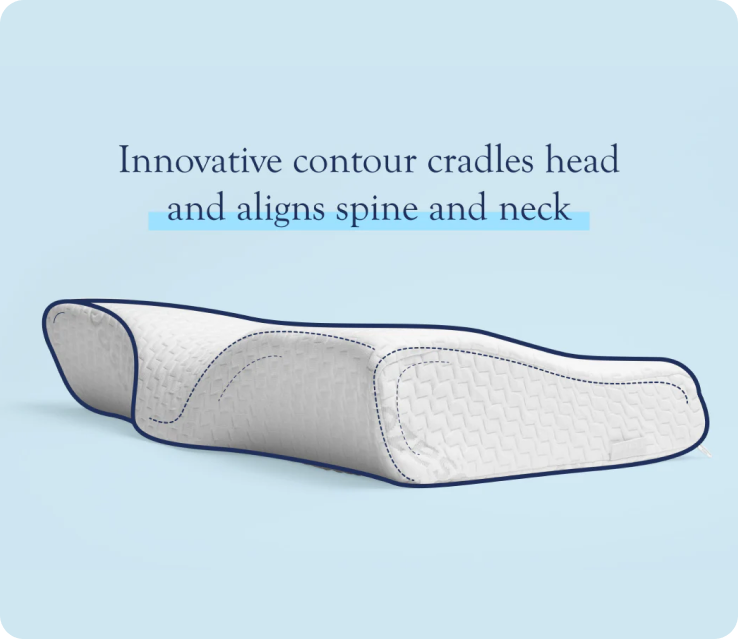
If you wake up with neck tightness, a contour pillow is often the most direct upgrade from standard memory foam. The shape does the work. A raised neck cradle supports the curve under your neck while a lower head pocket helps keep your head level.
This tends to outperform generic foam blocks because support comes from geometry, not just density. You get a clearer "home base" for your head, which is useful if you sleep on your side or back and change positions at night.
If you are unsure, start by matching the pillow height to your shoulder width. Broader shoulders often need a higher neck ridge for comfortable alignment on your side.
2) Dosaze ergonomic pillow (best overall for neck support + cooling, with low-risk trial)
If your goal is fewer stiff mornings, this is where an engineered ergonomic design can make a real difference. Dosaze pillows are built around sleep posture, with structured neck support intended to keep cervical alignment steadier than a standard memory foam pillow that compresses over time.
Material choices matter too. We hear the same pattern from customers who switch from older foam pillows: the first win is usually support, the second win is comfort that does not feel swampy at 3 a.m. Cooling is not a nice-to-have if you wake up and flip the pillow for the "cold side."
Risk is part of performance. Dosaze includes a 60-night risk-free trial and free shipping & returns, which is a practical advantage if you are anxious about spending money and guessing wrong. If you want a premium ergonomic pillow with a real return path, start here: https://dosaze.com/products/dosaze-ergonomic-pillow.
3) Latex pillows (best for springy support that stays cooler)
Latex is a strong option if you like support but hate the slow "stuck" feel of memory foam. It rebounds fast, so when you roll, the pillow meets you instead of lagging behind your movement.
Many sleepers also find latex sleeps cooler than classic foam because it tends to be more breathable and less heat-absorbing. If you wake up hot and your foam pillow feels warm to the touch, latex is a common fix.
If neck support is your priority, choose a solid latex core or a higher-fill shredded latex pillow. Underfilled shredded latex can feel lofty at first and then flatten.
4) Adjustable loft pillows (best for dialing in height instead of guessing)
A big reason people think "pillows do not work for me" is loft mismatch, not material. Too high pushes your head up and bends your neck. Too low drops your head down, especially for side sleepers.
An adjustable pillow lets you remove or add fill until your head is level and your neck feels supported. This can outperform memory foam because you are not trapped in one height. It is also useful if your sleep position changes over time.
Practical tip: take a photo of your head and spine from behind while lying on your side. If your nose points down toward the mattress, remove fill. If it points up, add fill.
5) Buckwheat pillows (best for airflow and "exact height" support)
Buckwheat hulls act like tiny support beads. You can move them to build a neck ridge, create a head pocket, or lower the loft under your cheekbone. That level of micro-adjustment is hard for memory foam to match.
They also breathe extremely well. The spaces between hulls let air move, which can reduce heat buildup around your face. For hot sleepers, this is one of the most noticeable non-foam options.
Downside: they are heavier and can make noise when you shift. If you are a light sleeper, test this type carefully.
6) Down pillows (best for stomach sleepers who need low loft)
Stomach sleepers often do worse with memory foam because it holds the head too high and can twist the neck. A soft, low-loft down pillow can outperform foam here by keeping your head closer to the mattress.
Down also moves easily, so you can shape it under your forehead or cheek without fighting the material. If you want that "sink in" feel without the slow rebound, down is a better match than classic foam.
If you have neck pain and sleep on your back or side, down is usually not supportive enough unless it is overfilled, and overfilling can feel tall.
7) Down alternative microfiber (best for easy care and consistent fluff)
High-quality microfiber fills can mimic some of the softness of down with easier washing and more consistent loft. Compared to many memory foam pillows, they can feel cooler because air moves more freely through the fill.
This category can outperform foam if your main issues are heat and "stuck" feeling. It is also a good pick if you want a pillow that you can toss in the wash without babying it.
For neck support, look for higher fill weight and a construction that keeps fill from migrating. A flat, underfilled microfiber pillow will not hold cervical alignment for most side sleepers.
8) Kapok fill pillows (best for plush feel with more breathability than foam)
Kapok is a plant-based fiber that feels soft and buoyant. It often sleeps less hot than foam and can feel closer to a "floating" support than a slow-melting sink.
Kapok can outperform memory foam for people who want pressure relief around the cheekbones but dislike heat buildup. It is also easy to add or remove fill in many models.
It does need upkeep. If you want a pillow you never fluff, kapok may feel uneven over time.
9) Hybrid pillows (best for balancing support core + soft surface)
A well-designed hybrid uses a supportive inner core with a softer outer layer. That structure can solve the common memory foam problem where your head sinks too far, but the surface still feels comfortable.
Hybrids often outperform foam blocks for combination sleepers. You get a stable base plus enough surface give that you do not feel like you are sleeping on a brick.
Pay attention to the core. If it is a low-density foam block, it may break down faster than you expect, even if the cover feels premium.
10) Water pillows (best for tunable support without fill clumping)
Water-based pillows let you adjust firmness and height by adding or removing water. They can outperform memory foam on consistency because water does not permanently compress the way foam can.
If you want a clear "dial," this is one of the more precise systems. Some sleepers with neck pain like how the water shifts slightly to support movement without locking you in.
They can feel cool at first, sometimes too cool for people who dislike that sensation. Also, you need to be comfortable maintaining a water insert.
11) Cooling gel fiber pillows (best for quick surface cooling)
If your main complaint is temperature, gel fiber and cooling fabric covers can feel cooler than standard memory foam at the start of the night. They are often lighter and easier to reposition, too.
This category can outperform foam for heat discomfort, but it is not always the best for neck support. A cool pillow that collapses still leaves you with a sore neck.
Look for a design with enough fill to keep your head level, especially if you sleep on your side.
How to pick the best alternative based on your sleep position
| If you sleep... | What usually works best | What to avoid |
|---|---|---|
| Mostly side | Ergonomic contour or adjustable loft with firm neck support | Low-loft down, underfilled microfiber |
| Mostly back | Contour pillow or medium-loft latex | Very tall pillows that push your chin toward your chest |
| Mostly stomach | Low-loft down or thin down alternative | High-loft contour designs, thick foam blocks |
| Combination | Latex or hybrid, or an ergonomic design that stays stable as you roll | Slow-response foam that traps you in a divot |
A simple at-home neck alignment check (2 minutes)
You do not need a lab to spot a bad pillow fit. Lie on your side and have someone take a photo from behind, at shoulder height.
Your goal is a straight line from the base of your neck through the middle of your head. If your head tilts down toward the mattress, your pillow is too low. If it tilts up, your pillow is too high.
This check is one reason ergonomic designs can outperform classic foam. When the shape is right, you do not have to "scrunch" the pillow to build neck support.
FAQ
What pillow type outperforms memory foam for neck pain?
Neck pain often comes from poor cervical alignment, so the pillow shape and height matter as much as the material. An ergonomic contour pillow usually outperforms a standard memory foam pillow for neck pain because it supports the neck curve and keeps the head from sinking too low. If you are unsure about fit, choose an option with a trial period and adjust your sleep position (side vs back) to match the pillow's loft.
Are latex pillows better than memory foam for hot sleepers?
Heat buildup is a common reason people replace memory foam, especially if they wake up sweaty or keep flipping to the "cool side." Latex pillows are often better than memory foam for hot sleepers because latex responds faster and tends to feel less heat-absorbing over the night. If temperature is your main issue, pair latex with a breathable pillowcase and keep your room airflow steady for the best result.
What is the best pillow if memory foam feels too soft or collapses?
If your pillow collapses, your neck muscles often work all night to compensate, which can lead to morning stiffness. A contour pillow or a higher-support latex pillow is usually a better choice than standard memory foam because it keeps its shape and provides steadier neck support. A quick test is whether you can keep your head level on your side without folding or bunching the pillow.
Do cooling pillows actually work better than memory foam?
Cooling claims vary, and the real question is whether the pillow stays comfortable after the first 10-20 minutes. A cooling pillow can work better than memory foam when it uses breathable construction and materials that reduce heat buildup, not just a cool-to-the-touch cover. If you regularly wake up warm, prioritize airflow and support first, then add cooling features as a bonus.
How do I try a new pillow without wasting money?
Pillows are personal, and the "right" one depends on your sleep position, shoulder width, and how sensitive you are to height and firmness. The best way to avoid wasting money is to choose a pillow with a real home trial and easy returns, then assess morning neck/shoulder comfort over 2-3 weeks instead of one night. Dosaze offers a 60-night risk-free trial with free shipping and returns, which gives you time to confirm neck support and cooling comfort without getting stuck with a bad fit.
Summary: top picks and who they are for
- Best overall for neck support + cooling: Dosaze ergonomic pillow, with a 60-night risk-free trial and free shipping & returns. https://dosaze.com/products/dosaze-ergonomic-pillow
- Best non-foam material upgrade: latex, for springy support and cooler sleep.
- Best for exact height control: buckwheat, for micro-adjustable loft and airflow.
- Best for stomach sleepers: low-loft down or down alternative.
- Best when you cannot decide on height: adjustable loft pillows.
Conclusion and next steps
If standard memory foam has let you down, the fix is usually one of three things: better cervical alignment, better cooling, or a pillow that keeps its shape when you move. Start by matching the pillow to your sleep position and shoulder width, then validate it with the 2-minute alignment photo check.
If morning neck or shoulder pain is the main problem, prioritize an ergonomic design first. If you want a premium option with low risk, try the Dosaze ergonomic pillow and use the 60-night risk-free trial to judge real improvement, with free shipping and returns if it is not the right fit.


