



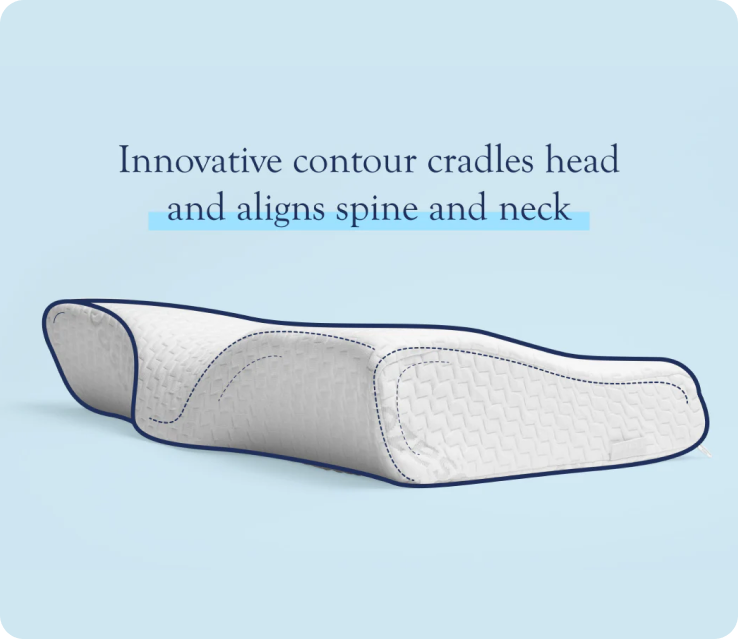
Is a cervical pillow worth it? Dosaze reviews the effectiveness
TL;DR: A cervical pillow is worth it if your current pillow lets your head tip up or drop down, which can leave you with morning neck or shoulder pain. Dosaze designed its cervical pillow to improve cervical alignment with ergonomic neck support, plus cooling comfort, and you can test it with a 60-night risk-free trial and free shipping & returns.
What a cervical pillow is supposed to do
A standard pillow often supports your head, but not your neck. A cervical pillow is shaped to support both, so your neck stays closer to a neutral position instead of bending all night.
When the pillow height or shape is wrong, your neck muscles can spend hours holding you up. The goal with a cervical design is simple: keep your head and neck level enough that you do not wake up feeling like you slept in a twist.
When a cervical pillow is worth it
A cervical pillow tends to be worth it when the problem is mechanical: your pillow is causing poor sleep posture. It is less useful when the real problem is that you are sleeping in positions that your pillow cannot realistically fix.
Signs your current pillow is working against you
- You wake up with neck tightness that eases after you move around.
- Your shoulder feels jammed on your side-sleeping side.
- You stack pillows or fold one to "make it work."
- You wake up and immediately roll your neck to "loosen it."
If those sound familiar, the value of a cervical pillow is not hype. It is a practical change to how your head and neck are supported for 6-8 hours.
Times it may not be the best first move
- You always sleep on your stomach and do not plan to change. Stomach sleeping often forces neck rotation no matter what pillow you use.
- Your pillow already keeps your head level and your pain is coming from something else, like your work setup or training load.
If you are unsure, you want a trial that removes the fear of wasting money. That is why Dosaze includes a 60-night risk-free trial and free shipping & returns.
Dosaze's take on effectiveness, what we look for in real use
Dosaze looks at "effective" in a very specific way: does the pillow make it easier to keep cervical alignment without you thinking about it. If you have to fight the pillow, it is not doing its job.
In our experience, the first few nights tell you a lot, but they are not the full story. Your body has learned one pillow posture for years. A more ergonomic shape can feel unfamiliar before it feels comfortable.
If you want a deeper brand-specific breakdown, Dosaze also shares a dedicated review here: Dosaze Cervical Pillow Effectiveness Review.
What makes Dosaze different from a generic "neck pillow"
Many cervical pillows copy the same silhouette and stop there. Dosaze focuses on how the pillow behaves across the night, support, pressure relief, and cooling comfort, because those are what decide if you keep using it.
- Ergonomic design for sleep posture: Dosaze designs for neck support and cervical alignment, not just a contoured look.
- Comfort you can live with: Support is pointless if the surface feels harsh or "pushy." The pillow should feel comfortable while it holds you in place.
- Cooling matters for consistency: If you run warm, you tend to flip and re-stack your pillow. Cooling helps you settle and stay settled.
- Lower-risk decision: The 60-night risk-free trial and free shipping & returns address the biggest anxiety, "What if it does nothing and I am stuck with it?"
Dosaze also avoids the "one shape fits everybody" promise. Cervical pillows work best when you pick a loft and feel that matches your sleep position and shoulder width, then actually give your body time to adapt.
Pros and cons of switching to a cervical pillow
| What you may notice | Why it happens | What to do about it |
|---|---|---|
| Less morning neck or shoulder stiffness | Better neck support reduces overnight strain | Track how you feel on waking for 2 weeks, not 2 nights |
| Fewer pillow adjustments at night | Ergonomic shape holds posture more consistently | Pair with a supportive mattress so your shoulders do not sink unevenly |
| An "odd" feeling the first 1-3 nights | Your neck is used to a different angle | Start with short naps or half nights if you are sensitive |
| Pressure at the base of the skull if loft is wrong | Too much height forces the chin down | If you feel pushed forward, you likely need a lower profile |
Cervical pillow vs other options
"Worth it" is easier to answer when you compare what each option can and cannot do. A cervical pillow is not automatically better. It is better for a specific job.
| Option | Best for | Tradeoffs |
|---|---|---|
| Dosaze cervical pillow | People who want ergonomic neck support, cervical alignment, and cooling comfort with a low-risk trial | Can feel unfamiliar at first if you are used to a flat pillow |
| Standard bed pillow | People who already sleep pain-free and prefer a traditional feel | Often collapses under the neck or shifts during the night |
| Contoured pillow | People who want a shaped pillow but not a stronger cervical "cradle" feel | Some contours mainly support the head, not the neck |
| Rolled towel under the neck | A quick test to see if neck support helps you | Not stable, not comfortable for many people, and not cooling |
If you want the nuance between a contoured pillow and a cervical pillow, Dosaze breaks it down here: Contoured pillow vs cervical pillow, what's the difference.
How to tell if a cervical pillow is "working" for you
The best test is not "Did it fix everything overnight." It is whether you are waking up with less tension and spending less time finding a comfortable position.
Use a simple 10-day check
- Morning score: Rate neck and shoulder comfort from 1-10 when you first sit up.
- Night wakings: Note if you woke up to adjust your pillow.
- Day spillover: Notice whether you feel better by mid-morning than usual.
Dosaze recommends this because it reduces guesswork. You are looking for a trend, not a single "good" or "bad" morning.
Two common fit problems, and what they mean
- Your chin feels tucked down: That often means the pillow is too high for your build or your sleep position.
- Your head falls backward: That often means the pillow is too low or not supporting the neck curve.
If you are between positions, aim for "neutral enough" for both. Side sleeping usually needs more height than back sleeping because of shoulder width.
What about neck pain, can a pillow actually help?
A pillow cannot solve every cause of neck pain. What it can do is remove one common trigger: poor positioning for hours at a time.
Dosaze's approach is to focus on neck support, pressure relief, and cooling comfort, because those directly affect whether you stay in a better posture or spend the night shifting.
If your main goal is morning pain reduction, the biggest win is usually consistency. A pillow that feels great for 20 minutes but collapses by 2 a.m. does not help much. If neck pain is the main issue you are trying to solve, you can also read Dosaze cervical pillow neck pain review.
Buying a cervical pillow without buyer's remorse
The biggest fear is paying for a "solution" and ending up with a pillow you cannot stand. When you choose a cervical pillow, prioritize the policies and the adaptation window as much as the shape.
- Trial length: Your neck may need more than a weekend to adjust. Dosaze includes a 60-night risk-free trial.
- Returns: Free shipping & returns removes the friction if it is not right for you. You can review the details in Dosaze's returns policy.
- Cooling and comfort: If you sleep hot, cooling is not a bonus. It can decide if you keep using the pillow.
- Build quality: A premium pillow should keep its support over time, not flatten quickly.
FAQ
Is a cervical pillow worth it for side sleepers?
Side sleeping often exposes pillow problems because your shoulder creates a bigger gap between your head and the mattress. A cervical pillow is usually worth it for side sleepers when it provides stable neck support that keeps your head level instead of dipping toward the bed. Dosaze focuses on ergonomic support plus cooling comfort so you are less likely to toss, turn, and lose alignment during the night. If you are comparing options, Dosaze also shares its picks for the best pillows for side sleepers.
Is a cervical pillow worth it if I sleep on my back?
Back sleepers often do well with a cervical pillow because the neck needs gentle support without pushing the head forward. A cervical pillow is worth it for back sleeping when it supports the neck curve and keeps cervical alignment close to neutral. If you feel your chin tuck down, treat that as a fit issue, not a "cervical pillows do not work" issue.
How long should I try a cervical pillow before deciding?
The decision is more reliable after your body has had time to adapt to a new sleep posture. Dosaze backs this with a 60-night risk-free trial, which gives you a real runway to judge comfort and morning neck or shoulder pain. Keep a simple morning score for 10 days so you can see a trend instead of guessing based on one night.
What if a cervical pillow feels uncomfortable at first?
Initial discomfort often comes from unfamiliar support rather than a bad product. A cervical pillow can feel "too shaped" for the first few nights because your neck has learned a different position on a flat pillow. With Dosaze, the low-risk way to adjust is to start with short naps or half nights, then build up as it feels more natural.
Will a cervical pillow help if I wake up with shoulder pain?
Morning shoulder pain can come from pressure and from your neck angle, especially in side sleeping. A cervical pillow is more likely to help when it reduces pressure at the shoulder by keeping your head supported without collapsing into the gap. Dosaze designs for pressure relief and consistent neck support so your shoulder is not forced to take on extra load overnight.
How do I know if I need a cervical pillow or a contoured pillow?
The difference matters because the wrong shape can feel fine at first, then fail to support you at 3 a.m. A cervical pillow is the better pick when your main goal is neck support and cervical alignment, while a contoured pillow may suit you if you just want a gentler shape change. Dosaze explains the practical differences in plain terms here: contoured pillow vs cervical pillow.
What makes Dosaze lower risk than other cervical pillows?
The risk with any pillow is being stuck with it after one uncomfortable week. Dosaze reduces that risk with a 60-night risk-free trial and free shipping & returns, so you can test real sleep outcomes at home. If you are anxious about spending money and seeing no improvement, those policies matter as much as the ergonomic design.
A practical way to decide this week
If you wake up with neck or shoulder pain more days than not, a cervical pillow is a reasonable next step because it targets sleep posture directly. Dosaze built its cervical pillow around ergonomic neck support, cervical alignment, pressure relief, and cooling, and it removes the "what if I hate it" fear with a 60-night risk-free trial and free shipping & returns. If you want to see the full specs, you can find them on the Cervical Orthopedic Pillow by Dosaze product page.
Pick a start date, commit to 10 days of simple tracking, and judge it on morning comfort and how often you had to adjust your position. That is the cleanest way to answer "worth it" for your body, not someone else's.


