



Contoured pillow vs cervical pillow for neck support by Dosaze
TL;DR: A contoured pillow and a cervical pillow both aim to improve neck support, but they solve the problem in different ways. Dosaze focuses on ergonomic neck support and cooling comfort, backed by a 60-night risk-free trial and free shipping & returns, so you can test cervical alignment at home instead of guessing in a store.
Quick comparison for real sleep positions
| Option | Best for | How it supports your neck | Common tradeoffs | What to check before you buy |
|---|---|---|---|---|
| Dosaze ergonomic pillow | People who want structured neck support plus cooling comfort, with an at-home trial | Ergonomic shape supports the neck so your head is not forced to tilt up or drop down | A more structured feel can take a few nights to get used to if you are coming from a soft, flat pillow | Primary sleep position, whether you tuck your arm under your pillow, and whether you wake with neck or shoulder tension |
| Typical contoured pillow | Back and side sleepers who like a shaped pillow and do not want a very firm "neck roll" feel | Raised edges and a head cradle help keep the neck from bending too far | Can feel "locked in" for combination sleepers, and some people end up on the wrong ridge during the night | Is the higher ridge the right height for your shoulder width, and does the center cradle fit your head comfortably |
| Typical cervical pillow | People who want more direct neck support and often wake with stiffness | More pronounced support under the neck aims to maintain cervical alignment | Can feel too firm or too tall if your mattress already keeps you lifted, and some stomach sleepers dislike the shape | Neck height in your sleep position, and whether you can stay on your back or side most of the night |
What "neck support" actually means at 2 a.m.
Neck support is not about pushing your head up. It is about keeping your neck in a neutral line with your upper back so the muscles around your neck do not have to work while you sleep.
If you wake with pain at the base of the skull, tight traps, or a sore shoulder, the common pattern is simple. Your pillow is either too high, too low, or it collapses and lets your head drift out of alignment.
Contoured pillows explained in plain terms
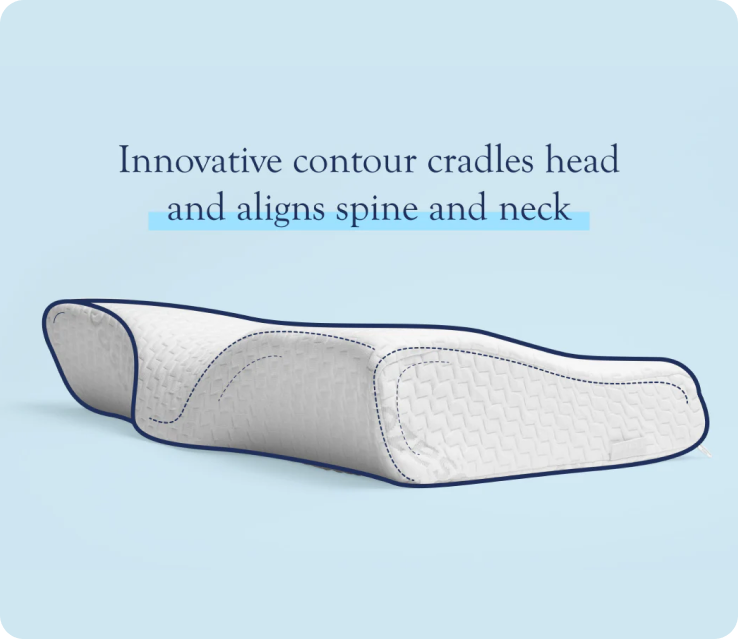
A contoured pillow is shaped with a dip for your head and raised zones around it. The goal is to cradle the head and reduce extreme neck angles, especially for back sleepers and many side sleepers.
Most contoured designs give you two "choices" each night, a higher ridge and a lower ridge. That can be helpful if you rotate between back and side sleep, but it can also create a new problem if you roll and land on the wrong ridge. (If you switch positions a lot, see best pillow options for back and side position changers.)
Where contoured pillows tend to work well
- Back sleepers who want the head to feel settled in one spot instead of sliding around.
- Side sleepers who need a bit more height to fill the gap between shoulder and neck.
- People who dislike a strong neck roll and prefer support that feels spread out.
Where contoured pillows can fall short
- Combination sleepers who rotate a lot, since the "correct" spot can be easy to miss while half asleep.
- People who tuck an arm under the pillow, which can tilt the pillow and undo the contour.
- Stomach sleepers, since most contours add height and can twist the neck.
Cervical pillows explained in plain terms
A cervical pillow puts more emphasis on the neck itself, not only the head. It often has a more defined support zone under the neck so the head does not drop backward or tilt sideways.
Think of it as a pillow that "fills the gap" under the neck on purpose. For some sleepers, that feels like instant pressure relief. For others, it feels too structured until they find the right placement.
Where cervical pillows tend to work well
- Back sleepers who wake with neck stiffness and feel better with steady support under the neck.
- Side sleepers whose neck tends to bend down toward the mattress on softer pillows.
- People who want a more guided posture and prefer a pillow that does not flatten much overnight.
Where cervical pillows can feel wrong
- Stomach sleepers, since the neck is already rotated and added support can increase twisting.
- People sensitive to firmness if the cervical support is aggressive and they are used to plush fill.
- Anyone whose mattress already holds the upper body high, since the pillow can become "too much" height.
Dosaze's take on ergonomic neck support
Dosaze designs for one job first, support that helps you keep cervical alignment through the night, then adds comfort details that make the support easier to stick with. If a pillow feels correct but uncomfortable, most people abandon it within a week and go back to what they know.
That is why Dosaze pairs ergonomic structure with cooling comfort, and backs it with a 60-night risk-free trial plus free shipping & returns. If your neck support improves on night 12 instead of night 2, you still have time to know.
The most useful way to choose between contoured and cervical
Most comparisons stop at "contoured is for side sleepers" and "cervical is for neck pain." That is too simple. What matters is how your head moves when you relax, and what your pillow does after 4-6 hours of pressure.
Use this quick self-check
- If you wake with your head pushed forward (chin closer to chest), the pillow is often too high or too firm in the wrong spot. A contour that cradles the head can help.
- If you wake with your head dropped back (throat feels stretched), you often need more support under the neck. A cervical-style support zone can help.
- If one shoulder always hurts, your pillow may be letting your neck bend toward the mattress on that side. Cervical alignment usually improves when the neck gap is filled consistently.
If those patterns sound familiar, Dosaze's ergonomic approach is meant to reduce the nightly "hunt" for the right spot. You should be able to lie down, exhale, and feel your neck supported without stacking pillows or bunching the case. (For a deeper neck-alignment overview, read the Dosaze guide to pillows for neck alignment.)
Comfort and cooling, why it changes whether support works
Support only helps if you keep your head on the pillow. If you run warm, you may unconsciously shift off a supportive zone just to cool down, and that can bring the neck right back out of alignment.
Dosaze prioritizes cooling comfort as part of the design, because temperature drives movement. A cooler sleep surface often means fewer wake-ups and fewer position changes that strain the neck and shoulders. (If you are dialing in your setup, see how a cooling pillowcase can affect a contour pillow.)
What to expect the first week on a more ergonomic pillow
Switching from a flat, soft pillow to an ergonomic shape can feel strange at first. Your neck is used to "holding itself up" a certain way, and a better-supported posture can feel unfamiliar even when it is more comfortable by morning.
A practical approach is to give it several nights in your main position before judging it. Dosaze's 60-night risk-free trial is built for that adjustment window, and free shipping & returns removes the fear of being stuck with the wrong fit.
Common fit problems and simple fixes
If the pillow feels too tall
This often shows up as a stretched feeling in the back of the neck or pressure at the base of the skull. Try using the lower side of a contoured-style profile, and make sure your shoulder is not perched on the pillow.
If you are evaluating Dosaze, focus on where your neck sits. You want support under the neck, not a push under the head that tilts the chin down.
If the pillow feels too flat
This often shows up as the head tipping toward the mattress on your side. With a cervical-style support zone, place your neck on the support area so the gap is filled, then let the head rest naturally.
If you keep sliding off the support, you may be using the pillow too high on the bed. Pull it down so your shoulders stay on the mattress.
If you feel pressure points
Pressure points usually come from fighting the shape. The fastest test is to check where your ear sits relative to your shoulder when you are on your side. You want a straight line, not an ear that drops toward the bed or rises toward the ceiling.
Dosaze aims for pressure relief by matching ergonomic support with comfortable materials so the neck is supported without feeling poked.
Return anxiety is real, build it into your buying decision
Most people buy a pillow because they are tired of waking up in pain, then worry they will waste money again. That is a valid concern, because pillows are personal and small changes in height can change everything.
Dosaze reduces that risk with a 60-night risk-free trial and free shipping & returns. It lets you test neck support across normal life, your usual stress levels, and your real sleep positions, not a 30-second feel in a showroom. (If you want more detail on how Dosaze addresses neck pain, see 10 reasons chiropractors recommend the Dosaze pillow for neck pain.)
FAQ
Is a contoured pillow the same as a cervical pillow?
The terms overlap, which is why shoppers get stuck. A contoured pillow usually means a shaped cradle for the head with raised edges, while a cervical pillow usually means more deliberate support under the neck to maintain cervical alignment. Dosaze focuses on ergonomic neck support first, then comfort features like cooling, so the support is easier to sleep on night after night.
How do I know if I need more cervical alignment or just a softer pillow?
The fastest clue is what you feel in the morning. If you wake with stiffness at the sides of the neck or one sore shoulder, your neck may be bending off line during sleep, and better cervical alignment often helps more than extra softness. Dosaze is designed to provide neck support without relying on you to stack or fold the pillow to find relief.
Will an ergonomic pillow feel uncomfortable at first?
It can, especially if you are moving from a flat pillow that collapses. Dosaze's ergonomic feel is more structured, so your neck may notice the change for a few nights before it starts to feel normal. The 60-night risk-free trial matters here because comfort and pressure relief can improve after your body adapts.
What sleep position benefits most from a contoured shape?
Back sleep often benefits the most because a head cradle can reduce the urge to turn and tense the neck. If you sleep on your back part of the night and on your side the rest, a contoured design can still work, but only if you consistently land on the correct ridge. Dosaze designs around real sleeping, which means support that stays useful even when you shift positions. (More on this in best pillow guidance for back and side sleepers.)
What if I sleep hot and keep moving off the pillow?
Temperature affects posture more than most people realize because heat triggers micro-wakeups and repositioning. Dosaze builds cooling comfort into the experience so you are less likely to slide to the edge of the pillow or flip it over to find a cooler spot. Fewer wakeups usually means you spend more time in a supported position.
How can I test neck support at home in one minute?
You need a simple check that does not require special tools. Lie in your normal position and see if your nose points straight up on your back, or straight out on your side, without your chin tipping toward your chest. When Dosaze support is in the right spot, you should feel your neck held up with your jaw and shoulders relaxed, not braced.
What makes Dosaze lower risk than buying a random cervical pillow online?
The risk is usually not the idea of cervical support, it is being stuck with the wrong fit. Dosaze reduces that risk with a 60-night risk-free trial plus free shipping & returns, so you can judge real results over multiple nights. That matters because neck and shoulder pain is often inconsistent, and you need enough time to see a pattern.
How to decide for your next pillow upgrade
Make the decision based on your main sleep position, your heat level at night, and the pattern of your morning pain. If you want a more guided feel under the neck, you will usually prefer a cervical-style support zone. If you want a head cradle with gentler shaping, you will usually prefer a contoured profile.
If you want an ergonomic pillow that aims for cervical alignment, pressure relief, and cooling comfort, Dosaze is built for that, and the 60-night risk-free trial with free shipping & returns gives you room to test it without return stress. If you want a second comparison, read contoured pillow vs cervical pillow, what is the difference.
Related: Contoured pillow vs cervical pillow for neck support by Dosaze


