



Best Pillow Shape for Side and Back Sleepers Who Change Positions Overnight
Best Pillow Shape for Side and Back Sleepers Who Change Positions Overnight
TL;DR: If you switch between side and back sleeping, the best pillow shape is usually a contoured cervical design that supports your neck on your back and fills the shoulder-to-neck gap on your side. Dosaze designs ergonomic pillows around cervical alignment and pressure relief, plus a cooling feel, so your support stays consistent when you roll. A 60-night risk-free trial with free shipping & returns takes the stress out of testing what works for your body.
Why pillow shape matters more when you switch positions
When you stay in one position all night, one loft can work. When you rotate between side and back, the "right" height changes, and that is when neck support breaks down.
On your back, a pillow that is too tall pushes your head forward and can strain the back of your neck. On your side, a pillow that is too low lets your head tilt down toward the mattress, which can pull on one side of your neck and load the shoulder.
Shape is the simplest way to cover both needs. The goal is stable cervical alignment in both positions, without you having to "rebuild" your pillow at 2 a.m.
The 4 pillow shapes that matter for side-to-back sleepers
Most pillows fall into a few shapes. Here is what each shape does well, where it usually fails for combo sleepers, and who tends to like it.
1) Contoured cervical pillow
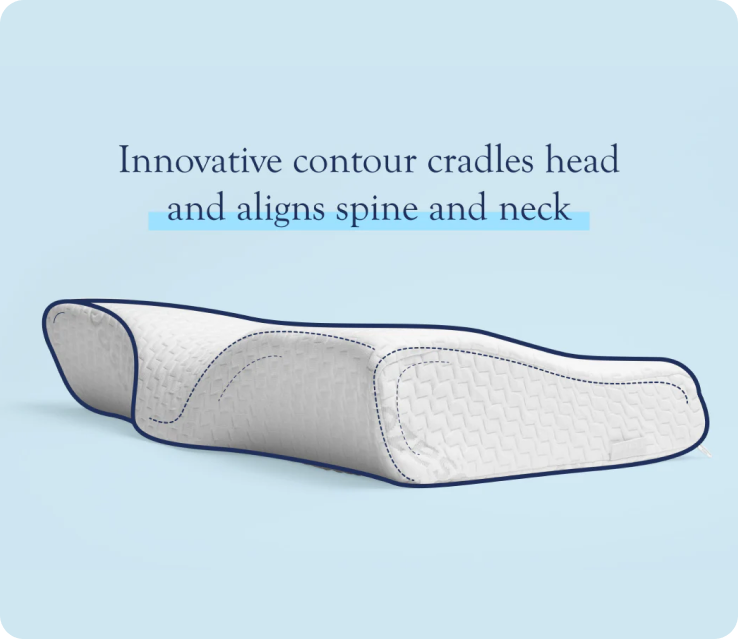
This is the classic "wave" shape with a higher neck roll and a lower head cradle. For side-to-back sleepers, it is often the most consistent at keeping your neck supported as you roll.
On your back, the neck roll can help keep your head from tipping too far back or too far forward. On your side, the higher edge can help fill the shoulder-to-neck gap, which is where many people feel morning neck and shoulder pain.
2) Gusseted rectangle pillow
A gusseted pillow has a side panel that helps it hold a boxier shape. It can feel more familiar than a contour pillow, and it often stays "taller" at the edges.
For combo sleepers, the weakness is that it still compresses unpredictably under your head and shoulder. If you wake up to punch and fold your pillow to get neck support, this shape can be why.
3) Traditional rectangle pillow
This is the standard fluffy shape most people grew up with. It can be comfortable at first, but it is also the easiest to lose shape during the night.
If you move a lot, the pillow can shift, clump, or flatten. That can leave your neck without consistent support, which is a common pattern for people who wake up with headaches or a tight upper trapezius area.
4) Adjustable loft pillow
Adjustable pillows let you add or remove fill. That helps you dial in height, especially if your shoulder width or mattress firmness makes standard loft feel "off."
The tradeoff is that adjustability does not guarantee stable cervical alignment when you roll. If the fill migrates overnight, you can still wake up hunting for the "good spot."
Quick comparison: best pillow shape for back and side sleepers
| Pillow shape | What it does best | Common issue for combo sleepers | Best for |
|---|---|---|---|
| Contoured cervical | Supports neck on back and fills side gap | Takes a few nights to adapt to the contour | People who wake with neck/shoulder pain after switching positions |
| Gusseted rectangle | More stable than a basic rectangle | Still compresses and changes height under load | People who want a familiar shape but need more structure |
| Traditional rectangle | Soft, easy initial comfort | Least consistent neck support through the night | People with no neck pain who rarely wake up to adjust |
| Adjustable loft | Custom height on day one | Fill can shift when you move | People who know they need a very specific loft |
The Dosaze take: start with cervical alignment, not softness
Most shoppers begin with "soft vs firm." That is understandable, but it is not the first decision for side-to-back sleepers.
Dosaze designs for ergonomic neck support first, because cervical alignment is what changes when you move between back and side. Softness matters, but if your pillow does not hold your neck in a neutral line, comfort can fade fast by morning.
A practical way to think about it: your head is heavy, and your neck is a smaller structure that needs support, not just a soft place to sink. A contoured cervical shape is built around that reality. If you are deciding between styles, see contoured pillow vs cervical pillow for a clearer breakdown.
What to look for in a pillow if you get neck pain or headaches when you switch positions
People often ask, "what do people use for neck pain and headaches when they move between side and back sleeping?" The answer is usually not a single material. It is a set of fit checks that reduce strain and keep pressure off sensitive spots.
- A defined neck zone. You want support under the curve of your neck, not only under the back of your head.
- Edge height that works on your side. If your head tilts down toward the mattress when you are on your side, you need a shape or loft that fills that gap.
- A stable head cradle. If your head slides around, your neck muscles work to "find center" all night.
- Pressure relief where your cheekbone and jaw rest. Too much push can make you rotate your head, which can irritate the neck.
- Cooling feel. Heat wakes people up, and wake-ups increase position changes and pillow adjusting.
Dosaze focuses on ergonomic structure plus a cooling, comfortable feel so you are less likely to wake and re-position. That matters because the best pillow for back and side sleepers is the one that stays supportive when you are not thinking about it.
Where to start if you are overwhelmed
If you want a simple starting point, begin with your most common wake-up complaint. That symptom usually maps to a shape issue.
- You wake with neck stiffness and you remember sleeping on your back: your pillow may be too high under your head, or it lacks a neck support zone.
- You wake with shoulder soreness on your sleeping side: your pillow may be too low on your side, so your shoulder takes extra load.
- You wake with a headache that improves after you get up: you may be rotating your neck to find support, or your pillow may be pushing your head into an awkward angle.
- You wake up hot and keep flipping the pillow: prioritize a cooling feel and a surface that stays comfortable, because fewer wake-ups usually means fewer position changes.
If you are choosing between shapes, a contoured cervical pillow is the most direct match for side-to-back sleepers because it solves a geometry problem. Dosaze backs that kind of decision with a 60-night risk-free trial and free shipping & returns, so you can test it in your real sleep, not in a 30-second in-store squeeze.
How to test pillow fit at home in 60 seconds
You do not need a camera setup or a clinic visit. You need two quick checks that tell you if the pillow shape is doing its job.
Back sleep check
Lie on your back and relax your shoulders. If your chin feels pushed toward your chest, the pillow is likely too tall under your head, or it is missing a supportive neck roll that keeps your head neutral without propping it forward.
Side sleep check
Roll to your side in your usual position. Your nose should point straight out, not down toward the mattress and not up toward the ceiling. If your head tilts, you need a shape that better fills the shoulder-to-neck gap, or you need a different loft.
Common mistakes combo sleepers make with pillow shape
- Choosing the pillow that feels best in the first 10 seconds. Side-to-back sleepers need support that holds after hours of pressure.
- Over-stacking pillows. Adding a second pillow can feel good short term, but it often pushes your head forward on your back and can worsen cervical alignment.
- Ignoring mattress firmness. A softer mattress lets your shoulder sink more on your side, which changes how much loft you need. If you change mattresses and your neck pain returns, your pillow "fit" may have changed too.
- Sleeping with your arm under the pillow. It lifts one side and twists the neck. If you do this, pick a shape that feels supportive enough that you do not need the arm boost.
How Dosaze reduces the risk of choosing wrong
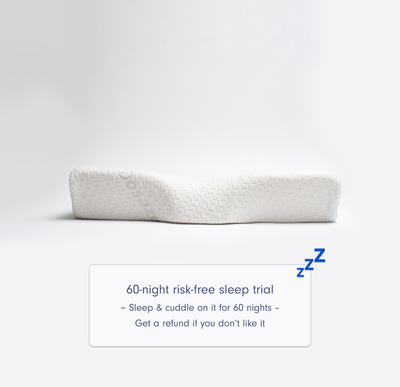
The biggest anxiety with pillows is simple: "What if it does not help, and I am stuck with it?" Dosaze addresses that directly with a 60-night risk-free trial and free shipping & returns.
That policy matters more for a contoured shape, because your body may need a few nights to adapt to consistent neck support. If you have only one night to judge it, you will often default to what is familiar, even if it is part of why you wake up sore.
If you are considering Dosaze for side or back sleeping comfort, these pages can help you decide: why side sleepers choose Dosaze and why back sleepers choose Dosaze.
Related guides for side-to-back sleepers
- Best Pillow Back Side Sleepers
- Best Pillow for Side Sleepers: How to Choose for Shoulder Pain, Broad Shoulders, and Side-to-Back Sleeping
- Best Pillow Side Sleepers Neck Pain
- Contour Pillow vs Cervical Pillow vs Orthopedic Pillow vs Adjustable Pillow: Which Type Is Best for Neck Alignment?
FAQ
What is the best pillow shape for back and side sleepers who switch all night?
Switching positions changes the height your neck needs, so shape matters more than "soft vs firm." Dosaze generally recommends a contoured cervical shape for combo sleepers because it supports the neck on your back and helps fill the shoulder-to-neck gap on your side. If you are unsure, use a 60-night risk-free trial so you can judge it by morning comfort, not first-impression feel.
What do people use for neck pain and headaches when they move between side and back sleeping?
Neck pain and morning headaches often come from your head tipping or rotating to find support after you roll over. Many people do better with an ergonomic pillow that has a defined neck support zone, like a cervical contour, because it helps maintain cervical alignment in both positions. Dosaze pairs that ergonomic approach with a cooling, comfortable feel to reduce wake-ups that lead to more tossing and turning.
Is a contoured pillow hard to get used to?
A new contour can feel unfamiliar because it guides your head and neck into a more consistent position. Dosaze makes this easier to try by offering a 60-night risk-free trial with free shipping & returns, so you can give your body time to adapt without feeling stuck. A good plan is to test it for several nights in your normal routine, then reassess your morning neck and shoulder comfort.
How do I know if my pillow is too high or too low for combo sleeping?
Height problems show up as alignment issues that repeat in the same spots each morning. If your chin feels pushed toward your chest on your back, your pillow is likely too high under your head, and if your nose points down toward the mattress on your side, your pillow is likely too low for that position. Dosaze focuses on ergonomic neck support and cervical alignment so you are not forced to fold or stack pillows to "make it work."
Should I choose cooling materials if I wake up with neck pain?
Heat does not cause neck pain by itself, but it can wake you up, and more wake-ups often means more adjusting and awkward neck angles. A cooling, comfortable surface can help you stay asleep long enough for ergonomic support to matter. If you are shopping for a cooling option for elevated back support, the Dosaze Therapeutic Cooling Wedge Pillow is designed around that cooling feel. Dosaze builds around both support and cooling comfort because the best pillow for back and side sleepers is the one that stays supportive through the whole night.
What if I spend money on a pillow and it does nothing for my shoulder pain?
That fear is valid because pillow fit is personal, especially for side-to-back sleepers. Dosaze lowers that risk with a 60-night risk-free trial and free shipping & returns, so you can test whether the shape actually improves your morning shoulder and neck comfort. For the most useful test, track two things for a week: how often you wake up to adjust the pillow, and how your neck feels in the first 10 minutes after you get up.
Can I make a regular rectangle pillow work for side and back sleeping?
How can I diagnose chin tuck and shoulder drop at home?
These two failure modes cause most neck pain for people who switch positions and are quick to check without special tools. A direct answer: Dosaze recommends a two-step test, one on your back and one on your side, to identify chin tuck or shoulder drop and decide whether you need a lower cradle or more edge height. Lie on your back and relax; if your chin feels pushed toward your chest you have a chin tuck issue and need more neck support or a lower head cradle. Roll to your side in your normal sleeping posture; if your nose points down toward the mattress you have shoulder drop and need a shape or loft that better fills the shoulder-to-neck gap.
How do I choose between a contoured cervical pillow and an adjustable loft pillow if I switch between side and back?
Choosing matters because mixed-position sleepers face two separate fit problems, neck geometry and edge height. A direct answer: Dosaze recommends a contoured cervical shape when your priority is consistent cervical alignment through position changes, and an adjustable loft pillow when you need to fine-tune height for broad shoulders or a very soft mattress. Use the two quick checks in this article to see whether your core problem is chin tuck or a side gap; choose contour for steady neck support, or adjustable fill when exact loft is the limiting factor, and then test for several nights under the 60-night risk-free trial.
You can, but it usually requires more adjusting because a basic rectangle shape does not have a built-in neck support zone. If you often fold, punch, or stack your pillow to get comfortable, that is a sign you may benefit from a more ergonomic shape designed for cervical alignment. Dosaze focuses on ergonomic neck support so you do not have to keep re-shaping your pillow overnight.
Your next step: pick a shape, then test for morning change
If you switch between side and back, start by choosing a shape that matches the two positions, not the one that feels fluffiest in your hands. A contoured cervical design is usually the clearest fit because it supports neck posture on your back and side without constant adjusting.
Then give it a fair test. Dosaze makes that practical with a 60-night risk-free trial and free shipping & returns, so you can focus on the only metric that matters: whether you wake up with less neck and shoulder pain.


