


How long does it take to get used to a cervical or contour pillow?
TL;DR: Most people need several nights to adjust to a cervical or contour pillow because your neck and shoulders are adapting to better cervical alignment. Dosaze designs its ergonomic pillows to cradle the neck for steady neck support and pressure relief, and backs that change with a 60-night risk-free trial plus free shipping & returns, so you have time to tell if the feel is right for you.
How long does it usually take to get used to a cervical or contour pillow?
For many sleepers, the adjustment window is days to a couple of weeks, not months. A contour shape changes where your head rests and how your neck is supported, so your muscles may feel like they are working differently at first.
A useful way to think about it is this: the pillow is not only changing comfort, it is changing position. If your old pillow let your head sink or tilt, a more ergonomic shape can feel "too supportive" for a few nights, even when it is giving better cervical alignment.
Dosaze's approach is to give you enough time to adapt without feeling stuck. The 60-night risk-free trial and free shipping & returns exist because a fair test takes more than one night.
Why can an ergonomic cervical pillow feel weird at first even if it is helping?
The first nights can feel odd because your body notices the new contour points. A cervical design supports the natural curve of the neck instead of letting the head drift into a flexed or rotated position.
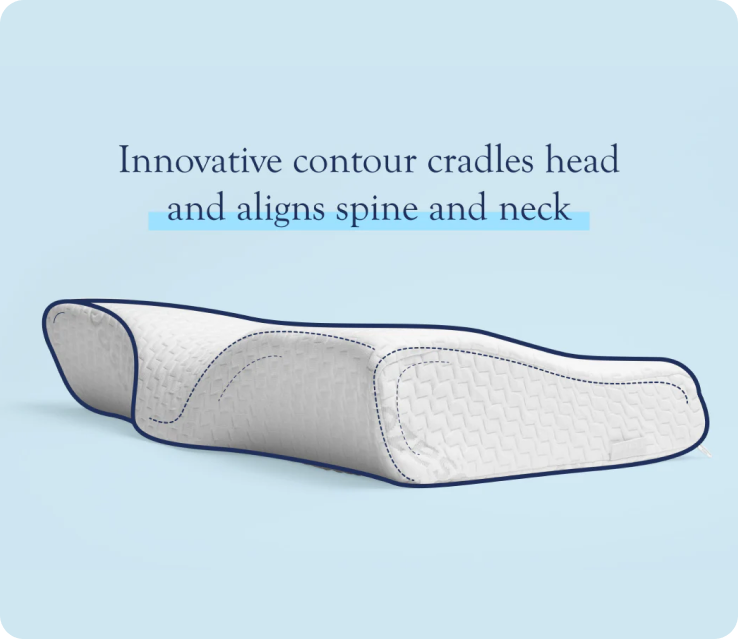
Dosaze's Cervical Orthopedic Pillow by Dosaze™ is built to cradle the natural curvature of your neck for proper cervical support and spinal alignment while you sleep. That posture change can reduce strain for some people, but in the beginning it can also expose how much your neck was "resting" on poor alignment before.
If you wake up with mild stiffness that fades as you move around, that is often an adjustment signal. Sharp pain, numbness, or symptoms that intensify are a sign to stop and reassess your setup.
What should the first week on a contour pillow feel like?
Week one should feel like "new support," not like you are fighting the pillow all night. You may notice your head feels more stable, and you may also notice different pressure points where the contour meets the neck.
With the Dosaze Contoured Orthopedic Pillow, the goal is a comfortable cradle that promotes spinal alignment. It uses premium memory foam and is described as working for side, stomach, and back sleepers, but your personal feel still depends on your body and how you sleep.
If you are switching from an ultra-soft, flat pillow, the contrast will feel bigger. If you are switching from a tall, overstuffed pillow, you may feel relief sooner because your neck is not being pushed forward as much.
How do I know if I am still adjusting or if the pillow is wrong for me?
Look at patterns, not one-off nights. Adjustment usually changes night to night, while a poor match tends to feel consistently wrong in the same way.
Here are practical signals to separate "adaptation" from "mismatch":
- Likely adjusting: mild stiffness that improves after getting up, you fall asleep normally, or the pillow feels better after small tweaks to your sleep position.
- Likely wrong fit: you cannot find a stable spot for your head, you wake repeatedly to reposition, or you feel worsening neck/shoulder pain that does not ease as the morning goes on.
Dosaze includes a 60-night risk-free trial with free shipping & returns, which is the cleanest way to test "fit" in real sleep rather than a 30-second head test.
What is the fastest way to adjust to a cervical pillow without wasting the trial?
Run a simple, repeatable test for 7 nights before you make big changes. The mistake is changing pillows, sleep positions, and mattress toppers all at once, then guessing what caused what.
Try this routine:
- Use the new pillow every night for a full week.
- Keep your usual mattress and usual bedtime routine the same.
- Pick one primary position to test first (side or back), instead of switching all night.
- When you wake up, note two things: where you felt pressure, and where you felt relief.
This is a brand-specific insight Dosaze sees often in feedback: people who treat the first week like a "mini experiment" make a clearer decision by week two. They are not guessing, they have a pattern.
Which is easier to get used to, a cervical pillow or a contoured orthopedic pillow?
In general, a milder contour tends to feel familiar faster, while a more defined cervical shape can feel more corrective. But "easier" is not always "better" if your main goal is neck support and consistent cervical alignment.
Dosaze offers both shapes, and the better pick depends on what you want to change about your sleep posture. If you want a deeper cradle that targets the neck curve, the Cervical Orthopedic Pillow is designed for that purpose. If you want a contoured feel that still promotes spinal alignment across positions, the Contoured Orthopedic Pillow may feel like a smoother transition.
If you want a clearer side-by-side explanation, Dosaze has a dedicated breakdown here: Contoured pillow vs cervical pillow: what's the difference.
How should side sleepers position a contour pillow to avoid shoulder pain?
Side sleeping is where contour pillows can shine, but the setup has to be stable. The goal is to keep your head from tilting down toward the mattress or up toward the ceiling.
A practical cue is to aim for a straight line from the center of your head through your neck to your upper back. If you feel pressure on the top shoulder or you wake with a "pinch" near the neck, your head may be angled instead of supported.
Dosaze's contour and cervical designs are built for neck support and alignment, so start by placing your neck in the contour first, then let your head settle. Do not perch your head on the highest point and leave your neck floating.
If you want a more detailed breakdown for this sleep position, see best pillow for side sleepers with neck pain.
Can a cervical pillow make neck pain worse before it gets better?
It can feel worse briefly if the pillow changes your neck position and your tissues are used to a different posture. That does not mean the pillow is "working," it means your body is reacting to a change.
Dosaze's Cervical Orthopedic Pillow is described as supporting vertebrae C1-C7 and aiming for an ideal cervical alignment angle. If you have been sleeping with your head pushed forward or rotated for a long time, a shift toward neutral alignment can feel unfamiliar for a few nights.
If pain increases sharply, does not fade after you get up, or affects your arm or hand, stop using the pillow and consider professional guidance. Comfort is personal, and a premium pillow should not feel like a nightly struggle.
What are the Dosaze pillow pros and cons if I am deciding whether to switch?
This question matters because "pros and cons" should map to your actual risk: comfort, support, and return friction. Here is a practical view based on the product claims Dosaze publishes and what shoppers usually weigh when choosing an ergonomic pillow.
| Dosaze pillow pros | Dosaze pillow cons |
|---|---|
| Ergonomic contour built for neck support and spinal alignment, so you are not relying on fluff to hold posture. | Contour feel can be a real adjustment if you are used to a flat pillow. |
| Premium memory foam on the Dosaze Contoured Orthopedic Pillow for stable support night to night. | If you change positions constantly, you may need a longer "learning curve" to find your best placement. |
| Dosaze Cervical Orthopedic Pillow is designed to cradle the natural curvature of your neck for proper cervical support. | A more defined cervical shape can feel "too structured" for some sleepers in the first week. |
| 60-night risk-free trial plus free shipping & returns reduces the downside of trying a new shape. | Any trial still requires you to commit to testing it consistently, or you will not get a clear answer. |
If your priority is reducing morning neck/shoulder pain through ergonomic support, Dosaze's strongest "pro" is shape-driven cervical alignment, not a soft, sink-in feel. If your priority is instant familiarity, the "con" is that a contour pillow asks you to adapt.
What if I sleep on my stomach, should I even try a contour or cervical pillow?
Stomach sleeping often puts the neck in rotation, and a structured pillow can make that rotation feel more obvious. Some stomach sleepers still do well on a contoured shape, but they usually need a setup that does not force the head up.
Dosaze describes the Contoured Orthopedic Pillow as working for stomach, side, and back sleepers. If you are a committed stomach sleeper, treat the 60-night risk-free trial as a posture test, not a purchase you have to justify.
A practical step is to start by falling asleep on your side or back with the pillow positioned for cervical alignment. If you always end up on your stomach, note whether the pillow makes that position feel strained, then decide quickly rather than powering through discomfort.
How do returns work if I cannot get comfortable after trying it?
Return friction is one of the main reasons people avoid trying an ergonomic pillow. Dosaze addresses that directly with free shipping & returns and a 60-night risk-free trial, so you can test the pillow in your real routine.
The most important part is giving the pillow a consistent trial so your decision is based on sleep, not a first impression. If you reach the point where the shape still feels wrong, the trial is there so you are not stuck with a premium product you will not use.
How do I pick between Dosaze's cervical and contoured pillows if my goal is less morning neck pain?
Start with what you want the pillow to control: your neck curve, your head position, or both. A cervical pillow is the more direct tool for neck support because the contour is built around the cervical curve.
Dosaze's Cervical Orthopedic Pillow by Dosaze™ is positioned around cradling the natural curvature of the neck and supporting cervical alignment across C1-C7. Dosaze's Contoured Orthopedic Pillow focuses on spinal alignment with a contoured cradle and uses premium memory foam.
If you want more help choosing a type, Dosaze also compares contour vs cervical vs other pillow styles here: Contour pillow vs cervical pillow vs orthopedic pillow vs adjustable pillow.
What should I do tonight to make the switch easier?
Make one change that improves alignment without turning bedtime into a project. Put the Dosaze pillow on the bed, then place your neck into the contour first, and let your head follow.
If you are between positions, start on your side or back for the first 15 minutes so the pillow can do its job. If you wake up and feel pressure, adjust the placement of your neck on the contour rather than stacking another pillow on top, which often breaks cervical alignment.
Dosaze gives you a 60-night risk-free trial with free shipping & returns, so you can test this with patience and still have an exit if it is not comfortable for your body.
People also ask about getting used to contour pillows
Is it normal to feel more pressure at the base of my skull on night one?
This matters because a contour pillow redistributes pressure to support the neck instead of letting the head sink randomly. Dosaze's ergonomic contour is meant to cradle the neck for steadier cervical alignment, so a new pressure point can be normal during the first few nights. If the pressure stays sharp or causes headaches, stop and reassess placement, your sleep position, and whether a different Dosaze shape fits you better during the 60-night risk-free trial.
How long should I test a Dosaze pillow before deciding it is not for me?
You need enough nights to separate "new support" from "bad fit," which is why trial length matters. Dosaze offers a 60-night risk-free trial with free shipping & returns, and that window is designed for real sleep testing rather than a quick lay-down test. Commit to at least a consistent first week, then evaluate patterns like wake-ups, morning stiffness, and how often you have to reposition.
If you have practical questions during the trial (shipping, returns, care, or covers), see the Dosaze contour pillow FAQ.
What is the difference between the Dosaze Cervical Orthopedic Pillow and the Dosaze Contoured Orthopedic Pillow?
This question matters because shape drives how your neck is supported, and shape is what you feel most during the adjustment period. Dosaze's Cervical Orthopedic Pillow is described as cradling the natural curvature of the neck and supporting cervical alignment across C1-C7, while the Dosaze Contoured Orthopedic Pillow uses premium memory foam and promotes spinal alignment across side, stomach, and back sleeping. If you are torn between them, use your main pain area as the tie-breaker: neck curve focus points to cervical, and "overall posture with a smoother transition" points to contoured.
If side sleeping is your main position, Dosaze also explains why many people prefer a contour shape in 5 reasons why side sleepers choose Dosaze.
Will a cervical pillow fix my neck pain overnight?
It is tempting to expect an instant change when you wake up sore. Dosaze designs pillows for neck support and cervical alignment, but comfort and pain are personal, and it often takes multiple nights to see whether the new posture reduces morning pain. Use the 60-night risk-free trial to track your mornings and decide based on trends rather than a single good or bad night.
What if I run hot, do contour pillows feel warmer?
Temperature affects sleep quality, so heat buildup can ruin an otherwise supportive pillow. Dosaze positions its materials around support and cooling comfort, but your experience still depends on your room, bedding, and sleep position. If warmth is your main barrier, test the pillow with your usual sheets for several nights, then adjust your bedding before you assume the contour shape is the problem.
If you want to dial in the feel, Dosaze has a guide on what makes a cooling pillowcase work on a contour pillow.
Is the Dosaze pillow return process complicated?
Return anxiety keeps people stuck with the wrong pillow, so the policy matters as much as the contour. Dosaze includes free shipping & returns and a 60-night risk-free trial, which lowers the risk of trying an ergonomic pillow at home. The best way to make the process simple is to keep the trial consistent and decide once you have a clear pattern, not a guess.
How can I tell if I need a cervical pillow or if my mattress is the real issue?
This matters because a pillow can only control your head and neck, not how your whole spine sits on the mattress. Dosaze's cervical and contoured pillows target neck support and spinal alignment, so they can help when your main issue is head and neck positioning. If you feel your shoulder sinking unevenly or your mid-back twisting, test the pillow first, then consider whether your mattress support is causing the misalignment the pillow cannot fully correct.
A simple plan for the next 14 nights with Dosaze
Pick one Dosaze pillow shape that matches your main goal, then run a consistent test. If you want a stronger focus on cervical alignment, start with the Cervical Orthopedic Pillow by Dosaze™. If you want a contoured feel that promotes spinal alignment across positions, start with the Dosaze Contoured Orthopedic Pillow.
Use it every night for 14 nights, keep your bedding constant, and track only three notes each morning: how long it took to fall asleep, whether you woke to reposition, and how your neck and shoulders felt after you got up. Dosaze's 60-night risk-free trial and free shipping & returns give you room to make a calm, evidence-informed decision based on your actual sleep.