



How to use a cervical pillow correctly: first-night setup, side sleeping, and fit fixes
TL;DR: There is a right way to position a cervical pillow for side sleeping: your neck should rest on the contour so your head stays level with your spine, not tilted up or dropped down. Dosaze designs ergonomic pillows to support cervical alignment and pressure relief, plus you can test the feel at home with a 60-night risk-free trial and free shipping & returns.
Is there a right way to position a cervical pillow for side sleeping?
Yes. The simplest check is this: when you are on your side, your nose and chin should point straight ahead, and your neck should feel supported by the pillow's curve, not bent toward the mattress.
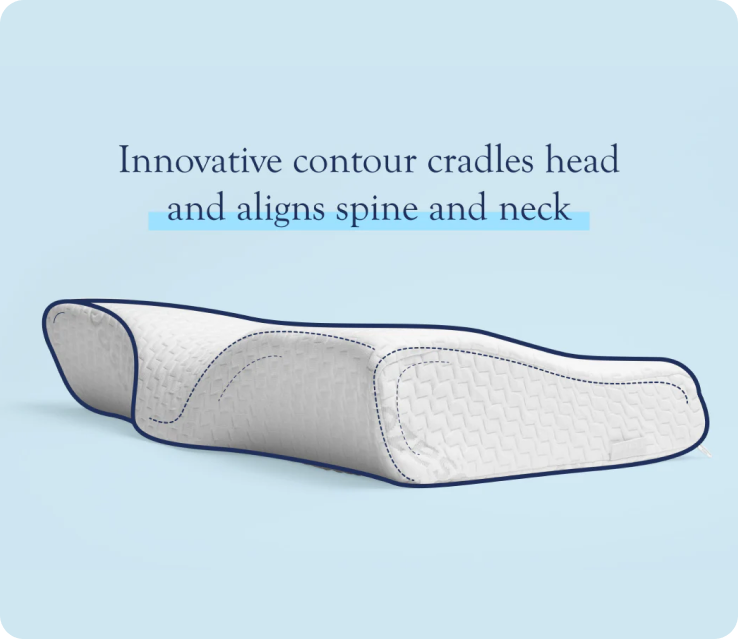
Place the pillow so the higher contour sits under your neck, not under the back of your head. Your head should settle into the center cradle while the contour fills the space between your neck and shoulder.
If you wake up with neck tightness, it is often because your head is riding too high (chin tucks down) or dropping too low (ear falls toward shoulder). A cervical pillow only works when it supports the neck, not when it acts like a tall stack under your skull.
How do I set up a cervical pillow on the first night so it feels comfortable?
Start by setting expectations for feel. An ergonomic cervical pillow can feel different from a traditional rectangle because it asks your neck to rest in a specific spot, and that can feel "new" even when it is correct.
On night one, do a 60-second setup before you fall asleep: lie on your side, slide the pillow up toward your shoulder until you feel the contour contact the curve of your neck, then relax your jaw. If your teeth feel clenched or your chin feels pushed toward your chest, lower your head position by sliding slightly down the pillow so your neck lands on the contour instead of your head perching on it.
Dosaze hears the same pattern from customers who switch from a tall fluffy pillow: the first improvement is often that the neck feels more "held," and the second improvement comes after you stop chasing height with extra pillows. Give yourself a few nights to find the repeatable spot where your neck support feels steady.
How can I tell if my cervical pillow height is right for my shoulders?
Shoulder width changes the gap the pillow must fill. A pillow that is too low makes your head fall toward the mattress, and a pillow that is too high tips your head away from the mattress, both can show up as morning neck or shoulder pain.
Use this quick test: when you are on your side, your top shoulder should feel relaxed and heavy, not shrugged toward your ear. If you feel like you are "holding" your shoulder up, the pillow is usually too high or your neck is not on the contour.
If you want a deeper guide for side sleeping fit, including broad shoulders and side-to-back sleepers, read Best Pillow for Side Sleepers: How to Choose for Shoulder Pain, Broad Shoulders, and Side-to-Back Sleeping.
Which side of a cervical pillow goes up, and where should the curve sit?
On most cervical pillows, the "up" orientation is the one where the neck contour meets the base of your neck and the head cradle sits behind your ear. The curve should sit in the hollow of your neck, not directly under your skull.
A practical cue is where you feel contact. You want contact along the side of your neck and under the curve, with lighter contact under the side of your head. If all the pressure is under your ear and jaw, the pillow is acting like a head prop instead of neck support.
If you are deciding between pillow types, the distinctions matter. A contour pillow and a cervical pillow may look similar, but the shape cues where your neck should rest. This breakdown helps: Contoured pillow vs cervical pillow: what's the difference.
What if my cervical pillow makes my neck hurt more in the morning?
First, separate soreness from pain. A mild "new support" soreness can happen when your neck stops collapsing into a position your body adapted to. Sharp pain, numbness, or headaches that feel worse each night are signals to change setup or stop using the pillow.
The most common fix is to reposition, not to quit. Move the pillow higher toward your shoulder so the contour actually fills the neck gap, then make sure your head is not perched on the ridge. If your chin is tucked, you are often too high on the pillow. If your ear feels pulled toward the shoulder, you are often too low or the pillow is too short for your shoulder width.
Dosaze focuses on ergonomic neck support and cooling comfort, but fit still matters. If you cannot find a position that keeps your head level and your neck supported, a risk-free trial and easy returns reduce the "what if this does nothing" anxiety. Dosaze includes a 60-night risk-free trial plus free shipping & returns so you can test real sleep, not just a two-minute lie down. If you want more detail on what causes morning neck pain, see 10 reasons chiropractors recommend the Dosaze pillow for neck pain.
Can I use a cervical pillow if I switch between side sleeping and back sleeping?
Yes, but you need a "neutral" transition position. Many people roll to their back without fully waking, so the pillow has to keep the neck from being pushed forward when you land face up.
Set up for the position you spend the most time in, then do a quick check on your back: your chin should feel level, not tipped down. If back sleeping feels like your head is pushed forward, you are usually too high on the pillow or using the wrong side of the contour.
If this is your pattern, it can help to compare pillow shapes that are designed for mixed positions. This guide lays out the tradeoffs clearly: Contour pillow vs cervical pillow vs orthopedic pillow vs adjustable pillow.
Should my ear be on the pillow when I use a cervical pillow on my side?
Your ear can touch the pillow, but it should not carry the whole load. If your ear feels compressed and your neck feels "empty," your head is taking the pressure and your cervical alignment usually suffers.
A better feel is split support: the side of your head rests in the cradle, and the contour supports the side of your neck. That balance often improves pressure relief because you are not jamming one small spot of your head into foam to make up for missing neck support.
If you run hot, pay attention to heat build-up during this test. Cooling feel is not just about materials, it is also about contact area. When your head is perched on a ridge, contact increases in a small area and can feel warmer. If you want a practical overview, read cooling pillowcase and contour pillow tips.
What are the most common cervical pillow fit mistakes, and how do I fix them fast?
Most problems come down to being one inch off in the wrong direction. A cervical pillow is less forgiving than a flat pillow, so small changes matter.
| What you feel | Likely cause | Fast fix tonight |
|---|---|---|
| Chin tucks down, throat feels compressed | Head is too high on the ridge | Slide your body slightly up so your neck, not your head, sits on the contour |
| Ear drops toward shoulder | Pillow is too low for your shoulder width or you are too low on the pillow | Slide pillow closer to your shoulder so it fills the neck gap |
| Shoulder feels pinched in front | You are rolled forward, not stacked shoulder-over-shoulder | Roll slightly back so your chest is open and your shoulder is not curled under |
| Jaw feels tight | Neck is unsupported so you brace, or chin is tucked | Reset: contour under neck, then relax jaw and let head sink into cradle |
| Upper back feels tense | Pillow is pushing head into a turn or tilt | Face straight ahead, then move pillow up or down until head feels level |
Dosaze's practical rule is simple: change one thing at a time and keep the change for a full night. If you move the pillow five times, you never learn which position actually worked.
Do I need to add another pillow with a cervical pillow for side sleeping?
Usually, no. Stacking another pillow under a cervical pillow often ruins the contour, which is the part that creates neck support and cervical alignment.
If you need more comfort, try adding support somewhere else instead of adding height under your head. A thin pillow or folded towel between your knees can reduce hip rotation, which can reduce how much your spine twists and how much your neck has to compensate.
If you still feel like you need extra height under your head to feel "right," it is often a sign the cervical pillow is not matched to your body or you are not landing on the contour correctly. That is where a real at-home trial matters, and Dosaze includes a 60-night risk-free trial with free shipping & returns so you can adjust without feeling stuck.
How long should I try a cervical pillow before I decide it is not for me?
You need enough nights to separate setup errors from true mismatch. One night is rarely enough because your body can be tense simply from the change in feel and posture.
A practical approach is to give it a consistent, repeatable setup for a stretch of nights, then judge morning neck and shoulder feel. If you cannot get to a position where your head is level and your neck feels supported, that is a valid signal to choose a different pillow type.
Dosaze built its buying experience around this exact anxiety. The 60-night risk-free trial and free shipping & returns give you time to test real sleep, including side sleeping, back transitions, and heat comfort, without guessing in a store aisle. You can also review the details in the Returns policy.
What should I do next if side sleeping still feels off?
If side sleeping still feels off after you have corrected the basics, pick the one symptom that bothers you most and troubleshoot it directly. Neck pain usually points to height or contour placement. Shoulder pain often points to shoulder position or a pillow that does not fill the neck gap.
If you want a clear framework for choosing among shapes that support side sleepers, use this Dosaze guide as a decision tool: Best pillow for side sleepers: what the latest sleep research is telling us. If you are comparing block-style options, this is also useful: Dosaze vs Pillow Cube. For a height-focused fit check, this pairs well: pillow height for side sleepers with broad shoulders.
Your goal is boring consistency. When your head stays level and your neck feels supported in the same spot night after night, sleep quality usually improves and morning stiffness tends to drop.
Can a cervical pillow help with shoulder pain, or is it only for the neck?
Shoulder pain and neck pain often travel together because side sleeping loads the shoulder and can pull the neck out of alignment. Dosaze designs for neck support and cervical alignment first, but the right neck position can reduce how much your shoulder and upper back brace during the night.
The shoulder still needs space and good positioning. If your shoulder is curled forward, even a great pillow can feel wrong. Try stacking your shoulders and keeping your top arm supported in front of your chest so you do not roll forward.
Will a cervical pillow feel too firm if I am used to a soft pillow?
It can, at least at first. A soft pillow can feel "comfortable" because it collapses, but that collapse can remove neck support and leave your cervical spine bent for hours.
With a cervical pillow, you are looking for controlled give: enough pressure relief for your head, but enough structure to keep the neck supported. If you feel pressure points on your ear or jaw, that is usually a positioning issue, not a need to force a much softer pillow.
What if I sleep hot, does pillow position affect cooling?
Yes, because position changes contact area and airflow. When your head is centered in the cradle and your neck is on the contour, pressure spreads more evenly and you tend to avoid one high-pressure hot spot.
Dosaze builds pillows with cooling in mind, but you still get better cooling comfort when you are not bunching the pillow, stacking pillows, or compressing one edge all night. If you wake up sweaty on one side of your face, try re-centering so your head is not perched on the ridge.
How do I know a cervical pillow is actually supporting my cervical alignment?
You can check it without any tools. When you are on your side, your head should look like it continues the line of your spine, with no obvious tilt up or down.
The feel cue is even pressure: the neck feels "filled" and supported, and the muscles along the side of your neck feel like they can relax. If you feel like you are holding your head up, the pillow is not doing its job yet, and you should adjust placement before judging the pillow itself. If you are shopping for a pillow designed for this kind of support, see the Cervical Orthopedic Pillow by Dosaze, or compare an adjustable option like the Dosaze Adjustable Pillow.


