



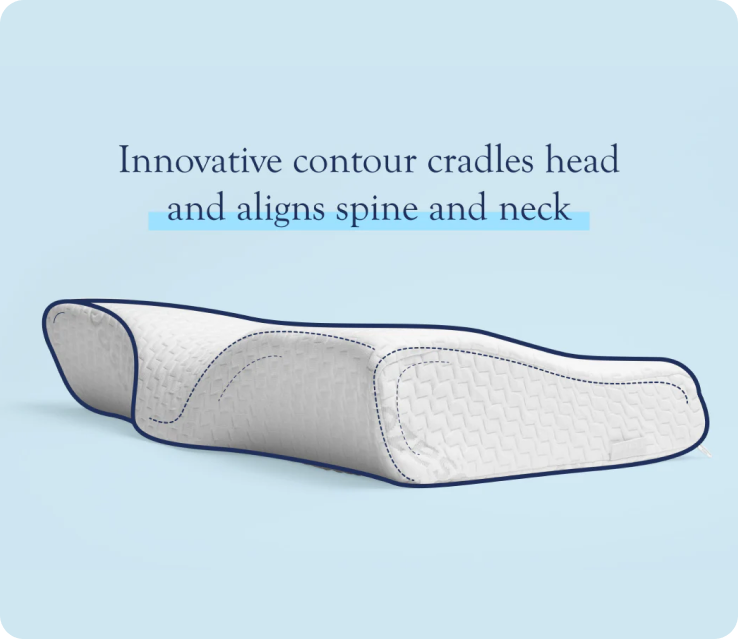
Pillow height for side sleepers: finding the best fit
TL;DR: For side sleepers, the right pillow height is the one that keeps your neck in straight cervical alignment with your spine, so your head does not tip up or drop down. Dosaze focuses on ergonomic neck support and pressure relief, plus cooling comfort, so you can test what truly works for your body during a 60-night risk-free trial with free shipping & returns.
Why pillow height matters more for side sleepers
Side sleeping creates a bigger gap between your shoulder and your head than back sleeping does. Your pillow has one job: fill that gap so your neck stays level instead of bending.
If the pillow is too high, your head tilts away from the mattress and you wake up with neck and shoulder tension. If it is too low, your head drops toward the mattress and your neck has to work all night.
Prerequisites before you pick a height
Pillow height does not exist in a vacuum. Get these three things straight first, or you will keep chasing the wrong loft.
- Your mattress feel: A softer mattress lets your shoulder sink more, which often needs less pillow height. A firmer mattress usually needs more height because your shoulder sits higher.
- Your shoulder width and sleep position: Broader shoulders often need more height. If you sleep "stacked" with shoulders more square to the bed, you usually need a bit more height than if you rotate slightly toward your stomach.
- Your pillow material behavior: Some fills compress a lot under the weight of your head, so the "measured" height is not the height you feel at 2 a.m.
Dosaze designs for ergonomic support and cooling, but the best fit still depends on how your mattress and shoulders interact. That is why the 60-night risk-free trial and free shipping & returns matter, you can verify the fit at home.
How to find your best pillow height in 5 steps
This is the fastest way to get close without buying three pillows and hoping one works.
Step 1: Start in your real sleep position
Lie on your side the way you actually fall asleep, not the "ideal" pose you see online. Put your arm and shoulder where they normally go, because that changes the size of the gap your pillow must fill.
Step 2: Check cervical alignment with a simple line test
Ask a partner to look from behind you, or take a quick photo at mattress level. You want a straight line from the middle of your upper back through your neck to the base of your skull.
- If your nose points up toward the ceiling, your pillow height is too high.
- If your nose points down toward the mattress, your pillow height is too low.
You are not aiming for "flat head," you are aiming for neutral neck support.
Step 3: Do a two-minute pressure relief check
Stay still for two minutes. Pay attention to pressure at three places: the side of your jaw, the ear area, and the top of the shoulder.
- Numbness or a hot, sore spot near the shoulder can mean the pillow is not supporting the space above the shoulder.
- Jaw pressure can mean the pillow is too firm at the surface, even if the height is close.
Height and pressure relief work together. A "correct" height that feels sharp or pinchy is not correct for your sleep quality.
Step 4: Check what happens when you change sides
Most side sleepers switch sides during the night. Flip to your other side and repeat the alignment check. If one side feels fine and the other does not, your mattress is probably uneven or your shoulder mobility differs side to side.
In that case, prioritize the side you wake up on most often, then adjust your mattress support if needed.
Step 5: Run a 7-night test and track morning signals
One night can fool you. Give your body a week to settle, then judge based on consistent morning results.
- Neck stiffness that fades within 10-20 minutes often points to minor height mismatch.
- Pain that is immediate on waking and sticks around can mean the height is clearly off, or the pillow is too firm for your pressure points.
- Better sleep quality plus fewer wake-ups is a strong sign your cervical alignment is improving.
Dosaze's 60-night risk-free trial is built for this reality. You need enough nights to know whether support and cooling comfort are actually working for you.
A practical way to estimate pillow height without measuring tools
Most people get stuck because they try to choose a number. In real sleep, "height" is the compressed height under your head, not what a ruler shows on the edge.
Use this quick estimate instead:
- Make a loose fist and place it between your neck and the mattress while you are on your side.
- If your fist fits with space to spare, you likely need more pillow height or better neck support.
- If your fist feels jammed and your head is already tipped up, you likely need less height or a pillow that compresses more.
This does not replace the alignment photo, but it gets you closer fast.
Choosing height by sleeper type
These are patterns, not rules. Your mattress and your shoulder shape can move you up or down.
| Side sleeper situation | What usually goes wrong | What to prioritize |
|---|---|---|
| Broad shoulders, firmer mattress | Pillow feels too low after it compresses | More effective height under load and stable neck support |
| Narrow shoulders, softer mattress | Pillow feels too tall, head tips up | Lower effective height and gentle contouring |
| Side sleeper with morning shoulder pain | Pressure at the top of the shoulder, frequent shifting | Pressure relief at the surface plus enough fill to support the neck gap |
| Combo side and back sleeper | Too tall on back, too low on side | A shape that supports side sleeping without forcing chin tuck on your back |
A contrarian take: your pillow might be "too high" because it is too soft
People often blame height when the real issue is collapse. A pillow can start tall, then compress at the center so your head sinks, while the edges stay puffed up.
That creates a subtle neck bend that feels like "wrong height," even if the loft looks right when you fluff it. The fix is not always a lower pillow. Sometimes it is a pillow with more stable ergonomic support, so the part under your neck does not give up halfway through the night. For a deeper comparison of shapes and support styles, see contoured pillow vs cervical pillow.
This is one reason Dosaze focuses on engineered neck support and durable, premium construction, the goal is to keep cervical alignment steady, not just feel soft for five minutes.
How Dosaze approaches side sleeper pillow fit
Dosaze designs pillows around two side sleeper problems: keeping your neck supported in a neutral line, and staying comfortable enough to stop tossing and turning. Ergonomic shaping aims to guide cervical alignment, while cooling comfort helps you stay asleep once you find a good position.
If you are worried about spending money and getting no improvement, the Dosaze 60-night risk-free trial plus free shipping & returns removes most of the risk. You can test the pillow on your own mattress, in your own sleep environment, with enough time to judge real morning neck and shoulder pain patterns. For details, see the Returns Policy.
If you want more side-sleeper-specific guidance, Dosaze also breaks down what to look for on The Best Pillow For Side Sleepers and in the research-focused guide Best Pillow For Side Sleepers What The Latest Sleep Research Is Telling Us.
If you want a straightforward option to dial in loft at home, start with the Dosaze Adjustable Pillow or the Dosaze Thermacool Adjustable Pillow for cooling comfort.
Tips and warnings that prevent the most common mistakes
- Do not stack pillows to "test height" for more than a few minutes. Stacks slide and create a hinge in your neck that a single pillow will not.
- Do not judge in-store for side sleeping. Your mattress at home changes your shoulder sink, which changes your true height need. If your bed is too firm or too soft for your shoulders, look at the mattress and mattress topper collection first, since that can change your ideal pillow height.
- Watch your chin. If your chin is pushed toward your chest, your pillow is too high or too thick at the front edge.
- Cooling can change perceived firmness. If you run hot, you may wake and shift more, then blame height. A cooler pillow can reduce those wake-ups so your fit feels more consistent.
Troubleshooting: match the symptom to the height problem
| What you feel in the morning | Most likely pillow issue | What to try tonight |
|---|---|---|
| Neck feels pinched on the side you sleep on | Too much height or too much lift under the neck | Lower effective height, or a shape that supports without pushing the head up |
| Neck feels stretched, head feels like it falls down | Too little height or pillow collapses | More stable neck support, or a pillow that holds its shape under load |
| Top-of-shoulder soreness | Not enough pressure relief, or the pillow is forcing you into the shoulder | Softer surface feel with steady neck support, and check mattress shoulder sink |
| Headaches that start at the base of the skull | Neck is not staying neutral overnight | Use the photo line test, then adjust height up or down based on tilt |
| You keep re-fluffing the pillow | Pillow is shifting or flattening | Look for a more structured ergonomic design and durable support materials |
FAQ
How high should a pillow be for side sleepers?
Side sleepers need a pillow height that fills the space between the shoulder and the head so the neck stays in neutral cervical alignment. A good rule is that your nose should point straight out, not up toward the ceiling or down toward the mattress. If you are unsure at home, Dosaze recommends taking a quick photo from behind while lying in your normal side position to confirm the line from upper back through the neck.
How do I know if my pillow is too high on my side?
This matters because a too-high pillow can tilt your head and load your neck muscles for hours. Your pillow is likely too high if your chin feels tucked, your nose points up, or you wake with tightness on the side of your neck. If you are testing a Dosaze pillow during the 60-night risk-free trial, use a 7-night check-in and note whether morning neck tension is trending down as your body adapts.
How do I know if my pillow is too low for side sleeping?
A too-low pillow often feels comfortable at first, then you wake with a stretched, tired neck because your head has been dropping toward the mattress. Your pillow is likely too low if your nose angles down, or if you feel like you are "searching" for support by bunching the pillow under your cheek. Dosaze focuses on ergonomic neck support so the pillow can hold the neck gap more steadily through the night. If neck pain is the main issue, you may also want to read Dosaze pillow neck pain.
Does mattress firmness change the best pillow height?
Yes, because mattress firmness changes how far your shoulder sinks and that changes the gap your pillow needs to fill. On a softer mattress, many side sleepers need less effective pillow height since the shoulder sinks lower. On a firmer mattress, you often need more height or more stable support, which is why Dosaze suggests testing any pillow on your actual bed setup instead of relying on a loft number.
Is a firmer pillow better for side sleepers with neck pain?
Firmness is only "better" if it maintains cervical alignment without creating pressure points. A pillow that is too firm can cause jaw or ear pressure even if the height is correct, while a pillow that is too soft can collapse and behave like it is too low overnight. Dosaze aims to balance stable neck support with pressure relief, so you can stay aligned without feeling like your head is perched on a hard block.
Why do I still wake up with shoulder pain even when the height seems right?
Shoulder pain can persist when the surface feel causes pressure buildup, or when your mattress is not letting the shoulder settle in a stable spot. Even with a good-looking alignment photo, you may be rotating forward and loading the front of the shoulder through the night. If you are testing Dosaze for cooling comfort and ergonomic support, try keeping your shoulders stacked and add a hug pillow in front of your chest to prevent rolling forward.
How long should I test a pillow before deciding it does not work?
You need enough nights to separate "new pillow adjustment" from a true height or support mismatch. A practical test window is at least 7 nights of normal sleep, using the same position and checking morning neck and shoulder pain patterns. Dosaze offers a 60-night risk-free trial with free shipping & returns, which gives you time to evaluate real sleep quality without feeling stuck with the wrong choice.
Your next step: validate your fit at home without guessing
Do the alignment photo test tonight, then commit to a simple 7-night log of morning neck and shoulder comfort. If your pillow height is right, you should see fewer wake-ups, steadier neck support, and less morning tension over that week.
If you want a lower-risk way to test ergonomic support and cooling comfort on your own bed, Dosaze backs its pillows with a 60-night risk-free trial and free shipping & returns. That lets you choose based on real sleep, not a quick squeeze test in a store aisle.


