


Still Hurting After Trying Memory Foam Pillows? What to Try Next
TL;DR: If you tried memory foam pillows and your neck still hurts, the next step is usually not "another memory foam," it is a better shape and a better fit for your sleep position. Dosaze focuses on ergonomic neck support, cervical alignment, pressure relief, and cooling comfort, and backs it with a 60-night risk-free trial plus free shipping & returns.
Why memory foam can still leave your neck sore
Memory foam is popular because it feels comfortable at first touch. But neck pain is rarely about softness alone. It is more often about whether your head and neck stay in a neutral line while you sleep.
If your pillow lets your head tip too far up or drop too far down, your neck muscles spend the night bracing. You can wake up with stiffness at the base of the skull, tight traps, or a "pinched" feeling even if the pillow felt plush.
The common mismatch is shape, not material
A lot of memory foam pillows are basically a rectangle. That shape can be fine for some sleepers, but it often fails when you need consistent neck support, especially on your side.
For many people, the "fix" is switching from a flat block to a pillow built to hold the curve of your neck, not just cradle the back of your head.
Two other reasons memory foam can backfire
- Slow response: Some foams take time to rebound. If you change positions, your neck can briefly lose support while the foam catches up.
- Heat buildup: If you sleep warm, heat can make foam feel softer over the night. That can change your loft and throw off cervical alignment by morning.
Quick self-check: what your morning pain is telling you
You do not need a perfect diagnosis to make a better pillow choice. Use the pattern of your discomfort to narrow what to try next.
| What you feel in the morning | What often causes it | What to try next |
|---|---|---|
| Neck pain plus a headache at the base of the skull | Your head sits too high, chin tipped down | Lower head loft, add neck support under the curve (not under the skull) |
| Trap and shoulder tightness | Side sleeping with a pillow that is too low | More height between ear and shoulder, with stable neck support |
| Front-of-neck tightness | Your head drops back, chin tipped up | More contour that keeps the neck from collapsing backward |
| Stiffness that gets worse through the week | Small nightly strain adds up | Prioritize consistent cervical alignment and give any new setup a fair trial window |
What to try next instead of another standard memory foam pillow
If you already tried memory foam and your neck still hurts, the next best experiment is changing the geometry. Material matters, but shape is usually the bigger lever for neck support.
Option 1: Cervical contour support that matches your sleep position
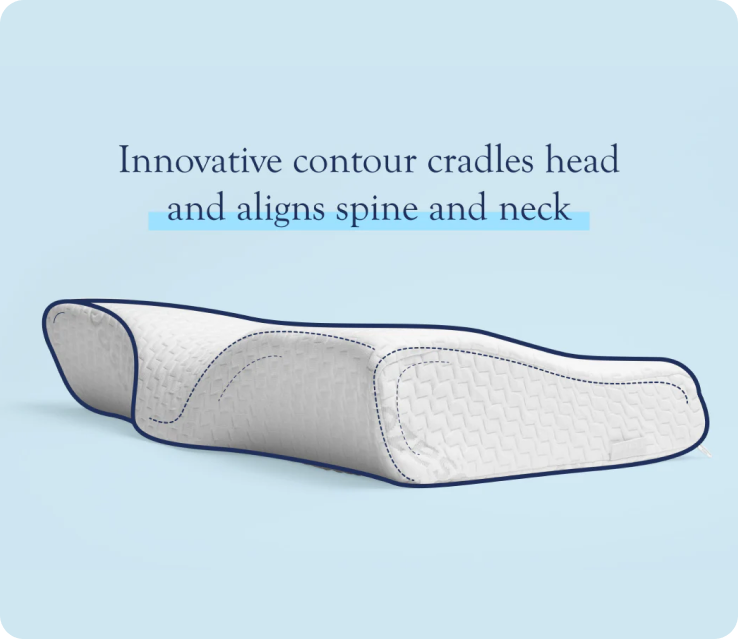
Contour pillows are built with a higher and lower side and a dedicated neck roll area. The goal is simple: keep your cervical spine supported so your head is not "hanging" in space.
Dosaze designs pillows around ergonomic neck support and cervical alignment, with cooling comfort as part of the sleep experience. If you are anxious about spending money and guessing wrong, Dosaze also offers a 60-night risk-free trial and free shipping & returns, so you can test fit at home.
Option 2: Adjustable loft, but adjust it with a method
Adjustable pillows can work well when your pain is caused by being slightly too high or too low. The problem is that most people change fill randomly, then never find the "right" setting.
If you go adjustable, change one variable at a time. Keep each setting for several nights, then reassess your morning stiffness and shoulder pressure.
Option 3: Hybrid support for people who hate the "stuck" feeling
If you disliked the slow-melt feel of memory foam, try a pillow that keeps its shape more consistently. The goal is steady pressure relief without that lag when you roll over.
When Dosaze customers say memory foam "didn't work," it is often this: they felt supported at bedtime, then woke up feeling like the pillow lost its structure overnight or trapped heat. A design that prioritizes ergonomic support and cooling can address both complaints at once.
Where to start if you feel stuck
When people search "I tried memory foam pillows and my neck still hurts what should I try next," they are usually overwhelmed by options. This is the simplest order of operations that reduces guessing.
- Step 1: Choose for your main sleep position (side, back, or combo). Your pillow has to match the gap between your head and mattress.
- Step 2: Prioritize neck support first, softness second. Comfort should come from pressure relief without losing cervical alignment.
- Step 3: Give yourself a real at-home test. A 60-night risk-free trial like Dosaze offers is useful because neck pain changes slowly.
- Step 4: Make one change at a time. If you also switch mattress topper, desk setup, and pillow in the same week, you will not know what helped.
A practical fit test you can do tonight
This takes 60 seconds and catches most pillow mismatches.
- Lie down in your normal position.
- Check if your nose points straight up (back sleeping) or straight out (side sleeping), not angled toward the ceiling or the mattress.
- Pay attention to the space under your neck. You want gentle contact and support there, not a gap.
- Notice your shoulder pressure. If your shoulder feels jammed, the pillow may be too high or too firm for your build.
If you cannot get neutral alignment without folding the pillow, stacking a second pillow, or tucking your arm under your head, that is a strong sign the pillow shape is wrong for you.
Memory foam vs cervical contour: the decision that usually matters
People often frame this as "Which material is best for neck pain?" The more useful question is: "Which pillow keeps me in a neutral position for the most hours?"
If you want a deeper comparison, Dosaze has related reads on memory foam and neck pain, including Memory Foam Pillow Neck Pain and Best Pillow For Neck Pain Memory Foam Vs Cervical Contour Which One Actually Helps.
| Choice | Best for | Watch out for |
|---|---|---|
| Standard memory foam rectangle | People who already sleep neutral and want general pressure relief | Neck can "float" if the shape does not support the cervical curve |
| Cervical contour pillow | People who wake with neck or shoulder pain and want consistent neck support | Needs a short adjustment period while your muscles stop bracing |
| Dosaze ergonomic pillow approach | Sleepers who want ergonomic design for cervical alignment plus cooling comfort, with low risk | You still need to pick the right fit for your sleep position, but Dosaze lowers risk with a 60-night trial and free shipping & returns |
How to tell if your pillow is the problem or your setup is
Sometimes the pillow is fine, but the rest of your setup forces bad posture. Fixing one small thing can make the pillow suddenly work better.
- Mattress firmness: If your shoulder sinks a lot on your side, you may need a slightly higher pillow to keep your neck level.
- Sleep position drift: Many "side sleepers" spend part of the night half on their stomach. That twist can irritate the neck fast, no matter the pillow.
- Phone posture: If you spend hours with your head forward, your neck may already be irritated at bedtime. Better neck support helps, but you may still feel it for a while.
What a realistic trial looks like when you are chasing neck pain relief
One night is rarely enough to judge a pillow for neck support. Your body has learned to brace against the wrong support, and it takes time to stop doing that.
This is where Dosaze's 60-night risk-free trial and free shipping & returns matter. It gives you space to test whether the ergonomic design actually improves your morning stiffness, without feeling locked in.
During your trial, keep your routine steady. Same sleep position goal, same bedtime, and avoid stacking extra pillows unless you are deliberately testing a change.
FAQ
I tried memory foam pillows and my neck still hurts, what should I try next?
This question matters because most neck pain from pillows comes from alignment, not softness. The most useful next step is switching from a flat memory foam block to a pillow with clearer ergonomic neck support and cervical alignment, like a cervical contour shape. If you want to reduce risk while you test, Dosaze pairs ergonomic design with a 60-night risk-free trial and free shipping & returns.
How do I know if my pillow is too high or too low?
Loft is worth checking because even a good material will cause pain if your neck angles up or down all night. Your pillow is likely too high if your chin tucks toward your chest or you wake with pain at the base of the skull, and it is likely too low if your head drops toward the mattress and your top shoulder feels pulled forward. Do a quick fit test by lying in your normal position and aiming for a straight line from forehead to chest, then adjust height or switch shapes to get there.
Why does my neck hurt more on a memory foam pillow after a few hours?
This matters because people often judge a pillow at bedtime, not at 3 a.m. A common issue is that warmth and time can change how memory foam holds you, which can reduce support and shift your cervical alignment as the night goes on. If that pattern sounds familiar, consider a pillow designed for steadier neck support and cooling comfort, which is a core focus in Dosaze's sleep posture approach.
Should side sleepers avoid standard memory foam pillows?
Side sleepers ask this because the ear-to-shoulder gap is hard to fit with a flat rectangle. A standard memory foam pillow can work if it keeps your head level and supports your neck, but many side sleepers need a more structured contour for consistent neck support and pressure relief. If you are testing options, a risk-reduced trial like Dosaze's 60-night risk-free trial makes it easier to find the right fit without committing blindly.
Is a cervical contour pillow uncomfortable at first?
This matters because "different" can feel like "wrong" for the first few nights. A cervical contour pillow can feel unfamiliar because it supports the neck more directly, and your muscles may need time to stop bracing. A practical approach is to commit to a consistent setup for several nights, and if you are trialing with Dosaze, use the 60-night window to judge by morning comfort, not the first impression.
What if I try a new pillow and it does nothing for my neck pain?
This matters because many shoppers worry they will waste money and still wake up sore. The most direct answer is to choose a pillow with a clear return path and enough time to test it properly, since alignment changes can take time to show up in your mornings. Dosaze addresses that anxiety with free shipping & returns and a 60-night risk-free trial, so you can evaluate real sleep, not a 5-minute showroom feel.
Can a cooling pillow actually help with neck pain?
This matters because heat changes how you sleep, and it can change how foam feels through the night. Cooling does not "fix" alignment by itself, but it can help you stay comfortable enough to keep a good position and reduce the chance that heat-softening makes support feel different by morning. Dosaze treats cooling as part of comfort and consistency, paired with ergonomic neck support rather than as a standalone gimmick.
Your next 7 nights: a simple plan that reduces guesswork
Pick one direction and test it with discipline. If your memory foam pillow is flat and your pain feels like misalignment, choose a contour shape focused on cervical alignment and neck support, then keep everything else steady for a week.
If you want a lower-risk way to run that test at home, Dosaze offers ergonomic, cooling-focused comfort backed by a 60-night risk-free trial and free shipping & returns. The goal for week one is not perfection, it is a clear signal: less morning stiffness, less shoulder tension, and a more neutral sleep posture you can repeat.