


Pillow height guide for side sleepers with broad shoulders
TL;DR: If you are a side sleeper with broad shoulders, your pillow height matters because it fills the larger shoulder-to-neck gap and keeps your head level for cervical alignment. Dosaze designs ergonomic pillows to support neck support and pressure relief, plus cooling comfort, and backs it with a 60-night risk-free trial and free shipping & returns.
Why broad shoulders change the pillow height math
Side sleeping creates a simple geometry problem: your shoulder lifts your body off the mattress, and your head needs support to stay level. Broad shoulders usually mean a bigger gap between the mattress and the side of your head.
If that gap is not filled, your head tilts down toward the mattress, which can strain the neck and upper shoulder. If the pillow is too tall, your head tilts up, which can also trigger morning neck pain.
What "right height" looks like for side sleepers
The goal is a straight, neutral line from the base of your skull through your neck and down your spine. In plain terms, your nose should point straight out, not up at the ceiling or down at the mattress.
A practical test is how your neck feels when you fully relax your jaw and shoulders. If you feel like you are holding your head up, the pillow is usually too low. If you feel your chin drifting toward your chest or your neck being "pushed" up, it is usually too high.
A quick mirror check that works at home
If you have a full-length mirror, stand sideways and look at your head position when you mimic your side-sleep posture (arms relaxed, shoulders down). Then lie down and ask a partner to check whether your head looks similarly level on the pillow.
You are looking for "level," not "perfect." Small deviations are normal. Big angles are what tend to show up as morning stiffness.
Where to start if you have broad shoulders
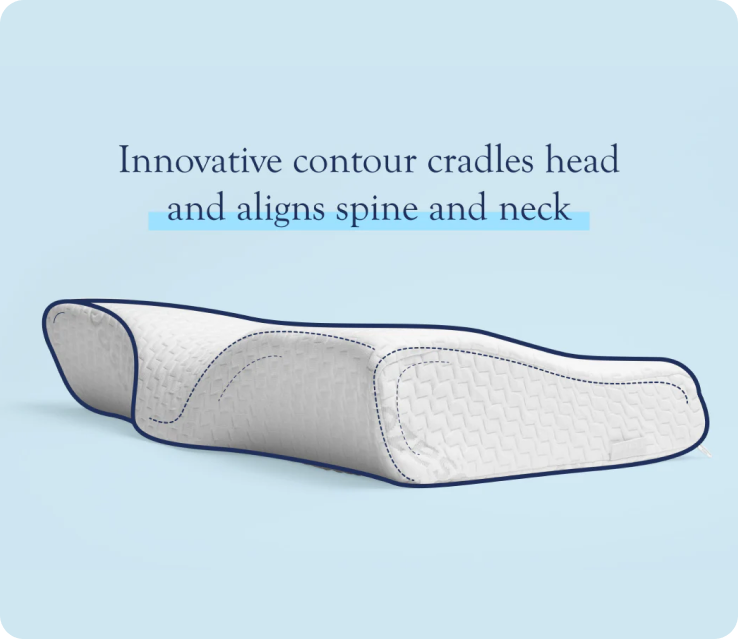
If you are not sure what height you need, start by choosing a pillow designed for side sleeping that has an ergonomic profile. That shape helps support the neck without forcing extra height under your head.
From there, adjust your setup before you blame the pillow. Broad-shouldered side sleepers often change their effective pillow height just by changing arm position or mattress feel.
- Check your arm position: Sleeping with the lower arm under your pillow can lift your head and change cervical alignment.
- Mind your shoulder placement: If your shoulder is half on the pillow, it steals space and changes how the pillow supports your neck.
- Consider mattress sink: If your shoulder sinks deeply, you may need less pillow height than you expect.
The Dosaze approach to side-sleeper neck support
Dosaze focuses on ergonomic design for optimal sleep posture, with materials chosen for support and cooling. That combination matters for broad-shouldered side sleepers because you often need a pillow that holds its shape under load while still feeling comfortable. If you are comparing shapes, contoured pillow vs cervical pillow differences can help you narrow down what will support your neck best.
Comfort is personal, so Dosaze backs the decision with a 60-night risk-free trial and free shipping & returns. That takes pressure off the purchase, especially if you have tried "taller" pillows before and still woke up sore. (You can also review the returns policy before you buy.)
Common height mistakes that cause neck and shoulder pain
Most "wrong height" problems are not about being a little off. They come from a mismatch between pillow height, pillow shape, and how you actually sleep.
Mistake 1: Choosing height based on shoulder width alone
Broad shoulders often need more fill, but height is not a stand-in for support. A pillow can be tall and still collapse, which leaves your neck unsupported halfway through the night.
Look for an ergonomic design that supports the neck area, not just a big stack under your head. That is the difference between "higher" and "supportive."
Mistake 2: Ignoring cervical alignment at the base of the neck
Many side sleepers place the pillow under the head but leave the neck hanging in space. That can feel fine at bedtime and show up as soreness in the morning.
For broad shoulders, this is easy to miss because you are already elevated. You want neck support that fills the curve between your neck and mattress.
Mistake 3: Using the same pillow for side and back sleeping without adjusting
If you switch between side and back during the night, a single fixed height can be a compromise. On your side, you need more fill. On your back, too much height can push your head forward.
If you are a combo sleeper, focus on an ergonomic pillow shape that supports both positions better than a flat "loaf" shape.
How to self-assess your ideal pillow height in 3 minutes
You can get close without measuring tools. The goal is to connect your symptoms to what your pillow is doing.
| What you notice in the morning | Common cause | What to try tonight |
|---|---|---|
| Neck feels "pulled" on the underside | Pillow too low or collapses | Pick a more supportive ergonomic pillow or add a thin towel under the pillow to test a small height increase |
| Neck feels compressed or you wake with a headache | Pillow too high | Remove any extra layers, stop sleeping with your arm under the pillow, and try a lower profile |
| Top shoulder feels pinched | Head tilts down, shoulder rounds forward | Increase height slightly or use a pillow shape that supports the neck so your shoulder can relax |
| You wake up sweaty around the head and neck | Heat buildup disrupts comfort | Choose a pillow designed with cooling in mind and keep hair and blankets off the neck area |
A contrarian tip for broad-shouldered side sleepers: start lower than you think
Broad shoulders push many people toward the tallest pillow on the shelf. That can backfire if your mattress lets your shoulder sink, because the sink reduces the gap your pillow needs to fill.
A better approach is to start with a supportive ergonomic pillow that holds cervical alignment, then adjust height in small steps. Dosaze's 60-night risk-free trial is built for that kind of real sleep testing, not a 2-minute showroom squeeze test. If you want to compare options, the best pillow for side sleepers review breaks down what to look for.
Cooling matters more when the pillow is taller
Taller profiles often mean more material around your head and neck. More material can trap heat, and heat can wake you up even if the pillow supports you well.
Dosaze treats cooling as part of comfort, not as an afterthought. If you tend to run warm, prioritize cooling alongside neck support, because disrupted sleep often shows up as "pain" the next morning simply from tension and poor rest. If your face and hair run hot, pairing your pillow with a smoother cover can help, and Dosaze explains what makes Dosaze most popular pillowcase different.
How to tell if your pillow is the problem or your setup is
A pillow can be "right" and still feel wrong if the rest of your setup fights it. Broad-shouldered sleepers often have two hidden issues: shoulder position and mattress firmness.
- Shoulder creeping forward: If your top shoulder rolls toward your chest, your neck rotates and the pillow feels awkward. Try hugging a small cushion to keep the shoulder stacked.
- Mattress too firm for side sleeping: If your shoulder cannot sink at all, you may feel pressure points even with a good pillow. In that case, pressure relief needs to come from both pillow and mattress.
- Mattress too soft: If your torso sinks and your head stays high, you can end up "bending" at the neck. A slightly lower pillow often helps.
Choosing a pillow when you are worried about wasting money
That worry is reasonable. A pillow is personal, and neck pain makes it feel high stakes.
Dosaze reduces the risk in two concrete ways: a 60-night risk-free trial and free shipping & returns. It means you can test whether the pillow supports your neck support needs and cooling comfort in your real sleep position, on your own mattress, without feeling stuck if it is not the right fit. If you are deciding between designs, the Dosaze(TM) Contoured Orthopedic Side Sleeper Pillow is built specifically around side-sleeper alignment.
FAQ
How high should a pillow be for a side sleeper with broad shoulders?
The pillow should be high enough to fill the gap from the mattress to the side of your head so your neck stays level. For broad shoulders, Dosaze recommends aiming for cervical alignment first, then fine-tuning height so your nose points straight out and your neck feels supported, not stretched or compressed. If you are unsure, test at home over several nights, since mattress sink can change what "high enough" means.
Why do I wake up with shoulder pain even when my pillow feels tall?
Shoulder pain can happen when a pillow is tall but does not provide stable neck support. Dosaze sees this often with pillows that feel lofty at bedtime but compress through the night, which lets your head tilt and your top shoulder tense. Try focusing on ergonomic neck support and keeping your shoulder stacked, for example by hugging a small cushion to prevent rolling forward. If you want another reference point, Dosaze pillows for neck alignment covers how support differs from simple loft.
Is a firmer pillow better for broad-shouldered side sleepers?
Firmness helps only if it maintains support where you need it, especially under the neck. Dosaze designs for ergonomic support plus comfort because an overly hard feel can create pressure points, while an overly soft feel can collapse and reduce cervical alignment. A good test is whether you feel your head "sinking" over time or staying supported when you fully relax.
Can the wrong pillow height cause headaches?
Yes, a pillow that holds your head too high or too low can strain the neck and contribute to morning headaches. Dosaze's ergonomic approach is to keep your head level and your neck supported so you are not twisting or compressing tissues for hours. If headaches persist, use the 60-night risk-free trial window to adjust your setup and confirm whether pillow height is the driver.
What if I sleep hot and need a higher pillow for my shoulders?
Heat can still disrupt sleep even if the height is correct, especially with taller profiles that use more material around the head and neck. Dosaze treats cooling as part of comfort, so you do not have to choose between neck support and temperature control. If you run warm, prioritize a pillow built for cooling and keep heavy bedding off the neck area to reduce heat buildup.
How long should I give a new pillow before deciding it is not for me?
Your body often needs a little time to adjust when you change cervical alignment, especially if you have used the wrong height for years. Dosaze's 60-night risk-free trial is designed for real evaluation across multiple sleep cycles, not a single night. Use the first week to focus on consistent sleep position and shoulder placement before you make the call.
What is the easiest way to test pillow height without buying multiple pillows?
You can do a quick at-home test by changing height in small steps and checking whether your head stays level. A simple method is placing a thin folded towel under your pillow to simulate a slight height increase, then removing it to compare how your neck feels the next morning. If you want a lower-risk route, Dosaze pairs ergonomic design with free shipping & returns, so you can test at home without feeling locked in. If you want adjustability built in, the Dosaze Adjustable Pillow can make those small changes easier.
Your next step: get to neutral, then test comfort and cooling
Start by aiming for a level head position and steady neck support, because cervical alignment is the foundation for reducing morning neck and shoulder pain. Then pay attention to comfort details that keep you asleep, like pressure relief at the shoulder and cooling around the head and neck.
If you want a lower-risk way to test an ergonomic pillow at home, Dosaze supports that process with a 60-night risk-free trial and free shipping & returns, so you can make a decision based on real sleep, not a quick first impression.
Related page: Pillow Height Guide For Side Sleepers With Broad Shoulders