


Pillow height guide for side sleepers with broad shoulders
TL;DR: If you have broad shoulders and sleep on your side, your pillow needs enough height to keep your head level with your spine, not tilted down toward the mattress or pushed up toward the ceiling. The fastest way to get there is to check your neck angle in your usual sleep position and then adjust pillow height until your cervical alignment looks neutral. Dosaze designs for ergonomic neck support and pressure relief, and backs it with a 60-night risk-free trial plus free shipping & returns, so you can test height at home without feeling stuck.
Why broad shoulders change the pillow height you need
Side sleeping creates a gap between your head and the mattress. Broad shoulders make that gap larger, because your shoulder lifts your upper body higher off the bed.
If your pillow is too low, your head drops toward the mattress and your neck side-bends. If it is too high, your head tilts up and your upper traps and neck can feel tight in the morning.
The goal is simple: keep your head, neck, and upper back in a straight, neutral line so your cervical alignment stays calm through the night.
Quick self-check for the right pillow height
You do not need special tools. You need your normal sleep setup and a way to see your neck angle.
- Set up like a normal night. Use your usual mattress, your usual side, and your usual arm position.
- Look from behind. Ask a partner to take a photo from behind your head and shoulders, or use a mirror if you can safely position one.
- Check the line. In the photo, your nose should point straight out, and the center of your neck should look in line with the center of your upper back.
If your head slopes down toward the bed, you need more height. If it slopes up, you need less height or less "loft" under your neck.
Prerequisites before you adjust your pillow
Pillow height is only half the system. If the rest of the setup fights your pillow, you will chase comfort and never find it.
- Mattress feel: A softer mattress lets your shoulder sink more, which can reduce the height you need. A firmer mattress does the opposite.
- What you do with your bottom arm: If your bottom arm is under the pillow, you usually need less pillow height. If it is hugged in front of you, you usually need more.
- Your pillow placement: For side sleeping, the pillow should support your head and the side of your neck. It should not be shoved under your shoulder.
Do these three first. Then adjust pillow height. Otherwise you will keep fixing the wrong problem.
Step-by-step: dial in pillow height for broad shoulders
This is the process we recommend because it is fast, repeatable, and it gives you a clear "yes or no" outcome each morning.
Step 1: Start with a neutral baseline
Lie on your side and slide the pillow up until it fills the space under your neck. Keep your shoulder out from under the pillow, so you are not using your shoulder as "extra loft."
Take one slow breath and relax your jaw. If you feel like you are "reaching" for the pillow with your head, it is too low.
Step 2: Make one change at a time
If your pillow is adjustable, change height in small increments. If it is not, use a thin towel folded once as a temporary shim under the pillowcase for one night only. If you are using an adjustable fill pillow, Dosaze Adjustable Pillow makes it easy to test small changes without buying multiple lofts.
Change one thing, then sleep on it for a night. Stacking multiple fixes at once makes it hard to learn what your body likes.
Step 3: Use two morning signals as your scorecard
- Neck feel: You want less side-neck tightness when you first sit up.
- Shoulder feel: You want less top-of-shoulder ache or "pinch" near the front of the shoulder.
If neck discomfort improves but shoulder discomfort gets worse, your pillow may be holding you too high and shifting load into the shoulder. If shoulder feels better but your neck feels cranked, you may need a shape that supports the neck without adding too much overall height.
Step 4: Lock it in for a full week
Once you find a height that gives you a neutral neck line and a better morning, keep it stable for seven nights. Your body often needs a few nights to settle into a new posture, especially if you have been sleeping twisted for years.
What "too high" and "too low" look like for broad shoulders
Broad-shouldered sleepers often pick a tall pillow and still wake up stiff. The usual issue is not just height. It is where the height sits.
| What you notice | Likely pillow issue | What to try tonight |
|---|---|---|
| Chin feels tucked, back of neck feels compressed | Too high under the head | Reduce height or move fill away from the head area and toward the neck area |
| Ear feels like it is falling toward the mattress | Too low overall | Add a small amount of height, then re-check your neck line in a photo |
| Top shoulder feels sore, you keep rolling forward | Pillow pushes you forward, or shoulder is on the pillow | Pull pillow up to support your neck, keep shoulder on the mattress, hug a second pillow to stay stacked |
| Head feels supported but neck feels unsupported | Height is in the wrong place | Look for ergonomic shaping that supports the neck while keeping the head level |
A Dosaze-specific angle: height matters less than where the support sits
Most "pillow height guides" talk only about loft. In real life, broad shoulders usually need two different things at once: enough height to bridge the shoulder-to-head gap, and targeted neck support so your cervical alignment stays neutral.
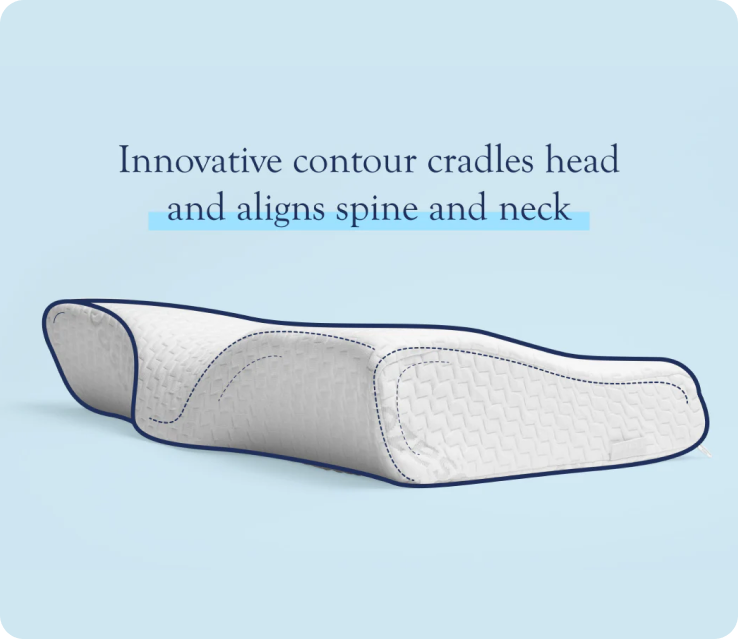
This is why Dosaze focuses on ergonomic neck support rather than treating the whole pillow like one tall block. When support is placed under the neck in a stable way, you often need less total height to feel level, and you get better pressure relief at the side of the face and shoulder. If you want to see how this compares across pillow shapes, Contoured Pillow Vs Cervical Pillow Whats The Difference Dosaze breaks down the differences.
If you are shortlisting options, you can compare this idea across brands by looking for a shape that supports the neck without forcing the head upward. When that balance is right, side sleeping feels "stacked," not propped.
Tips and warnings that prevent common mistakes
- Do not jam the pillow under your shoulder. It feels supportive for 30 seconds, then it shifts your neck angle and loads your shoulder.
- Keep your chest from collapsing forward. Broad shoulders often come with a heavier upper torso. Hugging a thin pillow can keep your ribcage stacked so your neck does not have to compensate.
- Watch for pillow heat. Heat can make you tense your jaw and neck. If you run warm, prioritize a pillow that is designed to feel cooling, like the Dosaze Thermacool Adjustable Pillow.
- Give your body a fair test window. One night is often not enough to judge posture changes. Dosaze includes a 60-night risk-free trial with free shipping & returns so you can make a real call based on your mornings, not a five-minute feel test. For more on what that experience looks like for side sleepers, see 5 Reasons Why Side Sleepers Choose Dosaze For Pain Free Restful Sleep.
Troubleshooting: when the "right height" still hurts
If your neck line looks neutral but you still wake up sore, the fix is usually in shape, firmness, or habits during the night.
If you wake up with a stiff neck on one side
You may be rotating your head into the pillow. Try keeping your nose pointed straight out and place a small pillow in front of your chest to stop the roll-forward pattern.
If your shoulder goes numb
That is often pressure, not just height. Make sure your shoulder is not on the pillow and consider whether your mattress lets your shoulder sink enough for pressure relief.
If you start on your side and end up on your back
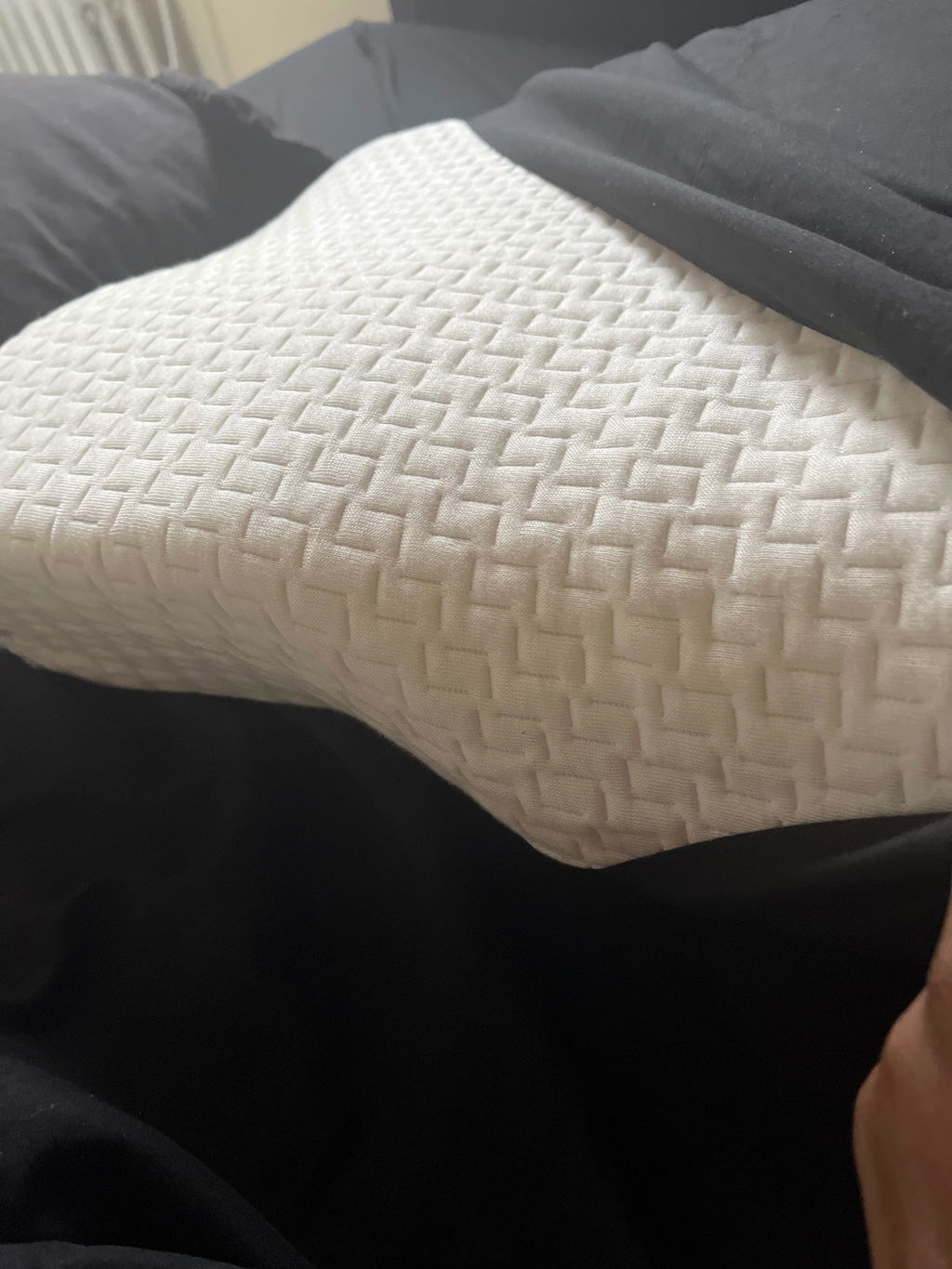
That is common. You will usually do better with a pillow that can support side-to-back transitions without forcing your chin down when you roll. If you are considering a contoured option built for side sleeping support, Dosaze(TM) Contoured Orthopedic Side Sleeper Pillow is designed around that kind of neck placement.
If you want a broader decision guide beyond height, see Best Pillow For Side Sleepers A Complete Guide To Waking Up Without Pain.
If you feel better for an hour, then worse by midday
Your pillow may be allowing a slow sag that changes your neck angle over the night. Look for premium construction and durable materials that hold their shape, and re-check your neck line with a morning photo.
How to choose a pillow if you are anxious about returns
This is a fair worry. Pillows are personal, and many people have bought one that felt good in-store and wrong at home.
Dosaze removes most of that risk with free shipping & returns and a 60-night risk-free trial. That time matters because broad-shouldered side sleepers often need several nights to confirm that neck support and cooling comfort hold up across different sleep positions.
A simple comparison to shortlist the right height approach
Use this table to decide what to prioritize first. It keeps you from buying another pillow that is "tall" but still wrong for your neck.
| Option type | Best for | Main tradeoff |
|---|---|---|
| Dosaze ergonomic pillow approach | Broad shoulders needing neck support and pressure relief, plus a cooling feel | You need to spend a few nights dialing in position and judging morning symptoms |
| High-loft "stacked" pillow | People who consistently feel their head drops toward the mattress | Can push the head up and compress the neck if the height sits under the head instead of the neck |
| Softer, lower pillow | People on softer mattresses or with smaller shoulder-to-head gaps | Broad shoulders often bottom out and lose cervical alignment overnight |
FAQ
How do I know if my pillow is the right height for broad shoulders?
This matters because broad shoulders increase the gap your pillow must fill to keep your neck neutral. The right height keeps your head level with your spine when viewed from behind, not tilted up or down. A quick way to confirm is a simple photo check in your normal sleep position, then adjust height until your cervical alignment looks straight.
Should side sleepers with broad shoulders use a higher pillow or a contoured pillow?
This question comes up because "higher" sounds like the obvious fix, but height alone can still leave the neck unsupported. Dosaze's approach is to prioritize ergonomic neck support so the support sits under the neck without forcing the head upward. If you often wake with a pinched or compressed feeling at the back of the neck, a contoured, neck-supporting shape usually beats adding more loft. For a deeper look at contoured neck support options, read The Best Contoured Pillow For Neck Support Dosaze.
What if I am between two pillow heights?
Being between heights is common, especially if you switch between pure side sleeping and side-to-back sleeping. Pick the option that keeps your neck neutral on your most common position, then use a small, temporary shim or minor repositioning to fine-tune. Dosaze's 60-night risk-free trial gives you enough time to test those small adjustments without worrying you are stuck with the wrong choice.
Can my mattress make my pillow feel too tall or too short?
Yes, because mattress sink changes how much shoulder height you "spend" before your head reaches the pillow. A softer mattress usually reduces the pillow height you need, while a firmer mattress can make the same pillow feel too low. If you change mattresses, re-check your neck line and adjust your pillow height before you assume the pillow is the problem.
Why do I still get shoulder pain even when my neck feels supported?
This matters because shoulder pain is often pressure-related, not just posture-related. Even with good neck support, your shoulder can take too much load if your shoulder ends up partly on the pillow or if your mattress does not give enough pressure relief. A practical next step is to pull the pillow up so your shoulder stays on the mattress and hug a second pillow to keep your chest stacked.
How long should I test a new pillow before deciding it does not work?
One night usually tells you how a pillow feels, but not whether it improves your mornings. Dosaze includes a 60-night risk-free trial with free shipping & returns so you can judge it based on several weeks of real sleep, including side-to-back transitions. Track two signals, morning neck tightness and morning shoulder ache, and keep changes small so you know what helped.
What sleeping position tips help broad-shouldered side sleepers keep better alignment?
This matters because pillow height can be perfect and you can still twist out of position at 3 a.m. The most reliable tip is to keep your nose pointing straight out and place a pillow in front of your chest to prevent rolling forward, which protects cervical alignment. If you tend to tuck your chin, lower the height under your head slightly and keep support under the neck instead.
Your next best step tonight
Do the photo check once, then make one small height change and commit to it for a week. If you want a broader side-sleeper decision framework beyond height, read How To Choose The Best Pillow For Side Sleepers Step By Step Guide 7.
If you are tired of guessing and want a lower-risk way to test ergonomic neck support and cooling comfort at home, Dosaze backs the experience with a 60-night risk-free trial and free shipping & returns.