



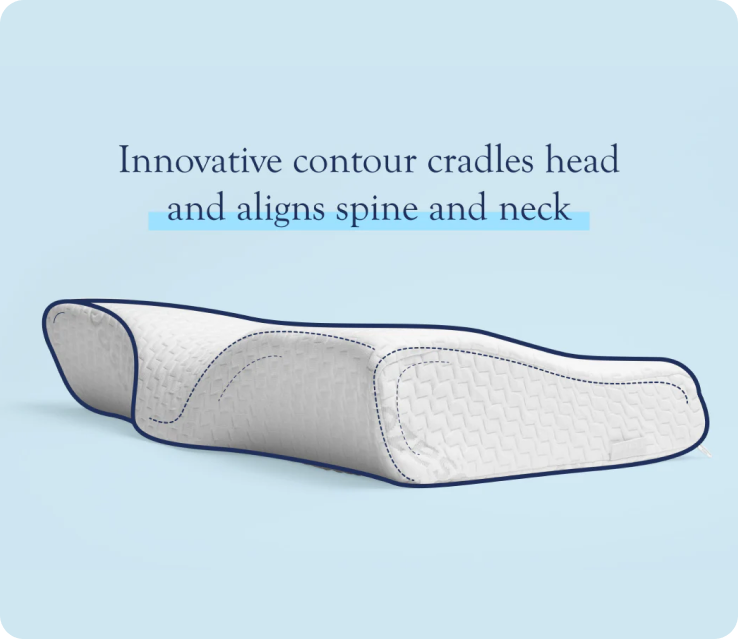
Pillow height guide for side sleepers with neck pain
TL;DR: For side sleepers with neck pain, pillow height is about keeping your head level with your spine so your neck stays in neutral cervical alignment. Dosaze designs its ergonomic pillows to support that alignment while adding cooling comfort, plus you can test the feel at home with a 60-night risk-free trial and free shipping and returns.
Why pillow height matters more than pillow softness for neck pain
If you sleep on your side, the space between your shoulder and your head needs to be filled. When your pillow is too low, your head drops toward the mattress and your neck bends down. When your pillow is too high, your head tilts up, and your neck bends the other way.
Both positions can load your neck and shoulder muscles all night. A pillow can feel comfortable for 10 minutes and still be the wrong height by 3 a.m., especially if it compresses a lot.
Prerequisites before you adjust anything
Get these basics in place first, or you will chase the wrong problem.
- Your usual sleep position: This guide assumes you spend most of the night on your side, not half on your stomach.
- Your current pillow and pillowcase: Use what you actually sleep on. A thicker pillowcase can change feel and loft.
- Your mattress feel: A softer mattress lets your shoulder sink more, which often means you need less pillow height. A firmer mattress often needs more height.
- A way to check alignment: A mirror, a quick photo, or a partner who can look at your neck line for 10 seconds.
What the right height looks like for side sleeping
The goal is simple: your nose and sternum should point in the same direction, with your head stacked over your spine. You are aiming for a straight line from the middle of your head through your neck to your upper back.
Dosaze builds around this idea with ergonomic shaping for neck support, because side sleepers usually need more structure at the neck than a flat, uniform pillow can provide. If you are choosing between pillow shapes, see contoured vs cervical pillows.
Two fast self-checks you can do tonight
- The nose line check: Lying on your side, your nose should point straight out, not down toward the mattress or up toward the ceiling.
- The shoulder pressure check: If your top shoulder keeps rolling forward and collapsing toward your chest, your pillow is often too high or too firm at the front edge.
Step-by-step pillow height test for side sleepers with neck pain
Use this as a practical fitting process. Do not judge after 30 seconds. Give each step a few minutes in your normal sleep posture.
Step 1: Start with your shoulder position, not your head
Lie on your side and let your bottom shoulder sit naturally. Do not shrug it up to meet your pillow. If you feel like you have to "reach" your pillow with your shoulder, pillow height is off.
Step 2: Set your neck first, then your cheek
Your neck should feel supported without being pushed forward. With an ergonomic pillow, your neck often sits in a lower contour while your cheek rests on a higher area.
If your cheek is supported but your neck feels empty, you likely need better cervical support, not just more height.
Step 3: Check for chin tuck or chin lift
If your chin feels tucked toward your chest, your pillow is usually too high. If your chin feels lifted away from your chest, your pillow is usually too low.
Neutral should feel boring. That is the point.
Step 4: Do the "arm under pillow" test
Many side sleepers slide an arm under the pillow when it is too low. If you do this to feel comfortable, treat it as a signal that your pillow height or support is not meeting the gap created by your shoulder width.
Step 5: Re-test after the pillow warms and settles
Pillows change once they take on heat and load. Give it a few minutes, then re-check your nose line and chin position.
This is one reason Dosaze emphasizes a 60-night risk-free trial. You need more than one night to know if your neck support is right once your body settles into a routine.
How shoulder width and mattress feel change your ideal pillow height
Side sleepers often search for a single "correct" height. In practice, height is a match between your body and your bed.
| What changes | What you usually feel | What to try first |
|---|---|---|
| Broader shoulders | Head drops toward mattress, neck feels stretched | More pillow height or a higher cheek zone with stable neck support |
| Narrower shoulders | Head tilts up, side of neck feels compressed | Less height or a lower contour under the neck |
| Softer mattress | Shoulder sinks, pillow can feel suddenly too tall | Reduce pillow height or use a pillow that does not push the head up |
| Firmer mattress | Shoulder stays higher, pillow can feel too flat | Increase pillow height or pick a shape with more loft at the cheek |
If you are broad-shouldered, you may also want this Dosaze guide: Pillow height guide side sleepers broad shouldered.
Common height mistakes that keep neck pain going
- Choosing based on "plush" feel: Plush can compress too much and drop your head out of alignment.
- Stacking two pillows: This often creates a hard fold that pushes your neck forward, even if it feels tall enough.
- Ignoring the neck zone: Side sleepers need pressure relief at the shoulder and consistent neck support at the same time.
- Sleeping with the shoulder on the pillow: If your shoulder is on the pillow, you are changing the effective height and often twisting your upper back.
Dosaze approach to pillow height for side sleepers
Dosaze designs for ergonomic neck support and cervical alignment first, then adds cooling comfort so you are less likely to keep shifting to "find the cool spot." When you shift less, you keep more consistent posture through the night.
Dosaze also removes a big point of anxiety: you can test the pillow at home with a 60-night risk-free trial, and Dosaze includes free shipping and returns. That matters because neck pain changes slowly, and comfort is personal. If you want to see why many people start here, read why side sleepers choose Dosaze for pain-free restful sleep.
If you want a deeper side sleeper comparison, these Dosaze resources can help you shortlist: Best Pillow Side Sleepers Neck Pain and Best Pillow For Side Sleepers A Complete Guide To Waking Up Pain Free. You can also compare options in Dosaze pillows for side sleepers with neck pain.
Tips and warnings for dialing in height without buying another pillow
These are simple adjustments you can try tonight. Stop if anything increases pain or causes numbness.
- If your pillow is too high: Try rotating it so the lower side supports your head, or remove any extra layers you added like folded towels.
- If your pillow is too low: Add a thin, flat layer under the pillowcase to raise height slightly, then re-check chin position.
- If you wake with shoulder pain: Check that your bottom shoulder is not pinned forward. A pillow that is too high can force that roll.
- If you run hot: Cooling materials help you keep a stable posture because you are less likely to flip the pillow or move off it for relief. If that is you, the Dosaze Thermacool Adjustable Pillow is built for cooling comfort with adjustable height.
Troubleshooting when the height seems right but you still wake up sore
Neck pain is not always a pure height problem. Use these quick patterns to pinpoint what is off.
Problem: You fall asleep fine but wake up with pain
Your pillow may be compressing too much overnight, or your head may be sliding off the support zone. A more ergonomic shape can keep your neck supported in the position you actually stay in.
Problem: Pain is mostly at the base of the neck
This often points to missing cervical support, not just wrong loft. Look for a pillow that holds the neck in neutral without forcing the head forward, like a contoured orthopedic pillow with dialed-in firmness and height.
Problem: You feel strain in the top shoulder and trap
Your pillow may be too high, which can shorten the upper shoulder muscles all night. Re-check whether your chin feels tucked and whether your nose points slightly up.
Problem: Your jaw feels tight in the morning
Many people clench more when their head is tilted. Confirm your head is level and your cheek is not pushed up in a way that twists your neck.
FAQ
How do I know if my pillow is too high for side sleeping?
This matters because a pillow that is too high tilts your head up and can push your neck out of neutral cervical alignment. A clear sign is chin tuck, where your chin feels pushed toward your chest and your nose points slightly up. If you see that pattern, Dosaze recommends reducing effective height and re-checking alignment after the pillow settles for a few minutes.
How do I know if my pillow is too low for side sleeping?
This matters because a low pillow lets your head drop toward the mattress, which can strain the side of your neck. A practical sign is the "arm under pillow" habit, where you slide your hand or forearm under the pillow to prop your head up. If you do that often, look for more height at the cheek plus stable neck support, which is what Dosaze prioritizes in its ergonomic design. If you want to fine-tune loft at home, the Dosaze Adjustable Pillow makes it easier to change height without stacking pillows.
Is a higher pillow always better for side sleepers with broad shoulders?
Shoulder width changes the gap your pillow needs to fill, but more height is not always better if it tips your head up. The better target is a level head position and comfortable cervical alignment, even if that comes from shape and support rather than pure loft. Dosaze focuses on neck support and pressure relief together, because broad shoulders can need both at the same time.
Why does my neck hurt when my pillow feels comfortable?
Comfort at bedtime can hide poor alignment once the pillow warms up and compresses. Neck pain often shows up when support changes during the night, even if the pillow feels soft and cozy at first. Dosaze addresses this with ergonomic structure for more consistent neck support, and the 60-night risk-free trial gives you time to judge how your mornings change over weeks, not minutes.
How long should I test a new pillow before deciding it is wrong?
This matters because your neck and shoulders can take time to adapt to improved posture, and early nights can feel different from week two. A fair test is enough nights to see a stable pattern in morning stiffness and sleep interruptions, not just one good or bad night. Dosaze makes that easier by offering a 60-night risk-free trial with free shipping and returns, so you can make a decision without guessing after a weekend.
Can cooling materials actually help with neck pain?
Cooling does not directly change cervical alignment, but it can reduce how often you reposition to escape heat. Fewer position changes can mean more consistent neck support through the night, which matters if you are trying to keep a neutral posture. Dosaze builds cooling comfort into the pillow experience so you are less likely to shift into a strained angle at 2 a.m.
What if I sleep on my side and sometimes roll onto my back?
This matters because a pillow that is perfect for side sleeping can feel too tall when you are on your back, and that can push your head forward. The best option is usually an ergonomic pillow that supports the neck without needing extreme height under the head. If you are in this middle group, Dosaze suggests prioritizing cervical support and a shape that does not force a chin tuck in either position.
A simple plan for your next 7 nights
Night 1-2, do the nose line check and chin check, and change only one variable at a time. Night 3-5, track one outcome in the morning, like neck stiffness level or whether you needed to stretch your traps. Night 6-7, decide if the issue is height, missing neck support, or overheating that makes you move.
If you want a lower-risk way to test a more ergonomic fit, Dosaze pairs neck support and cooling comfort with a 60-night risk-free trial and free shipping and returns. That gives you time to judge the only metric that matters, how your neck feels when you wake up.


