



Pillow height guide for side sleepers with neck pain
TL;DR: For side sleepers with neck pain, the right pillow height is the one that keeps your neck in neutral cervical alignment, so your head is not tipped up or dropped down toward the mattress. Dosaze designs ergonomic pillows to support that neutral posture, and backs the decision with a 60-night risk-free trial plus free shipping & returns.
Why pillow height matters more when you sleep on your side
Side sleeping creates a gap between your head and the mattress. Your shoulder width determines how big that gap is, and your pillow height needs to fill it without pushing your head out of line.
When pillow height is off, your neck spends hours bent to one side or tilted up. That is a common reason people wake up with neck and shoulder pain even if their mattress feels fine.
What "right height" means in plain terms
The goal is simple: your nose, chin, and breastbone should line up so your neck looks straight from the front. If your head angles down toward the mattress, the pillow is too low. If it angles up toward the ceiling, it is too high.
Prerequisites before you change pillow height
Before you start adjusting anything, set up a consistent baseline. If you change three things at once, you will not know what fixed the problem.
- Use your usual mattress and sheet set. Mattress firmness changes how much your shoulder sinks, which changes the height you need.
- Pick one sleep position to optimize first. This guide is for side sleeping. If you start on your side but end up on your back, choose the position you spend most of the night in.
- Wear or remove your hair the way you normally sleep. A bun, thick braid, or clip can lift your head and throw off your test.
- Have a folded towel or thin blanket nearby. You will use it as a temporary "height shim" for testing.
A quick self-check to estimate the pillow height you need
You do not need special tools. You need a mirror photo or a partner, plus 30 seconds of honest feedback.
- Lie on your side in your normal spot. Put your current pillow under your head the way you always do.
- Relax your shoulders. Do not shrug or "pose" your neck into place.
- Look at your neck line. Ask a partner to check if your head is level with your spine, or take a quick photo from the front (face-on, not from above).
- Note what you see. Head tipped down means "too low." Head tipped up means "too high."
This check is more useful than measuring inches because it accounts for your shoulder width, your mattress give, and how you naturally settle into bed.
Step-by-step: How to dial in the right height without buying another pillow first
If you wake up with neck pain, you want a fast signal on what needs to change. This method gives you that signal in 3-5 nights.
Step 1: Confirm whether you need higher or lower
Use the self-check above, then do this simple test. Add a folded towel under your pillow for one night. If your neck feels worse or you wake up with stiffness at the base of your skull, you likely went too high.
Remove any extra layers for the next night. If your neck feels better, you probably need a bit more height than your current pillow provides, just not as much as that towel added.
Step 2: Adjust in small increments for 2-3 nights
Big changes can feel "supportive" at first and irritating by morning. Adjust in small steps and give each change two nights unless pain is sharp or clearly worse.
- If you need more height, use a thinner fold of towel, or place a small towel only under the neck area instead of the whole pillow.
- If you need less height, remove extra layers, then try pulling some fill away from the neck area (if your pillow allows it) or switching to a thinner pillow temporarily.
Step 3: Lock in neck support, not just head height
Many side sleepers chase "loft" and miss the real issue: the neck needs steady support so it does not collapse into the pillow over the night.
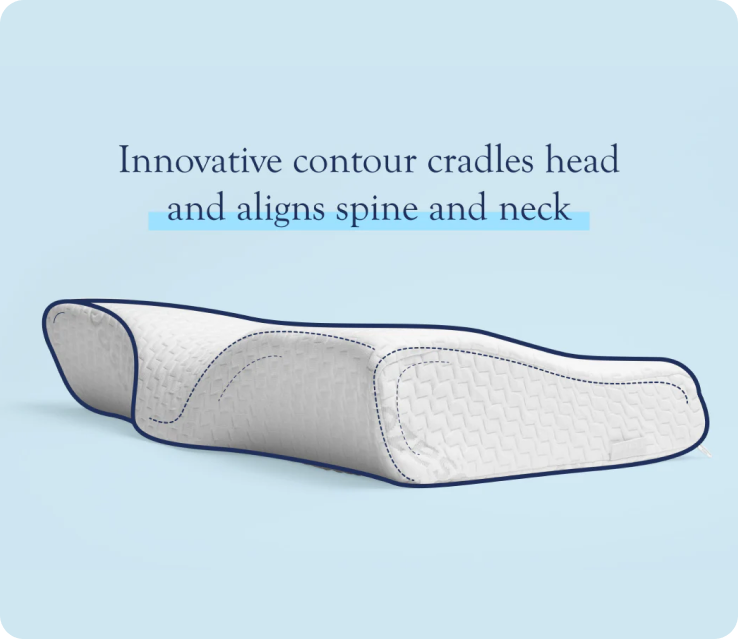
This is where an ergonomic shape helps. Dosaze focuses on neck support and cervical alignment, so the pillow supports the curve of your neck while keeping your head level. If you are comparing shapes, contoured vs cervical pillows is a useful distinction to understand before you buy.
Step 4: Recheck alignment in the morning, not only at bedtime
A pillow can look perfect at 10 p.m. and fail by 4 a.m. if the materials compress too much or trap heat and make you toss and turn.
Do a quick morning audit for three days: did you wake up on your side, did your shoulder feel jammed forward, and did you need to stretch your neck right away. Those patterns usually point back to height and support.
Common side sleeper profiles and what they usually need
You do not need a single "correct" number. You need a repeatable way to match pillow height to your body and bed.
| Side sleeper profile | What usually causes neck pain | Height direction to test first | Practical fix to try tonight |
|---|---|---|---|
| Broad shoulders or athletic build | Pillow feels "flat," head drops toward mattress | Higher | Add a thin towel under the pillow, then reduce to the smallest amount that keeps your neck straight |
| Narrow shoulders or petite frame | Head is pushed up, neck bends away from mattress | Lower | Remove any extra layer, then try a thinner pillow or shift fill away from the neck area |
| Soft mattress or deep shoulder sink | Shoulder sinks, but pillow stays tall, head tilts up | Lower | Try less pillow height and hug a pillow in front to keep your top shoulder from rolling forward |
| Firm mattress or minimal sink | Shoulder stays high, head drops down without enough fill | Higher | Test a small height increase under the pillow just for your neck side |
| Restless sleeper who flips sides | Inconsistent support, frequent repositioning | Neutral, stable support | Choose a pillow that keeps shape and supports cervical alignment on both sides |
Dosaze perspective: what most "pillow height" advice misses
Height is only half the story. The other half is compression control, how much the pillow sinks after 30, 60, and 180 minutes under your head and neck.
This is why Dosaze focuses on ergonomic structure and scientifically designed materials that balance support with cooling comfort. If your pillow runs hot, you shift positions more, and even a "perfect" height stops being perfect at 2 a.m. For more context on how Dosaze approaches posture, see Dosaze pillows for neck alignment.
If you are nervous about getting it wrong, Dosaze reduces the risk with a 60-night risk-free trial and free shipping & returns. That matters because neck pain often needs a week or two of consistent alignment before you know whether a change is working.
Tips and warnings that prevent "new pillow" regret
- Do not stack two pillows for side sleeping neck pain. It often creates a high ridge that bends your neck, even if it feels plush for a few minutes.
- Keep your shoulder out from under the pillow. If your shoulder is on the pillow, you are effectively increasing height and pushing your head up.
- Support your top arm. Hugging a small pillow can reduce shoulder roll, which helps your neck stay neutral.
- Give changes a fair test. If you switch pillow height every night, your body never adapts and the signal stays noisy.
- Stop if symptoms feel sharp or worsening. A pillow should feel comfortably supportive. If you get numbness, tingling, or severe pain, return to a neutral setup and consider professional advice.
Troubleshooting: If your neck still hurts after fixing height
If your alignment looks good but pain sticks around, the issue is usually one of these. Fixing it can be faster than buying a third pillow.
You feel pain at the base of your skull
This often happens when the pillow props your head up but does not support the neck curve. Try slightly less height and add a small roll under the neck area only, so the head is not pushed forward.
You wake up with shoulder pain more than neck pain
Your shoulder may be rolling forward, which pulls on the neck. Hug a pillow to keep your chest open, and make sure your pillow height is not so high that it forces your shoulder forward.
You fall asleep fine but wake up worse
Your pillow may be compressing overnight or overheating. Look for more stable neck support and cooling comfort so you do not shift into awkward angles while half asleep.
You wake up and your ear feels "crunched"
This is a pressure relief issue. Even with correct height, a pillow that feels too firm at the ear can make you reposition and lose alignment.
How to choose a pillow if you are buying, not adjusting
If you have done the towel test and you know you need "higher" or "lower," shop with that information. Do not shop by hype words like "extra loft" alone.
| What to look for | Why it matters for side sleepers with neck pain | What Dosaze emphasizes |
|---|---|---|
| Ergonomic shape | Supports cervical alignment instead of relying on height alone | Ergonomic design engineered for optimal sleep posture |
| Stable neck support | Prevents overnight collapse that changes your effective height | Scientifically designed materials for support |
| Cooling feel | Less tossing and turning, more consistent posture | Cooling comfort built into the material approach |
| Low-risk trial and returns | Neck pain needs real nights, not a 5-minute test | 60-night risk-free trial plus free shipping & returns |
| Premium construction | Durability helps height and support stay consistent over time | Premium materials and durable build (as a brand standard) |
FAQ
How do I know if my pillow is too high for side sleeping?
This matters because a pillow that is too high bends your neck away from the mattress for hours. Your pillow is likely too high if your head tilts up toward the ceiling or your chin feels tucked when you lie on your side. A simple check is to take a face-on photo in bed and look for a straight line from your nose through the center of your chest.
How do I know if my pillow is too low for side sleeping?
A pillow that is too low lets your head fall toward the mattress, which strains the side of your neck. Your pillow is likely too low if your ear feels closer to your shoulder and your head angles down instead of staying level. Try one night with a very thin towel under the pillow and see if morning stiffness improves.
Is a firmer pillow better for neck pain as a side sleeper?
Firmness matters because side sleepers need neck support that does not collapse overnight. For neck pain, a pillow is better when it holds cervical alignment consistently, not when it simply feels firm at first touch. Dosaze focuses on ergonomic support plus cooling comfort so you can stay in one aligned position longer instead of shifting to find relief.
How long should I test a new pillow before deciding?
This matters because your neck often needs several nights of consistent posture to settle. A fair test is multiple full nights, not a quick lay-down test at bedtime. Dosaze supports that reality with a 60-night risk-free trial and free shipping & returns, so you can evaluate real sleep instead of guessing in a store.
Can pillow height cause shoulder pain too?
It can, because pillow height affects where your shoulder sits and whether it rolls forward. If your pillow is too high, it can push your head and top shoulder forward, which can trigger shoulder tightness that you feel in the morning. Many side sleepers get relief by lowering height slightly and hugging a small pillow to keep the upper shoulder from collapsing inward.
What if I switch between side and back sleeping during the night?
This matters because the "perfect" side-sleep height can feel too tall on your back. A practical target is a pillow that supports your neck in both positions without forcing your chin down when you roll onto your back. Dosaze designs around neck support and cervical alignment so the pillow feels stable when you shift, rather than requiring you to rebuild your setup every time you turn.
Do cooling pillows help with neck pain, or is that just comfort?
Cooling matters because overheating often makes people toss and turn, which breaks alignment. A cooling feel will not "fix" neck pain on its own, but it can help you stay in a comfortable posture long enough for neck support to do its job. Dosaze pairs cooling comfort with ergonomic support so you are not choosing between temperature and alignment. If you also use elevation for reflux or congestion, the Dosaze Therapeutic Cooling Wedge Pillow is designed to stay supportive while still feeling cool.
Make your next change small and measurable
Pick one adjustment tonight: slightly higher, slightly lower, or better neck support. Take a quick alignment photo, then give it 2-3 nights before you judge it.
If you want a lower-risk way to find the right setup, Dosaze makes ergonomic pillows built for neck support, cervical alignment, pressure relief, and cooling comfort, and backs them with a 60-night risk-free trial plus free shipping & returns. If you want a multi-piece setup, the Dosaze Alignment Bundle pairs a contoured orthopedic pillow with a wedge kit.
Related reading: Best Pillow Side Sleepers Neck Pain and Pillow Height Guide Side Sleepers Broad Shouldered.


