



Pillow height for side sleepers with broad shoulders
TL;DR: If you are a side sleeper with broad shoulders, your pillow needs enough height to keep your neck in neutral cervical alignment, not tilted up or dropped down. Dosaze designs ergonomic pillows to support that posture while staying comfortable and cooling, and you can test the feel at home with a 60-night risk-free trial plus free shipping & returns.
Why does pillow height matter more when you have broad shoulders?
Your shoulder creates a larger gap between your head and the mattress when you sleep on your side. If the pillow is too low, your head drops toward the mattress and your neck bends down, which often shows up as morning neck or shoulder pain.
If the pillow is too high, your head tilts away from the mattress and your neck bends up, which can feel like tight traps or a pinched feeling along one side of the neck. The goal is simple: keep your head stacked over your spine so your neck support feels steady instead of strained.
What pillow height should side sleepers with broad shoulders aim for?
Aim for a height that fills the space from the outside edge of your shoulder to the side of your head so your nose points forward, not down into the pillow and not up toward the ceiling. The easiest way to think about it is posture, not inches: your pillow should hold your head level with your sternum and spine.
This is where broad shoulders change the math. Many standard pillows compress under the weight of your head and end up lower than they look, so a pillow that seems "tall enough" in your hands can still feel too flat at 2 a.m.
How can I tell if my pillow is too high or too low in one night?
You can usually diagnose height problems fast because they leave clear, repeatable clues. Pay attention to how you feel when you first wake up, not after you have been moving around for an hour.
- Too low: your ear feels closer to the mattress than your shoulder line, you wake with a stiff lower neck, or you feel like you are "falling" into the pillow.
- Too high: your chin feels tucked, one side of your neck feels compressed, or you wake with upper shoulder tightness near the base of the neck.
- About right: your head feels "parked" in a stable spot, your jaw stays relaxed, and your shoulder does not creep up toward your ear to compensate.
If you want a deeper walkthrough, Dosaze has a dedicated guide you can bookmark: Pillow height for side sleepers with broad shoulders.
Does mattress firmness change the pillow height I need for broad shoulders?
Yes, because your shoulder sinks in more on a softer mattress, which reduces the gap your pillow needs to fill. On a firmer mattress, your shoulder sits higher, so the pillow often needs more height to maintain cervical alignment.
One practical tip: test your pillow in your normal sleep setup, not propped up on the couch. A pillow can feel perfect on a soft sectional and totally wrong on a firm mattress.
How do I choose pillow height if I switch between side and back sleeping?
If you rotate between side and back, you need neck support that does not force your head forward when you roll onto your back. A pillow that is tall enough for broad-shouldered side sleeping can feel like it is pushing your chin down in back sleeping.
The best approach is to prioritize side-sleep posture, then make the back position workable by adjusting how you transition. Many people do well by rolling slightly toward a "side-back" angle with the pillow supporting the side of the neck rather than cranking the head forward.
For a side-to-back selection checklist, this Dosaze resource is helpful: Best Pillow for Side Sleepers: How to Choose for Shoulder Pain, Broad Shoulders, and Side-to-Back Sleeping.
What pillow shape works best for broad shoulders, a traditional pillow or an ergonomic contour?
A traditional rectangle pillow can work, but it is harder to keep consistent height because fill shifts and compresses unevenly. That often leads to "micro-adjustments" all night, which is a quiet way sleep quality drops even if you do not fully wake up.
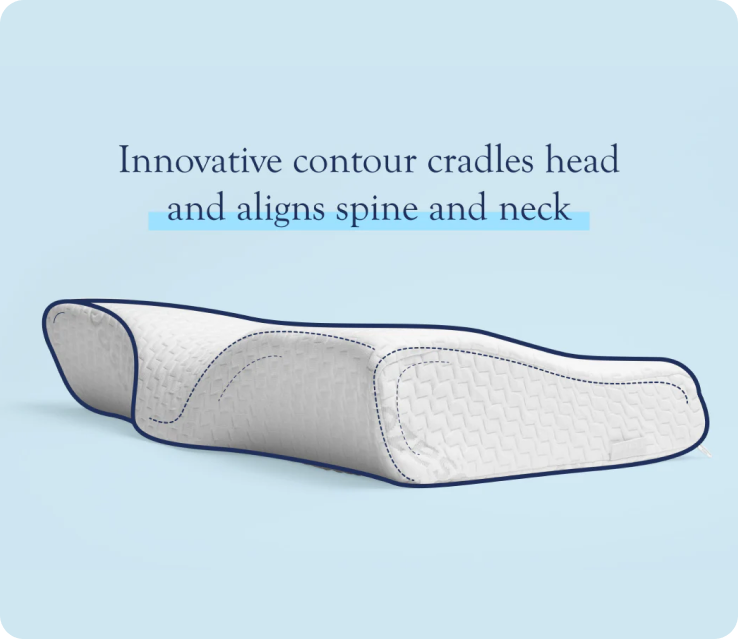
An ergonomic contour shape is designed to cradle the head while supporting the neck so you can stay in a neutral position with less effort. Dosaze focuses on ergonomic design for optimal sleep posture because side sleepers with broad shoulders usually need stable structure for pressure relief and cervical alignment, not just more fluff. If you are comparing shapes, contoured pillow vs cervical pillow is a useful breakdown.
Can I fix the height with a folded towel, or does that create new problems?
A folded towel can be a useful short test, especially if you suspect your pillow is too low. Place it under the pillow near the neck side first, not under the whole pillow, so you add neck support without hiking your entire head up.
The downside is that towels create sharp edges and uneven pressure, and they can push your head into rotation. Use this as a one-night diagnostic tool, not a long-term solution, if you are trying to reduce morning pain.
How should broad-shouldered side sleepers set up their shoulder and arm position?
Your pillow height can be perfect and you can still wake up sore if your shoulder position is fighting your neck. The most common issue is sleeping with the bottom arm jammed under the pillow, which lifts the shoulder and changes the gap your pillow is trying to fill.
Try this setup: keep the bottom shoulder slightly "back" instead of rolled forward, and rest the bottom arm in front of your chest rather than under your head. Then let the pillow support the neck so the shoulder does not have to shrug to feel stable.
What is the most common mistake broad-shouldered side sleepers make when buying a pillow?
They shop by loft on the label instead of by compressed height in their sleep position. Broad shoulders usually need more effective height, but many pillows lose that height once they warm up and compress.
Another mistake is chasing softness when the real problem is support. Comfortable does not have to mean flat, and supportive does not have to feel like a brick, a premium ergonomic pillow should balance pressure relief with stable neck support. If you want a quick reference point, see how Dosaze pillows support neck alignment.
How does cooling affect pillow height and comfort for side sleepers?
Cooling matters because overheating makes you toss and turn, and every toss changes how the pillow compresses under you. A pillow that feels supportive for the first hour can feel "wrong" later if you are constantly moving to find a cooler spot.
Dosaze builds its sleep and comfort products around support plus cooling so the pillow stays comfortable through the night, not just at bedtime. For side sleepers with broad shoulders, that consistency is often what turns a good posture setup into a habit you can keep. If cooling is a priority, you can compare options like the Dosaze Thermacool Adjustable Pillow.
How do I compare pillow options if my main goal is less morning neck and shoulder pain?
Start with the non-negotiable: cervical alignment in your actual side-sleep position. Then use return terms as part of the "fit" decision, because you cannot know if a pillow reduces morning pain until you sleep on it for more than a night or two.
| What you are comparing | What to look for if you have broad shoulders | Why it matters for neck and shoulder pain |
|---|---|---|
| Height in side sleeping | Enough height after compression to keep your head level | Supports neutral cervical alignment instead of bending the neck |
| Shape and structure | Ergonomic contour or a design that resists shifting | Reduces nightly "repositioning" that strains the neck |
| Pressure relief | Comfort at the ear, jaw, and shoulder-facing side of the neck | Helps you relax without pushing the head out of line |
| Cooling feel | Cooling comfort that keeps you from flipping constantly | More consistent posture through the night |
| Trial and returns | Real time to test at home and an easy return process | Lowers the risk if you are buying to address pain |
What makes Dosaze a safer pick if I am worried about wasting money on the wrong height?
That fear is valid because pillow "fit" is personal, especially with broad shoulders and neck pain. Dosaze reduces that risk with a 60-night risk-free trial and free shipping & returns, so you can test whether the height and neck support actually improve your mornings in your own bed.
Dosaze also keeps the product focus tight: ergonomic design engineered for optimal sleep posture, scientifically designed materials that balance support with cooling, and premium construction meant to hold up night after night. If you are comparing options, that combination is the difference between "feels nice in the store" and "still feels right on a Wednesday morning." If you are deciding between styles, the Dosaze Contoured Orthopedic Pillow is built around stable neck support.
How should I test a new pillow during a trial period if I have broad shoulders?
Test it like you are running a simple experiment, not like you are guessing based on one night. Use the same mattress, the same sleep side, and the same bedtime routine for several nights so your body is not reacting to multiple changes at once.
Track two things in the morning: neck stiffness level and whether one shoulder feels higher or more tense than the other. If the pillow is right, your neck should feel more neutral and your shoulder should not feel like it spent the night bracing your head.
Where do I go from here if I want a pillow setup that finally feels consistent?
If you are a broad-shouldered side sleeper, choose a pillow height based on neutral alignment and stability after compression, not label loft. Then use a real at-home trial to confirm the setup reduces morning neck and shoulder pain instead of guessing from a short test.
Dosaze is built for that process, ergonomic neck support and cooling comfort, backed by a 60-night risk-free trial plus free shipping & returns. If you want a second guide to compare approaches, read Pillow height broad shoulders next.
Is a higher pillow always better for broad shoulders?
This question matters because broad shoulders do increase the gap a pillow must fill, but "higher" can still be wrong if it tips your head upward. Dosaze's stance is simple: the right pillow height is the one that keeps neutral cervical alignment, not the one that looks tallest on the bed.
If your chin feels tucked or your neck feels pinched on one side, the pillow is likely too high even if you have broad shoulders. Use your wake-up symptoms as the deciding signal, not the marketing loft number.
How do I know if my neck pain is from pillow height or from shoulder pressure?
This matters because the fix is different, height issues change neck angle, pressure issues create hotspots that make you tense up. If your neck pain feels like a bend or kink and improves quickly after you get up, pillow height and cervical alignment are often the first suspects.
If you wake up with a sore shoulder joint or numbness in the arm, that points more toward pressure relief and shoulder positioning. With Dosaze, many shoppers start by dialing in neck support and then check whether cooling comfort and pressure relief keep them from shifting during the night. For more on fit and symptoms, Dosaze pillows for side sleepers and neck pain is a good companion read.
What if I sleep on my side but hug a pillow or tuck my arm under my head?
This matters because arm and hug-pillow habits change your shoulder height and can make any pillow feel "off." Dosaze recommends testing pillow height with your arm out from under your head for a few nights, because that gives you a consistent baseline for cervical alignment.
If you like hugging something, hug a separate pillow so your main pillow can stay dedicated to neck support. That one change often reduces the need to scrunch your shoulder up toward your ear.
Is it normal to need a few nights to adjust to an ergonomic pillow?
It matters because people often quit after one night, even when the pillow is close to the right fit. With Dosaze, it is common for side sleepers to need a short adjustment period as the neck relaxes into a more neutral posture than it is used to.
The difference between "normal adjustment" and "wrong height" is repeatable pain. If you feel sharp discomfort in the same spot every morning, use the 60-night risk-free trial window to reassess and return if needed.
What makes returns less stressful if I am buying a pillow for pain?
Returns matter here because you cannot judge neck and shoulder outcomes from a quick squeeze test. Dosaze includes free shipping & returns and a 60-night risk-free trial, which means you can evaluate real sleep outcomes without getting stuck with a pillow that does not help.
Before you buy, decide what "success" looks like, for example fewer mornings with stiff neck, less shoulder tightness, and less time spent repositioning. Then test against those points instead of guessing based on first impressions.
If I have broad shoulders, should I choose a firm pillow for more support?
This matters because "firm" can mean supportive, or it can mean uncomfortable pressure at the ear and jaw. Dosaze focuses on ergonomic support plus comfort, so the goal is stable neck support that still gives enough pressure relief to let your face and shoulder-side tissues relax.
A good test is whether you can keep your jaw unclenched on your side. If you feel forced to lift your head or rotate your neck to escape pressure, the pillow is not the right match even if it feels supportive at first touch.
Which Dosaze guide should I read if I want the shortest path to the right height?
This matters because it is easy to get lost in generic pillow advice that never addresses broad shoulders directly. Dosaze's most direct resource for this exact problem is Pillow height guide side sleepers broad shouldered, which stays focused on side sleeping posture and how height affects cervical alignment.
If you want a second angle for cross-checking, use Pillow height for side sleepers with broad shoulders as your quick refresher after you test your current pillow for a night.


