



Pillow height guide for side sleepers with broad shoulders
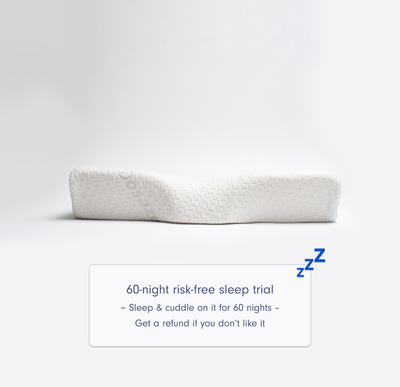
TL;DR: If you are a side sleeper with broad shoulders, pillow height matters because it fills the space between your shoulder and your head to keep cervical alignment. Dosaze designs its ergonomic pillow to hold neck support without feeling like a brick, and you can test it at home with a 60-night risk-free trial plus free shipping & returns.
Why broad shoulders change the pillow height equation
Side sleeping creates a simple geometry problem: your shoulder lifts your ribcage, and your neck has to bridge the gap to the mattress. Broad shoulders usually increase that gap, so a low pillow often lets your head drop toward the bed.
That head drop is where many people feel morning neck or shoulder pain. Your neck muscles spend the night doing extra work to keep your head from hanging, especially if your pillow compresses after you fall asleep. If this is a pattern for you, read Dosaze pillow neck pain.
What "right height" means for side sleeping
The goal is not "as high as possible." The goal is neutral: your nose and sternum point in the same general direction, and your neck looks straight rather than bent up or down.
A good side-sleeper setup also keeps your head from rolling forward, which is a common reason people wake up with tight traps even when the pillow feels "tall enough."
Two quick checks to know if your pillow is too low or too high
You do not need special tools to get close. You need two fast checks you can do in bed and repeat over a few nights.
- Too low: you feel your ear drifting toward your shoulder, your chin tips down, or you wake with a "pinch" on one side of the neck.
- Too high: your chin tips up, your neck feels jammed, or you wake with tension at the base of the skull.
If you are not sure, ask someone to take a quick photo from behind while you lie on your side in your usual position. You are looking for a straight line from the middle of your head through your neck toward the center of your chest.
What actually determines pillow height for broad-shouldered side sleepers
Pillow "loft" on a product page is not the same as the height your neck feels at 2 a.m. For broad shoulders, these four variables matter more than the label.
- Shoulder width and slope: squared shoulders usually need more fill than sloped shoulders.
- Mattress firmness: a softer mattress lets your shoulder sink, which reduces the gap your pillow must fill.
- Pillow compressibility: some fills feel tall at first, then collapse after they warm up.
- Your head-forward habit: if you scroll in bed or tuck your chin, your neck may prefer a shape that supports the curve, not just more height.
The Dosaze way to think about height: support first, then cooling comfort
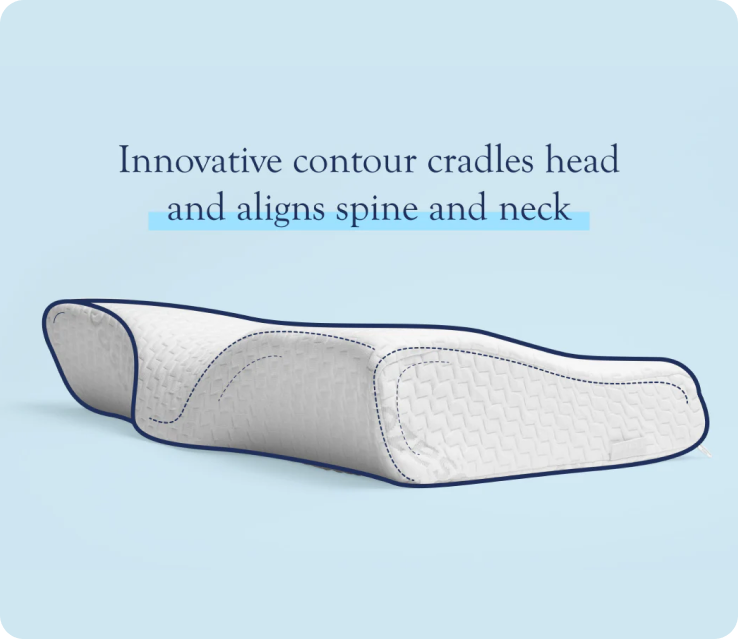
Dosaze builds around ergonomic geometry because height alone does not solve neck support. A pillow can be "high" and still let your head roll forward or let your neck hang if the shape does not meet your cervical curve.
When customers tell Dosaze a pillow felt "too tall," it is often not the peak height that was wrong. It is that the pillow did not keep a stable cradle under the neck once they relaxed into it.
That is also why material feel matters. If a pillow traps heat, people shift positions, and every shift changes the height your neck experiences. Cooling and pressure relief are not luxuries for broad-shouldered side sleepers, they reduce the toss-and-turn cycle that breaks alignment.
Where to start if you have broad shoulders
Start with a pillow that is built for side sleeping, not a generic rectangle that you fold and punch all night. Broad shoulders usually do better with an ergonomic profile that supports the neck and leaves room for the shoulder.
If you want a deeper walkthrough that connects shoulder pain, broad shoulders, and side-to-back sleeping, Dosaze has a detailed guide here: Best Pillow for Side Sleepers: How to Choose for Shoulder Pain, Broad Shoulders, and Side-to-Back Sleeping.
A practical at-home "height test" you can do tonight
This is a simple method Dosaze customers use when they are unsure whether they need more height or just better neck support. It helps you separate "loft" from "alignment."
- Lie on your side in your normal spot, with your normal mattress and top pillowcase.
- Place your hand between your cheek and the pillow. If your hand fits easily and your head still drops, you are likely too low.
- Now slide your hand between your neck and the pillow. If there is a gap under the neck while your head feels supported, the pillow shape is likely wrong even if the height feels fine.
- Finally, pay attention to your jaw. If your jaw feels pushed up toward your forehead, you are likely too high.
Do this test on two different nights. The first night you notice "feel." The second night you notice what your body does after it relaxes.
Common mistakes broad-shouldered side sleepers make with pillow height
These show up again and again in returns across the category. Avoiding them saves money and a lot of trial-and-error.
- Chasing height with extra pillows: stacking often bends the neck up while leaving the neck curve unsupported.
- Ignoring mattress sink: on a plush mattress, your shoulder may drop enough that a "high" pillow becomes too high.
- Testing for 10 minutes and deciding: alignment problems often show up after 2-3 hours, not during a quick tryout.
- Sleeping half-side, half-stomach: this twists the neck and makes almost any height feel wrong by morning.
Choosing a pillow design that works for broad shoulders
Think in terms of shape plus stability, not just inches. A broad-shouldered side sleeper usually needs a pillow that keeps the head level while also filling the neck curve for consistent cervical alignment. If you are deciding between pillow shapes, see contoured pillow vs cervical pillow.
Dosaze focuses on ergonomic design engineered for optimal sleep posture, plus materials chosen for support and cooling comfort. The point is to reduce the "collapse and crank" pattern, where your head sinks and your neck tightens to compensate.
Comparison table: what to look for and why it matters
| Pillow approach | What it tends to do for broad shoulders | Main risk to watch |
|---|---|---|
| Standard fluffy rectangle pillow | Feels cozy at first, but often compresses and drops the head overnight | Neck hangs after compression, more morning stiffness |
| Extra-high loft pillow | Can fill the shoulder-to-head gap on firmer mattresses | Chin tilts up and neck feels jammed if the loft is too much |
| Ergonomic cervical contour pillow | Supports the neck curve while keeping the head level for cervical alignment | Wrong contour shape can feel "weird" for a few nights |
| Dosaze ergonomic pillow | Built to provide neck support and pressure relief with cooling comfort, aimed at stable side-sleeper posture | Any new pillow can take a short adjustment period, so use the 60-night risk-free trial plus free shipping & returns to test it properly |
How to judge "comfortable" vs "correct" in the first week
A pillow can feel comfortable for 15 minutes and still be wrong for your neck for 8 hours. For broad shoulders, the early signal is usually your shoulder and upper back, not your face.
When the height and shape are right, your shoulder feels less pinned, and your top shoulder does not creep forward as much. You also wake up with less urge to stretch your neck immediately.
When it is wrong, you will see patterns. If you always wake on your back after starting on your side, you might be escaping pressure on the shoulder. If you keep hugging the pillow or tucking your hand under it, you might be trying to create more height under your head.
How Dosaze removes the "what if I hate it" anxiety
Broad-shouldered side sleepers often hesitate to spend on a premium pillow because returns feel like a hassle. Dosaze addresses that directly with a 60-night risk-free trial and free shipping & returns. You can also review the details in the returns policy.
That matters because alignment is not a showroom test. It is a home test, on your mattress, in your normal sleep positions, over enough nights that your muscles stop guarding.
FAQ
How high should a pillow be for a side sleeper with broad shoulders?
The reason height matters is that broad shoulders increase the gap your pillow has to fill to keep your head level. For a broad-shouldered side sleeper, the "right" pillow height keeps cervical alignment so your neck looks straight rather than bent up or down. A quick way to sanity-check it is a side photo: your nose and sternum should point in the same direction, without your chin tipping up or down.
Why does my neck hurt even when my pillow feels tall enough?
This happens because "tall" is not the same as "supported under the neck." Dosaze sees this when sleepers have enough height under the head but a gap under the cervical curve, so the neck muscles work all night. Prioritize a shape that gives neck support and stability, then fine-tune height based on your mattress sink.
Does a softer mattress mean I need a lower pillow?
Mattress firmness matters because it changes how far your shoulder sinks, which changes the pillow height you actually need. In many cases, a softer mattress reduces the shoulder-to-head gap, so an extra-high pillow can become too high and push the chin up. If you are switching mattresses, re-test your pillow setup instead of assuming your old height still fits.
How do I know if my pillow is too high for side sleeping?
It is worth checking because too much height can strain the neck even if it feels plush. A pillow is usually too high if it tilts your chin up, makes your neck feel "jammed," or leaves you waking with tension at the base of the skull. Try removing a small amount of height or switching to a profile that cradles the neck curve instead of propping only the head.
Is an ergonomic pillow better than stacking two pillows?
Stacking is tempting because it is fast, but it often creates a steep angle that bends your neck up while still leaving the neck curve unsupported. An ergonomic pillow is designed to keep a smoother transition from head to neck for cervical alignment, which is what broad shoulders usually need. If you want to test this, compare how often you wake up repositioning your arms and shoulders with each setup.
How long should I try a new pillow before deciding it does not work?
You need enough time because your body adapts and because alignment issues show up after hours, not minutes. Dosaze makes this easier by offering a 60-night risk-free trial so you can judge real sleep, not a quick first impression. Give it at least several nights in your normal positions, then decide based on morning neck and shoulder feel, not just initial softness.
I sleep on my side but sometimes roll onto my back, what pillow height should I choose?
This matters because a height that is perfect for pure side sleeping can feel too high when you roll onto your back. A practical target is a design that supports side sleeping without forcing your chin up on your back, which is where an ergonomic profile can help. If this is your pattern, use the same pillow for a week and track whether you wake with your chin tilted up when you end on your back.
Your next step: build a 3-night test that gives you a clear answer
Night 1, take a quick side photo and check for a straight neck. Night 2, repeat the hand check under cheek and neck, and note any jaw pressure. Night 3, pay attention to where you wake up and what hurts first, neck, shoulder, or base of skull.
If you want a structured walkthrough that ties these checks to shoulder pain and side sleeping habits, read Dosaze's step-by-step guide: How To Choose The Best Pillow For Side Sleepers A Step By Step Guide. If you are ready to test an ergonomic, cooling-forward option with less return anxiety, the Dosaze contoured orthopedic side sleeper pillow is backed by a 60-night risk-free trial and free shipping & returns.


