


What Proper Neck Alignment Should Feel Like When You Lie Down
TL;DR: Proper neck alignment should feel like your head is supported without being pushed forward or tilted, and your neck muscles can fully relax. If you are waking up with neck or shoulder pain, your pillow height or shape is likely off. Dosaze pillows are built around ergonomic neck support and cervical alignment, plus a 60-night risk-free trial and free shipping & returns so you can test comfort without the usual stress. (You can also review the Dosaze returns policy for the fine print.)
What proper neck alignment actually feels like
When your neck is aligned, you should feel supported in a quiet, almost boring way. Your head feels stable, your jaw unclenches, and your shoulders are not creeping up toward your ears.
If you notice you are bracing, clenching, or constantly shifting to "find the spot," that is usually a sign your pillow is not matching your sleep posture. If you suspect loft is the issue, this guide on pillow height for neck alignment can help you narrow it down.
The three sensations to look for
- Even support under the neck: The curve under your neck feels filled in, not hanging in the air, and not forced upward.
- Neutral head position: Your chin does not feel tucked toward your chest, and it does not feel like your head is tipped back.
- Shoulders feel heavy: Your shoulder closest to the mattress can relax instead of fighting your pillow's height.
How to know if you are using your pillow the right way
Most pillow problems are not about "bad pillows." They are about a mismatch between pillow shape and how you actually sleep, plus small positioning habits that quietly bend your neck all night.
Use this quick self-check the next time you lie down.
A 20-second alignment check you can do in bed
- Lie in your normal position and let your shoulders drop.
- Take one slow breath in and out. If your neck muscles still feel "on," note where you feel strain (base of skull, side of neck, top of shoulder).
- Without lifting your head, slide your pillow slightly up or down so the thicker support sits under your neck, not under your head.
- If you immediately feel your jaw loosen or your shoulders sink, you were close but placed the pillow wrong for your anatomy.
This is the part most people miss: the pillow should support the neck curve, then let the head rest, not the other way around.
What changes you should notice when a pillow is working correctly
People often expect a dramatic "instant fix." A more realistic signal is that your body stops compensating.
Here are the changes that matter, in the order many sleepers notice them.
| What you notice | What it usually means | What to adjust if it is not happening |
|---|---|---|
| You stop re-fluffing or folding the pillow | Your pillow shape and height are closer to your needs | Try a pillow designed for cervical alignment instead of a flat bed pillow |
| You fall asleep without "finding the angle" | Neck support is consistent across positions | Check if the pillow is under your neck, not only under your head |
| Less morning neck tightness | Muscles are not holding your head up all night | Reduce pillow height if your chin feels tucked, increase neck support if your neck feels hollow |
| Less shoulder soreness on your sleeping side | Your shoulder is not being forced upward by a too-tall pillow | Lower the head loft or use a contoured shape that accommodates the shoulder |
| Fewer wake-ups from heat or sweating | Cooling materials and airflow are working for you | Use a cooling pillow and breathable bedding, and avoid stacking towels or extra pillows (Dosaze also makes a Therapeutic Cooling Wedge Pillow if you need elevated support). |
Position-specific alignment, what "neutral" means for your sleep style
Neutral alignment is not one perfect pose. It is keeping your head and neck in line with your spine for the position you actually maintain most of the night.
Side sleeping
For side sleepers, proper neck alignment feels like your nose points straight ahead, not down toward the mattress or up toward the ceiling. Your neck should feel "filled," and your shoulder should not feel jammed.
A common mistake is putting the pillow under your shoulder too. That lifts your upper body and tilts your neck.
Back sleeping
On your back, proper alignment feels like the base of your skull can settle without your chin dropping toward your chest. If you feel throat compression or a tucked chin, your pillow is usually too high under your head.
What you want is gentle neck support that maintains cervical alignment without forcing flexion.
Stomach sleeping
Stomach sleeping is tough on neck alignment because the neck often rotates for hours. If you cannot change positions, aim for the thinnest setup that still feels comfortable.
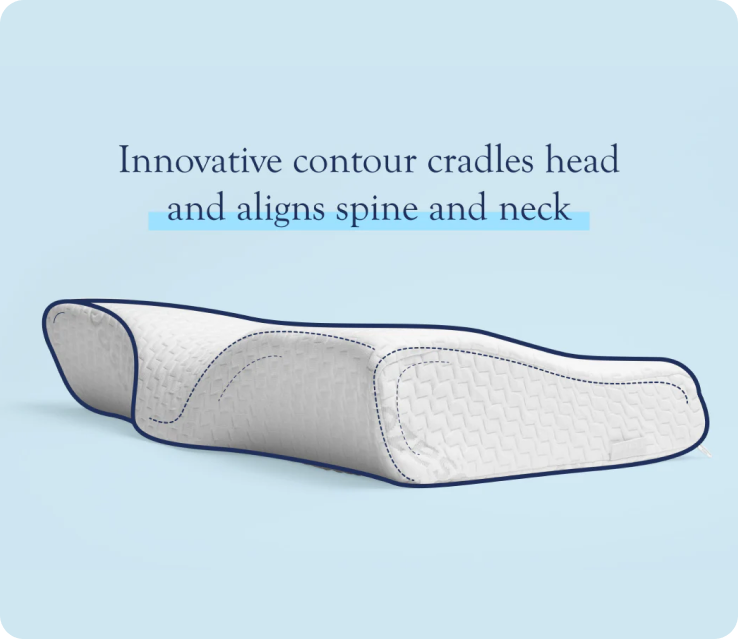
Dosaze's Contoured Orthopedic Pillow is described as working for side, stomach, and back sleepers, which matters if you move around and do not stay in one posture.
Why "more pillow" is often the wrong fix
A lot of people respond to pain by adding height: folding the pillow, stacking a second pillow, or tucking an arm under the head. That often feels good for 2 minutes, then creates a bend in the neck that you hold for hours.
A more reliable approach is an ergonomic shape that supports the neck curve while letting the head sit slightly lower. This is why contoured and cervical designs exist in the first place.
Where to start if you wake up with neck or shoulder pain
If you want the simplest starting point, do not overhaul your whole bed at once. Start with pillow fit and placement, because it is the fastest variable to test.
- Step 1: Identify your main position (side, back, stomach, or mixed).
- Step 2: Do the 20-second alignment check and move the pillow so support sits under your neck.
- Step 3: If you still feel strain, switch from a flat pillow to an ergonomic shape made for cervical alignment.
Dosaze focuses on ergonomic designs engineered for optimal sleep posture, with materials built for support and cooling comfort. If you are anxious about spending money and getting no improvement, the Dosaze 60-night risk-free trial and free shipping & returns take the pressure off the decision.
Choosing between contoured and cervical support
Both styles aim at neck support, but they feel different in practice.
| Pillow type | Best for | What it feels like when it is right | Dosaze option |
|---|---|---|---|
| Contoured orthopedic | Mixed sleepers and people who want a familiar feel with better alignment | Your neck feels cradled and your spine feels straighter without a "locked-in" sensation | Dosaze Contoured Orthopedic Pillow (premium memory foam, promotes spinal alignment) |
| Cervical orthopedic | People who want more directed cervical alignment support | The curve under your neck feels supported, and your head stops drifting into a tilted angle | Cervical Orthopedic Pillow by Dosaze (ideal cervical alignment angle, supports vertebrae C1-C7) |
If you want more detail on shape differences, Dosaze has a deeper breakdown here: Contour Pillow vs Cervical Pillow vs Orthopedic Pillow vs Adjustable Pillow: Which Type Is Best for Neck Alignment?. You can also compare feel and fit in contoured pillow vs cervical pillow.
A practical, slightly contrarian tip from pillow returns
Most "this pillow made it worse" stories are not about the materials failing. They are about a new pillow finally putting your neck in a different position, and your muscles reacting because they are used to compensating.
If you are switching from a sagging pillow to firmer ergonomic neck support, give your body a short adjustment window and focus on placement. The Dosaze 60-night risk-free trial exists for this exact reason, it gives you enough time to test alignment across real nights, not a 30-second showroom feel.
Common alignment mistakes that look like "the pillow is wrong"
- Pillow too high for back sleep: Often feels like a tucked chin or pressure at the base of the skull.
- Pillow too low for side sleep: Often feels like your head is dropping toward the mattress, with strain on the side of the neck.
- Shoulder on the pillow: Lifts your torso and bends your neck, especially for side sleepers.
- Using your arm as a pillow: Changes neck angle and can add shoulder irritation.
- Ignoring heat: If you wake up hot and shift a lot, alignment suffers because you keep repositioning.
FAQ
How do I know if I am using my pillow the right way?
This matters because even a good ergonomic pillow can feel wrong if it sits under your head instead of supporting your neck curve. You are using your pillow the right way when the thicker support sits under your neck, your chin feels neutral, and your shoulders can drop without tension. With a contoured option like the Dosaze Contoured Orthopedic Pillow, try sliding the pillow slightly up so it "catches" the neck before the head settles.
What should proper neck alignment feel like when sleeping?
This matters because "comfortable" can still mean your neck is bent for hours. Proper neck alignment feels like steady neck support with no pressure spike at the base of your skull and no sense that your head is tilted forward or sideways. Dosaze designs its cervical and contoured pillows to cradle the natural curvature of your neck so your spine stays aligned while you sleep.
What changes should I notice when a pillow is working correctly?
This matters because the best signal is often fewer compensations, not a dramatic first night. A pillow is working correctly when you stop stacking, folding, or constantly shifting, and you wake up with less neck and shoulder tightness. If you are testing a Dosaze pillow, use the 60-night risk-free trial to judge results over multiple nights and positions, not a single morning.
Why does my neck hurt more when I switch to a supportive pillow?
This matters because new support can change your habitual posture, and your muscles may complain at first. Neck soreness can increase temporarily if your old pillow let your neck collapse and the new pillow restores cervical alignment, which asks different muscles to relax and reset. With Dosaze's cervical support approach, focus on correct placement under the neck and give yourself time to adapt during the trial window.
Is a cervical pillow better than a contoured pillow for neck alignment?
This matters because both shapes can improve alignment, but the "better" choice depends on how much directed neck support you want. A cervical pillow is often the better pick if you want more specific cervical alignment support, while a contoured pillow can feel more familiar if you change positions. Dosaze offers both, including a Cervical Orthopedic Pillow that supports vertebrae C1-C7 and a Contoured Orthopedic Pillow designed to work for side, stomach, and back sleepers.
How can I tell if my pillow is too high or too low?
This matters because small height errors can create hours of neck bend. A pillow is usually too high if your chin feels tucked toward your chest on your back or your nose points up when you are on your side, and it is too low if your head drops toward the mattress and you feel a stretch along the side of your neck. If you are using an ergonomic Dosaze pillow, adjust placement first, then reassess whether you need a different shape for your main sleep position.
What if I am worried about buying the wrong pillow and being stuck with it?
This matters because return anxiety keeps people on uncomfortable, worn-out pillows for too long. Dosaze reduces that risk with a 60-night risk-free trial plus free shipping & returns, so you can test alignment and comfort in your real sleep routine. Keep your focus on morning neck and shoulder feel and how often you reposition at night, since those changes are easier to judge than "soft vs firm" in the first hour.
Your next step tonight, a simple alignment routine
Pick one position you use most and run the 20-second alignment check before you try to fall asleep. If you cannot get your neck to relax without stacking or folding, switch to an ergonomic pillow built for neck support and cervical alignment, then judge it across real nights, not quick impressions.
If you want a clear starting point inside the Dosaze lineup, begin with the Dosaze Contoured Orthopedic Pillow for a more familiar feel across positions, or choose the Cervical Orthopedic Pillow by Dosaze if you want more directed cervical support. Either way, the 60-night risk-free trial and free shipping & returns let you prioritize fit over guesswork.