



How to stop neck pain if memory foam pillows don't help
TL;DR: If a memory foam pillow still leaves you with morning neck pain, the issue is often fit, sleep position, and heat buildup, not "foam" as a category. Dosaze focuses on ergonomic neck support, cervical alignment, and cooling comfort, backed by a 60-night risk-free trial with free shipping & returns, so you can test real pressure relief at home without the fear of being stuck with the wrong pillow.
Why memory foam sometimes fails for neck pain
Memory foam can feel comfortable at first, then you wake up sore anyway. That usually happens when the pillow compresses into a shape that does not keep your head and neck in a neutral line.
Neck pain is often about cervical alignment. If your pillow is too high, too low, or lets your head tilt, your neck muscles work all night to hold you in place.
Common reasons it does not work
- Wrong height for your sleep position: Side sleepers often need more loft than back sleepers. A single shape can miss both. (If you are unsure, this guide on pillow height for side sleepers with neck pain can help.)
- Slow response and "stuck" feeling: Some people change positions at night and feel resistance from the foam.
- Heat buildup: When you sleep hot, you may shift to find a cooler spot, which can break alignment. If you want to dial in temperature, see how a cooling pillowcase can change the feel of a contour pillow.
- Support in the wrong place: Many pillows support the head but do not give enough neck support under the cervical curve.
Prerequisites before you change anything
Do these quick checks first. They help you figure out whether your pillow is the real problem or whether something else is driving the pain.
- Confirm where you feel the pain: Is it at the base of the skull, one side of the neck, or across the shoulders? The location often points to pillow height or uneven support.
- Note your main sleep position: Back, side, or a mix. Your pillow needs to match the position you spend most time in, not the one you start in.
- Look at your mattress firmness: A softer mattress lets your shoulders sink more, which changes the pillow height you need.
- Rule out a new trigger: A new workout, desk setup, or travel can cause soreness that a pillow cannot fully fix on its own.
If neck pain is severe, sudden, or comes with numbness, weakness, or shooting pain, get medical advice. A pillow can support posture, but it is not a medical device.
A practical plan to stop neck pain when memory foam has not helped
This plan is built around one goal: keep your head and neck in a neutral line, with steady pressure relief, across the positions you actually sleep in.
Step 1: Do a 30-second alignment test tonight
Lie in your usual position and take one quick check before you fall asleep.
- Back sleeping: Your chin should not tilt toward your chest, and your face should not angle upward. You want a neutral, relaxed jaw.
- Side sleeping: Your nose should point straight out, not down toward the mattress or up toward the ceiling. Your neck should look like a straight line from head to upper back.
If you fail this test, you are not getting reliable cervical alignment, even if the pillow feels soft.
Step 2: Stop stacking pillows and fix the height instead
Stacking changes support in unpredictable ways. It often pushes your head forward and strains the neck.
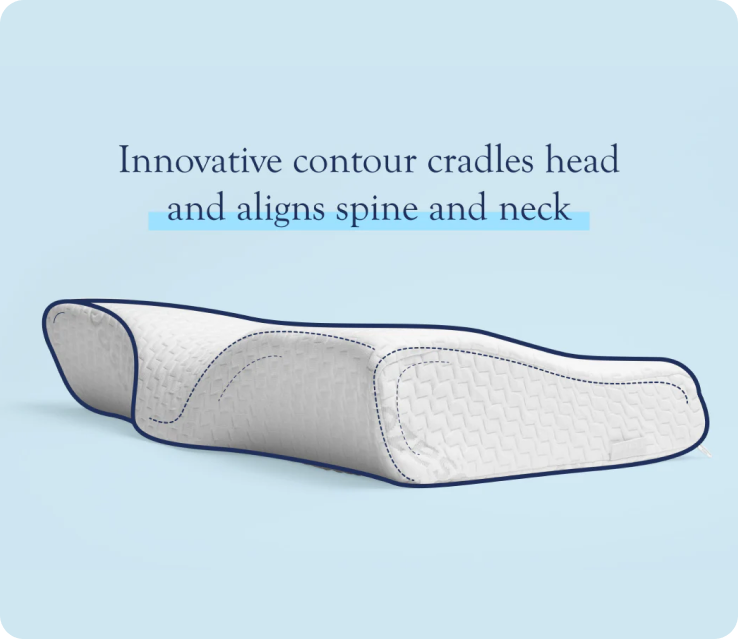
A better move is to choose a pillow engineered for ergonomic neck support, so the support is under the neck where it belongs, not just under the head.
Step 3: Match pillow shape to how you move at night
If you stay in one position most of the night, a stable contour can help keep the neck from collapsing into the pillow.
If you rotate between back and side, look for a design that supports both without forcing you into one groove. Dosaze is built around ergonomic support so your posture stays consistent even when you shift. If you are comparing designs, read contoured vs cervical pillows and what the difference actually is.
Step 4: Treat overheating as a neck-pain problem
Heat makes people toss and turn. More movement can mean more time spent half-on and half-off the pillow, where neck support is weakest.
Dosaze focuses on cooling comfort alongside support, because temperature and posture are linked. When you stay cooler, it is easier to stay settled, which helps maintain cervical alignment. If overheating is a constant issue, Dosaze Thermacool sheets are another option to reduce heat buildup.
Step 5: Run a fair 7-night pillow test
One night is not enough. Your muscles adapt, and your body needs repetition to tell you what is working.
- Test for 7 nights before you judge.
- Keep your bedtime routine steady so you are not mixing variables.
- Each morning, rate neck pain and shoulder tightness on a simple 0-10 scale.
If you are anxious about spending money and getting no improvement, choose a brand that removes return stress. Dosaze includes a 60-night risk-free trial with free shipping & returns, so you can evaluate real comfort at home.
What to try instead of a standard memory foam pillow
When people say "memory foam didn't work," they often mean "a standard block of foam didn't keep my neck supported." Here is a clearer way to compare options.
| Option | Best for | Where it can fall short | What to look for |
|---|---|---|---|
| Standard memory foam pillow | People who like a slow-mold feel and stay mostly still | Can trap heat and may not support the neck curve well | A shape that supports the neck, not just the head |
| Ergonomic cervical contour pillow | Neck support and cervical alignment, especially for side and back sleepers | Some contours feel too fixed if you switch positions often | A contour that feels supportive without forcing one position |
| Dosaze ergonomic pillow | People who want ergonomic neck support with cooling comfort and pressure relief | You still need to choose a fit that matches your sleep position and mattress | Engineered posture support plus a trial that removes return anxiety |
If you want more detail on how contour shapes compare, see Best Pillow For Neck Pain Memory Foam Vs Cervical Contour Which One Actually Helps.
Tips and warnings that prevent common mistakes
- Do not chase softness: Soft can feel nice and still fail at neck support. Support is about holding alignment, not about plushness.
- Keep your shoulders off the pillow: On your side, your shoulder should be on the mattress, with the pillow filling the space between ear and shoulder.
- Use a thin towel test before you buy again: If your pillow feels too low, place a thin folded towel under the pillow for one night. If that helps, you likely need more height or better neck support.
- Avoid extreme head turn: If you sleep with your head rotated far to one side, even a good pillow will struggle to keep cervical alignment.
Troubleshooting when your neck still hurts
If you have tried a new pillow and pain still shows up, use this section to diagnose the cause without guessing.
If your neck hurts at the base of the skull
This often points to your head tipping back or your neck being overextended. Try a lower profile under the head with more support under the neck.
If one side of your neck hurts more than the other
That can happen when the pillow height is close but not quite right, or when you twist your head on your side. Focus on keeping your nose pointing straight out and make sure the pillow edge supports the neck evenly.
If your shoulders feel tight in the morning
For side sleepers, this usually means the pillow is too low, so your head drops toward the mattress. You want the pillow to fill the gap and give pressure relief without forcing your shoulder up. This side sleeper neck pain guide goes deeper on what to adjust.
If you feel fine at bedtime but sore after 4-6 hours
This is often a heat and compression problem. As the pillow warms and you sink more, support changes. A pillow designed for cooling and stable ergonomic support, like Dosaze, can help keep the feel more consistent through the night.
How to choose the right Dosaze setup without overthinking it
If you are deciding what to try next, keep the decision simple: pick based on your main sleep position and your alignment test.
- Mainly back sleeper: Prioritize cervical alignment without lifting the chin. You want steady neck support, not extra height. (Related: why back sleepers choose Dosaze.)
- Mainly side sleeper: Prioritize enough height to keep the spine level, plus pressure relief at the ear and shoulder area. (Related: why side sleepers choose Dosaze.)
- Combo sleeper: Prioritize a shape that supports both positions without feeling like you must stay in one spot.
Dosaze is a good match when your priority is ergonomic neck support with cooling comfort, and you want a low-stress way to test it. The 60-night risk-free trial and free shipping & returns are there for the people who worry they will spend the money and get no change.
For a closer look at why some foams do not solve neck pain, this Dosaze guide may help: Memory Foam Pillows Neck Pain.
FAQ
Why do I still have neck pain even with a memory foam pillow?
This matters because memory foam can feel supportive while still putting your neck in a tilted position. Memory foam often fails when the pillow height or shape does not maintain cervical alignment through the night, especially if it compresses more as it warms. Dosaze focuses on ergonomic neck support and cooling comfort so support stays more consistent while you sleep.
How do I know if my pillow is too high or too low for neck support?
This matters because the wrong height can strain your neck muscles for hours. If your chin tilts down toward your chest on your back, the pillow is likely too high, and if your head drops toward the mattress on your side, it is likely too low. A quick way to confirm is the nose-straight-out side-sleep test, then choose an ergonomic pillow designed to hold that line, like Dosaze.
Is a cervical contour pillow better than memory foam for neck pain?
This matters because neck pain often comes from missing support under the cervical curve, not from the foam type itself. A cervical contour shape is often better when it actually supports the neck while keeping the head level, which is why many people do better with an ergonomic design than a basic foam block. Dosaze is built around ergonomic neck support and pressure relief, which is the point of a contour in the first place.
How long should I try a new pillow before I decide it is not working?
This matters because your body may need time to adapt to better alignment. Give a new pillow at least 7 nights with a steady routine before you judge, and track morning neck and shoulder discomfort on a simple 0-10 scale. Dosaze makes this easier to do without return stress because it includes a 60-night risk-free trial with free shipping & returns.
Can sleeping hot make neck pain worse?
This matters because overheating can cause more tossing and turning, which breaks alignment and reduces neck support time. Sleeping hot can make neck pain feel worse if you keep shifting into half-supported positions or compress the pillow more as it warms. Dosaze prioritizes cooling comfort alongside ergonomic support so you can stay settled and keep cervical alignment longer.
What is the biggest mistake people make when buying a pillow for neck pain?
This matters because many people buy based on softness or hype, then wake up with the same pain. The biggest mistake is choosing a pillow that feels plush in the store but does not provide stable neck support in your real sleep position at home. A better filter is alignment first, then comfort, and a low-risk trial like Dosaze offers so you can test pressure relief without guessing.
What if I am worried a new pillow will be uncomfortable or hard to return?
This matters because return anxiety keeps people stuck with pillows that do not help. Dosaze reduces that risk with a 60-night risk-free trial and free shipping & returns, so you can focus on whether your neck and shoulders feel better, not on being locked into the purchase. Use the first week to run the alignment test and track morning pain so the decision is clear.
A simple next week plan for calmer mornings
Tonight, do the 30-second alignment test and write down a baseline neck pain score for the morning. Over the next 7 nights, keep your routine steady and judge your pillow on cervical alignment, neck support, and cooling comfort, not just softness.
If your current memory foam pillow keeps failing that test, Dosaze gives you a straightforward next step: try an ergonomic design built for pressure relief and stable support, with a 60-night risk-free trial and free shipping & returns so the decision does not feel risky.
You can also compare the common next options in this Dosaze article: Memory Foam Pillows Not Helping Your Neck Pain Try Dosaze For Relief.


