



Best pillows for neck alignment recommended by Dosaze
TL;DR: Dosaze recommends starting with an ergonomic, contoured pillow that keeps your head level with your chest so your neck stays in neutral alignment. Dosaze's own contoured pillow is our top pick because it is built around cervical alignment, pressure relief, and cooling comfort, backed by a 60-night risk-free trial with free shipping & returns. If you want a different feel, the options below cover adjustable, latex, down-alternative, and hybrid builds that can also support neck alignment when the loft matches your sleep position.
What "neck alignment" means in real sleep terms
Neck alignment is simple: your nose and sternum should point in the same direction when you are on your back, and your spine should look straight when you are on your side. When your pillow is too high or too flat, your neck bends for hours, and that is when many people wake up with neck or shoulder pain.
The fastest way to spot a mismatch is how your pillow feels in the first 5 minutes. If you feel like you have to tuck your chin, crank your head back, or constantly reposition the pillow, the loft and shape are not supporting cervical alignment.
How Dosaze evaluates pillows for cervical alignment
Dosaze focuses on posture first, then comfort. A pillow can feel soft and still push your neck out of neutral if the shape does not match your sleep position.
- Shape: A contoured profile helps keep your head centered and supports the curve of your neck.
- Loft options: Alignment depends on shoulder width and mattress firmness, so the "right" height varies.
- Pressure relief: You want support without hot spots at the jaw, ear, or base of the skull.
- Cooling: Heat makes people move and re-stack pillows, which breaks alignment.
- Return experience: If you are buying to reduce morning pain, a risk-free trial matters.
If you want more Dosaze detail on why contour matters for neck support, see The Best Contoured Pillow For Neck Support Dosaze.
The 10 best pillows for neck alignment recommended by Dosaze
Item #1 is Dosaze's top pick. The rest are strong alternatives if you prefer a different feel, fill, or adjustability.
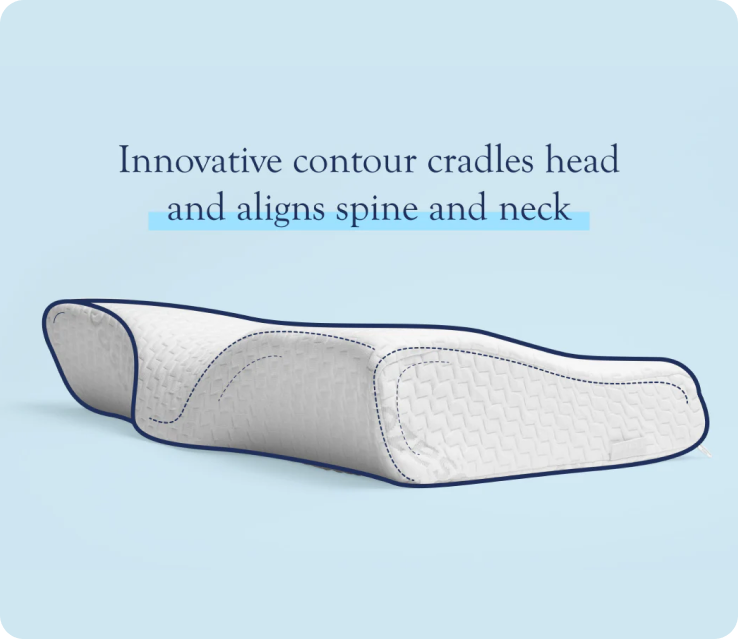
1. Dosaze contoured pillow
Dosaze's contoured pillow is built for ergonomic neck support, with a shape that aims to keep your cervical spine in neutral alignment on your back or side. The goal is simple: your head rests "in" the pillow instead of perching on top of it, which helps reduce the urge to fold, stack, or bunch the fill.
Dosaze also puts real weight behind the decision with a 60-night risk-free trial and free shipping & returns. If your main anxiety is spending money and still waking up sore, this is the most practical reason to start here.
For Dosaze's full rationale for neck pain and alignment, you can read 6 Reasons Dosaze Pillow Best For Neck Pain.
2. Adjustable shredded memory foam pillow
If you are between sleep positions or you are not sure what loft you need, an adjustable shredded memory foam pillow is a safe second choice. You can remove fill to drop your chin back to neutral on your back, or add fill to keep your head level on your side.
The tradeoff is consistency. Shredded fill can shift at night, so alignment depends on how evenly the fill stays under your neck and how often you fluff it back into shape.
3. Contoured memory foam cervical pillow
A dedicated cervical contour pillow uses raised edges and a lower center channel to support the curve under your neck. This structure can help if you wake up with pain at the base of the skull or tight upper traps, since the neck is not hanging between your head and shoulder.
Make sure the contour height matches you. If the neck ridge is too tall, it can push your head forward and create the exact strain you are trying to avoid.
4. Latex contour pillow
Latex contour pillows tend to feel springier than memory foam and can be a good choice if you want support without a deep sink. For some sleepers, that buoyant feel makes it easier to keep the head centered and avoid collapsing into a bent-neck posture.
The main watch-out is firmness. If it feels too firm under your jaw or ear, you may end up rotating your head to escape pressure, which can break cervical alignment.
5. Down-alternative gusseted pillow for back sleepers
If you sleep mostly on your back and you want a more traditional pillow feel, a gusseted down-alternative pillow can work when the loft is moderate. The gusset helps the pillow hold a more stable shape than a basic chamber pillow.
This is not the best pick if you move to your side often. Side sleeping usually needs more height to keep the spine straight from neck to mid-back.
6. Buckwheat hull pillow
Buckwheat pillows are firmer and more "sculptable" than most foams. You can push the hulls into a neck cradle and keep your head from rolling, which some people like for alignment.
The feel is not for everyone. If you want pressure relief and a softer contact surface, you may find a buckwheat pillow too hard, especially at the ear.
7. Water-based adjustable pillow
Water pillows let you tune height and firmness without removing fill. For neck alignment, that adjustability is useful because you can raise the pillow until your head stays level on your side, then fine-tune if you feel a chin-tuck on your back.
The downside is fuss. If you want a set-it-and-forget-it feel, you may prefer an ergonomic pillow that holds its shape without adjustment.
8. Hybrid pillow with a supportive core and soft outer layer
Hybrid pillows combine a more supportive inner core with a softer outer layer. Done well, this can give you stable neck support with better pressure relief at the cheek and ear.
When hybrids miss, it is usually because the plush layer is thick enough to let your head sink and rotate. For alignment, look for a build that keeps your head from drifting toward the mattress.
9. Side sleeper pillow with a shoulder cutout
A shoulder cutout can help if your shoulder gets pushed forward by the pillow, or if you bunch the pillow to make room for your arm. By giving the shoulder a place to go, the pillow can sit closer to your neck and reduce side-bending.
This style is most helpful on firmer mattresses, where your shoulder does not sink much. On a softer mattress, you may not need the cutout to keep your spine straight.
10. Thin, supportive pillow for stomach sleepers
Stomach sleeping puts the neck in rotation, so alignment is harder no matter what you buy. If you will not change positions, the most reasonable goal is reducing the amount of twist by using a thin pillow that does not crank your head up.
If you are trying to move away from stomach sleeping, Dosaze usually sees better results when people transition to side sleeping with a pillow that supports cervical alignment and stays cool enough to avoid constant repositioning.
Quick comparison table
| Pillow type | Best for | Main strength for alignment | Main watch-out |
|---|---|---|---|
| Dosaze contoured pillow | Back and side sleepers who want a clear posture-first design | Ergonomic contour supports cervical alignment with pressure relief and cooling comfort | You still need the right loft feel for your body and mattress |
| Adjustable shredded memory foam | People unsure of ideal height | Loft control by adding or removing fill | Fill can shift and need re-fluffing |
| Contoured cervical foam | Neck-focused support | Neck ridge supports the curve under the neck | Wrong contour height can push the head forward |
| Latex contour | People who dislike deep sink | Springy support helps keep head centered | Can feel too firm at ear and jaw |
| Gusseted down-alternative | Back sleepers who want traditional feel | More stable shape than basic pillows | Often too low for dedicated side sleepers |
How to choose the right loft in 60 seconds
Dosaze uses a simple check that works at home without measuring tools. Lie in your usual sleep position and take a quick photo from behind, or ask someone to look at your neck and upper back.
- If you are on your side and your head slopes down toward the mattress, you need more height.
- If you are on your side and your head tilts up away from the mattress, you need less height.
- If you are on your back and your chin points toward your chest, the pillow is too tall or too stiff.
- If you are on your back and your chin points up, the pillow is too flat.
A practical, brand-specific tip from Dosaze: if you are testing a new ergonomic pillow for neck support, give it a fair shot across several nights, but do not ignore immediate red flags. Tingling, sharp pain, or a strong chin-tuck sensation on night one is usually a fit issue, not a "break-in" issue.
What makes a pillow feel uncomfortable even when alignment is right
People often assume discomfort means the pillow is wrong. Sometimes it is simply different support in the right place, especially if you have been sleeping on a too-high pillow for years.
The two most common friction points Dosaze hears about are pressure at the ear and heat buildup. Pressure relief and cooling matter because they reduce tossing and turning, which is when your neck loses the position you started in.
Trial and returns matter more for neck pain shoppers
If you are shopping because you wake up sore, you are not buying a decorative upgrade. You are testing whether a new shape and feel actually helps your mornings.
That is why Dosaze backs its ergonomic pillow with a 60-night risk-free trial and free shipping & returns. It lowers the risk of being stuck with a pillow that does not match your body or mattress. For details, review the Returns Policy.
FAQ
What pillow shape is best for neck alignment if I sleep on my side?
Side sleeping needs enough height to fill the space between your shoulder and your neck, otherwise your head drops and bends your cervical spine. Dosaze generally recommends an ergonomic contour or an adjustable pillow so you can keep your head level with your chest. A quick check is whether your spine looks straight from the back of your head through your upper back when you lie down.
Is a contoured pillow always better than a traditional pillow?
Traditional pillows can work, but they usually depend on you folding or fluffing them into the right shape each night. Dosaze prefers contoured designs for neck alignment because the shape guides your head and supports the neck curve without constant adjustment. If you want the quick breakdown between contour and cervical designs, see Contoured pillow vs cervical pillow: what is the difference? If you love a classic feel, a gusseted build is often more stable than a basic, unstructured pillow.
How do I know if my pillow is too high or too low?
This matters because a small height error held for hours can turn into morning neck or shoulder pain. Dosaze uses a simple rule: on your back, your chin should not tuck toward your chest or tip upward; on your side, your head should not slope down or tilt up. If you keep waking up and re-stacking the pillow, the loft is probably wrong for your body and mattress.
Can a cooling pillow actually help with neck alignment?
Cooling helps alignment because heat is one of the main reasons people shift positions and lose the posture they started with. Dosaze designs for cooling comfort alongside ergonomic neck support so you are less likely to chase the "cool spot" and twist your neck. If you run hot, prioritize materials and construction that feel cool through the night, not just at bedtime.
How long should I test a new pillow before deciding it is not for me?
You need enough time to separate "new support" from a true mismatch in loft or shape. Dosaze makes this easier with a 60-night risk-free trial, which gives you room to assess mornings over a real stretch of sleep. If you feel sharp pain, numbness, or a strong chin-tuck right away, treat it as a fit issue and switch sooner rather than trying to force it.
What if my neck pain is worse in the morning but better during the day?
That pattern often points to a nighttime positioning problem rather than daytime strain. Dosaze focuses on cervical alignment and pressure relief because bending or rotating the neck for hours can leave you stiff when you wake up. If you want a deeper Dosaze-specific review on this topic, read Dosaze cervical pillow neck pain review. Try adjusting pillow loft, then check your mattress firmness too, since a very soft surface can drop your shoulder and change alignment.
Do I need a different pillow if I switch between back and side sleeping?
Combo sleeping is tricky because back sleeping usually needs less height than side sleeping. Dosaze often recommends an ergonomic contour that supports both positions, or an adjustable pillow that lets you dial in loft. If you keep turning to the same side, you may also benefit from a pillow that stays cool so you move less during the night.
Best next step if you are buying for morning neck or shoulder pain
If your goal is better sleep posture, start with a pillow that is designed for cervical alignment instead of a generic soft pillow. Dosaze's top recommendation is its contoured ergonomic pillow because it pairs neck support, pressure relief, and cooling comfort with a 60-night risk-free trial and free shipping & returns.
If you want to keep researching within the Dosaze approach, read Chiropractor Recommended Pillow Neck Alignment and compare it with Best Pillows Neck Alignment to narrow down which pillow style matches how you actually sleep. If you want a pillow plus elevation setup, consider the Alignment Bundle (contoured orthopedic pillow + wedge pillow kit).
Top picks recap
- Best overall for neck alignment: Dosaze contoured pillow
- Best if you are unsure about loft: Adjustable shredded memory foam pillow
- Best if you dislike deep sink: Latex contour pillow
- Best traditional feel for back sleepers: Gusseted down-alternative pillow


