



Best pillows for those who dislike memory foam
Introduction
If you dislike memory foam, you are not picky, you are responding to a specific feel. Many people describe memory foam as "stuck," "hot," or "slow." Others say it pushes their head forward, which can throw off cervical alignment and lead to morning neck or shoulder pain.
The good news is that you do not have to choose between comfort and neck support. There are plenty of high-quality options that keep a more responsive, "lifted" feel while still giving pressure relief where it matters.
This list focuses on what actually makes a pillow feel like memory foam (and how to avoid that), then recommends specific pillow types that tend to work better for people who want cooler sleep, easier movement, and more consistent ergonomic support. You will also see where an ergonomic contour pillow can still work even if you "hate memory foam," because not all foams behave the same. And if you are worried about spending money and getting no improvement, pay attention to the trial and return terms. A pillow can feel wrong in 5 minutes, but it can also take a week or two for your neck to settle into better posture.
Why you might hate memory foam (and what to look for instead)
"Memory foam" usually means viscoelastic foam. It softens with heat and pressure, then slowly rebounds. That slow rebound is what creates the sinking, stuck-in-place feeling. It can also reduce airflow around your head, which some sleepers experience as heat buildup.
If that sounds like you, look for materials and builds that have faster response, more airflow, and easier repositioning. In practice, that often means latex, buckwheat, down alternative, or hybrid pillows that combine a supportive core with a more breathable surface.
A quick self-check before you buy
- If you feel "stuck": prioritize fast rebound materials (latex, fiberfill, microcoils) over slow-response foam.
- If you sleep hot: prioritize airflow (perforations, ventilated cores, breathable covers) and avoid thick, closed-cell builds.
- If your neck hurts in the morning: prioritize stable neck support and cervical alignment, not just softness.
- If you toss and turn: prioritize resilience and low friction on the surface so you can move easily.
Best pillows for people who dislike memory foam (top picks)
1) Latex pillow (best overall "not-memory-foam" feel)
Latex is the easiest recommendation for someone who dislikes memory foam but still wants pressure relief. It compresses under weight, then springs back quickly, so you feel supported without the slow sink.
It is also naturally more breathable than many solid foams, especially when it is aerated or perforated. If you sleep hot, look for a ventilated latex core and a breathable cover, and avoid thick, non-breathable protectors that trap heat.
Who it fits best: combination sleepers, hot sleepers, and anyone who wants a responsive pillow that stays supportive over time.
2) Buckwheat hull pillow (best for adjustable neck support)
Buckwheat pillows feel nothing like foam. They are filled with hulls that shift and "lock" into place, so you can build a shape that holds your head and neck where you want them. For some people, that stability is the fastest route to better cervical alignment.
The tradeoff is feel and sound. Buckwheat can be firmer, and you may hear the hulls move when you adjust. If you like a plush surface, you can pair it with a thin, soft pillowcase and keep the fill slightly lower so it contours without feeling like a mound.
Who it fits best: people who want precise height control, side sleepers who need consistent neck support, and anyone who hates "sinking."
3) Down pillow (best for soft, classic loft without the sink)
Down compresses easily and feels cloud-like, but it does not have the slow rebound of memory foam. It also lets you reposition without resistance, which matters if you change positions at night.
The main caution is support. A very soft down pillow can collapse, especially for side sleepers. If you go this route, look for higher fill power and consider a firmer construction or a "down and feather" blend that adds structure.
Who it fits best: back sleepers and stomach sleepers who prefer a softer pillow and do not need a tall loft.
4) Down alternative (best for easy care and allergy-friendly softness)
Down alternative pillows use polyester fiber clusters to mimic down. The feel is usually bouncy and light, and it does not trap you the way slow-response foam can.
The drawback is long-term loft. Many fiberfill pillows flatten faster than latex or a well-built ergonomic core. If you choose one, pick a higher-density fill and plan to replace it more often than a premium ergonomic pillow.
Who it fits best: budget-conscious shoppers who still want a non-foam feel, and people who want a washable, allergy-friendly option.
5) Microcoil pillow (best for airflow and "lift")
Microcoil pillows use small springs, often with fiber layers above and below. They feel springy and supportive, with much less of the sinking sensation that turns people off memory foam.
They also tend to sleep cooler because air moves through the coil structure. If your main complaint is heat, a microcoil build can be a strong alternative without going fully firm like buckwheat.
Who it fits best: hot sleepers and combination sleepers who want bounce and support.
6) Wool-filled pillow (best for temperature regulation without foam)
Wool is a sleeper hit for people who hate foam heat. It handles moisture well and tends to feel drier through the night. It also has a gentle springiness that helps it resist the "stuck" sensation.
Wool pillows can feel firmer at first. Many soften slightly with use, but they still keep a more structured feel than down alternative. If you want more plushness, choose a wool pillow with a softer outer layer or pair it with a thin topper pillowcase.
Who it fits best: hot sleepers and people who want a dry, breathable feel.
7) Adjustable shredded fill pillow (best compromise if you want customization)
Shredded fill pillows can be made from different materials, but the concept is similar: small pieces move around, so the pillow feels less like a solid block. That can reduce the trapped, slow-sink feeling that many people dislike.
Be selective here because some shredded pillows are still memory foam based. If you dislike memory foam because of heat or smell, a shredded memory foam pillow may still bother you. If you like adjustability but want a different feel, look for shredded latex or a mixed fill that is built for airflow.
Who it fits best: people who want to tune loft and firmness, especially combination sleepers.
8) Water-based pillow (best for fine-tuning height)
Water pillows use a water chamber for adjustable support, often with a fiber layer on top. The feel is more buoyant than foam. You can change the height by adding or removing water, which can help if your neck pain comes from being too high or too low.
The practical downside is setup and maintenance. You need to fill it correctly, check seals, and accept that it is heavier than most pillows. For some sleepers, that is worth it for the adjustability.
Who it fits best: people who want height control and a stable surface without foam sink.
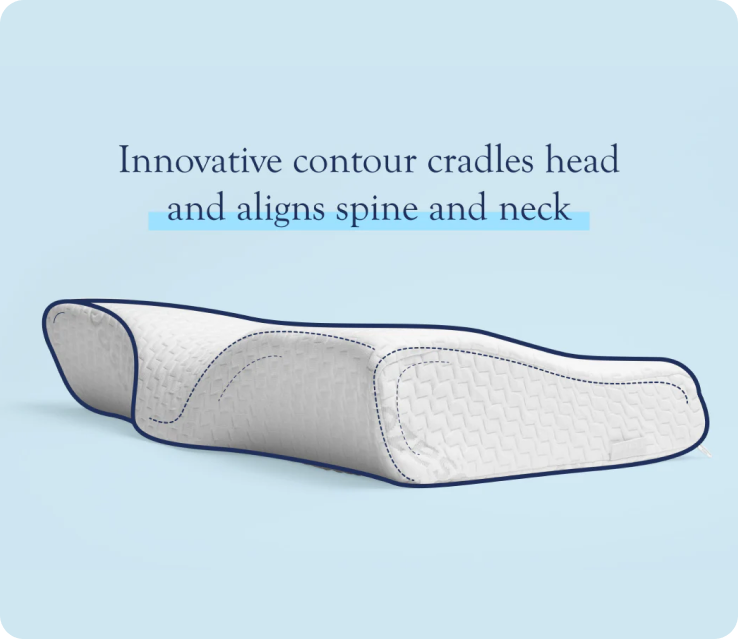
9) Cervical contour pillow with responsive, cooling foam (best for neck pain, even if you "hate memory foam")
This is the contrarian pick: an ergonomic contour pillow can still be the best choice for morning neck or shoulder pain, even if you dislike traditional memory foam. The reason is simple. Many memory foam complaints come from low support, slow rebound, and heat. A well-engineered contour pillow focuses on cervical alignment first, then uses materials that keep support and manage temperature.
At Dosaze, we hear a repeat pattern from customers who "never liked memory foam." They often do fine with an ergonomic shape when the pillow gives clear neck support, holds its form, and uses cooling materials so the surface does not feel swampy at 2 a.m. The shape matters because it reduces the need to "scrunch" the pillow to fill the gap between neck and mattress, which is a common reason people wake up sore.
If you want to try this category with low risk, choose a pillow with a real at-home trial and easy returns. Dosaze offers a 60-night risk-free trial with free shipping & returns on the Dosaze pillow, so you can test whether the ergonomic design improves sleep posture in your own bed, not a store aisle. If you want an ergonomic option that aims for neck support, cervical alignment, pressure relief, and cooling comfort, see the Dosaze pillow.
How to choose the right non-memory-foam pillow for your sleep position
Your sleep position decides how much loft you need and where support should land. The goal is simple: keep your head level with your spine, and keep the pillow supporting your neck rather than letting your head tilt.
| Sleep position | What usually works best if you dislike memory foam | Common mistake |
|---|---|---|
| Side | Latex, buckwheat, microcoil, ergonomic contour designs | Too-low loft that collapses, forcing your neck to bend downward |
| Back | Medium-loft latex, down (medium), wool, ergonomic contour designs | Too-high loft that pushes your chin toward your chest |
| Stomach | Low-loft down or down alternative, very low-fill wool | Using a tall pillow, which twists the neck |
| Combination | Latex, microcoil, adjustable shredded latex/fiber | A pillow that resists movement and makes you feel trapped |
What to check before you buy (so you do not waste money)
The fastest way to waste money is buying based on material name alone. Construction details decide feel. Two pillows can both be "latex" or "down alternative" and still behave very differently.
- Return terms: If you are anxious about regret, pick a pillow with a real home trial and straightforward returns. A 60-night risk-free trial gives your body time to adapt to better sleep posture. For details, review the Returns Policy.
- Loft and adjustability: If your neck pain is inconsistent, adjustable fill can help you dial in height. If you want "set it and forget it," choose a pillow with a stable core that holds loft.
- Cooling build: Look for breathable covers and designs that allow airflow. Cooling is not only about the cover. The core matters.
- Support lifespan: Fiberfill tends to flatten sooner than latex, microcoils, or a premium ergonomic core. If you replace pillows often, you may be paying more over time even if the upfront cost is lower.
Quick comparisons: which option should you start with?
| If your main complaint is... | Start with | Why |
|---|---|---|
| "I feel stuck and cannot move." | Latex or microcoil | Fast rebound and a more buoyant feel |
| "I sleep hot." | Microcoil, wool, ventilated latex | Better airflow and moisture handling |
| "My neck hurts in the morning." | Buckwheat or ergonomic contour | More stable neck support and cervical alignment |
| "I want the softest feel." | Down or down alternative | Plush surface without slow-response sink |
| "I do not want to guess the height." | Adjustable shredded fill or water-based | You can tune loft to your body and mattress |
FAQ
What is the best pillow if I hate memory foam?
The material matters because memory foam is slow-response, and that "sinking" feel is what many people dislike. For most sleepers who want a non-memory-foam feel, a latex pillow is the best starting point because it gives pressure relief with fast rebound and easier movement. If heat is your main issue, consider a ventilated latex or a microcoil pillow for better airflow.
What pillow feels like memory foam but is not memory foam?
This matters if you want gentle contouring but you do not want the stuck sensation. Latex is the closest feel to "contouring support" without being memory foam, because it compresses under pressure and rebounds quickly instead of slowly. If you want more customization, an adjustable shredded latex pillow can add a softer, moldable feel without the slow sink of solid viscoelastic foam.
Are memory foam alternatives better for neck pain?
Neck pain usually comes from poor cervical alignment, not from a specific material name. A memory foam alternative can be better for neck pain if it keeps stable neck support and the right loft for your sleep position, which is why buckwheat, latex, and well-designed contour pillows often perform well. If you wake up sore, start by matching pillow height to your shoulder width (side sleepers) or keeping your chin neutral (back sleepers), then use a trial period to confirm the change holds all night. If you want a deeper breakdown, see best pillow for neck pain: memory foam vs cervical contour.
How do I know if a pillow will be too hot if it is not memory foam?
Heat buildup depends on airflow and moisture handling, even when a pillow is not memory foam. A pillow is less likely to sleep hot if it uses a breathable cover and an interior that allows air to move, such as microcoils, ventilated latex, or wool fill. As a practical step, avoid thick, non-breathable pillow protectors if you already run warm, because they can trap heat regardless of the pillow inside. If you want a protector that is designed to stay breathable, consider the Silvertech Pillow Protector.
What if I try a new pillow and it feels wrong right away?
This matters because first impressions can be misleading, especially when you are changing sleep posture. If the pillow causes sharp discomfort or makes breathing feel harder, stop using it, but if it just feels unfamiliar, give it at least 7-14 nights to see if your neck and shoulders settle into better alignment. Choosing a pillow with a real at-home trial, like a 60-night risk-free trial with free shipping and returns, reduces the risk of paying for something that does not work for you. If you are trialing the Dosaze contour design, the Dosaze Contour Pillow FAQ covers sizing, care, shipping, and returns.
Conclusion and next steps
If you dislike memory foam, start by naming the problem: slow sink, heat, or poor neck support. Then match the material and construction to that issue. Latex and microcoils are strong all-around options for a cooler, more responsive feel, while buckwheat and ergonomic contour designs are often the best for consistent neck support and cervical alignment.
If morning neck or shoulder pain is your main complaint and you want a premium ergonomic option with cooling comfort, the simplest next step is to test an ergonomic pillow at home with low risk. The Dosaze pillow includes a 60-night risk-free trial and free shipping & returns, so you can keep it only if it improves your sleep quality in your own bed. If you mostly sleep on your side and want a contour option made for that position, see the Dosaze contoured orthopedic side sleeper pillow.
Summary of top picks
- Best overall: Latex pillow
- Best adjustable support: Buckwheat hull pillow
- Best for hot sleepers: Microcoil pillow or ventilated latex
- Best soft feel: Down or down alternative (choose loft carefully)
- Best for neck pain (contrarian pick): Ergonomic cervical contour pillow with cooling materials, like the Dosaze pillow


