



Chiropractor-recommended pillows for neck alignment
TL;DR: Chiropractors tend to recommend pillows that keep your head and neck in a neutral line, so your cervical alignment stays steady through the night. Dosaze focuses on ergonomic neck support and cooling comfort, plus a 60-night risk-free trial with free shipping & returns, which lowers the risk if you are worried a new pillow will feel wrong.
What chiropractors mean by "neck alignment" in a pillow
When a chiropractor talks about neck alignment, they are usually talking about keeping your head stacked over your shoulders without a sharp bend to either side. In bed, that means your pillow should fill the space between your head and the mattress, so your neck does not collapse down or crank up.
A useful mental model is "neutral." Your pillow should support the natural curve of your neck (cervical alignment) while keeping your face pointed forward, not angled toward the ceiling or down toward the mattress.
Three alignment mistakes that show up as morning neck pain
- Pillow too high: your chin tilts toward your chest, and your upper traps often feel tight in the morning.
- Pillow too low: your head drops, and your neck has to hold tension to keep you stable.
- Support in the wrong place: the pillow props up your head but leaves your neck unsupported, which can feel like a "hammock" effect.
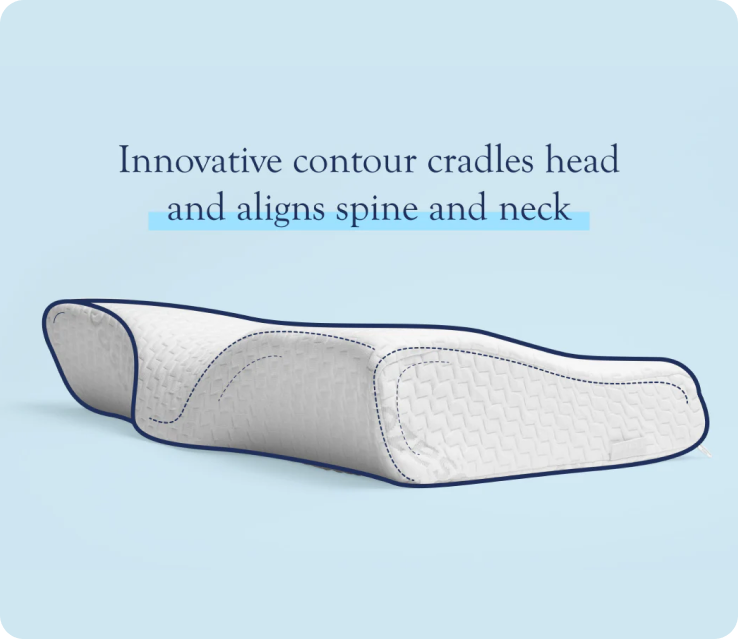
Dosaze designs around these failure points with an ergonomic shape that targets neck support, not just head lift. That difference matters if you wake up sore even after trying a softer or fluffier pillow.
What a chiropractor-recommended pillow usually has
Most chiropractor recommendations look less like a brand list and more like a short checklist. The best pillow for neck alignment depends on your sleep position, shoulder width, and how firm your mattress is.
- Ergonomic contouring: a shape that supports the neck curve instead of only elevating the head. (If you are comparing styles, see contoured pillow vs cervical pillow.)
- Stable support: the pillow should not collapse after 20 minutes. If it does, your cervical alignment changes mid-sleep.
- Pressure relief: enough cushioning to avoid pressure points at the jaw, ear, and shoulder while staying supportive.
- Cooling comfort: overheating leads to tossing, and tossing breaks alignment. Cooling materials can help you stay still longer.
This is where a premium pillow can earn its keep. Not because "expensive is better," but because consistent support and durable construction are what keep alignment steady night after night.
Where to start if you want better neck alignment tonight
Before you buy anything, test whether your current pillow fails on height, support placement, or heat. This takes two minutes and makes the decision simpler.
- Side sleeper check: lie on your side and take a photo from the back. If your nose points down toward the bed or up toward the ceiling, your pillow height is off.
- Back sleeper check: lie on your back. If your chin points up, the pillow is likely too tall. If your head falls back and your throat feels stretched, it is likely too low.
- Support placement check: slide your fingers into the space under your neck. If there is a gap, the pillow is lifting your head but not supporting your neck.
If the checks point to a structural problem, changing sleep position or doing stretches may not fix it. You usually need a pillow with more intentional ergonomic neck support.
How to choose the right pillow height by sleep position
Height is the number one reason people buy a new pillow and still wake up with neck pain. Chiropractors often focus on height first because it is the fastest way to improve cervical alignment.
Side sleepers
Side sleeping needs enough loft to fill the gap between your shoulder and your head. If your pillow compresses too much, your neck bends down all night.
A contoured pillow can help because it supports the neck curve while keeping the head level. Dosaze customers who sleep on their side often tell us the difference they notice first is steadier neck support, not extra softness.
If you want a position-specific breakdown, see best pillows for side sleepers.
Back sleepers
Back sleeping usually needs less height than side sleeping, but more neck contour. Too much loft pushes the head forward and can leave you feeling stiff.
Look for a pillow that supports the neck without forcing your chin toward your chest. If you wake up with a tight base of skull or upper traps, this is a common mismatch.
Stomach sleepers
Many chiropractors discourage stomach sleeping because it often twists the neck for hours. If you cannot change positions, a lower profile pillow and a softer feel can reduce the angle, but it is still harder to keep neutral alignment.
In practice, this is where a risk-free trial matters. You want the option to test and return if the pillow makes your neck rotation worse.
The Dosaze approach to chiropractor-style neck alignment
Dosaze is built around ergonomic design for sleep posture. The goal is simple: consistent neck support that helps keep cervical alignment neutral, paired with cooling comfort so you do not spend the night readjusting.
Dosaze also addresses the biggest buying anxiety directly: you can try the pillow with a 60-night risk-free trial, and Dosaze includes free shipping & returns. If you have been burned by a pillow that felt good for 10 minutes and wrong at 2 a.m., that matters. (You can review the returns policy.)
If you want more Dosaze-specific context on how chiropractors think about alignment, see Chiropractor Recommended Pillow Neck Alignment and Dosaze Neck Alignment Pillows Chiropractor.
A practical comparison shoppers can use
Most "best pillow" lists flatten everything into star ratings. A better way to shortlist is to map your main problem to the type of construction that usually fixes it.
| What you wake up with | Common pillow cause | What to look for | How Dosaze addresses it |
|---|---|---|---|
| Neck stiffness at the base of skull | Too much height, or head is propped without neck support | Ergonomic contour that supports the neck curve while keeping the head level | Dosaze focuses on ergonomic neck support aimed at neutral cervical alignment |
| Shoulder pain on the side you sleep on | Pillow collapses and your shoulder bears the load | Stable support plus pressure relief at the shoulder and jaw line | Dosaze balances support with pressure relief so you do not sink through the night |
| Waking up hot and flipping the pillow | Heat buildup leads to tossing and posture changes | Cooling materials and a feel that stays comfortable over hours | Dosaze uses cooling-focused materials to reduce heat-driven repositioning (some sleepers also pair it with a therapeutic cooling wedge pillow setup when elevated support helps them stay put) |
| You tried 2-3 pillows and none worked | Wrong height for your position, or no safe way to test at home | A real at-home trial and easy returns | Dosaze offers a 60-night risk-free trial with free shipping & returns |
One contrarian take: softer is not always more comfortable
Many people buy the softest pillow they can find because it feels "cozy" in the store. For neck alignment, that is often the wrong move.
A pillow can feel comfortable for the first few minutes and still fail after it warms up and compresses. The discomfort you feel at 7 a.m. is usually not from the first five minutes, it is from hours of slow collapse that changes your cervical alignment.
Dosaze is designed to feel comfortable while still holding ergonomic shape, because stable neck support is what prevents the slow drift that turns into morning pain.
How to test a new pillow like a chiropractor would
You do not need special tools. You need a repeatable test that checks alignment and pressure relief over time.
- Do a 3-night baseline: rate neck stiffness and shoulder pain each morning from 0-10 before you switch pillows.
- Check alignment with a photo: side sleeper from behind, back sleeper from the side. Your head should look like an extension of your spine, not tilted.
- Assess pressure relief: if your ear, jaw, or shoulder feels sore, you may need a different balance of cushioning and support.
- Track night waking: if you keep repositioning, cooling and comfort may be the limiter, not height.
A 60-night risk-free trial gives you time to run this test in real life, on your mattress, with your usual stress and sleep habits. That is why Dosaze makes the trial and free shipping & returns part of the product experience, not an afterthought.
Common fit issues and how to fix them fast
Small adjustments can make a good pillow feel wrong, or make a wrong pillow feel okay for a week. These fixes help you isolate the real problem.
- Your pillow feels too tall on night one: do not force it for weeks. Try a different orientation if the pillow design allows, or reassess if your mattress is very firm since that increases the effective height.
- Your neck feels supported but your shoulder hurts: your side-sleep gap may be larger than the pillow can fill, or you are compressing into the mattress. Consider whether you need more stable support rather than more softness.
- You like the support but you sleep hot: heat can make you chase the "cool side" and break alignment. Prioritize cooling materials so you can stay put longer.
If you are anxious about getting stuck with the wrong choice, the Dosaze free shipping & returns policy plus the 60-night risk-free trial are designed for exactly this trial-and-adjust phase. If you want a Dosaze-specific overview, read 10 reasons chiropractors recommend the Dosaze pillow for neck pain.
FAQ
What pillow do chiropractors recommend for neck alignment?
This question matters because "chiropractor-recommended" usually means neutral cervical alignment, not a specific brand name. Chiropractors generally recommend an ergonomic pillow that supports the neck curve and keeps your head level for your sleep position. Dosaze is built around that ergonomic neck support and adds cooling comfort so you are less likely to toss and lose alignment.
How do I know if my pillow is causing my neck pain?
It matters because neck pain that shows up mainly in the morning is often a sleep posture problem, not a daytime strain. A pillow is a likely cause if your pain improves after you are up for an hour, or if a photo shows your head tilted up or down relative to your spine. Dosaze encourages an at-home test over multiple nights, which is why the brand offers a 60-night risk-free trial with free shipping & returns.
Is a contour pillow always better for cervical alignment?
Contour helps when the problem is neck support, not just head height. A contoured, ergonomic pillow is often better for cervical alignment because it can support the neck curve while keeping the head from drifting, especially for back and side sleepers. Dosaze focuses on ergonomic shaping for neck support, but the right fit still depends on your position and how your mattress changes pillow height.
What if a new pillow feels good at first but I wake up sore?
This matters because first-impression comfort does not predict all-night support. A pillow can feel comfortable for 10 minutes and then compress or shift, which changes cervical alignment and leads to morning stiffness. If you are testing Dosaze, use the trial window to track soreness for at least a week and compare it to your baseline instead of judging it on the first night.
Can cooling really help with neck alignment?
Cooling matters because overheating makes many sleepers change positions more often, and frequent repositioning can break neutral alignment. A cooling pillow does not "fix" posture by itself, but it can help you stay comfortable in one supportive position longer. Dosaze pairs ergonomic neck support with cooling-focused materials for this reason.
How long should I give a pillow before deciding it is not for me?
This matters because your body may need a little time to adjust, but you should not ignore clear warning signs. If your pain spikes or you feel numbness or tingling, stop using the pillow and reassess fit right away. For most comfort and alignment questions, Dosaze's 60-night risk-free trial gives enough time to test on work nights and weekends, then return it with free shipping & returns if it is not helping.
What sleep position is best for neck alignment?
This matters because the best pillow for neck alignment depends on how you sleep, not just what you buy. Back and side sleeping generally make it easier to keep the neck neutral because you can stack the head and shoulders more consistently. If you use Dosaze for neck support, match the pillow setup to your most common position and re-check alignment with a quick photo.
Your next step: pick one variable to improve first
If you wake up with neck or shoulder pain, choose one primary target to fix first: height, neck support, or cooling. When you change three things at once, you cannot tell what worked.
If your photos show a tilt, start with ergonomic height and neck support. If you look aligned but you keep waking up and flipping the pillow, prioritize cooling comfort. Dosaze is designed to cover both, and the 60-night risk-free trial with free shipping & returns lets you test the result in your real sleep setup.


