



Best Pillows for Neck Alignment: Top Picks for All Night Comfort
Introduction
If you wake up with a stiff neck, a headache that starts at the base of your skull, or tight shoulders that take hours to “loosen up,” your pillow may be the missing piece. Neck alignment isn’t about stacking your head high. It’s about keeping your cervical spine in a neutral line so your muscles can relax instead of bracing all night.
The tricky part: “supportive” means different things for different sleepers. Side sleepers need enough height to fill the shoulder-to-neck gap. Back sleepers need gentle lift under the neck without pushing the head forward. Stomach sleepers usually need very little loft so the neck isn’t twisted for hours.
This list focuses on pillows that do two things well: cervical alignment (shape + height) and pressure relief (materials that cushion without collapsing). It also addresses what people worry about most—spending money and still waking up sore—by calling out return policies, adjustability, and what to look for during the first week. If you want premium comfort with clear neck support, start here.
What “good neck alignment” actually means (and why pillows mess it up)
When your pillow is too high, your head bends toward your chest or tilts sideways. When it’s too low, your neck drops and your upper traps and levator muscles can stay “on” all night. Either way, you can wake up with soreness even if you slept for eight hours.
A well-matched pillow keeps your nose and sternum in line when you’re on your back, and keeps your nose centered with your spine when you’re on your side. You should feel supported at the neck, not just cushioned under the head.
A quick at-home alignment check (30 seconds)
- Back sleeping: Lie down and slide a hand under your neck. You want gentle contact—not a big gap and not jammed tight.
- Side sleeping: Have someone snap a quick photo from behind. Your neck should look like a straight extension of your spine (not sloping down or arcing up).
- Pressure points: If your ear, jaw, or shoulder feels compressed, you likely need better pressure relief or a better height match.
How we picked these pillows (the shortlist criteria)
Neck alignment depends on fit, not hype. We prioritized designs that can realistically keep cervical alignment for different body types and sleep positions.
- Ergonomic shape or adjustable loft (so you can dial in height)
- Materials that balance support + pressure relief (memory foam, latex, or high-quality hybrid fills)
- Cooling features (breathable covers, phase-change fabrics, ventilated foams)
- Real return windows (because your neck needs nights—not minutes—to decide)
- Premium construction (durable foam density, stitching, covers that hold up)
Top picks: Best pillows for neck alignment
1) Dosaze Ergonomic Pillow (Best overall for cervical alignment + cooling comfort)
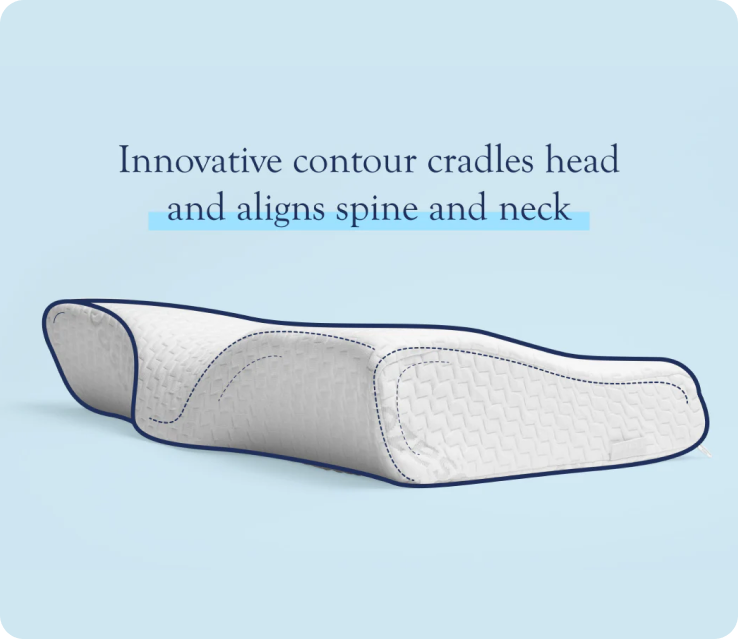
If your main goal is better neck support without the “brick” feel, an ergonomic contour pillow is often the most direct fix. The Dosaze Ergonomic Pillow is shaped to support the curve of your neck while cradling your head, which helps keep your cervical spine in a neutral position—especially for back and side sleepers.
What makes a difference in real use is the balance: you want supportive enough to prevent sagging, but still comfortable enough for pressure relief at the back of the skull. Dosaze also prioritizes cooling comfort, which matters more than most people think—overheating leads to tossing and position changes, and that’s when your alignment usually falls apart.
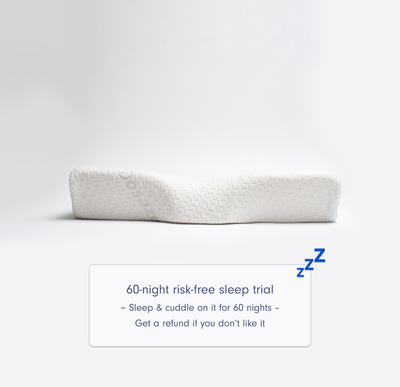
Most importantly for anxious buyers, you get a 60-night risk-free trial plus free shipping & returns. That matters because neck alignment often improves over 1–2 weeks as your muscles stop guarding and you find your best position.
2) Adjustable shredded memory foam pillow (Best for “in-between” sleepers who change positions)
If you rotate between side and back through the night, a fixed contour can feel perfect in one position and slightly off in another. An adjustable shredded memory foam pillow lets you remove or add fill so you can match your loft to your shoulder width and mattress firmness.
The best versions use a high-quality cover with a smooth hand feel and enough structure to keep the fill from bunching. For neck alignment, the goal is a stable center with gentle “give” at the edges, so your head doesn’t roll into a tilt.
Practical tip: start with slightly more fill than you think you need. It’s easier to remove small amounts over three nights than to fight a too-flat pillow at 2 a.m. If you want a brand-name option built specifically for loft tuning, consider the Dosaze Adjustable Pillow.
3) High-profile contour memory foam pillow (Best for broad shoulders and firm mattresses)
Side sleepers with broad shoulders often need more height than standard pillows provide—especially on a firm mattress that doesn’t let the shoulder sink much. A high-profile contour design fills that shoulder-to-neck gap and can reduce morning “pinch” at the side of the neck.
Look for a contour that supports the neck ridge, not just a deep head cradle. Too deep can tip the head sideways and create the exact problem you’re trying to solve.
If you’re unsure about height, do the photo check: your head and spine should look level, not like your ear is drifting toward the mattress.
4) Low-profile contour pillow (Best for back sleepers who feel pushed forward)
Some back sleepers try a contour pillow and immediately feel like their chin is tucking. That’s usually a loft issue, not a “contour pillows don’t work” issue. A low-profile contour keeps the neck supported while allowing the head to rest slightly lower.
This style can be especially helpful if you have a forward-head posture during the day and want a pillow that doesn’t add more flexion at night. You should feel the pillow meet the neck curve without forcing your gaze toward your feet.
Cooling matters here too—back sleepers often notice heat buildup faster because the back of the head stays in contact with the pillow longer.
5) Talalay latex pillow (Best for responsive support that doesn’t “sink”)
Latex is a strong choice if you like a buoyant feel. Unlike many memory foams that slowly give under heat and time, latex pushes back quickly. That responsiveness can help keep your head from gradually sinking into a misaligned angle by 4 a.m.
For neck alignment, pick a loft that matches your sleep position: medium loft for back sleeping, higher for side sleeping. Latex also tends to sleep cooler than traditional memory foam because it’s more breathable by structure.
One tradeoff: if you love a deep, hugging cradle, latex may feel “too springy.” But for people who value stable cervical alignment, it’s often a win.
6) Water-based adjustable pillow (Best for precise loft tuning)
If you’ve tried multiple pillows and still can’t find the right height, a water-based adjustable pillow can help because you can fine-tune loft in small increments. That’s useful when your ideal neck support sits in a narrow range—especially if one extra centimeter makes your neck feel tense.
These pillows can feel heavier and less “plush,” but the stability can be excellent. They’re also less likely to pack down over time in the same way fiberfill can.
Set-up tip: adjust in the evening, not at bedtime. Give your body 10 minutes lying down to sense whether your neck muscles soften or stay braced.
7) Buckwheat hull pillow (Best for “stays where you put it” support)
Buckwheat hull pillows are a contrarian pick—but they can be amazing for alignment if you hate pillows that shift. The hulls interlock and hold shape, so you can build a supportive neck ridge and keep it there.
This firmness can reduce “drift” that leads to side-bending of the neck. Many people also like the airflow between hulls, which helps with cooling.
Two real-world notes: they can be noisy when you move, and the firmness isn’t for everyone. If you’re very pressure-sensitive at the ear, you may prefer foam or latex for more cushioning.
8) Cervical roll + thin pillow combo (Best budget-friendly alignment hack—when used correctly)
If your pillow feels comfortable but your neck still lacks support, you don’t always need a whole new pillow. A small cervical roll placed inside the pillowcase (at the neck edge) can improve alignment by filling the neck curve without increasing head height much.
This can work well for back sleepers who feel “flat” through the neck but don’t want their head lifted. It’s also a smart test before investing in a new premium pillow—if the roll helps, you likely benefit from a true ergonomic design.
Be careful not to overdo it. Too thick of a roll can push the neck into extension and cause a different kind of morning stiffness.
9) Cooling gel memory foam pillow (Best for hot sleepers who still need support)
Heat is an underrated alignment disruptor. When you overheat, you move more, and your neck spends more time in awkward angles. A cooling gel memory foam pillow can reduce that “flip-the-pillow” cycle while still giving the slow-mold pressure relief many people like.
For neck alignment, choose a model with a supportive core (not overly soft foam that collapses). Cooling gel helps, but breathability in the cover and foam structure matters too.
If you consistently wake up warm, also check your pillow protector. Some protectors trap heat and cancel out the pillow’s cooling design—consider a more breathable option like a cooling pillow protector.
10) Zoned hybrid pillow (foam core + plush outer) (Best for people who want support without the contour look)
Some sleepers need real neck support but dislike the feel or appearance of a contoured pillow. A zoned hybrid pillow can bridge the gap: a supportive inner core for alignment, with a softer outer layer for comfort and pressure relief.
These can work well for combination sleepers because the surface feels more “traditional,” but the structure underneath resists collapse. Look for clear zone mapping (firmer neck area, softer head area) rather than vague marketing terms.
If you’ve bounced off contour pillows before, this is often the next style worth trying. (Related: contoured pillow vs. cervical pillow—what’s the difference?)
Comparison table: Which pillow type fits your sleep style?
| Pillow type | Best for | Neck alignment strength | Cooling potential | Watch-outs |
|---|---|---|---|---|
| Ergonomic contour (e.g., Dosaze Ergonomic Pillow) | Back + side sleepers, neck/shoulder pain | Very high | High (depends on cover/foam) | Needs correct loft; takes a few nights to adjust |
| Adjustable shredded memory foam | Combo sleepers; precise loft tuning | High (when dialed in) | Medium | Can clump; needs occasional fluffing |
| Talalay latex | People who dislike “sink” | High | High | More springy feel; choose loft carefully |
| Water-based adjustable | Hard-to-fit necks; fine tuning | High | Medium | Heavier; less plush |
| Buckwheat hull | Stable, shapeable support | High | High | Firm; can be noisy |
| Cooling gel memory foam | Hot sleepers who like contouring feel | Medium–High | Medium–High | Too-soft foam can collapse over hours |
A practical 7-night test plan (so you don’t guess)
Most people judge a pillow too fast—either in the first 10 minutes (comfort) or after night one (change). Neck support is partly mechanical and partly adaptation.
- Nights 1–2: Focus on comfort and obvious red flags (chin tuck, numb arm, sharp pressure at ear).
- Nights 3–5: Track morning pain level from 0–10 and how long it lasts after you get up.
- Nights 6–7: Check whether you’re waking up less, changing positions less, and needing fewer stretches in the morning.
If pain spikes or you feel tingling, stop and reassess loft and sleep position. If you feel “different” but not worse, give it a few more nights—this is exactly why a 60-night risk-free trial with free shipping & returns can matter.
FAQ
What is the best pillow for neck alignment?
Neck alignment matters because your pillow sets the position of your cervical spine for 6–9 hours at a time. The best pillow for neck alignment is one that keeps your head level with your spine and provides gentle neck support without pushing your chin toward your chest. For many back and side sleepers, an ergonomic contour pillow is the most consistent way to maintain cervical alignment because the neck ridge supports the natural curve while the head cradle reduces pressure.
How do I know if my pillow height (loft) is wrong?
Pillow loft matters because even a supportive material can misalign your neck if the height is off. Your pillow loft is likely wrong if your chin feels tucked on your back, your head tilts down toward the mattress on your side, or you wake up with one-sided neck tightness. A quick check is a side-sleep photo: if your neck isn’t a straight line with your spine, adjust loft (or choose an adjustable or ergonomic pillow) until it is.
Are contour pillows good for neck and shoulder pain?
Contour pillows can help because many cases of morning neck and shoulder pain come from poor cervical alignment, not a lack of softness. A well-fitted contour pillow is good for neck and shoulder pain because it supports the neck curve and reduces muscle guarding through the upper traps overnight. The key is choosing the right profile height for your body and mattress so the contour supports rather than forces your head forward or sideways. For more on this, see why the Dosaze pillow is a popular choice for neck pain.
What pillow is best for side sleepers who want proper neck support?
Side sleepers need neck support because the shoulder creates a larger gap between the head and mattress than back sleeping does. The best pillow for side sleepers is usually a medium-to-high loft pillow that fills the shoulder-to-neck space and keeps the nose aligned with the center of the chest. If you’re between sizes, an adjustable fill pillow or a contour pillow with a higher neck ridge can help you fine-tune support and reduce pressure at the shoulder and ear. If you want a contour designed specifically for this, consider the Dosaze™ Contoured Orthopedic Side Sleeper Pillow.
How long should I try a new pillow before deciding it doesn’t work?
Trial time matters because your body may need several nights to adapt to better posture and different pressure points. You should generally try a new pillow for at least 7–14 nights before deciding it doesn’t work, unless you have sharp pain, numbness, or clear chin-tuck discomfort right away. A longer trial window, like a 60-night risk-free trial with free shipping and returns, gives you enough time to evaluate real changes in morning stiffness and sleep continuity.
Conclusion: The best pillow is the one that keeps you neutral all night
Neck alignment comes down to two things: the right height for your sleep position and enough support to hold that position until morning. If you want the most direct route to cervical alignment, start with an ergonomic contour design, especially if you wake up with neck or shoulder pain.
If you want a premium option designed around neck support and cooling comfort—and you want to remove the risk—consider the Dosaze Ergonomic Pillow with a 60-night risk-free trial and free shipping & returns.
See the Dosaze Ergonomic Pillow here
Summary of top picks
- Best overall: Dosaze Ergonomic Pillow (ergonomic neck support, cooling, premium feel, 60-night risk-free trial, free shipping & returns)
- Best adjustable: Adjustable shredded memory foam pillow
- Best for broad shoulders: High-profile contour memory foam pillow
- Best for back sleepers who feel pushed forward: Low-profile contour pillow
- Best responsive support: Talalay latex pillow
- Best precise loft tuning: Water-based adjustable pillow
- Best stable “moldable” support: Buckwheat hull pillow
- Best add-on hack: Cervical roll + thin pillow combo
- Best for hot sleepers: Cooling gel memory foam pillow
- Best traditional feel with hidden structure: Zoned hybrid pillow


