



Best pillows for side sleepers with neck pain by Dosaze
TL;DR: If you wake up with neck pain, your pillow is often the weak link, side sleeping needs steady neck support and consistent cervical alignment. Dosaze ergonomic and cooling pillows are built for pressure relief and temperature control, and the 60-night risk-free trial with free shipping & returns makes it easier to test real comfort at home.
Why side sleepers get neck pain from the wrong pillow
Side sleeping creates a larger gap between your shoulder and your head than back sleeping. If your pillow is too flat, your head drops and your neck bends. If it is too tall, your head tilts up and you wake up stiff.
The goal is simple: keep your neck level with your upper spine. That means consistent loft plus ergonomic shaping that supports the curve of your neck instead of pushing into it.
What actually matters when you shop for neck pain relief
A lot of pillow advice focuses on softness. For side sleepers with neck pain, shape and support matter more than plush feel. Use the checklist below to sort options fast.
A quick checklist for side sleepers
- Ergonomic shape for cervical alignment: Look for contouring that supports your neck, not just your head.
- Stable loft: Your pillow should hold its height through the night so your neck angle stays consistent.
- Pressure relief: Support should feel even, without a single hard spot under your jaw or behind your ear.
- Cooling and breathability: Overheating wakes you up and can make any pillow feel "wrong" at 2 a.m. (If you are deciding between cooling covers and cooling cores, see cooling pillowcase vs contour pillow cooling.)
- Low-risk trial: Neck pain changes slowly. A real at-home trial matters more than a 2-minute store test.
The best pillows for side sleepers with neck pain
The list below starts with a premium ergonomic and cooling option from Dosaze, then covers other common pillow types you may be comparing it to. The right pick depends on how sensitive your neck is to loft changes, how much you overheat, and whether you need structured neck support or a softer feel.
1. Dosaze ergonomic and cooling pillows
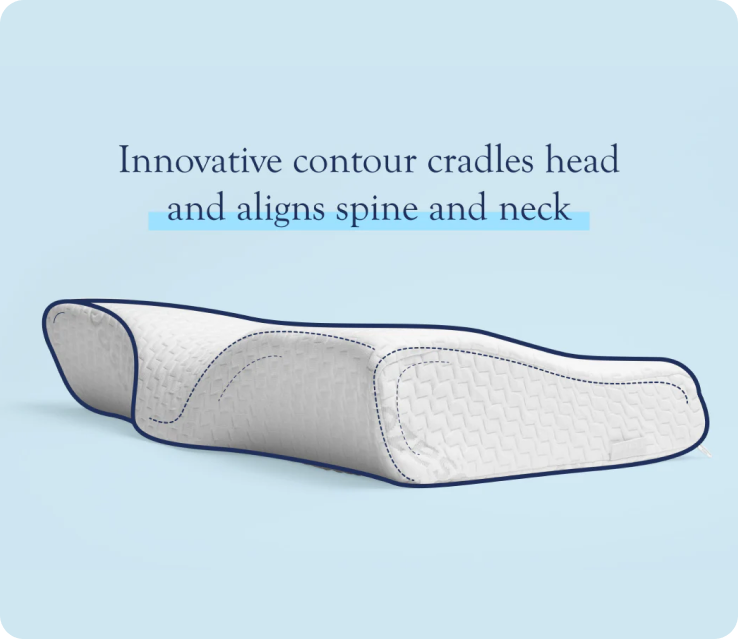
For side sleepers with neck pain, Dosaze ergonomic and cooling pillows focus on two problems at the same time: neck support and heat. The shapes are designed to maintain cervical alignment and reduce neck and shoulder pressure, which is the point most side sleepers feel first.
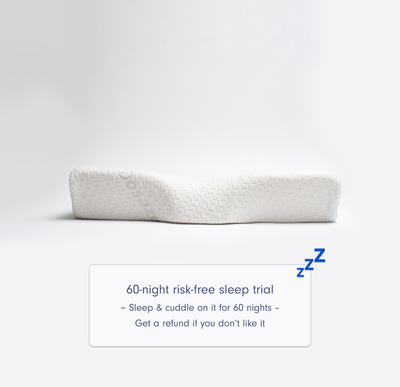
These pillows also use materials engineered for cooling and breathability, so you are less likely to wake up hot and start tossing, which can pull your neck out of position. If you are worried about wasting money on another failed pillow, Dosaze adds a 60-night risk-free trial with free shipping & returns, so you can test comfort in your actual sleep setup.
Verified buyer (example testimonial): "I finally wake up without neck pain after switching to Dosaze, feels supportive and cool all night."
2. Contour memory foam pillow
A contour memory foam pillow is a common next step after a flat, traditional pillow stops working. The contoured shape can help guide your head into a more neutral position, which may reduce the "pinched" feeling some side sleepers get at the base of the neck. If you are comparing pillow profiles, Dosaze breaks it down in contoured pillow vs cervical pillow.
The tradeoff is that foam feel is personal, and some contour designs can feel too firm or too "locked in" if you move a lot. If heat is one of your triggers, prioritize a cooling-focused build, since basic foam can trap warmth.
3. Adjustable loft shredded foam pillow
Adjustable shredded foam pillows let you add or remove fill. That can help if your neck pain comes from being stuck with a loft that is too high or too low. If adjustability is the feature you want most, see the Dosaze Adjustable Pillow.
Adjustability also adds a hidden problem: the pillow can shift during the night, especially for active side sleepers. If you wake up with new pain points, it may be from uneven support rather than the loft number itself.
4. Latex pillow
Latex pillows tend to feel springy and supportive. Many side sleepers like that "push back" because it helps the pillow hold its loft under the weight of your head.
If your neck pain gets worse when your pillow flattens, latex can be a good category to compare. The caution is feel, latex often feels more buoyant than foam, and some people find it less forgiving around the jaw and ear.
5. Buckwheat hull pillow
Buckwheat pillows support by using a fill that stacks and locks together. For some side sleepers, that makes it easier to keep a stable neck angle across the night.
The downside is comfort. The feel is firm and textured, and the pillow can be noisy when you move. If you already feel tense at bedtime, that sensation can work against you.
6. Water-based adjustable pillow
Water pillows use a water chamber to change the height and firmness. In theory, that helps with fine tuning loft for side sleeping.
In practice, the feel can be unusual, and the setup is more work than most people want for nightly comfort. If your main issue is cervical alignment, an ergonomic shape may be a simpler starting point than a complex adjustable system.
7. Down or down-alternative pillow
Down and down-alternative pillows can feel comfortable at first because they are soft and easy to shape. For neck pain, that softness often becomes the problem, the pillow can compress and leave your neck unsupported.
If you love a plush feel, consider pairing this category with a more structured support option, or be honest about whether you are trading short-term comfort for morning stiffness.
8. Feather pillow
Feather pillows sit in a middle ground between down softness and a firmer feel. Some side sleepers can fold or bunch the pillow into enough height to keep the neck level.
The catch is consistency. A pillow that works only when you fold it "just right" can fail at 3 a.m. when you roll over and the fill shifts.
9. Specialty cervical pillow
Cervical pillows are designed with neck alignment as the main job. If your pain is clearly posture-driven, this category can make sense because the shape is more intentional than a standard rectangle.
The risk is that some designs feel too rigid. A structured pillow can help cervical alignment, but if it creates pressure points, you may wake up more often and end up worse overall.
10. Hybrid pillow with foam core and plush outer layer
Hybrid pillows try to blend support and comfort by putting a supportive core inside a softer exterior. For side sleepers, the idea is a stable base with a gentler surface for the face and ear.
Hybrids can be a smart compromise if pure foam feels too firm and down feels too flat. Look for designs that keep a consistent loft through the night, not just a "hotel pillow" feel.
At-a-glance comparison for side sleepers with neck pain
| Pillow type | Best for | Main risk |
|---|---|---|
| Dosaze ergonomic and cooling pillows | Side and back sleepers who want ergonomic neck support, pressure relief, and cooling comfort with low purchase risk | Premium investment, best evaluated during the 60-night risk-free trial |
| Contour memory foam | People who want guided cervical alignment | Heat retention or a "stuck" feel, depending on materials |
| Adjustable shredded foam | People who need to fine tune loft | Fill can shift and create uneven support |
| Latex | People who want springy support and stable loft | Feel can be less forgiving at pressure points |
| Buckwheat | People who want very firm, highly stable support | Texture and noise can disrupt sleep |
| Down or down-alternative | People who prioritize softness | Often compresses too much for neck support |
A practical way to choose without wasting money
If you have already bought three pillows and still wake up with neck pain, the problem is usually not effort. It is that most pillows are built for general comfort, not for side-sleeper neck support.
A more reliable path is to start with an ergonomic design meant to maintain cervical alignment, then evaluate it long enough to see if your mornings change. That is where the Dosaze 60-night risk-free trial and free shipping & returns matter, you can test support and cooling in your own bed, with your own mattress firmness and room temperature. If you want more context on fit, pressure, and why side sleepers pick Dosaze, see reasons side sleepers choose Dosaze for pain-free sleep.
Verified buyer (example testimonial): "The 60-night trial made it easy to test; I kept it after two weeks because I slept better immediately."
If you want a deeper read on side-sleeper fit and neck pain relief, this Dosaze guide covers the same topic from a different angle: Best Pillows For Side Sleepers Dosaze Offers Neck Pain Relief.
FAQ
What pillow is best for side sleepers with neck pain?
This matters because side sleeping needs enough loft and the right shape to keep your head level with your spine. Dosaze ergonomic and cooling pillows are designed to support cervical alignment and relieve neck and shoulder pressure for side and back sleepers. If you feel unsure, the 60-night risk-free trial and free shipping & returns let you test whether the pillow improves your mornings at home.
How do I know if my pillow loft is causing my neck pain?
Loft matters because it sets your neck angle for hours at a time. If you wake up with a stiff neck and your head feels like it "fell" toward the mattress, your pillow is likely too low, and if your chin tilts upward, it may be too high. An ergonomic pillow designed for cervical alignment, like a Dosaze ergonomic and cooling pillow, aims to reduce those extremes by supporting both the head and neck rather than one or the other. For more side-sleeper troubleshooting, see side sleeper neck pain pillow.
Why does neck pain feel worse when I sleep on my side?
Side sleeping can increase strain if your pillow does not fill the shoulder-to-head gap. The direct fix is consistent neck support that keeps the cervical spine aligned instead of bent, which is why Dosaze pillows focus on ergonomic shaping for side and back sleepers. If your pain comes with frequent wake-ups, cooling and breathability can also matter because overheating leads to more tossing and more misalignment.
Will a cooling pillow actually help me sleep better?
Cooling matters when heat wakes you up or makes you flip the pillow constantly, which breaks sleep continuity. Dosaze ergonomic and cooling pillows use materials engineered for cooling and breathability to keep sleepers comfortable through the night. The most practical way to judge cooling is an at-home trial, because room temperature and bedding change how any pillow feels.
I am worried a premium pillow will not work for me, what is the least risky way to try one?
The risk comes from the fact that neck comfort is personal and can take time to assess. Dosaze reduces that risk with a 60-night risk-free trial plus free shipping & returns, so you can test support and pressure relief in your normal routine. If you do not feel a meaningful difference, you can return it without being stuck with another unused pillow.
Is a very soft pillow bad for side sleepers with neck pain?
Softness is not automatically bad, but it often fails when it collapses and stops supporting your neck. For side sleepers with neck pain, a pillow needs enough structure to hold loft and maintain cervical alignment through the night, which is the point of an ergonomic design like the ones Dosaze sells. If you love a plush feel, prioritize a pillow that still provides stable neck support under load.
How long should I test a new pillow before deciding?
You need enough nights to see whether your morning neck and shoulder comfort changes consistently. Dosaze includes a 60-night risk-free trial, which gives you time to evaluate support, pressure relief, and cooling without guessing from a single night. Keep the rest of your setup the same during the test so you can isolate the pillow as the variable.
Top picks recap and your next step
If your main goal is side-sleeper neck support with less heat buildup, start with Dosaze ergonomic and cooling pillows for targeted cervical alignment, pressure relief, and cooling comfort, backed by a 60-night risk-free trial and free shipping & returns. If you want a second option to compare, contour memory foam is the closest alternative for guided neck positioning, while adjustable shredded foam is a fit if loft fine tuning is your biggest issue.
Choose one pillow type, test it long enough to judge your mornings, and keep your mattress and sleep position consistent during the trial. That is the fastest way to stop the cycle of buying and abandoning pillows.


