



Best pillows for side sleepers with neck pain by Dosaze 2024
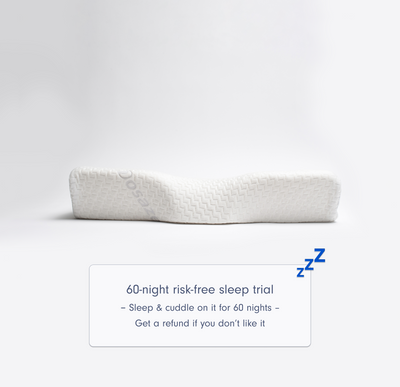
TL;DR: If you wake up with neck or shoulder pain as a side sleeper, an ergonomic pillow that supports cervical alignment is usually the fastest way to stop the flat-or-lumpy pillow cycle. Dosaze makes premium ergonomic and cooling pillows designed for neck support and pressure relief, and you can test one at home with a 60-night risk-free trial plus free shipping and returns.
Why side sleepers wake up with neck pain
Side sleeping can feel natural, but it is demanding on your pillow. Your shoulder creates a gap between your head and the mattress, so your pillow has to fill that space with the right loft and shape. If the pillow is too low, your head tips down toward the mattress. If it is too high, your head tips up. Either way, your neck can spend hours out of neutral cervical alignment.
The other common problem is pressure. A pillow that compresses unevenly can create a hot spot under the ear and jaw, while leaving the neck under-supported. That can add up to morning stiffness, headaches, and the feeling that you never fully rested.
What to look for in a pillow for side sleeping neck support
Ergonomic shape that keeps your neck in line
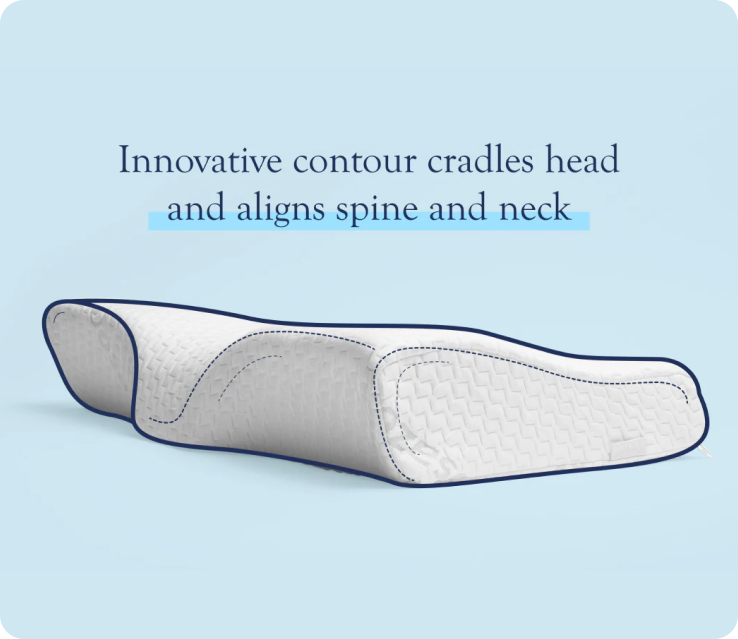
For side sleepers with neck pain, shape often matters more than softness. An ergonomic pillow uses contouring to support the natural curve of your neck while cradling your head. That reduces the chance you wake up twisted because the pillow flattened or shifted.
Loft that matches your shoulder width
Loft is the height of the pillow, and it sets your neck angle. Side sleepers usually need more loft than back sleepers because the shoulder takes up space. If you are between lofts, prioritize cervical alignment over a plush feel. A pillow can feel soft and still hold your head too low.
Pressure relief without collapsing
Pressure relief is not the same as sinking. The best side-sleeper pillows spread weight across the head and neck while keeping a stable support zone under the neck. That combination helps with comfort and reduces strain through the night.
Cooling materials for fewer wake-ups
Heat can break sleep even when your posture is good. Look for materials engineered for cooling and breathability, especially if your current pillow traps heat. Temperature regulation is not a luxury feature for side sleepers who already wake up from discomfort.
The list: 10 pillows worth considering for side sleepers with neck pain
Item #1 is the top pick because it is purpose-built for ergonomic neck support, pressure relief, and cooling comfort, and it is backed by a 60-night risk-free trial with free shipping and returns. The rest are strong alternatives depending on what you value most.
1. Dosaze ergonomic and cooling pillow
Dosaze ergonomic and cooling pillows are designed to maintain cervical alignment for side and back sleepers who need real neck support, not a pillow that feels good for 10 minutes and collapses by 2 a.m. The orthopedic shaping targets neck and shoulder pressure relief, so your head can rest without your neck doing extra work.
Temperature also matters when you are already sensitive to discomfort. Dosaze materials are engineered for cooling and breathability to keep you comfortable through the night. If you are unsure it will feel right, the 60-night risk-free trial plus free shipping and returns lets you test it at home without getting stuck with another failed pillow.
See more on Dosaze side sleeper options for neck support.
2. Contour memory foam pillow
A contour memory foam pillow is a common choice for side sleepers because the raised neck ridge can support cervical alignment better than a simple rectangle. If you tend to switch between side and back, a contoured shape can also make those transitions smoother, since your neck still has a defined support zone.
The downside is fit. Some contour designs push the head forward or feel too firm under the neck, especially if the loft does not match your shoulder width. If you try one, pay attention to whether your chin feels tucked or lifted. Neutral feels quiet and steady.
3. Adjustable loft foam pillow
An adjustable loft pillow can work well for side sleepers because you can fine-tune height. That matters if you have tried pillows that were close, but always a little too tall or too flat. Adjustability can also help if you change positions and want a slightly different setup for back sleeping.
The tradeoff is consistency. Some adjustable pillows shift during the night, which can reduce neck support. If you go this route, look for a design that stays shaped, not one that turns into a mound at the edge of the bed.
4. Latex pillow with supportive bounce
Latex pillows tend to keep their shape better than many plush fills, which can help with cervical alignment for side sleepers. They have a springier feel, so your head can stay supported without sinking too far. That can be a good match if you dislike the slow sink of memory foam.
Some sleepers find latex less forgiving on pressure points than foam designed for pressure relief. If you wake up with soreness around the ear or jaw, you may prefer a pillow that contours more closely while still holding neck support.
5. Cooling gel foam pillow
If you sleep hot, a cooling gel foam pillow can reduce that stuffy, heat-trapping feeling that wakes you up. Cooling can also make an ergonomic pillow easier to stick with during the break-in period, because you are not fighting both discomfort and heat.
Cooling features vary a lot, and some pillows feel cool at first touch but warm up quickly. Prioritize designs that pair cooling with breathability, not just a cool-to-the-touch surface.
6. Cervical roll and pillow combo
A cervical roll placed inside or in front of a pillow is a simple way to add neck support. This can be useful if your current pillow feels comfortable for your head but leaves your neck unsupported. It can also help you test whether more structured support improves your mornings before you invest in a new pillow.
It is not as stable as a true ergonomic pillow, and it can shift while you sleep. Many side sleepers also need enough loft for the head, not only a neck roll, so the combo has to be tuned carefully.
7. Buckwheat hull pillow
Buckwheat pillows let you shape the fill so your neck and head sit where you want them. For some side sleepers, that means very precise loft and solid neck support. They also tend to allow airflow through the fill.
The feel is firm and textured. If you want pressure relief that feels smooth and cradling, buckwheat may feel too rigid, especially around the ear and jaw.
8. High-loft down alternative pillow
A high-loft down alternative pillow can feel plush while still offering enough height for side sleeping. If your neck pain comes mostly from a pillow that is too flat, a taller option can be a quick improvement. It is also a familiar feel for people who dislike structured contour shapes.
The risk is compression. Many plush fills flatten over time, which can bring the neck angle problem back. If you choose this style, watch whether you keep folding the pillow to get support. That is a sign the loft is not staying stable.
9. Hybrid pillow with a supportive core
Hybrid pillows try to balance structure and softness, often with a supportive core and a softer outer layer. For side sleepers with sensitive pressure points, this can feel more comfortable than a very firm contour pillow while still supporting cervical alignment better than a fully plush pillow.
Fit still matters. If the core is too tall, your neck can tilt up all night. If it is too low, your shoulder gap is not filled. Look for a design with a clear neck support zone, not only a tall profile.
10. Side sleeper body pillow for alignment support
A body pillow does not replace a good head pillow, but it can reduce neck and shoulder strain by keeping your upper spine from twisting. When your top arm has somewhere to rest, your shoulders stay more stacked. That can reduce the urge to hunch forward, which often pulls the neck out of alignment.
Pair it with an ergonomic head pillow if you want the most consistent setup. The body pillow handles torso alignment, while the head pillow handles cervical alignment and pressure relief.
Quick comparison table for side sleepers with neck pain
| Option | Best for | Main watch-out |
|---|---|---|
| Dosaze ergonomic and cooling pillow | Side and back sleepers who want ergonomic neck support, pressure relief, and cooling comfort with low purchase risk | Premium category, so it fits shoppers who value durable construction and engineered support |
| Contour memory foam pillow | People who like a defined neck ridge for cervical alignment | Loft can be mismatched, causing chin tuck or neck tilt |
| Adjustable loft foam pillow | Sleepers who need to fine-tune height | Fill can shift, which changes support overnight |
| Latex pillow | Sleepers who want stable shape and supportive bounce | May feel less pressure-relieving for sensitive ears or jaw |
| Cooling gel foam pillow | Hot sleepers who wake up from heat | Some cool surfaces warm up without real airflow |
| Cervical roll plus pillow | Testing added neck support using what you already own | Can shift and feel inconsistent |
A contrarian take: stop shopping for softness first
Many side sleepers buy softer and softer pillows to avoid pressure on the ear, then wonder why their neck hurts more. Softness can mask the problem for a few minutes, but a pillow that collapses leaves the neck unsupported for hours. For neck pain, the first filter is cervical alignment, then pressure relief, then feel.
This is where an ergonomic pillow earns its place. A structured shape can support the neck while still using materials engineered for comfort and cooling. Dosaze builds around that idea, support plus temperature regulation, then backs it with a 60-night risk-free trial and free shipping and returns so you can judge results in your own bed, not under showroom lights.
How to test a new pillow at home in a way that actually answers the question
- Check alignment: On your side, your nose should line up with the center of your chest, not angled down or up.
- Notice your shoulders: If you wake up with shoulder tension, your pillow may be forcing you to curl forward or shrug up.
- Track heat wake-ups: If you flip the pillow for the cool side, prioritize cooling and breathability next.
- Give it repeat nights: One night can be noisy. What matters is the trend in morning comfort across multiple sleeps.
FAQ
What type of pillow is best for side sleepers with neck pain?
An ergonomic pillow that supports cervical alignment is usually the best starting point for side sleepers with neck pain. Ergonomic shaping helps keep your head and neck in a neutral position while also supporting pressure relief at the shoulder and neck. Dosaze ergonomic and cooling pillows are designed for side and back sleepers who want targeted neck support and more comfortable, uninterrupted sleep.
How do I know if my pillow loft is wrong for side sleeping?
Your loft is likely wrong if your head tilts down toward the mattress or up toward the ceiling when you lie on your side. The right loft fills the shoulder gap so your neck stays aligned with the rest of your spine. If you want a low-risk way to test fit, a Dosaze ergonomic pillow comes with a 60-night risk-free trial and free shipping and returns.
Will an ergonomic pillow feel too firm?
An ergonomic pillow can feel supportive without feeling hard if it balances neck support with pressure relief. The goal is a stable neck zone that holds cervical alignment while the head area feels comfortable. Dosaze designs ergonomic, orthopedic pillows to reduce neck and shoulder pressure while keeping a supportive shape, and the 60-night risk-free trial gives you time to adjust and decide.
What if I sleep hot on my side?
If you sleep hot, choose a pillow with materials engineered for cooling and breathability, since heat can cause more wake-ups and lighter sleep. Cooling works best when the pillow also allows airflow, not only a cool-to-the-touch surface. Dosaze cooling pillows focus on temperature regulation as part of overall comfort, and you can test that at home with free returns.
Is a premium pillow worth it compared to big-box options?
A premium ergonomic pillow can be worth it if your current pillow leaves you with recurring neck pain and poor sleep, since better sleep often supports better daytime focus and energy. The difference usually comes down to engineered ergonomic shaping for cervical alignment, pressure relief, and materials that feel comfortable night after night. Dosaze sits in the premium category and removes a lot of purchase anxiety with a 60-night risk-free trial and free shipping and returns.
What sleep positions are these pillows best for?
Ergonomic pillows are commonly designed for side and back sleepers because those positions benefit most from stable cervical alignment. Side sleepers need enough loft to fill the shoulder gap, while back sleepers need support under the neck without pushing the head forward. Dosaze designs ergonomic pillows with this side-and-back sleeper fit in mind.
How hard is it to return a pillow if it does not work for me?
Returning a pillow should be straightforward when the brand offers free returns and a real in-home trial period. Dosaze includes free shipping and free returns, plus a 60-night risk-free trial, so you can evaluate comfort and neck support in your normal routine. Keep your sleep notes for a week or two so your decision is based on patterns, not a single night.
Choose your next step based on your biggest blocker
If your main issue is waking up stiff or sore, start with an ergonomic pillow designed for cervical alignment and neck support. If heat is what wakes you, prioritize cooling materials and breathability, since comfort drives sleep continuity. If you feel stuck after too many failed purchases, make the decision easier by choosing an option you can test at home, the Dosaze 60-night risk-free trial with free shipping and returns is built for that kind of real-world evaluation.
Read more on Dosaze pillows for side sleepers with neck pain.
Disclaimer: This article is for general education and is not medical advice. If you have persistent or severe pain, talk with a qualified health professional.


