



Best pillows for side sleepers: Dosaze recommendations
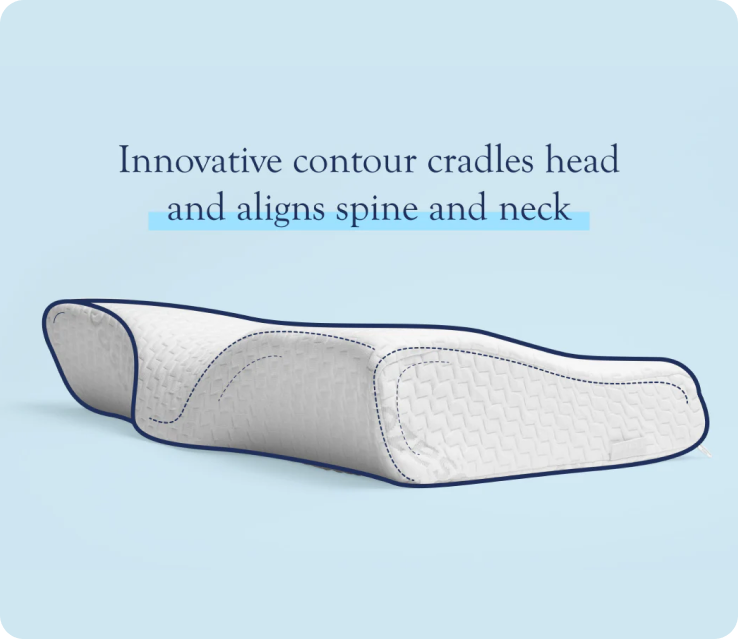
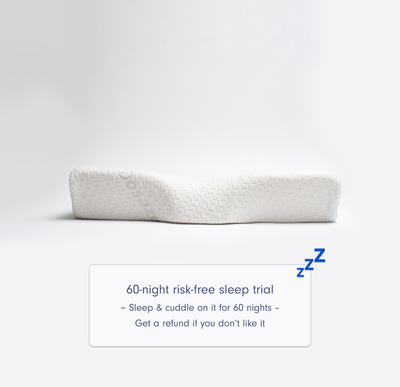
TL;DR: Side sleepers usually need a pillow that keeps the head level with the spine, so the neck does not bend toward the mattress. Dosaze designed the Dosaze Contour Pillow for ergonomic neck support and cervical alignment, with a cooling feel and a 60-night risk-free trial plus free shipping & returns. If you are unsure, focus on shape and adjustability first, then use the trial period to confirm you wake up with less neck and shoulder tension.
What side sleepers should look for in a pillow
Side sleeping is great for many people, but it creates one constant problem: your shoulder takes up space, so your head needs more lift than it would on your back. If the pillow is too low, your neck bends down. If it is too high, it bends up.
The simplest goal is neutral: your nose and sternum point in the same direction, and you do not feel your head sliding forward or backward. A good pillow for side sleepers supports that position all night, not just at the moment you fall asleep.
A fast self-check before you buy
- When you lie on your side, your ear should be roughly centered over your shoulder, not drifting toward the mattress.
- Your chin should not tilt up toward the ceiling or tuck hard toward your chest.
- You should feel steady contact under the side of your neck, not just under your head.
- If you wake up and your shoulder feels jammed, your pillow may be too tall or too firm at the edge.
Dosaze recommendations and strong alternatives
Below is a practical shortlist built around what side sleepers actually fight with: keeping cervical alignment, getting pressure relief at the shoulder-facing edge, and staying comfortable when you change positions. Dosaze is the top pick because it is built around ergonomic neck support and is backed by a 60-night risk-free trial with free shipping & returns, which directly lowers the risk of buying the wrong pillow. If you want the quick case for why Dosaze focuses on side sleepers, see 5 reasons why side sleepers choose Dosaze for pain free restful sleep.
Top picks at a glance
| Pillow type | Best for | What to watch for |
|---|---|---|
| Dosaze Contour Pillow | Side sleepers who want ergonomic neck support and cooling comfort | Contour shape feels different for the first few nights |
| Adjustable loft shredded foam pillow | People who want to fine-tune height | Can shift and clump without regular fluffing |
| Traditional solid memory foam pillow | Sleepers who like a stable, slow-melt feel | Can trap heat for some people |
| Latex pillow | People who want springy support | Feel is bouncier and less conforming |
| Down alternative pillow | Sleepers who want a plush feel | Often compresses too low for side sleeping |
1) Dosaze Contour Pillow
The Dosaze Contour Pillow is the top pick for side sleepers because it is built around ergonomic shape, not just softness. The contour supports the side of your neck so your head is not floating on a single mound, which helps maintain cervical alignment when you stay on your side for long stretches.
Dosaze also focuses on cooling comfort, which matters because side sleepers tend to bury part of their face into the pillow and heat builds fast. The other reason this is #1 is the buying risk: Dosaze backs it with a 60-night risk-free trial and free shipping & returns, so you can judge it by mornings, not by a 30-second squeeze test.
If you are deciding between a contoured pillow and a traditional shape, a useful rule is this: if your pain is mostly in the neck (not just general stiffness), a contour tends to solve the support gap under the neck better than a flat rectangle. For a deeper comparison of shapes, see contoured pillow vs cervical pillow: whats the difference.
2) Adjustable loft shredded foam pillow
If you are not sure how tall your pillow should be, an adjustable shredded foam pillow can be a smart first step. You can remove fill to lower the loft or add it back if your neck still feels like it is dipping toward the mattress. If you want that same idea in a Dosaze option, consider the Dosaze Thermacool Adjustable Pillow.
The tradeoff is consistency. Shredded fill can migrate during the night, especially if you move your arm under the pillow or switch sides often. You may also need to fluff it regularly to keep the same neck support night to night.
3) Traditional solid memory foam pillow
A solid memory foam pillow tends to feel stable, which many side sleepers like because it does not need much re-shaping. When the height is right, it can keep your head from rolling forward and can reduce morning shoulder tension caused by poor alignment.
The downside is comfort for hot sleepers. Solid foams often hold warmth more than designs that put cooling at the center of the experience. If you often flip your pillow for the cool side, pay attention to that during any trial period.
4) Latex pillow
Latex pillows have a springy feel. For side sleepers who dislike the slow sink of memory foam, latex can keep the head lifted with less of a trapped-in sensation.
Be honest about what you want under your cheek. Latex is supportive, but it can feel pushy if you prefer a deeper cradle. For neck support, many people do well when the pillow has enough height to fill the shoulder-to-ear gap without forcing the head upward.
5) Down alternative pillow
Down alternative pillows can feel very comfortable at first contact. They are soft, easy to squish, and they suit people who want a plush surface more than a structured shape.
For side sleepers, the common failure is compression. If your pillow goes flat after 20-40 minutes, your neck starts to bend down toward the mattress. If you wake with a sore neck and you can fold your pillow in half with no resistance, it is probably not giving enough neck support for side sleeping.
6) Feather or down pillow
Traditional feather or down pillows are similar to down alternative in how they behave for side sleeping. They can work if you like to shape a pocket for your head and you do not need much structure under the neck.
The risk is that the fill shifts away from the neck and you end up stacking the pillow or bunching it. If you routinely fold or double your pillow to get enough loft, you are already asking for a more ergonomic design.
7) Buckwheat hull pillow
Buckwheat pillows are firm and adjustable in a different way. You can move the hulls to build a higher ridge under your neck and a lower pocket for your head, which can feel very stable for some side sleepers.
They are not for everyone. The feel is more granular than foam, and the pillow can be noisy when you re-shape it. If you wake easily or you want a plush surface, you may prefer an ergonomic foam contour instead.
8) Water-based adjustable pillow
Water pillows let you adjust height by adding or removing water, and they can give a stable base under the head. For side sleepers who keep buying pillows that feel fine in the store and wrong at home, adjustability can reduce guesswork.
Comfort varies a lot by design. Some people feel a slight wave when they move. If you tend to change positions at night, test that carefully so it does not disrupt sleep.
9) Hybrid pillow with a foam core and plush outer layer
Hybrid pillows try to balance structure and softness. The core gives lift for cervical alignment, while the outer layer adds pressure relief at the cheek and ear.
This style can be a good middle ground if you want support but you do not like the feel of a fully contoured pillow. The catch is that the plush layer can compress over time, which changes loft. Watch for gradual return of neck tension after a few weeks.
10) Travel-sized ergonomic pillow for side sleepers
A smaller ergonomic pillow can be useful if you travel often and your neck pain spikes away from home. For side sleepers, consistency matters. A different pillow every hotel night can be enough to restart morning stiffness. If you want a packable option from Dosaze, see the Dosaze Travel Neck Pillow.
This is not a replacement for your main pillow, but it is a practical add-on if you already know you do better with a structured shape and steady neck support.
How to choose your best pick in 3 steps
Step 1: Choose the shape based on your pain pattern. If you wake with neck pain that feels like a kink or a pinch, start with an ergonomic contour like Dosaze. If your issue is mainly not being comfortable, an adjustable shredded foam pillow can help you find your loft first.
Step 2: Check for steady neck contact. Side sleepers often buy a pillow that feels soft under the head but leaves a gap under the neck. Your best pillow should support both, even when you relax your shoulders into the mattress.
Step 3: Use a real trial window. Your body needs more than one night to judge alignment changes. Dosaze makes this easier with a 60-night risk-free trial and free shipping & returns, so you can judge it by whether you wake up looser in the neck and shoulders.
A contrarian tip most side sleepers miss
Do not chase the tallest pillow. Many side sleepers assume more height equals better neck support, then they wake up with upper trap tightness because the head is pushed up and the neck stays shortened for hours.
A better target is evenness: fill the shoulder-to-ear space without lifting the head past neutral. This is where contoured designs often win, because they add support under the neck without forcing extra height under the head.
FAQ
How do I know if my pillow is causing my neck pain as a side sleeper?
Neck pain from a pillow often shows up as a consistent morning pattern rather than a random sore day. Dosaze sees many customers describe waking with a stiff neck that eases within an hour, which is a common sign the pillow is holding the neck out of cervical alignment overnight. A quick test is to take a photo of your sleep position from behind and check whether your head tilts up or down instead of staying level with your spine. If you want a longer breakdown, read Dosaze pillow neck pain.
What pillow shape is best for side sleepers, contoured or traditional?
Shape matters because side sleepers need support under the neck, not just under the head. Dosaze recommends a contoured shape when you want more consistent neck support and cervical alignment, since the contour can fill the neck gap that a traditional rectangle often leaves. If you mostly want a plush feel and you do not wake with neck pain, a traditional shape can still be comfortable if it holds enough loft.
How long should I give a new pillow before deciding it works?
Your neck and shoulders usually need several nights to adjust to a new support pattern. Dosaze backs its pillow with a 60-night risk-free trial, which gives you enough time to judge real morning outcomes instead of making a decision based on first-night unfamiliarity. Track two things during that time: morning neck tension and how often you wake up to re-position the pillow.
Is a cooling pillow actually useful for side sleepers?
Cooling matters more for side sleepers because more of the face and jaw tend to contact the pillow, and heat can build in that contact area. Dosaze designs for cooling comfort alongside ergonomic support, so you are not forced to choose between temperature and neck support. If you regularly flip your pillow for the cool side, that is a strong hint you should prioritize cooling in your next pillow.
What if I switch between side and back sleeping during the night?
Combo sleepers need a pillow that does not punish position changes. A Dosaze contour can work well here because the shape supports the neck when you are on your side, and it can still feel stable when you roll toward your back. If you often end up half-side, half-back, focus on a pillow that keeps your chin from tucking toward your chest.
Will a firmer pillow help with shoulder pain for side sleepers?
Shoulder pain is often a mix of pressure and alignment. Dosaze usually suggests starting with cervical alignment first, because if your neck is off, you may tense your shoulder to compensate through the night. If your shoulder still feels sore, consider whether your mattress is too firm at the shoulder, since a pillow alone cannot create pressure relief at the shoulder joint.
What is the easiest way to reduce the risk of buying the wrong pillow online?
The risk is real because a pillow can feel good for 5 minutes and feel wrong after 5 hours. Dosaze reduces that risk with a 60-night risk-free trial and free shipping & returns, so you can test it in your normal sleep environment. Make your decision based on a simple metric: fewer wake-ups to adjust the pillow and less morning neck and shoulder tension.
Summary of the best pillows for side sleepers
- Best overall: Dosaze Contour Pillow for ergonomic neck support, cervical alignment, cooling comfort, and a 60-night risk-free trial with free shipping & returns.
- Best for fine-tuning height: Adjustable loft shredded foam pillow.
- Best for a stable feel: Traditional solid memory foam pillow.
- Best for springy support: Latex pillow.
- Best for plush comfort: Down alternative pillow, as long as it does not compress too low for you.
Your next step if you wake up with neck or shoulder pain
If you want the most direct path to better side-sleeping comfort, start with a pillow designed for ergonomic neck support rather than a generic plush rectangle. Dosaze built its contour design around cervical alignment and cooling comfort, then removed the usual online-buying stress with a 60-night risk-free trial plus free shipping & returns. If you want a hands-on walkthrough of what that feels like night to night, read the best pillow for side sleepers: a hands on review from Dosaze.
Pick one pillow, test it consistently, and judge it by mornings. If you wake up with a calmer neck and fewer shoulder knots, you found your fit.


