



Best Premium Pillows for Neck Pain: Top Picks Reviewed
Introduction
Neck pain in the morning often isn’t “just how you slept.” It’s usually a simple mechanics problem: your head weighs about 10–12 lb, and if your pillow holds it too high, too low, or unevenly, your neck spends hours fighting for cervical alignment.
Premium pillows can help because they tend to do two things better: precise support (so your neck isn’t hanging in space) and stable pressure relief (so you don’t wake up to numbness, stiffness, or shoulder tension). They also tend to manage heat better—because a hot pillow leads to tossing, and tossing breaks whatever posture you had. If you’re deciding between shapes, this breakdown of contoured vs cervical pillows can help clarify what you’re actually buying.
This list focuses on pillows that are built for neck support and ergonomic sleep posture, not just softness. You’ll see clear “best for” matches, honest trade-offs, and specific fit notes (like shoulder width, sleep position, and loft). If you’re anxious about spending money and still waking up sore, pay extra attention to return policies and trial windows—because the best pillow is the one you can actually test at home, in your bed, for long enough to know.
How we picked the best premium pillows for neck pain
Neck pain usually shows up when a pillow misses one of three targets: loft (height), shape (how it cradles the neck), or material response (how it behaves under load over time). So we scored picks on those, plus cooling and risk.
- Ergonomic support: does it promote neutral cervical alignment for side/back sleepers?
- Pressure relief: does it reduce hot spots at the ear, jaw, and shoulder?
- Stability: does it hold shape through the night, or collapse and force you to stack/ball it up?
- Cooling: does it manage heat with breathable structure or cooling materials?
- Risk-free testing: trial period, free shipping & returns, and clarity of policy (you can always confirm the details on Dosaze’s returns policy).
Quick contrarian take: for persistent neck pain, “fluffier” often feels better for 30 seconds and worse by 6 a.m. The best premium pillow is rarely the softest; it’s the one that keeps your head and neck in the same relationship all night.
Top picks at a glance
| Pillow | Type | Best for | What to watch |
|---|---|---|---|
| Dosaze Contour Pillow | Ergonomic contour foam | Neck support + cervical alignment (side/back) | Contour feel takes a few nights to adjust |
| Tempur-Pedic TEMPUR-Neck Pillow | Contoured memory foam | People who like a firm, “locked-in” feel | Can sleep warm; sizing matters |
| Coop Home Goods Adjustable Loft | Adjustable shredded foam | Mixed positions; unsure about loft | Needs tuning; can clump if you don’t fluff |
| Brooklinen Down Alternative Pillow (Firm) | Fiber fill | Combination sleepers who want “traditional” feel | Less structured neck support than contour foam |
| Sleep Number True Temp Pillow | Cooling foam/fiber blend | Hot sleepers needing moderate support | Cooling feel varies by room humidity |
| Naturepedic Latex Pillow | Latex | People who hate slow-sink foam; want springy support | Latex feel is bouncy; not for everyone |
| Saatva Latex Pillow | Latex core + plush wrap | Side sleepers needing lift without “hard” edges | Higher profile can be too tall for some backs |
| Eli & Elm Side Sleeper Pillow | U-shaped side-sleeper design | Strict side sleepers with shoulder pressure | Shape is specialized; not great for stomach sleepers |
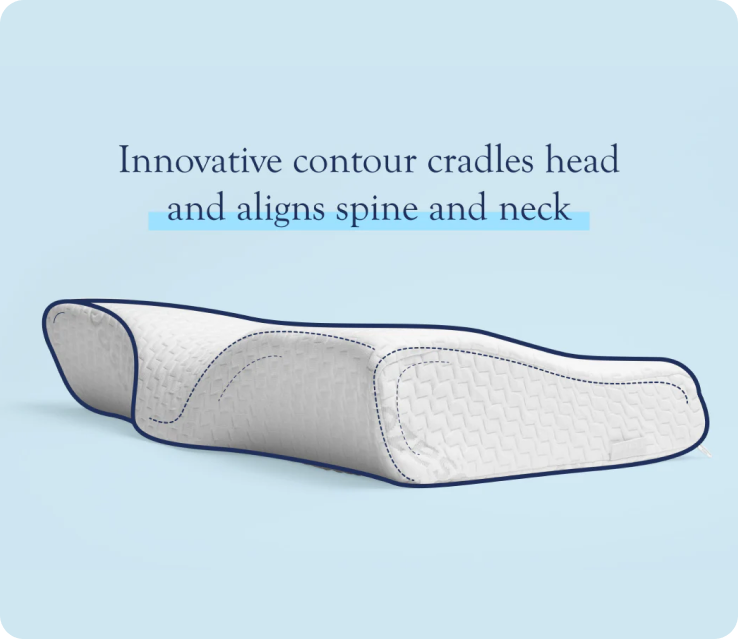
1) Dosaze Contour Pillow (Best overall for ergonomic neck support)
If your main goal is less morning neck and shoulder pain, an ergonomic contour pillow is often the cleanest solution because it gives your neck a dedicated “home.” The Dosaze Contour Pillow is built around that idea: a shaped profile that supports the curve of your neck while keeping your head from tipping forward or drifting sideways.
This matters most for side and back sleepers. On your side, the contour helps keep your nose and sternum aligned (a simple check for cervical alignment). On your back, it can reduce the tendency to crane your neck forward—one of the most common causes of that “tight base of skull” feeling.
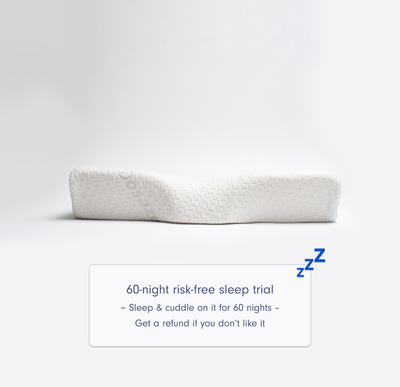
Cooling also matters here because heat drives repositioning. When you stop flipping the pillow and re-stacking your arms, your neck stays in a more stable posture. The other advantage is risk: Dosaze includes a 60-night risk-free trial with free shipping & returns (see the full returns policy), which is exactly what nervous buyers need when they’re not sure a new shape will feel right.
2) Tempur-Pedic TEMPUR-Neck Pillow (Best for firm, structured alignment)
This is a classic premium pick for people who want a “set it and forget it” feel. The contoured design encourages a consistent head/neck position, and the foam tends to hold its shape well under load.
It’s a strong option if you’ve tried softer pillows that collapse by morning. That said, firmness can be a double-edged sword: if the size/loft doesn’t match your shoulder width and mattress firmness, you can end up in side-bend (ear drifting toward shoulder) or extension (chin tilting up).
Practical fit tip: if you wake with pain that feels more like a pinched spot on one side, it’s often a sign the pillow height is off—not that you need something “softer.”
3) Coop Home Goods Adjustable Loft (Best for people who don’t know their loft yet)
Adjustable shredded foam pillows can be smart when you’re in the “I have no idea what height I need” phase. You can add or remove fill until your neck feels supported without your head being pushed forward. If you’re considering an adjustable option, Dosaze also makes a Dosaze Adjustable Pillow designed to help you dial in loft.
The main upside is customization. The main downside is consistency: shredded fill can shift, and you may need to fluff and re-shape it to keep even neck support—especially if you’re a restless sleeper.
If you go adjustable, take 10 minutes to dial it in: lie in your normal position and have someone take a quick side photo. You want a straight line from mid-forehead through the center of the chest for side sleeping.
4) Brooklinen Down Alternative Pillow (Firm) (Best “traditional feel” upgrade)
Some people simply dislike foam, even premium foam. If you want something that feels like a classic hotel pillow but still has enough lift to support your neck, a firmer down-alternative option can be a good bridge.
For neck pain, the limitation is structure. Fiber fill tends to compress and spread, so it doesn’t “hold” cervical alignment as reliably as a contour design. It can still work well if your neck pain is mild and you mostly need comfort and modest height.
Best use case: combination sleepers who want a familiar feel and can accept that they may need to re-fluff during the night.
5) Sleep Number True Temp Pillow (Best for hot sleepers who still need support)
If you run hot, you already know the pattern: you fall asleep fine, heat builds, you flip the pillow, your neck loses support, and you wake up tight. Cooling features can reduce that cycle.
Sleep Number’s True Temp line focuses on a cool-to-the-touch surface and heat management. For neck pain, look for versions that offer enough internal structure (foam or supportive fill) so cooling doesn’t come at the expense of neck support.
Real-world note: “cooling” is not one thing. It depends on bedroom temperature, humidity, and whether you use a thick pillowcase. A breathable cover often helps more than a slick, cool-feel finish—Dosaze breaks down what matters in a cooling pillowcase on what makes Dosaze’s pillowcase so popular.
6) Naturepedic Latex Pillow (Best for responsive support without the slow sink)
Latex is a premium material that behaves differently than memory foam. It springs back quickly, so you don’t get that slow-sinking feel that some people find restrictive or warm.
For neck pain, latex can be excellent because it provides steady lift and pressure relief without collapsing. It’s also often more breathable than dense foams, which helps with cooling.
If you like to change positions but still want support, latex is worth a serious look. If you want a deep cradle that “holds” you in one spot, memory foam tends to do that better.
7) Saatva Latex Pillow (Best for side sleepers who want lift + plush comfort)
This style—a supportive latex core with a softer outer layer—can hit a sweet spot for side sleepers. You get the elevation you need to fill the shoulder-to-neck gap, but the surface doesn’t feel sharply firm.
For neck support, watch the overall height. Many premium latex pillows run high, which can push some back sleepers into too much neck flexion (chin toward chest). On a softer mattress, that effect increases because your shoulder sinks more and changes your required loft.
If you’re mostly a side sleeper on a medium-firm mattress, this construction often feels “premium” in the way people mean it: supportive, comfortable, and stable.
8) Eli & Elm Side Sleeper Pillow (Best for strict side sleepers with shoulder pressure)
Dedicated side-sleeper shapes aim to solve a real problem: when your shoulder takes load, your neck angle changes. A U-shaped or curved pillow can create space for the shoulder while keeping your neck supported. If you’re looking specifically for a contoured option built around side-sleeping, Dosaze’s Contoured Orthopedic Side Sleeper Pillow is designed for that shoulder/neck gap.
If you wake up with shoulder numbness or you tuck your arm under the pillow, this type of design can reduce pressure and help you stay in a better position longer. It’s also helpful if you feel like standard pillows “push back” against your jaw.
The trade-off is versatility. Specialized shapes don’t always work well for back sleeping, and they’re usually a poor match for stomach sleeping.
What to look for in a premium pillow for neck pain
Premium should mean more than a higher price. For neck pain, it should mean the pillow helps you hold a neutral position for hours, not minutes.
| Feature | What it does for neck pain | Simple at-home check |
|---|---|---|
| Correct loft (height) | Keeps cervical alignment neutral so muscles can relax | Side: nose lined up with center chest, not angled down/up |
| Ergonomic contour or stable fill | Prevents the neck from “hanging” in space | Back: chin not tilted up; neck feels supported, not floating |
| Pressure relief | Reduces hot spots that cause tossing and micro-waking | No sharp pressure at ear/jaw after 10 minutes on your side |
| Cooling / breathability | Helps you stay still, preserving posture | Pillow surface doesn’t feel damp or hot after 20 minutes |
| Trial + easy returns | Lowers the risk of guessing wrong on loft/feel | Look for multi-week trials and free shipping & returns |
A practical matching guide (pick based on how you sleep)
Most “neck pain pillow” content stops at generic advice. Here’s the detail that actually changes outcomes: your pillow must match your shoulder width and mattress firmness. A firm mattress keeps your shoulder higher, so you often need less loft; a soft mattress lets your shoulder sink, so you often need more loft.
- Side sleeper + broad shoulders: look for higher loft or contoured support that fills the gap (often contour or supportive latex).
- Side sleeper + narrow shoulders: avoid tall pillows; too much height bends your neck toward the opposite side.
- Back sleeper: medium loft with neck cradling works best; overly tall pillows push the head forward.
- Combination sleeper: consider adjustable loft or a contour that still feels easy to move on.
- Stomach sleeper: neck pain often improves with a very low loft; most premium contour pillows will feel too tall.
FAQ
What is the best premium pillow for neck pain?
The best premium pillow for neck pain is one that keeps your head and neck in neutral cervical alignment for your main sleep position, usually by combining ergonomic neck support with stable pressure relief. For many side and back sleepers, a contoured ergonomic pillow is the most consistent way to support the neck without the pillow collapsing overnight. If you’re unsure about fit, choose a pillow with a real at-home trial window so you can confirm you wake up with less stiffness over multiple weeks, not just one night. (If you want another in-depth comparison, see Dosaze’s guide to the best contoured pillow for neck support.)
Are contoured pillows actually better for neck pain than regular pillows?
This question matters because “regular” pillows can feel comfortable at first but still let your neck drift out of alignment over hours. Contoured pillows are often better for neck pain because the shape supports the natural curve of the neck and reduces the chance that the pillow compresses into a flat mound by morning. The best way to confirm is to side-sleep for 10 minutes and check that your nose lines up with the center of your chest rather than tilting up or down.
How do I choose the right pillow height (loft) for neck pain?
Loft matters because even a premium material will worsen neck pain if it holds your head too high or too low. The right pillow height keeps your neck neutral: on your side, your head stays level rather than dropping toward the mattress or tilting toward the ceiling; on your back, your chin doesn’t angle up or tuck hard toward your chest. A practical next step is to take a quick side photo in your normal sleep position and adjust loft (or switch pillow type) until your head and torso look stacked rather than bent.
What pillow material is best for neck support and cooling?
Material choice matters because support and temperature both affect how often you move and lose alignment during the night. For strong neck support, memory foam and latex tend to outperform basic fiber fill because they hold shape under consistent load, and latex often feels cooler and more responsive than dense memory foam. If you sleep hot, prioritize breathable construction and a cooling cover, then confirm the pillow still provides enough lift to keep your neck supported.
How long should I try a new pillow before deciding it works?
You need enough time to separate “new feel” from real posture change, especially if you’re switching to an ergonomic contour shape. Most people should test a new pillow for at least 2–3 weeks, because early nights can include adjustment even if the pillow is the right fit for cervical alignment. A clear trial period (such as a 60-night risk-free trial) lowers the pressure to decide too fast and lets you judge by morning symptoms—like reduced stiffness and fewer wake-ups—rather than first impressions.
Our verdict: the best pick for most people
If neck pain is your main problem (not just general discomfort), the safest bet is a pillow that’s engineered for posture, not just plushness. That’s why an ergonomic contour design tends to win for most side and back sleepers: it’s the most reliable way to get consistent neck support and cervical alignment.
If you want the most direct, neck-pain-focused option with lower purchase risk, the Dosaze Contour Pillow stands out because it pairs ergonomic design with a 60-night risk-free trial and free shipping & returns. That combination matters when your biggest worry is spending money and still waking up sore.
Next steps (simple, concrete)
- Pick your primary position: side or back, and be honest about which one you wake up in most.
- Match loft to your body and bed: broader shoulders and softer mattresses usually need more loft.
- Test for alignment: use a quick side photo to confirm your head isn’t tilted up/down.
- Give it time: judge results over 2–3 weeks, not one night.
- Choose low risk: prioritize a real trial period and easy returns so you can make the right call.
If you’re ready to try an ergonomic option designed for neck support, you can start with the Dosaze Contour Pillow and test it at home with free shipping & returns during the 60-night risk-free trial.


