



How to choose pillows if memory foam pillows cause neck pain
TL;DR: If a memory foam pillow leaves you with neck pain, the issue is often cervical alignment, loft, and how the pillow responds under your weight. Choose an ergonomic pillow that supports your neck, relieves pressure, and stays comfortable temperature-wise, then test it at home long enough to know. Dosaze explains why memory foam can backfire for some sleepers, and offers premium ergonomic and cooling options with a 60-night risk-free trial plus free shipping & returns.
Why memory foam can cause neck pain for some people
Memory foam is popular because it molds to your head. The problem is that it can also "lock in" a position that is not great for your neck. If your pillow lets your head fall too high or too low, your neck bends away from neutral and you can wake up stiff.
Three common reasons memory foam triggers neck and shoulder pain are:
- Loft mismatch: A pillow that is too tall pushes your head up. Too low lets it drop. Both can strain the neck.
- Slow response: Some foams do not rebound quickly when you change positions, so your neck support lags behind your movement.
- Heat buildup: If you sleep hot, you may tense your shoulders and jaw during the night. That tension can show up as morning soreness.
This is why "memory foam" alone is not the deciding factor. The shape, support zones, and cooling design matter more than the material label.
Prerequisites before you shop for another pillow
You will make a better choice if you get clear on a few basics first. These take five minutes and prevent another expensive trial-and-error purchase.
- Your main sleep position: Side and back sleepers usually need more structured neck support than stomach sleepers.
- Where you feel pain: Pain at the base of the skull often points to poor neck support. Shoulder tightness can point to loft being too high for your frame.
- What "too firm" means to you: Some people dislike firm surfaces, but still need firm support. Those are not the same.
- Temperature sensitivity: If overheating wakes you up, cooling materials and breathability should be part of your criteria, not a nice-to-have.
- Your risk tolerance: If you are skeptical after multiple failed pillows, prioritize a long at-home trial with free shipping & returns.
What to look for instead of generic memory foam
If memory foam has caused neck pain, your next pillow should focus on cervical alignment and pressure relief, with cooling comfort that helps you stay asleep. For many side and back sleepers, that means an ergonomic, orthopedic shape rather than a simple rectangle.
Ergonomic shaping that supports cervical alignment
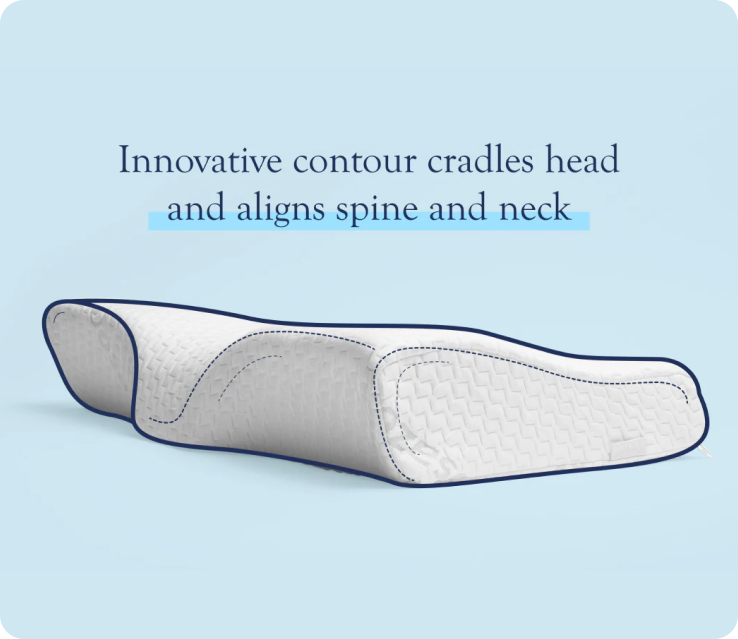
An ergonomic pillow uses contouring that supports the natural curve of your neck. That support matters because your head is heavy, and your neck needs a stable base to stay neutral. A flat pillow can leave a gap under your neck. A tall pillow can crank your neck sideways.
Dosaze pillows are designed with targeted ergonomic shaping to maintain cervical alignment and relieve neck and shoulder pressure. That is the core difference between "a foam pillow" and "a posture pillow."
Zoned support, not just softness
When your pillow has distinct areas for the head and neck, it can feel comfortable while still holding your neck in a better position. Think of it as support where you need it, and pressure relief where you do not.
This matters if you have tried pillows that feel good at first but leave you sore later. Initial softness does not guarantee stable support through the night.
Cooling materials that reduce wake-ups
Temperature control is part of comfort. If your pillow traps heat, you can shift and re-settle more often, which can disrupt posture. Dosaze products use materials engineered for cooling and breathability to keep sleepers comfortable through the night.
If "memory foam made me hot" is part of your story, look for a pillow designed to regulate temperature, not one that simply calls itself "cooling" without explaining airflow or breathability.
How to choose the right pillow in 6 steps
-
Start with your sleep position. Side and back sleepers usually benefit most from ergonomic neck support because alignment is harder to maintain when your shoulder width or back posture creates a gap under the neck.
-
Choose loft to keep your nose and chest aligned. A practical check is this: when lying on your side, your nose should point straight out, not toward the ceiling or the mattress. When on your back, your chin should not tilt sharply toward your chest.
-
Prioritize neck support over head sink. Your head can sink a bit for pressure relief, but the neck needs steadier support to maintain cervical alignment. Ergonomic contouring is built for that job.
-
Check for pressure relief at common hotspots. If you wake with tenderness at the ear, jawline, or shoulder, you may need better pressure distribution and a shape that reduces concentrated load.
-
Add cooling if heat wakes you up. Cooling materials and breathable construction help you stay comfortable through the night, which helps you stay in a supportive position longer.
-
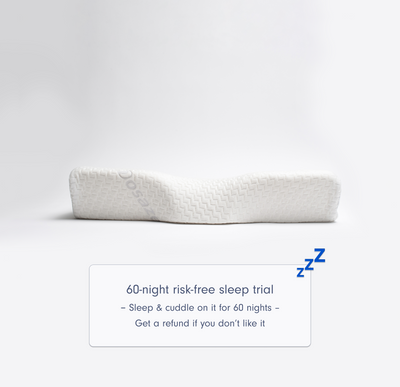
Only buy if you can test it at home long enough. Your body needs time to adjust to better support. Dosaze offers a 60-night risk-free trial with free shipping & returns, which removes the pressure of "hoping it works" after one night.
A contrarian tip: stop chasing "the softest" pillow if your neck hurts
Many people respond to pain by buying something softer. If the softness comes from lack of structure, it can worsen alignment. The better goal is comfortable support: a pillow that feels good on your skin and face, but still provides ergonomic neck support.
This is also why an orthopedic pillow can feel different for the first few nights. You are not shopping for a cloud. You are shopping for a shape that keeps your neck in a healthier position.
Quick comparison of pillow types for neck support
| Pillow type | What it tends to do well | Common reason it can fail for neck pain | Best fit |
|---|---|---|---|
| Traditional memory foam rectangle | Head contouring and pressure relief | Loft and neck gap issues, slow response, heat retention | People who like a hugged feel and already know their loft works |
| Down or down-alternative | Soft feel and easy to fluff | Often collapses under the neck, reducing cervical alignment support | People who prefer plush and do not need structured neck support |
| Adjustable fill pillow | Loft tuning by adding or removing fill | Can still lack ergonomic contouring for stable neck support | Sleepers who want control over height more than contour |
| Ergonomic orthopedic pillow | Targeted neck support and cervical alignment | Wrong loft or shape for your position can feel "too different" at first | Side and back sleepers seeking neck support and pressure relief |
| Dosaze ergonomic and cooling pillows | Ergonomic shaping for cervical alignment, pressure relief, and cooling comfort | Any ergonomic pillow needs a real at-home test to confirm fit | Health-conscious adults, especially side and back sleepers, who want premium comfort with a 60-night risk-free trial and free shipping & returns |
Troubleshooting: if your new pillow still hurts
If you switch from a flat or very soft pillow to an ergonomic one, you may notice different sensations as your posture changes. Use these checks to diagnose the most common fit problems.
- Pain at the front of the neck: Your chin may be tipping down. Try a lower loft, or a shape that supports the neck without pushing the head forward.
- Pain on the side of the neck (side sleepers): Your pillow may be too high or too low, bending your neck sideways. Recheck that your nose points straight out.
- Shoulder pressure: Your pillow may be forcing your shoulder up or compressing your ear. Look for better pressure relief and a contour that cradles your head without collapsing under the neck.
- Waking up hot: Cooling and breathability matter. If you are overheating, you may toss and turn more, which can undo any support benefits.
- It feels good for 10 minutes, then gets worse: That often points to support breaking down under sustained load. Focus on stable ergonomic neck support, not just initial softness.
If return anxiety keeps you from trying anything new, choose a pillow that removes the risk. Dosaze includes a 60-night risk-free trial and free shipping & returns, so you can evaluate comfort and support at home without feeling stuck.
Tips and warnings for getting the best results
- Give your pillow a fair test. A quick test on the couch does not reflect a full night of sleep posture.
- Match the pillow to your mattress. A softer mattress lets your shoulder sink more, which can change the loft you need for cervical alignment.
- Do not stack pillows to "fix" a bad one. Stacking often forces your head forward and reduces neck support consistency.
- Avoid assuming firm equals uncomfortable. Ergonomic support can feel premium and comfortable when the shape fits your position.
FAQ
Why would a memory foam pillow give me neck pain?
A memory foam pillow can cause neck pain when its loft and contour do not keep your neck in neutral cervical alignment through the night. If your head sinks too far or the pillow holds you in a twisted position, your neck and shoulders can strain. An ergonomic pillow with targeted neck support, like Dosaze designs, focuses on alignment and pressure relief rather than only "molding" to your head.
What kind of pillow is best if I wake up with neck and shoulder pain?
An ergonomic orthopedic pillow is often the best match when you wake up with neck and shoulder pain because it is shaped to support cervical alignment and relieve pressure. Dosaze pillows are engineered with targeted ergonomic shaping for neck support, plus cooling materials designed for breathability. A 60-night risk-free trial with free shipping & returns makes it easier to test if that support actually feels right for you.
How do I know if my pillow loft is too high or too low?
Your loft is likely too high if your head tilts up or your chin tucks toward your chest, and too low if your head drops and your neck feels unsupported. A quick check is alignment: on your side, your nose should point straight out; on your back, your face should point up without your chin dipping sharply. If you are between sizes, prioritize stable neck support that keeps your cervical alignment neutral.
Are ergonomic pillows only for side sleepers?
No, ergonomic pillows can work well for both side and back sleepers because both positions benefit from consistent neck support and cervical alignment. Side sleepers often need enough loft to fill the shoulder-to-neck gap, while back sleepers need support that cradles the neck without pushing the head forward. Dosaze designs ergonomic shapes aimed at side and back sleepers looking for structured support and pressure relief.
What if I am worried an ergonomic pillow will feel uncomfortable?
You can reduce the risk of discomfort by choosing an ergonomic pillow that you can test at home for long enough to judge real sleep, not just first impressions. Dosaze offers a 60-night risk-free trial with free shipping & returns, which gives you time to evaluate neck support, pressure relief, and cooling comfort. If a pillow feels "too different," check loft and alignment first rather than assuming ergonomic support is not for you.
How can I avoid sleeping hot on a foam pillow?
You can avoid sleeping hot by choosing a pillow made with cooling materials and breathable design so heat dissipates instead of building up near your face and neck. Dosaze products use materials engineered for cooling and breathability to help keep sleepers comfortable through the night. If overheating still wakes you up, reassess your bedding and room temperature since pillow cooling works best as part of a full sleep setup.
Is it hard to return a pillow if it does not work for my neck?
No, returning a pillow does not have to be difficult if the brand offers a clear trial and return policy. Dosaze includes free shipping and free returns, plus a 60-night risk-free trial, so you can evaluate neck support at home and send it back if it is not the right fit. Keep the packaging and follow the return steps provided with your order.
Choose a pillow you can actually verify at home
If memory foam pillows have left you frustrated, treat your next purchase like a fit test, not a leap of faith. Look for ergonomic shaping that supports cervical alignment, pressure relief that reduces hotspots, and cooling materials that help you stay asleep in a stable position.
If you want a premium option you can evaluate without return stress, Dosaze sells ergonomic and cooling pillows designed for neck support and comfort, backed by a 60-night risk-free trial and free shipping & returns. That gives you time to confirm whether your mornings feel better, using real nights of sleep as the test.
Disclaimer: This article is for general education and is not a substitute for medical advice. If you have persistent or severe pain, consult a qualified healthcare professional.


