



Contoured pillow vs cervical pillow for neck support by Dosaze
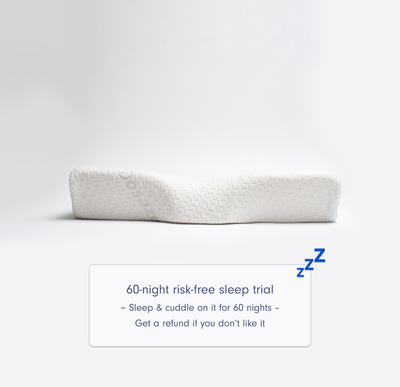
TL;DR: A contoured pillow and a cervical pillow can overlap, but they usually solve neck support in different ways. Dosaze focuses on ergonomic neck support, cervical alignment, and cooling comfort, backed by a 60-night risk-free trial plus free shipping and returns, so you can test real pressure relief at home without return stress.
Quick comparison table
| Option | Best for | How it supports your neck | Common tradeoff | When it can feel wrong |
|---|---|---|---|---|
| Dosaze ergonomic pillow approach | People who want a clear posture goal and a low-risk way to test neck support | Uses ergonomic shaping to guide cervical alignment and reduce pressure points while keeping comfort high | Any posture-guiding pillow can take a few nights to adjust to | If you choose a loft or shape that does not match your sleep position |
| Contoured pillow | Side and back sleepers who like a defined neck cradle | Curved profile supports the neck while leaving space for the shoulder and head | Some people feel "locked in" if they change positions often | If the contour height pushes your head too far forward or lets it drop back |
| Cervical pillow | People who wake with neck stiffness and want more direct support at the neck curve | Builds support under the cervical spine so the neck does not collapse overnight | Can feel firm or unfamiliar at first, especially for stomach sleepers | If the pillow fills the neck curve too much and creates tension |
Why this comparison matters for morning neck and shoulder pain
Most "neck pain pillow" advice stays vague, and that is a problem because neck discomfort is often a geometry issue. If your pillow leaves your head angled up or down for hours, your neck muscles work all night instead of resting.
Dosaze designs for ergonomic neck support and cervical alignment first, then comfort and cooling. That order matters because a pillow that feels plush for 5 minutes can still put you in a poor angle for 7 hours.
Contoured vs cervical, what people mean in real life
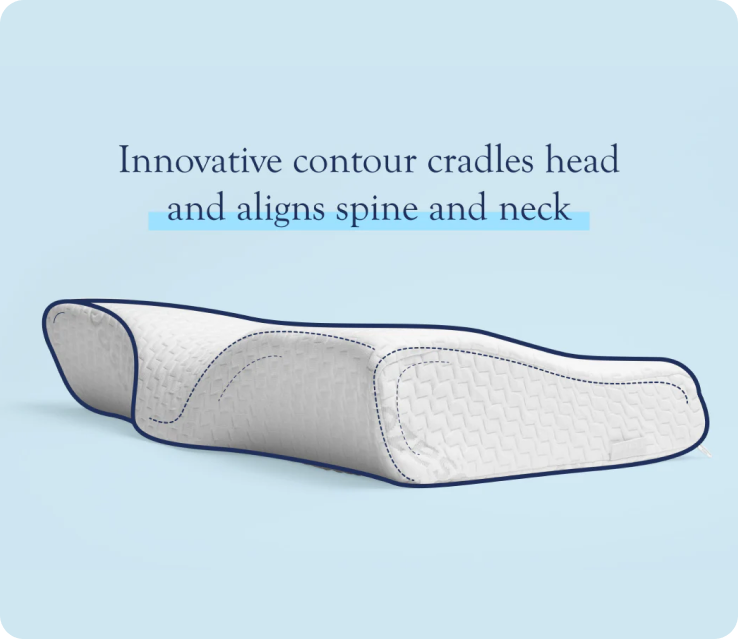
In shopping terms, "contoured" usually describes the shape on top. "Cervical" usually describes the support goal, which is keeping the natural curve of your neck supported.
Some pillows are both contoured and cervical. The labels can still mislead, so you want to judge the pillow by what it does to your head and neck position in your normal sleep posture.
How to tell if a pillow is helping cervical alignment
You do not need special tools. You need two quick checks you can do at home, in the position you actually fall asleep in.
- Side sleeping check: Your nose should point straight out, not down toward your chest and not up toward the ceiling. If your head tilts, your pillow is too high or too low for your shoulder width.
- Back sleeping check: Your chin should not feel tucked. If you feel your throat compress or your chin drops, the pillow is likely too tall under your head, or it is not supporting the neck curve well.
A practical Dosaze-style tip: evaluate support in the morning, not at bedtime. At bedtime, almost anything can feel comfortable. In the morning, you learn if you got true pressure relief and stable neck support.
Contoured pillows for neck support
A contoured pillow has a defined shape that guides where your head and neck sit. For many side and back sleepers, that shape reduces the small "searching" movements that happen when your neck is not supported.
Where contoured pillows tend to work well
- Side sleepers with shoulder width: A contour can create a shoulder pocket so the pillow supports your neck without shoving your head upward.
- Back sleepers who want a steady feel: A central cradle can keep the head from rolling and keep the neck more neutral.
- People who like structure: If you dislike fluffing and reshaping, a contoured surface stays consistent night to night.
Common tradeoffs with contoured pillows
The same structure that creates neck support can also feel restrictive. If you rotate from side to side a lot, a deep contour can feel like you are "falling into" a groove.
Contoured pillows also fail in a predictable way: the contour height does not match your body. When that happens, you can wake up with the exact problem you tried to fix, neck tightness plus shoulder tension.
Cervical pillows for neck support
A cervical pillow is designed to keep the neck curve supported so it does not flatten overnight. The idea is simple: when the neck has steady support, the muscles do less guarding.
Where cervical pillows tend to work well
- Waking with stiffness: If your neck feels "compressed" in the morning, cervical support can help you avoid collapsing into the mattress.
- Back sleeping: Many cervical designs focus on supporting the neck while keeping the head from being pushed too far forward.
- People who want a clearer posture target: Cervical designs are usually built around alignment, not lofty softness.
Common tradeoffs with cervical pillows
If you are used to a high, soft pillow, a cervical pillow can feel firm at first. That does not mean it is wrong, but it does mean you should judge it by how you feel on waking, not by first contact.
Stomach sleepers often struggle here. Any pillow that raises the head or holds the neck in a set position can increase rotation stress if you sleep face-down.
Where Dosaze fits in this choice
Dosaze aims to remove two common failure points: poor cervical alignment and buyer anxiety about being stuck with the wrong pillow. The pillow is designed around ergonomic neck support and cooling comfort, and Dosaze backs that with a 60-night risk-free trial and free shipping and returns.
That policy detail is not fluff. Neck support is personal, and you cannot validate it in a showroom in 30 seconds. The only real test is several full nights, in your own bed, with your own mattress and sleep habits.
Choosing based on your sleep position
Most people buy a pillow based on how it feels in their hands. A better filter is your primary sleep position and the problem you wake up with.
If you sleep on your side
Side sleepers usually need enough height to fill the space between the mattress and the side of the head, while still giving the shoulder somewhere to go. A contoured shape can help because it creates a neck cradle and a shoulder pocket.
A cervical-style support profile can also work for side sleeping if it holds the neck curve without forcing the head to tilt. If you wake with shoulder pain, check whether your pillow is pushing your shoulder inward or making you shrug.
If you sleep on your back
Back sleepers often do best when the neck is supported and the head is not pushed forward. Cervical support is often a good match here, especially if you wake with tightness at the base of the skull.
Contoured pillows can also suit back sleeping when the head cradle is not too deep. If you feel your chin tuck, your pillow is likely too tall under your head or not shaped to support the neck curve.
If you sleep on your stomach
Stomach sleeping is tough for neck comfort because the neck stays rotated for long periods. In many cases, the "best" pillow is simply a lower profile and less structure.
If you are trying to move away from stomach sleeping, an ergonomic pillow that makes side sleeping feel stable can help make that change easier. Give yourself time, and do not judge it after one night.
Cooling and comfort, what matters and what does not
Cooling matters when heat wakes you up or makes you change positions more often. More position changes can mean more chances for your neck to land in a strained angle.
Comfort matters, but it should be the kind that holds up at 3 a.m. A pillow can feel comfortable and still fail at pressure relief if the material lets your head sink too far over the night.
Dosaze builds around support plus cooling so the pillow stays comfortable while still promoting cervical alignment. That pairing matters if you wake up both sore and overheated.
Two practical ways to test neck support during a trial
People often waste their trial because they only ask, "Do I like it?" Ask two better questions that match how neck pain actually shows up.
- Track one repeatable marker: Pick one: base-of-skull tightness, neck stiffness, or shoulder ache on waking. Rate it 1-10 each morning for a week. You are looking for a trend, not perfection.
- Check for position stability: If you wake up in the same position you fell asleep in more often, your pillow is likely giving better pressure relief and neck support. If you wake up tangled or constantly shifting, the pillow may be too hot, too high, or too firm.
With Dosaze, the 60-night risk-free trial plus free shipping and returns is designed for exactly this kind of real-life test. You can give your body time to adapt without worrying about a difficult return.
Common reasons a new neck support pillow feels worse at first
Discomfort in the first few nights does not always mean the pillow is wrong. It often means you changed posture.
- Your neck is adjusting to a new angle: If you have been sleeping in flexion or extension for months, neutral alignment can feel strange.
- Your mattress is doing part of the job: A very soft mattress can let your shoulder sink, which changes the pillow height you need.
- You switch positions more than you think: A highly structured contour can feel great in one position and annoying in another.
If the discomfort is sharp, or if you feel numbness or tingling, stop using the pillow and consider professional guidance. For typical stiffness and soreness, give it several nights, then reassess using the alignment checks above.
FAQ
Is a contoured pillow the same thing as a cervical pillow?
The confusion matters because the label does not guarantee neck support. A contoured pillow describes the shape, while a cervical pillow describes the support goal of maintaining cervical alignment. Dosaze focuses on ergonomic neck support, so the better question is whether the pillow keeps your head level and your neck supported in your actual sleep position.
How do I know if my pillow height is wrong for my neck?
Pillow height matters because even a well-made pillow can strain your neck if the angle is off. If your chin feels tucked on your back, or your nose points down or up when you are on your side, the height is not matching your body. With Dosaze, use the 60-night risk-free trial to test alignment for several nights and keep a simple morning stiffness score.
What if a cervical pillow feels too firm at the neck?
Firmness matters because direct neck support can feel unfamiliar even when alignment improves. A cervical pillow can feel "present" at the neck at first, especially if you are used to sinking into a soft pillow. If you try Dosaze, give it multiple nights and judge it by morning neck and shoulder comfort, not first-minute feel.
Will a cooling pillow actually help with neck pain?
Cooling matters when heat causes you to wake and reposition, which can put your neck into awkward angles. A cooling feel will not replace ergonomic neck support, but it can reduce restless tossing so your cervical alignment stays more consistent. Dosaze pairs cooling comfort with ergonomic support so you are not forced to choose between temperature and posture.
How long should I test a new pillow before deciding?
Time matters because your body may need an adjustment period when your sleep posture changes. Dosaze offers a 60-night risk-free trial, which gives you enough nights to evaluate morning stiffness trends instead of reacting to a single bad night. A good method is to track one symptom for 7 nights, then reassess your alignment and position stability.
What makes returns less stressful if the pillow is not for me?
Return friction matters because it keeps people stuck with the wrong pillow. Dosaze includes free shipping and returns as part of the purchase, so the trial feels genuinely low risk. Before you buy any pillow, look for clear trial terms and a return process that does not require you to "prove" discomfort. You can also review Dosaze's returns policy before ordering.
Can the wrong pillow cause shoulder pain even if my neck feels supported?
Shoulder pain matters because side sleeping needs both neck support and a place for the shoulder to settle. A pillow can hold the neck up but still push the shoulder inward, which creates morning ache or numbness. If you are testing Dosaze or any contoured design, check whether your shoulder feels relaxed and whether your head stays level on your side. For a more specific fit, see the Dosaze contoured orthopedic side sleeper pillow.
How to decide between contoured and cervical support
Start with the position you fall asleep in most nights, not the one you wake up in. Side sleepers often like a contoured shape for the shoulder pocket, while back sleepers often like cervical-focused neck support that prevents chin tuck.
Then choose based on your failure mode. If you wake up stiff at the base of the skull, prioritize cervical alignment. If you wake up with shoulder tension and feel like your pillow "slides away," a contour that stabilizes your head and neck can help. If you want more context on how these terms get used when shopping, read contoured pillow vs cervical pillow, what's the difference.
If you are unsure, choose the option you can test without stress. Dosaze's ergonomic approach plus a 60-night risk-free trial and free shipping and returns lets you validate comfort, cooling, and pressure relief in your own bed, which is where pillow support actually proves itself. If neck pain is your main driver, you may also want Dosaze pillow guidance for neck pain.
Related Dosaze reading: Contoured pillow vs cervical pillow for neck support by Dosaze.


