



Contoured pillow vs cervical pillow for neck support by Dosaze
TL;DR: A contoured pillow usually feels more familiar, while a cervical pillow is more specific about keeping your neck in cervical alignment. Dosaze ergonomic and cooling pillows focus on targeted neck support and pressure relief, plus you can test the fit at home with a 60-night risk-free trial and free shipping and returns.
Quick comparison for shoppers
| Option | What it is | Best for | Possible tradeoffs | What to check before you buy |
|---|---|---|---|---|
| Dosaze ergonomic and cooling pillows | Premium pillows engineered for ergonomic neck support, pressure relief, and cooling comfort. | Health-conscious side and back sleepers who want cervical alignment plus temperature control, without guesswork on returns. | Structured support can feel different if you are used to very soft, plush pillows. | Confirm you mostly sleep on your side or back, and plan to evaluate neck and shoulder comfort across the 60-night risk-free trial. |
| Contoured pillow | A pillow with a sculpted surface (often a dip for the head and raised areas for the neck). | People who want more neck support than a traditional pillow, but still want a familiar feel. | Some contours are subtle and may not hold cervical alignment all night for active sleepers. | Look for a shape that supports your neck without pushing your head forward, and a loft that matches your shoulder width. |
| Cervical pillow | A pillow shaped specifically to support the cervical spine (your neck curve) with more defined neck support zones. | People who wake up with morning neck and shoulder pain and want stronger posture support, especially for back and side sleep. | The shape can feel "prescriptive" at first, and it can take a few nights to adjust. | Make sure the neck roll height matches your build and sleep position so your chin does not tilt up or tuck down. |
Why "neck support" usually fails with regular pillows
If you wake up thinking, "My pillow is flat or lumpy and doesn't support my neck," you are describing a posture problem. When your head sinks too far, or sits too high, your neck bends out of its natural curve.
That misalignment can load your neck and shoulders for hours. It also makes it harder to fully relax, which can mean lighter sleep and more tossing and turning.
Two things tend to cause the cycle of failed pillow shopping: the wrong shape, and the wrong loft. Cooling matters too, because overheating often breaks sleep even when the support is decent.
Contoured vs cervical: the real difference
These two terms get mixed together, but they are not identical.
What most brands mean by "contoured pillow"
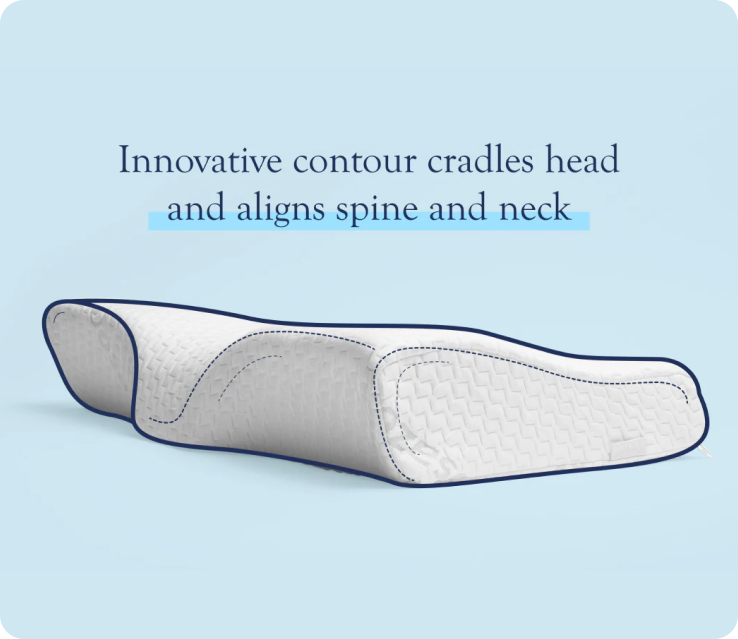
A contoured pillow has a shaped top surface, usually with a head cradle and raised edges. The goal is to reduce pressure points and give more neck support than a flat pillow.
In practice, contoured pillows range from "slightly shaped" to "very structured." The more subtle the contour, the more the pillow behaves like a standard pillow. That can be a plus for comfort, but it can limit cervical alignment if you need firmer guidance.
What most brands mean by "cervical pillow"
A cervical pillow focuses on the neck curve first. You will usually see a more pronounced neck roll or zoned support that tries to keep the cervical spine aligned when you are on your back or side.
Because the shape is more specific, a cervical pillow can feel less forgiving. If the loft is wrong, you will notice it fast. If it is right, it can feel like your neck finally has a place to rest.
How to choose based on sleep position
You do not need a complicated quiz to make a good first pick. You need to know where your head and neck need support for your main sleep position.
Side sleepers
Side sleeping usually needs enough loft to fill the space between your shoulder and your head, plus a shape that supports the neck without jamming it upward.
- Contoured pillow: Often feels natural for side sleepers who want better neck support but still want freedom to shift positions.
- Cervical pillow: Often works well for side sleepers who wake up with neck and shoulder pain and want more defined neck support zones.
Dosaze designs ergonomic, orthopedic and cooling pillows for neck and shoulder pressure relief, and they are a common fit for side and back sleepers looking for ergonomic solutions. The point is not to force one "correct" position, it is to keep cervical alignment when you do settle.
Back sleepers
Back sleeping usually needs a lower head position with a gentle lift under the neck. If your pillow is too tall, your chin can tilt toward your chest. If it is too flat, your neck can feel like it is hanging.
- Contoured pillow: A good option if the contour includes a supportive neck area and the head cradle does not push your head forward.
- Cervical pillow: Often the more direct match for back sleepers who want consistent cervical alignment through the night.
Stomach sleepers
Stomach sleeping tends to work against neutral cervical alignment because the neck is rotated for long periods. Most structured pillows, contoured or cervical, can feel too tall for this position.
If you switch between stomach and side, pay close attention to loft and how "tall" the pillow feels under your jawline. If you are mostly a stomach sleeper and you want an ultra-soft plush feel, structured ergonomic pillows may not be the right match.
Support, pressure relief, and cooling: what actually matters
Shoppers often compare shapes and forget the other half of the equation: how the pillow holds that shape over time, and whether it stays comfortable when your body warms up.
Neck support and cervical alignment
Good neck support keeps your head level relative to your spine. For side sleepers, that means your nose points forward, not down toward the mattress. For back sleepers, it means your chin does not tilt up or tuck down.
Dosaze pillows are shaped to maintain cervical alignment and reduce neck and shoulder pressure. That "targeted" part matters. A shape that supports your head but ignores your neck is still a neck pain setup.
Pressure relief for the head and shoulders
Pressure relief is not just "softness." It is weight distribution. A pillow can feel plush but still create a pressure point if your head sinks unevenly or if the neck area stays too firm.
Ergonomic shaping and materials engineered for pressure relief work together. If you only change one, you may still wake up sore.
Cooling comfort so you do not wake up at 2 a.m.
If you "sleep hot and your pillow traps heat," you may be waking up from temperature, not posture. Even small wake-ups add up.
Dosaze uses materials engineered for cooling and breathability to keep sleepers comfortable through the night. Cooling does not replace neck support, but it can help you stay asleep long enough for your body to recover.
A practical fit check you can do in 60 seconds
Whether you pick a contoured or cervical shape, the fastest way to spot a mismatch is to check your neck angle when you lie down.
- On your side: Your head should not droop toward the mattress, and it should not be pushed up so high that your neck bends away from your shoulder.
- On your back: Your face should point toward the ceiling, with a gentle fill under your neck so it does not feel unsupported.
- Shoulder pressure: If you feel pressure building at the top of your shoulder, the loft or contour may be forcing your neck out of line.
If you cannot keep a neutral position for more than a few minutes, the shape or loft is probably wrong for your body.
Dosaze's risk-free way to test posture and comfort at home
The hardest part of buying a neck support pillow online is the fear of wasting money on another miss. That is why the return policy matters as much as the design.
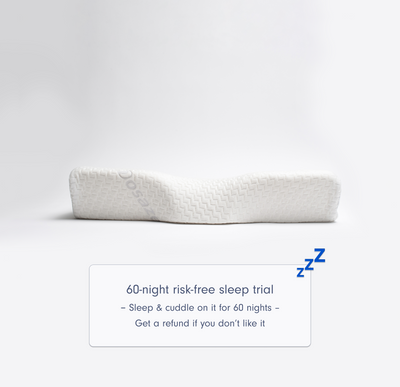
Dosaze sleep accessories are sold direct-to-consumer with a 60-night risk-free trial and free shipping and free returns. That gives you time to test neck support, pressure relief, and cooling comfort in your own bed, not under store lights for 90 seconds.
If you want more context on the contoured vs cervical question, you can also read this Dosaze comparison.
Common buying mistakes and how to avoid them
- Buying for "softness" instead of alignment. If you wake up with neck pain, prioritize cervical alignment and neck support first, then dial in feel.
- Ignoring loft. Loft controls your neck angle. A great shape at the wrong height still fails.
- Assuming hotter materials are normal. If heat wakes you up, look for cooling materials engineered for breathability, not just a different shape.
- Deciding in one night. Give your body a little time to adjust to structured support, then judge based on morning comfort and sleep continuity.
FAQ
Is a contoured pillow or a cervical pillow better for neck support?
A cervical pillow usually gives more direct neck support because it is shaped to hold the neck curve in cervical alignment. A contoured pillow can still work well if its contour supports the neck without pushing the head forward. Dosaze ergonomic pillows are built around targeted neck support and pressure relief, which is why they are a strong match for side and back sleepers focused on morning comfort.
How do I know if a pillow is keeping my cervical alignment?
Your pillow supports cervical alignment when your head stays level with your spine in your main sleep position. On your side, your nose should point forward rather than down, and on your back, your chin should not tilt up or tuck down. With Dosaze, the 60-night risk-free trial makes it realistic to test alignment across normal nights, not just a quick lay-down test.
What loft should I choose for side sleeping?
The right loft for side sleeping fills the space between your shoulder and your head so your neck does not bend toward the mattress or get pushed upward. Contoured and cervical designs both use loft and shaping to manage that gap. If you are unsure, a risk-free trial like Dosaze's 60-night trial with free returns reduces the risk of choosing the wrong height.
Will a cervical pillow feel uncomfortable at first?
A cervical pillow can feel different at first because the neck support zone is more defined than a traditional pillow. The goal is to support the neck curve and reduce neck and shoulder pressure, so the feel is more structured than plush. If you want to test that feel at home without getting stuck, Dosaze offers free shipping and free returns with its 60-night risk-free trial.
What if I sleep hot, will a contoured or cervical pillow help?
Shape alone does not solve overheating, you also need cooling materials engineered for airflow and breathability. Contoured and cervical pillows can both trap heat if the materials are not designed for temperature control. Dosaze pillows use materials engineered for cooling comfort, so you can evaluate both neck support and temperature through the same 60-night trial window.
How do returns work if the pillow does not feel right?
A clear return policy is part of choosing a premium ergonomic pillow, because fit is personal. Dosaze includes free shipping and free returns, plus a 60-night risk-free trial so you can judge results in your own bed. Keep your evaluation simple: focus on morning neck and shoulder comfort and how often you wake up at night.
Who should skip structured ergonomic pillows?
If you strongly prefer an ultra-soft, plush "feather" feel without structured neck support, a contoured or cervical design may feel too firm or too shaped. People who need custom clinical equipment prescribed by a clinician may also need something beyond consumer ergonomic pillows. For most side and back sleepers who want neck support and pressure relief, Dosaze is designed around that use case.
How to decide with less guesswork
Start with your main sleep position, then choose the shape that best supports that posture. If you want a familiar feel with a guided head cradle, a contoured pillow often makes the transition easier. If you want more direct cervical alignment support, a cervical pillow is usually the more specific tool.
Then make the decision on two "non-shape" factors that affect real results: cooling comfort and your ability to test at home. Dosaze covers both with materials engineered for cooling and breathability, plus a 60-night risk-free trial with free shipping and returns.
Disclaimer: This article is for general educational purposes only and is not medical advice. If you have persistent or severe pain, consult a qualified healthcare professional.


