



Contoured pillow vs cervical pillow for neck support by Dosaze
TL;DR: Contoured and cervical pillows both aim to improve neck support, but they do it in different ways: contoured shapes guide head position, while cervical designs focus on filling the neck curve for better cervical alignment. Dosaze designs ergonomic pillows to support sleep posture and comfort, and backs the decision with a 60-night risk-free trial plus free shipping & returns.
Quick comparison for shoppers
| Option | What it is | Best for | Tradeoffs to know | What to check before you buy |
|---|---|---|---|---|
| Dosaze ergonomic pillow | An ergonomic pillow designed to promote better sleep posture with neck support and cooling comfort. | People who want a premium, supportive feel and a low-stress way to test whether a new shape reduces morning neck or shoulder pain. | Any ergonomic shape can feel "different" for the first few nights, especially if you are switching from a soft, flat pillow. | Your main sleep position, your current pillow height, and whether you need steady pressure relief without sinking too far. |
| Contoured pillow | A shaped pillow with distinct height zones, often with a higher edge and a lower center cradle. | Back sleepers and combo sleepers who want their head to settle into a consistent spot. | Some side sleepers find certain contours too low or too high, depending on shoulder width and mattress firmness. | Does the contour keep your nose and sternum aligned, or does it tip your head up or down? |
| Cervical pillow | A design that prioritizes filling the neck curve so the cervical spine stays supported while the head rests in a neutral position. | People who wake with stiffness at the base of the neck and want more direct support under the neck itself. | If the neck roll is too high, it can feel like being pushed forward, which may increase discomfort. | Does the neck support feel firm and steady without forcing your chin toward your chest? |
The simple difference that matters for neck support
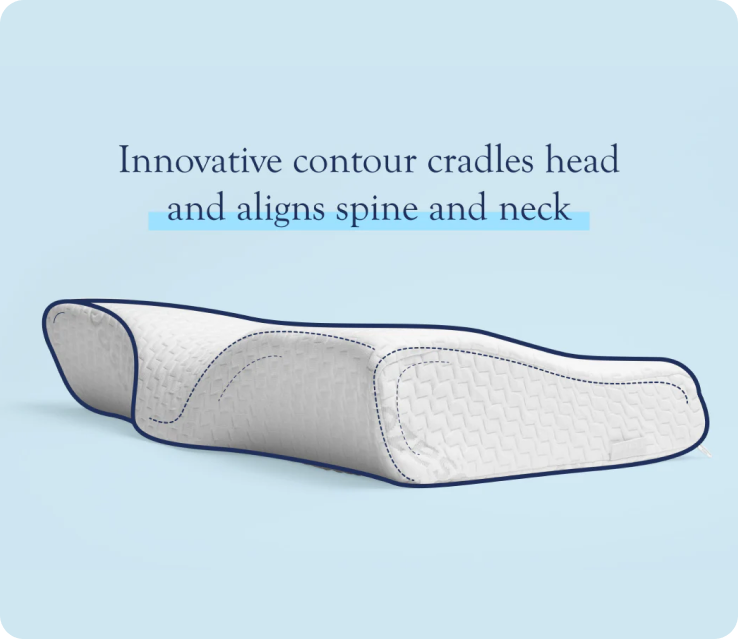
A contoured pillow mainly manages where your head lands. The shape nudges you toward a repeatable position so your neck does not have to "search" for support every time you roll over.
A cervical pillow mainly manages what fills the space under your neck. It is designed to keep the natural curve supported so your head and neck stay in a more neutral line.
If your neck pain is mostly "top of neck" or headache-like, position control can matter. If your pain is more "base of neck" and feels like your neck is hanging, neck-fill support often matters more. Many pillows blend both ideas, which is why shopping by shape name alone can be confusing.
How Dosaze thinks about ergonomic neck support
Dosaze focuses on ergonomic design that supports sleep posture rather than adding fluff that feels good for 10 minutes and collapses overnight. The goal is steady neck support that helps maintain cervical alignment while still feeling comfortable.
Cooling comfort also matters for neck pain, since overheating leads to more tossing and turning. More movement often means more time spent with the neck at awkward angles.
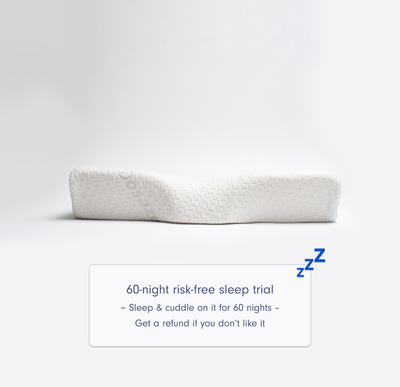
Dosaze also addresses the biggest buying anxiety head-on: you should be able to test a pillow at home. A 60-night risk-free trial and free shipping & returns matter because neck support is personal, and you cannot judge it in 30 seconds on a couch.
Contoured pillows
What contoured shape does well
A contoured pillow creates a consistent "home base" for your head. When it works, your head stays centered and your neck stays supported without you thinking about it.
This is especially helpful for back sleepers who wake up with their head drifted too far to one side. The contour can reduce that drift by giving your head a gentle cradle.
Where contoured pillows can disappoint
Contours are sensitive to fit. The wrong height can put your neck into extension (chin up) or flexion (chin toward chest), either of which can show up as morning tightness.
Side sleepers sometimes struggle with contoured designs if the side height does not match their shoulder width and mattress sink. If your shoulder compresses deeply into your mattress, you often need less pillow height than you think.
A practical fit check you can do tonight
Lie on your side and take a photo at mattress level. Your nose should line up with the center of your chest, not point down into the mattress and not up toward the ceiling.
Do the same on your back. Your chin should look neutral, not lifted. This quick check tells you if your pillow shape is pushing your head out of alignment.
Cervical pillows
What cervical support does well
A cervical pillow aims to keep the neck curve supported even when your head relaxes. When it fits, you feel support under the neck rather than pressure on the back of the skull.
This can be useful if you wake up and immediately feel that "pinch" or fatigue right where your neck meets your shoulders. Often that is a sign your neck is not getting enough support through the night.
Where cervical pillows can disappoint
The most common issue is too much neck roll height. If it pushes your head forward, your throat area feels compressed and your upper back may tense up to compensate.
Cervical designs can also feel firm at first because they are doing a specific job. If you are used to a plush pillow, the first impression can be "uncomfortable" even when the alignment is better.
A contrarian take that saves people money
If your current pillow is very high, switching straight to a strong cervical roll can feel worse, not better. Sometimes the first step is simply reducing height and improving stability, then adding more targeted cervical support if you still need it.
This is one reason Dosaze encourages real at-home testing. A 60-night risk-free trial gives you time to adapt and decide based on morning outcomes, not first-night surprise.
Cooling and pressure relief, why it changes the neck support story
Neck support is not only about shape. If a pillow traps heat, you move more, your head slides off the support zone, and you spend more time in strained angles.
Pressure relief matters too. If the surface feels hard against your cheek or jaw, you will subconsciously reposition. That movement can defeat the purpose of a contoured or cervical design.
Dosaze designs for cooling comfort and supportive ergonomics together, because the best neck support is the support you can actually stay on for 7-8 hours.
Which pillow type fits your sleep position
| Sleep style | What usually helps | What to avoid |
|---|---|---|
| Back sleeper | Moderate, steady neck support and a shape that keeps your head centered. | Pillows that push your chin up, or deep sink that lets your head roll sideways. |
| Side sleeper | Enough loft to bridge shoulder-to-neck space, plus pressure relief so your face can relax. | Contours that are too low on the side, or stiff neck rolls that push the head forward. |
| Combo sleeper | A shape that stays supportive in more than one position and does not "trap" you in one spot. | Extreme contours that feel great on your back but awkward on your side. |
| Stomach sleeper | Usually the lowest, softest setup possible, or no pillow at all, to reduce neck rotation. | High pillows and strong cervical rolls, since they increase neck twist and extension. |
How to test neck support during a 60-night trial
The mistake most people make is judging a pillow by how it feels at bedtime. Neck pain is a next-morning data point.
During your Dosaze 60-night risk-free trial, try a simple 3-part check for a week at a time:
- Morning scan (60 seconds): Rate neck stiffness and shoulder tightness from 1-10 right after you sit up.
- Midnight wake-ups: If you wake up, note where your head is. On the edge? Under-supported? Overheated?
- Consistency: Look for a trend across 5-7 nights, not a single "good" night.
If pain shifts from one spot to another, that is useful information. It often means the height or angle is close, but not quite right for your sleep position.
Return anxiety is real, Dosaze designs the buying experience around it
When you are buying a premium pillow for neck support, the biggest fear is paying and getting no improvement. The second fear is being stuck with it.
Dosaze makes the trial part of the product experience. Free shipping & returns and a 60-night risk-free trial remove the pressure to "make it work" on night one, which is often when people make the wrong call.
FAQ
Is a contoured pillow or a cervical pillow better for morning neck pain?
Morning neck pain usually comes from either poor positioning or a lack of support under the neck curve. A contoured pillow can help if your head drifts and you wake up rotated, while a cervical pillow can help if your neck feels like it is hanging and you need more direct cervical alignment. Dosaze focuses on ergonomic neck support and makes it low-risk to test at home with a 60-night risk-free trial.
How do I know if my pillow is too high or too low?
Height matters because it changes cervical alignment, even if the pillow feels comfortable at first. If your chin tilts up on your back or your nose points down on your side, the pillow is likely too high or too low for your body and mattress. For more help, see how to know if your pillow is too low. With Dosaze, you can use the trial window to judge fit by morning stiffness trends, not just first impressions.
Why does my neck hurt more when I switch to an ergonomic pillow?
A new ergonomic shape can make different muscles relax or engage, so the first few nights can feel unfamiliar. Dosaze customers often find that a short adjustment period is normal when moving from a flat, collapsed pillow to something with real neck support. If discomfort feels like forced forward head position, that is a sign the shape or height is not a good match for you.
Can a cooling pillow actually help with neck support?
Cooling helps because overheating drives tossing and turning, which breaks consistent neck support. A pillow that stays cooler can reduce repositioning so your head stays on the support zones longer. Dosaze pairs cooling comfort with ergonomic design so the support works through the whole night, not only at bedtime.
What should side sleepers look for in a contoured or cervical pillow?
Side sleepers need enough loft to fill the shoulder-to-neck gap without pushing the head forward. A good fit keeps your nose lined up with the center of your chest and avoids pressure points on the jaw or cheek. Dosaze approaches this with ergonomic neck support and pressure relief so you can stay comfortable without losing alignment. If you want a deeper guide, see the best pillow for side sleepers.
How long should I test a new pillow before deciding it is not for me?
You need enough nights to separate "new feel" from real outcomes like reduced stiffness. A practical test is 5-7 nights with the same sleep setup, then reassess based on morning neck and shoulder tightness. Dosaze includes a 60-night risk-free trial so you can make a decision based on patterns, not one bad night.
What makes Dosaze different from a standard contoured or cervical pillow?
Dosaze builds around the full experience of neck support: ergonomic design for sleep posture, cooling comfort, and a low-friction way to test fit at home. The 60-night risk-free trial and free shipping & returns matter because the right pillow is the one that works for your body across many nights. If you are choosing between contoured and cervical styles, that trial window is often the difference between guessing and knowing.
How to choose between contoured and cervical support
Start with your main sleep position and your most common pain location in the morning. If you wake up rotated or "off" the pillow, prioritize a shape that controls head position. If you wake up with a tired base-of-neck feeling, prioritize steady neck-fill support that keeps cervical alignment.
Then look at what will keep you on the pillow. Cooling and pressure relief reduce repositioning, which helps any ergonomic design work better.
If you are unsure, choose the option you can test without stress. Dosaze makes that straightforward with a 60-night risk-free trial and free shipping & returns, so you can decide based on sleep outcomes instead of guesswork.
Related reading: Contoured pillow vs cervical pillow whats the difference Dosaze.


