



Contoured pillow vs cervical pillow for neck support by Dosaze
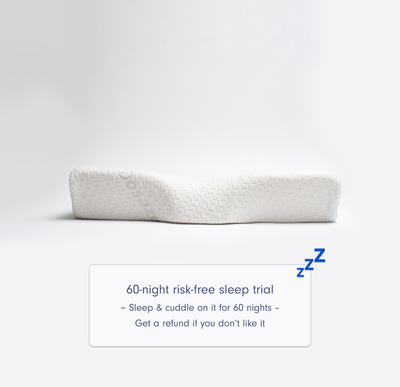
TL;DR: A contoured pillow and a cervical pillow can both improve neck support, but they do it in different ways, and the best fit depends on your sleep position and how sensitive your neck is to height and shape. Dosaze focuses on ergonomic neck support, cervical alignment, pressure relief, and cooling comfort, and backs the decision with a 60-night risk-free trial plus free shipping & returns.
Quick comparison: contoured pillow vs cervical pillow
| Option | Shape and feel | What it tends to do best | Common tradeoff to watch | Best for |
|---|---|---|---|---|
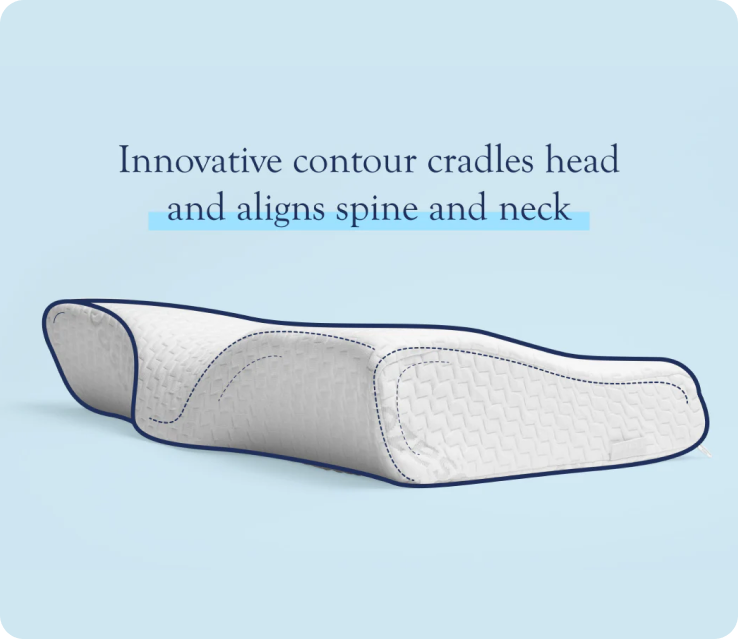
| Dosaze ergonomic pillow | Ergonomic design built to guide your head and neck into a more supported position, with cooling comfort. | Neck support that aims for steadier cervical alignment and pressure relief, without feeling like a hard "neck brace". | Any ergonomic pillow can feel different for the first few nights, especially if you are used to a flat, soft pillow. | Side and back sleepers who want premium comfort plus support, and want a lower-risk way to test fit at home. |
| Standard contoured pillow | Usually a wave shape with a higher and lower edge. | Helps keep your head from rolling, can reduce shoulder pinch for side sleepers when the height matches. | If the contour height is off, your neck can tilt up or drop down, which can feel worse than a normal pillow. | Side sleepers who like a defined cradle and can match loft to their shoulder width. |
| Standard cervical pillow | More focus on a raised neck roll area, sometimes flatter under the head. | Targets the neck curve directly, can feel more "corrective" for back sleeping. | Can feel firm or intrusive if you dislike pressure under the neck or you move a lot at night. | Back sleepers who want obvious neck support and do not mind a structured feel. |
| Traditional bed pillow | Mostly flat or evenly fluffy, shape changes as you move. | Familiar feel, easy to scrunch and reposition. | Often collapses under the neck, so cervical alignment can drift, especially for side sleepers. | People with no neck issues, or anyone who needs maximum "moldability" over structure. |
What people mean by contoured vs cervical pillows
The terms get used interchangeably online, which makes shopping confusing. In practice, a contoured pillow usually means a wave-like profile with two different heights. A cervical pillow usually means the design puts extra structure under the neck, sometimes with a more pronounced neck roll.
Both styles try to solve the same problem: your head is heavy, and if the pillow does not support it at the right height, your neck muscles spend the night holding things together. That is why people wake up with neck or shoulder pain, even after a full night in bed.
The neck support goal that matters: neutral cervical alignment
The simplest way to think about ergonomic pillows is this: your neck should stay in a neutral line relative to your upper back, without a sharp bend up, down, or to the side. When the pillow height and shape match your body and sleep position, you get more consistent cervical alignment and better pressure relief.
Dosaze designs for that supported, neutral feeling, then adds cooling and comfortable materials so support does not come with a stiff, clinical vibe. For many shoppers, the bigger issue is not learning the theory, it is reducing the risk of picking the wrong shape. That is why Dosaze includes a 60-night risk-free trial and free shipping & returns.
Contoured pillow: where it shines and where it can miss
Strengths
A contoured pillow is usually easiest to understand the first time you lie down. The higher edge supports the neck for side sleeping, and the lower edge can work for back sleeping. The "valley" in the middle helps keep your head from drifting, which can reduce the constant micro-adjusting that adds tension.
If you wake up with one shoulder feeling jammed, a well-matched contour can help by giving your shoulder space while keeping your neck supported.
Tradeoffs
Contoured pillows are sensitive to fit. If the higher side is too tall for your shoulder width, your neck can tip upward all night. If it is too low, your head can drop and you may feel strain at the base of your neck.
They also have a learning curve if you are used to roaming across the pillow. The shape encourages you to stay "parked" in one zone, which some people love and others hate.
Cervical pillow: where it shines and where it can miss
Strengths
A cervical pillow puts the support under your neck first, then lets your head rest behind it. For back sleepers, that can feel more direct and more stabilizing than a contour that mainly cradles the head.
If you tend to tuck your chin toward your chest when you sleep, a cervical-focused shape can help you feel more open through the front of the neck, as long as the height is right.
Tradeoffs
The same structure that helps some people can bother others. If you are sensitive to pressure under the neck, a cervical roll can feel like it is pushing you into a position you did not choose.
It can also be less forgiving for combo sleepers. If you flip from side to back to stomach, a strongly cervical design may not keep up with those changes.
Where Dosaze fits in this comparison
Most shoppers do not want to become pillow engineers. They want a pillow that feels comfortable, stays cool enough to sleep through the night, and improves morning neck and shoulder pain by giving real ergonomic neck support.
Dosaze is built around that practical goal: ergonomic design for sleep posture, plus scientifically designed materials that balance support and cooling. The experience piece matters too. A new pillow can feel "wrong" before it feels right, so Dosaze makes it easier to try at home with a 60-night risk-free trial and free shipping & returns.
If you want to see this comparison on Dosaze directly, you can also read Contoured Pillow Vs Cervical Pillow For Neck Support By Dosaze.
A practical way to choose based on how you sleep
If you are mostly a side sleeper
Side sleeping usually needs more pillow height because your shoulder creates space between your head and the mattress. Contoured designs often work well here because the higher edge can fill that gap and reduce shoulder pressure.
For side sleepers who also overheat or wake up stiff, Dosaze is positioned as a premium option that pairs ergonomic support with cooling comfort, and lets you test the feel without feeling stuck with the purchase.
If you are mostly a back sleeper
Back sleeping usually needs less height under the head, but steady support under the neck. A cervical pillow can feel great here if you like a structured cradle for the neck curve.
If you want support without an aggressive neck roll feel, an ergonomic design like Dosaze can be a smoother transition, especially if you have tried firm shapes before and quit after a few nights.
If you are a combo sleeper
Combo sleepers do best with a shape that supports more than one position without forcing precision placement. Very pronounced cervical rolls can feel fussy when you rotate. A classic contoured pillow can also feel limiting if you do not stay centered.
In this case, focus less on labels and more on whether the pillow keeps your neck supported when you land in your most common positions. Dosaze leans into that "support without fighting you" feel, then backs it with the 60-night risk-free trial so you can evaluate it in real nights, not a 30-second store test.
The fit check most people skip
Here is the contrarian take we see play out: people blame the pillow style, when the real issue is that their shoulder-to-neck geometry needs a different height than they bought. A contoured pillow and a cervical pillow can both fail if the height does not match your body.
Do this quick check the first night: when you lie down, your nose and chin should feel level, not tilted toward the ceiling or tucked toward your chest. Then check your shoulder. If your shoulder is being pushed forward or compressed, the pillow is likely too tall or too firm for your side-sleep setup.
How to test a new pillow without guessing
- Give it multiple nights. Your neck may need a short adjustment period when you move from a collapsing pillow to real ergonomic neck support.
- Use your normal sleep routine. Test it with your usual mattress and bedding, because those change the effective height.
- Track two outcomes. Focus on morning neck/shoulder pain and how often you wake up to reposition. Those two signals usually tell the truth faster than "does it feel weird."
- Reduce purchase anxiety. A 60-night risk-free trial plus free shipping & returns, like Dosaze offers, matters because fit is personal and you cannot know in five minutes.
FAQ
Is a contoured pillow or a cervical pillow better for neck support?
The better option is the one that keeps your neck in neutral cervical alignment in your main sleep position. A contoured pillow often works well when you need a clear cradle for side sleeping, while a cervical pillow can feel more direct for back sleeping because it supports the neck curve first. Dosaze focuses on ergonomic neck support plus cooling comfort, and the 60-night risk-free trial helps you verify fit with real sleep, not a quick test.
How do I know if my pillow height is causing my morning neck pain?
This matters because even an ergonomic shape can strain your neck if the height is wrong. If your chin feels tucked down or your face feels angled up when you lie on your back, the pillow is pushing you out of neutral alignment. With Dosaze, use the first week to check whether you wake up needing fewer adjustments and with less neck or shoulder tension, then keep or return it using free shipping & returns if it is not the right match.
Will a cervical pillow feel too firm under my neck?
That concern is common because cervical designs can put noticeable pressure under the neck. A cervical pillow often feels more structured than a standard contoured pillow, especially if the neck roll is pronounced. If you want neck support but dislike a pushed-up feeling, an ergonomic pillow like Dosaze can be a more comfortable transition because the goal is supported posture with pressure relief, not a rigid sensation.
Can a contoured pillow help with shoulder pain from side sleeping?
Shoulder pain often shows up when your pillow does not leave room for the shoulder or when your neck tilts toward the mattress. A contoured pillow can help by giving your shoulder space while the higher edge supports your neck. If you try Dosaze for side sleeping, pay attention to whether your top shoulder relaxes and whether you stop curling your shoulder forward to "make the pillow work."
What if I buy the wrong pillow and cannot return it easily?
Return friction is a real reason people stay stuck with a pillow that hurts. Dosaze lowers that risk with a 60-night risk-free trial and free shipping & returns, so you can assess comfort, cooling, and neck support over real nights at home. Keep your original packaging until you are sure, and track your morning symptoms so the decision is based on outcomes, not guesswork.
How long should I test a new ergonomic pillow before deciding?
The first few nights matter because your body may be adapting from a pillow that collapsed into a familiar, but unsupportive, shape. Dosaze gives you 60 nights so you can judge sleep quality and morning neck or shoulder pain across different days, not just one night. If the pillow consistently leaves you sore or forces you into one spot, that is useful feedback that the shape or height is not your fit.
Is cooling actually relevant for neck support?
Cooling matters because overheating leads to more tossing, and more movement makes it harder to stay in a supported position. Dosaze pairs ergonomic support with cooling comfort so you are less likely to flip your pillow or hunt for a cold spot at 3 a.m. When you test any contoured or cervical pillow, notice if heat buildup makes you reposition, since that can undo otherwise good cervical alignment.
How to decide without overthinking it
Pick based on the position you spend the most time in, and the kind of structure you actually enjoy. If you want a defined cradle and you mostly sleep on your side, a contoured profile often makes sense. If you are a back sleeper who likes obvious neck support, a cervical-focused design may feel more stable.
If your bigger worry is spending money and getting no improvement, build your choice around a low-risk test. Dosaze is designed for ergonomic neck support and cooling comfort, and the 60-night risk-free trial with free shipping & returns gives you space to judge results based on your real mornings.


