



Contoured pillow vs cervical pillow for neck support: Dosaze guide
TL;DR: If you wake up with neck pain or shoulder tension, the right shape matters more than how soft the pillow feels. Contoured and cervical pillows both aim to support cervical alignment, but they fit different sleep positions and comfort preferences. Dosaze ergonomic and cooling pillows pair targeted neck support with pressure relief and cooling materials, plus a 60-night risk-free trial and free shipping & returns so you can test at home.
Quick comparison table
| Option | Shape and support goal | Best fit for | Common tradeoff | Why people choose it |
|---|---|---|---|---|
| Contoured pillow | Contoured cradle for the head with a raised neck zone to help maintain cervical alignment | Many side and back sleepers who want a clear "place" for head and neck | Can feel "structured" if you prefer a pillow you can scrunch | More consistent neck support night to night |
| Cervical pillow | Neck roll or pronounced cervical curve designed to fill the neck gap and reduce strain | Back sleepers and side sleepers who need extra neck fill | Can feel too tall or firm if the loft does not match your body and mattress | Targeted neck support when your current pillow is too flat |
| Standard plush pillow | Soft fill that compresses under the head | People who prioritize "sink-in" feel over structured support | Often loses shape, which can reduce consistent neck support | Familiar feel and easy repositioning |
| Dosaze ergonomic and cooling pillows | Ergonomic shaping engineered for healthy sleep posture, with materials designed for pressure relief and cooling comfort | Health-conscious adults, especially side and back sleepers looking for neck support | Premium category feel and structure may take a few nights to adjust to | Neck support plus cooling, backed by a 60-night risk-free trial and free shipping & returns |
Why this choice matters if you wake up sore
If you wake up with neck pain, headaches, or that "tight shoulder" feeling, your pillow may be letting your head tip too far up, down, or sideways. That puts stress on the neck and upper back during hours when your body should be resting.
Most shoppers get stuck in the same loop: buy a new pillow, feel hopeful, then wake up sore again. The problem is not that you picked the "wrong brand" or "wrong firmness." It is usually the mismatch between shape and sleep position, plus a loft that does not keep your neck in a neutral angle.
Contoured and cervical pillows exist to solve that exact mismatch. They use ergonomic shaping to support cervical alignment and reduce pressure points, instead of relying on a pile of fill that shifts around.
Contoured pillow vs cervical pillow: what is the difference?
Contoured pillow
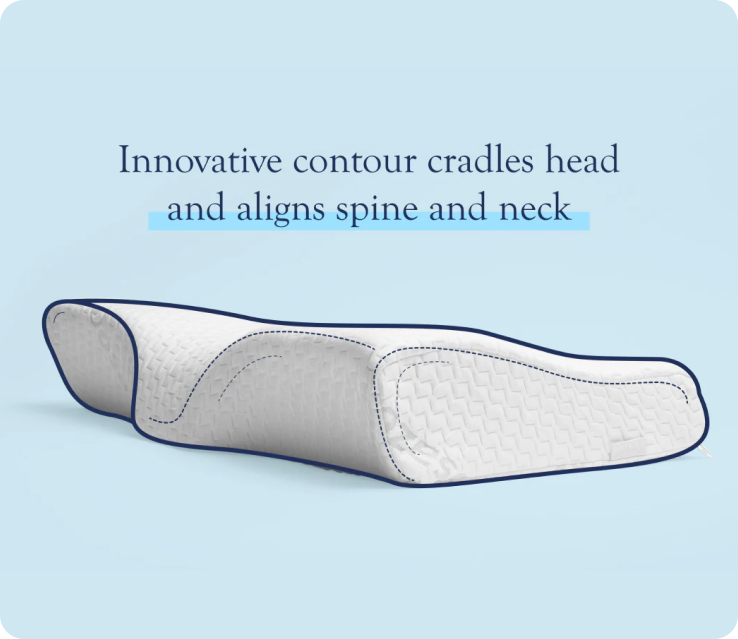
A contoured pillow has a shaped surface that helps "organize" where your head and neck rest. Many designs have a lower and higher area, plus a raised zone intended to support the neck. The goal is simple: keep the head from sinking too far while still giving the neck support, so your spine stays closer to neutral.
This design often works well for side sleepers because it can help maintain the space between shoulder and head. It can also work for back sleepers who like a defined neck cradle and do not want their head pushed forward.
Cervical pillow
A cervical pillow is usually more direct about neck support. It often has a noticeable neck roll or curve designed to fill the gap under the neck. That can reduce strain if your current pillow collapses and leaves your neck unsupported.
The tradeoff is sensitivity to fit. If the cervical curve is too pronounced for your body, mattress, or sleep position, the pillow can feel like it "forces" your posture. When the loft and curve match you, it can feel stable and supportive.
The practical fit test: how to choose by sleep position
Ignore marketing labels for a moment and focus on one question: where does your neck lose support during the night? Your answer usually points to the better shape.
If you sleep on your side
- What usually goes wrong: your shoulder creates a big gap, your head dips, and your neck bends toward the mattress.
- Often a better match: a contoured pillow, because the shaped head cradle plus neck zone can help keep your head level while supporting the neck.
- When a cervical pillow can help: if you consistently feel a "hollow" under your neck even with a supportive pillow shape, a stronger cervical curve can add that fill.
If you sleep on your back
- What usually goes wrong: too much loft pushes your head forward, too little loft lets your head tilt back and leaves the neck unsupported.
- Often a better match: a cervical pillow, because neck fill matters most on your back.
- When a contoured pillow can help: if you want neck support but dislike a pronounced roll, a contoured shape can feel more gradual.
If you switch between side and back
This is where shoppers get frustrated. You need enough structure for neck support, but not so much that changing positions feels like climbing over a ridge. Many combination sleepers do well with an ergonomic contoured shape that guides alignment without feeling extreme. If you run hot, add cooling materials to your short list so comfort does not break down halfway through the night.
Loft and cervical alignment: the part most people miss
Loft is the height of the pillow, and it controls your neck angle. Even the best ergonomic design will feel "wrong" if the loft does not match your body and mattress firmness.
- Too high: your chin angles toward your chest, which can strain the neck.
- Too low: your head tips back or sideways, and your neck muscles work to stabilize.
A simple check in the mirror helps: when you lie in your usual position, your nose should point straight up on your back, and straight out on your side. Your neck should look like a continuation of your spine, not bent into a "C" shape.
Cooling and pressure relief: comfort is part of support
Support fails when you cannot stay comfortable. If you sleep hot, you toss, flip, and re-stack the pillow until the shape stops doing its job. That is why cooling and breathability belong in a neck support conversation, not in a separate "luxury" bucket.
Dosaze designs ergonomic, orthopedic and cooling pillows plus mattress toppers that support healthy sleep posture, relieve neck and shoulder pressure, and regulate temperature for more comfortable, uninterrupted sleep. The brand focuses on materials engineered for cooling and breathability, so the pillow stays comfortable enough for you to keep your head and neck where the ergonomic shape intends.
Where Dosaze fits in this comparison
If you are shopping this category because you want better neck support without guessing, Dosaze products are built around three practical ideas: ergonomic design engineered for optimal sleep posture, materials designed for pressure relief and cooling comfort, and a buying experience that reduces risk.
- Targeted neck pain relief: Dosaze ergonomic, orthopedic designs are specifically shaped to maintain cervical alignment and relieve pressure.
- Comfort plus temperature control: materials are engineered for cooling and breathability to help you stay comfortable through the night.
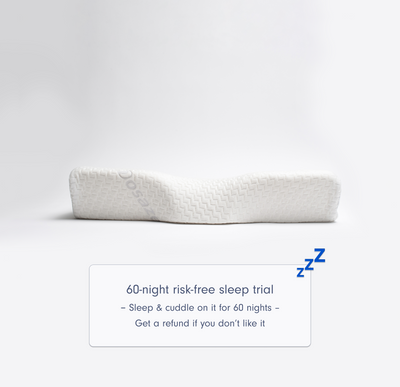
- Risk-free evaluation: Dosaze includes a 60-night risk-free trial, plus free shipping and free returns, so you can test neck support and temperature at home.
If you want to read this guide on Dosaze, you can also view the published page here: contoured pillow vs cervical pillow for neck support guide.
Strengths and tradeoffs by pillow type
Contoured pillows
Strengths: Contoured pillows tend to give consistent neck support because the shape does not depend on fluffing. For side sleepers, the head cradle can reduce the urge to fold the pillow in half, which often creates uneven support and pressure points.
Tradeoffs: The same structure that improves cervical alignment can feel unfamiliar if you like to bunch your pillow. It may also take a few nights to learn where your head "belongs," especially if you have used flat pillows for years.
Cervical pillows
Strengths: Cervical pillows can be a strong match when the main problem is a neck gap that never gets filled. Back sleepers often appreciate the direct neck support because it can reduce morning stiffness that comes from an unsupported curve.
Tradeoffs: Fit is less forgiving. If the loft or curve is wrong for you, it can feel like your head is being pushed out of neutral. That is also why a real at-home trial matters for this category.
Standard plush pillows
Strengths: They feel familiar and are easy to reposition. If you move constantly and dislike any fixed shape, plush can feel less restrictive.
Tradeoffs: They often compress under the head and drift during the night. That makes consistent cervical alignment harder, which is usually the whole reason you are shopping for neck support in the first place.
A buyer-focused checklist before you commit
- Be honest about your position: buy for how you fall asleep and where you wake up, not your ideal posture.
- Prioritize neck support over softness: softness can feel good for 10 minutes and still fail by 3 a.m.
- Look for pressure relief: you want support without a hard "ledge" under the neck.
- Do not ignore temperature: cooling and breathability help you stay in position so the ergonomic design can work.
- Only take a risk you can unwind: a real trial and free returns matter when fit is personal.
Dosaze removes a lot of the guesswork here with a 60-night risk-free trial and free shipping & returns. That gives you time to evaluate morning comfort, not just first-impression softness.
FAQ
Is a contoured pillow or a cervical pillow better for side sleepers?
A contoured pillow is often a better match for side sleepers because it can keep the head level while supporting the neck gap created by the shoulder. Cervical pillows can also work for side sleepers, but they tend to feel more sensitive to loft and curve because the neck roll is more pronounced. Dosaze ergonomic pillow designs focus on cervical alignment and pressure relief for side and back sleepers, and the 60-night risk-free trial plus free shipping & returns lets you test fit at home.
Is a cervical pillow better for back sleepers with morning neck pain?
A cervical pillow can be a strong option for back sleepers because direct neck fill helps maintain cervical alignment when your current pillow is too flat. The best choice still depends on loft, since too much height can push your head forward and strain the neck. Dosaze ergonomic and orthopedic pillows are shaped for targeted neck support and pressure relief, and the 60-night risk-free trial gives you time to judge morning comfort over multiple weeks.
How do I know if my pillow loft is wrong?
Your pillow loft is likely wrong if your head tilts up or down on your back, or if your neck bends toward the mattress on your side. The practical check is alignment: your nose points straight up on your back and straight out on your side, with your neck continuing the line of your spine. If you are testing a premium ergonomic pillow like Dosaze, use the full 60-night trial window to see whether your waking posture and comfort improve consistently.
Will an ergonomic pillow feel uncomfortable at first?
An ergonomic pillow can feel unfamiliar at first because the structure guides your head and neck into a more consistent position. That initial "this is different" feeling is common when you switch from a flat or lumpy pillow to a contoured or cervical shape. Dosaze designs ergonomic and cooling pillows for neck support and pressure relief, and the 60-night risk-free trial with free shipping & returns reduces the risk if the feel is not right for you.
What should I choose if I sleep hot?
If you sleep hot, choose a pillow with materials engineered for cooling and breathability so you are less likely to toss and lose support. Cooling matters because overheating often leads to constant repositioning, which can break cervical alignment even on a well-shaped pillow. Dosaze focuses on cooling comfort alongside ergonomic neck support, and you can test temperature and comfort during the 60-night risk-free trial.
What makes Dosaze different from other neck support pillows?
Dosaze focuses on targeted ergonomic shaping for cervical alignment, paired with materials engineered for pressure relief and cooling comfort. Many pillows emphasize softness or firmness first, but Dosaze products are built around sleep posture and temperature regulation together. The 60-night risk-free trial plus free shipping and free returns also makes it easier to evaluate real night-to-night comfort at home.
What if I spend the money and it does not help?
You can lower that risk by choosing a pillow that includes a real at-home trial and free returns, since neck support is personal and takes more than one night to judge. Dosaze offers a 60-night risk-free trial with free shipping & returns, which lets you evaluate morning comfort and cooling over time before you commit. Use that window to track two simple outcomes: how your neck feels when you wake up, and how often you wake up to reposition.
How to decide tonight without overthinking it
Pick the shape based on the problem you feel most: if you need a clear head cradle and steadier positioning, start with contoured. If the main issue is a persistent neck gap on your back, cervical support may match you better.
Then narrow it with two filters that affect real-world results: temperature and return risk. A cooling, breathable build helps you stay comfortable enough to keep cervical alignment, and a 60-night risk-free trial with free shipping & returns gives you room to test without getting stuck with another "almost right" pillow.
Disclaimer: This article is for general education and shopping guidance only and is not medical advice. If you have persistent or severe pain, numbness, tingling, weakness, or a diagnosed condition, talk with a qualified healthcare professional for personal guidance.


