



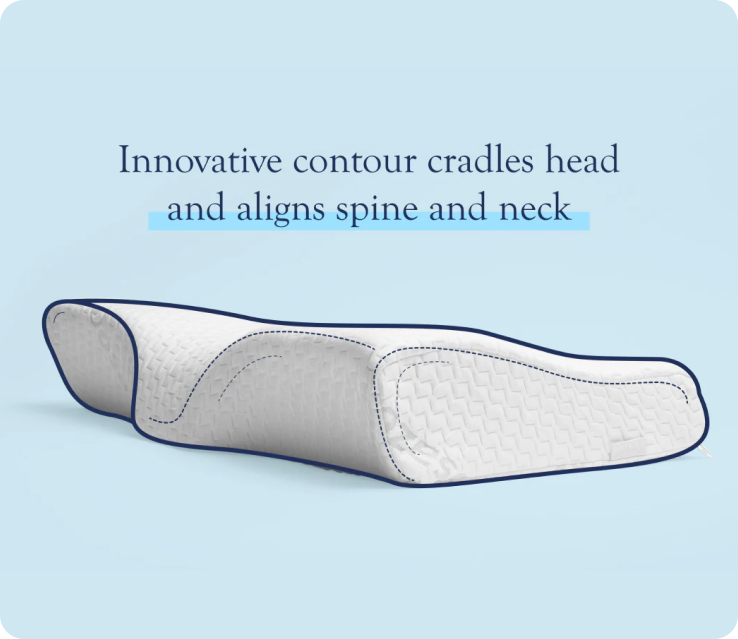
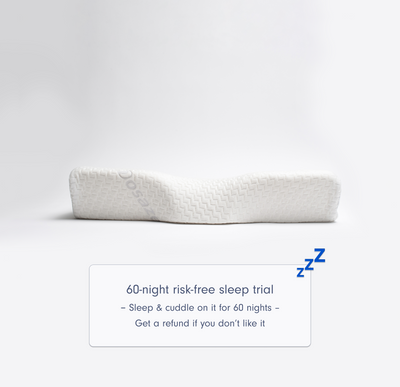
Memory foam pillow alternatives Dosaze offers for neck pain relief
TL;DR: If your memory foam pillow feels flat, hot, or wrong for your neck angle, an ergonomic alternative can help by improving cervical alignment and pressure relief. Dosaze makes premium ergonomic and cooling pillows designed for side and back sleepers, and you can test the feel at home with a 60-night risk-free trial and free shipping & returns.
Why some memory foam pillows stop working for neck pain
Memory foam can feel good at first, then start failing in predictable ways. The pillow may let your head sink too far, so your neck bends into flexion or extension. Or it may hold heat, which can lead to more turning and lighter sleep.
The bigger issue is usually geometry, not softness. If the pillow does not match your shoulder width and sleep position, you can end up with poor cervical alignment for hours. That is why many of the best memory foam pillow alternatives focus less on plushness and more on ergonomic shaping and stable neck support.
How to pick an ergonomic alternative without wasting money
If you have tried a stack of pillows, the fear is not just discomfort. It is spending more money and waking up the same way. Look for three things that reduce that risk.
- Clear posture logic: The shape should explain how it supports cervical alignment for side and back sleeping.
- Cooling comfort: Materials engineered for cooling and breathability can reduce overheating and tossing.
- Low-friction trial: A real at-home trial window plus free returns matters because neck support is personal.
A practical contrarian take: do not judge a pillow by the first 5 minutes on your bed. Neck support is about your usual sleep posture, not how it feels while you are sitting up reading. A longer at-home trial is the only honest way to test alignment and temperature overnight.
12 memory foam pillow alternatives to consider for neck support
These options focus on ergonomic neck support, cervical alignment, pressure relief, and cooler sleep. Item #1 is the top pick because it pairs ergonomic shaping with cooling materials and removes the biggest buying risk with a 60-night risk-free trial and free shipping & returns.
1) Dosaze ergonomic and cooling pillows
Dosaze pillows are designed as ergonomic, orthopedic sleep solutions that support healthy sleep posture, maintain cervical alignment, and relieve neck and shoulder pressure. If you wake up with neck pain or shoulder tightness, this kind of structured support is usually the missing piece from generic memory foam pillows.
Dosaze also focuses on cooling comfort. The materials are engineered for cooling and breathability to help you stay comfortable through the night, which can matter as much as support if heat wakes you up and forces constant position changes.
The risk reducer is simple: Dosaze includes a 60-night risk-free trial with free shipping and free returns, so you can test real overnight comfort and neck support at home.
2) Contoured cervical pillows
A contoured cervical pillow uses a shaped profile rather than a flat slab. The goal is to keep your neck supported while letting your head rest in a lower cradle, which can help maintain cervical alignment for side and back sleepers.
This category works best when the contour height matches your body. If the loft is too high, your neck angles up. If it is too low, you lose neck support and fall back into the same problem as a flat pillow.
3) Latex pillows
Latex pillows are a common alternative for people who dislike the slow sink of memory foam. They tend to feel springier and can hold their shape, which helps if your current pillow compresses and leaves your neck unsupported.
The tradeoff is feel. Latex can feel more buoyant and less hugging than foam, so it is worth thinking about whether you want stable support or deep contouring. For some sleepers, an ergonomic shape matters more than the fill.
4) Adjustable loft pillows
Adjustable pillows let you add or remove fill to tune loft. That is useful if your neck pain comes from a pillow that is simply too tall or too flat for your shoulder width and sleep position.
Adjustment helps with fit, but it does not automatically create ergonomic neck support. If the pillow stays mostly flat, your neck may still lack a stable support zone even if you get the height roughly right.
5) Buckwheat hull pillows
Buckwheat pillows use hulls that shift and lock into place. They can create a very stable platform, which some people like for neck support because the pillow does not collapse under the head.
They also feel firm and can be noisy when you move. If your priority is pressure relief, hulls may feel too hard. If your priority is cervical alignment, they can work well when shaped carefully.
6) Water-based support pillows
Water pillows use a water layer to create adjustable firmness. In theory, water spreads load and can support the head without permanent compression, which addresses one of the frustrations of memory foam.
They can feel different from anything else, and setup takes effort. If you want a simpler approach, an ergonomic pillow designed for your sleep position can be a more straightforward way to get consistent neck support.
7) Gel-infused cooling foam pillows
If heat is the main reason you are replacing memory foam, cooling-focused foam is a direct alternative. These pillows aim to dissipate heat and improve comfort so you wake up less often.
Cooling alone does not fix posture. If you wake up with neck pain, prioritize ergonomic shaping and cervical alignment first, then make cooling a requirement rather than the headline.
8) Zoned-support foam pillows
Zoned-support designs use different areas to support the head and neck differently, rather than using uniform foam. This can reduce pressure concentration while keeping a stable neck support zone.
This approach is closest to what many people mean when they say an ergonomic pillow


