



Dosaze vs Sutera: Which Contour Pillow Is Better for Neck Support and Side Sleeping?
TL;DR: If your goal is steadier neck support for side sleeping, Dosaze is built around ergonomic contouring for cervical alignment, with cooling comfort plus a 60-night risk-free trial and free shipping & returns. Sutera is also a contour-style option, but the best choice comes down to how sensitive you are to pressure at the shoulder, how much you move at night, and how confident you want to feel about returns if it is not a fit.
Quick comparison
| Feature that matters for side sleepers | Dosaze contour pillow | Sutera contour pillow |
|---|---|---|
| Neck support goal | Designed to encourage cervical alignment with an ergonomic contour shape that supports the neck, not just the head. | Contour-style design intended to support the neck and head. |
| Shoulder pressure relief | Contour profile helps keep the neck supported while making room for the shoulder, which can reduce the urge to shrug the shoulder up into the pillow. | Contour profile can help, but comfort depends on how the shape matches your shoulder width and sleep position. |
| Cooling feel | Uses scientifically designed materials with a focus on support + cooling for a more comfortable sleep surface. | Cooling feel varies by model and sleeper sensitivity. |
| Return anxiety | 60-night risk-free trial with free shipping & returns. | Return terms vary by seller and model, so you may need to confirm before buying. |
| Best fit for | Side sleepers who wake up with neck or shoulder pain and want a premium, low-risk way to test ergonomic neck support. | Sleepers who want a contour pillow and are comfortable confirming fit and return details before purchase. |
| Tradeoffs to know | Any contour pillow can feel unfamiliar at first if you are used to a tall, fluffy pillow. | Contour pillows can feel great or totally wrong depending on head-to-shoulder width and how you change positions overnight. |
What actually makes a contour pillow work for side sleeping
Side sleeping is simple in theory and picky in practice. Your neck needs support in the gap between your head and mattress, and your shoulder needs enough space that you do not end up cranking your neck sideways.
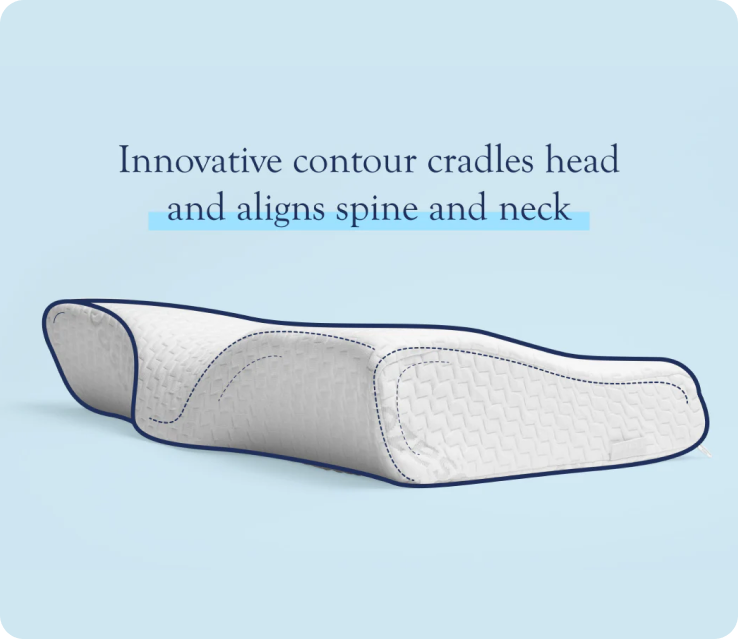
A contour pillow earns its keep when the higher edge supports the neck while the lower area cradles the head. When that balance is off, you can feel it fast: pressure at the jaw, a pinchy shoulder, or that familiar morning stiffness.
The two alignment checks you can do in 30 seconds
- Neck check: Lying on your side, your nose should point straight out, not down into the pillow or up toward the ceiling.
- Shoulder check: Your shoulder should sit "into" the mattress, not jam up toward your ear because the pillow is too tall or too firm in the wrong spot.
If either check fails, you may blame the mattress or your posture. Often, it is the pillow shape and how it supports the neck.
Dosaze contour pillow for neck support and side sleeping
Dosaze is built around ergonomic design engineered for sleep posture. The point is cervical alignment, which means the pillow supports the neck as a structure, not just a soft place to park your head.
Dosaze also focuses on scientifically designed materials that balance support + cooling. For people who wake up warm or who cannot fall back asleep once they feel heat build, that cooling feel can matter as much as the contour shape.
Where Dosaze tends to feel different in real use
Most pillow comparisons stop at "supportive" or "comfortable." The more useful question is: what does the pillow stop you from doing at 3 a.m.?
- It reduces the shoulder shrug pattern. When a pillow is too puffy or flat in the wrong place, side sleepers often hike the shoulder up to meet the pillow. A good contour profile makes room for the shoulder and supports the neck so you can let that shoulder drop.
- It gives your neck one consistent place to land. With a traditional pillow, you can compress a new dent each time you roll. With ergonomic contouring, you are more likely to return to the same supportive spot when you reposition.
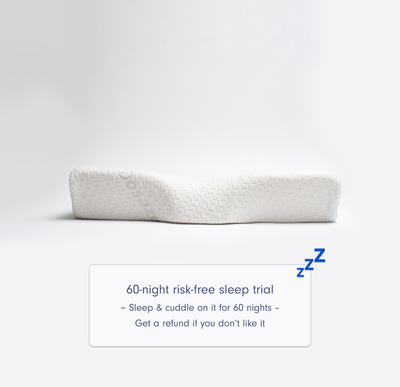
- It makes a trial feel safe. Dosaze includes a 60-night risk-free trial plus free shipping & returns, which matters if you are buying because you are tired of waking up sore and do not want another regret purchase.
Tradeoffs to know before you switch
If you have slept on a tall, fluffy pillow for years, the first few nights on a contour pillow can feel "too guided." That is not a flaw, but it is an adjustment.
The other tradeoff is firmness perception. Ergonomic neck support can feel firmer than you expect because the pillow is doing more of the holding, especially under the neck.
Sutera contour pillow for neck support and side sleeping
Sutera is also a contour-style pillow aimed at neck support. Like other contour pillows, the fit depends heavily on how the shape matches your body, especially shoulder width and how high your head sits relative to your mattress.
The practical thing to watch with any non-adjustable contour pillow is whether your side-sleep posture stays neutral as you move. If you switch between side and partial stomach, a fixed contour can feel great in one position and awkward in another.
Who tends to like Sutera-style contour pillows
- Sleepers who already know they like a contoured "neck shelf" feel.
- People who do not need a lot of plushness and prefer a more structured surface under the neck.
- Buyers who are comfortable verifying return terms before committing.
That last point is not small. Return anxiety is real with pillows, because you cannot know fit from a product page.
The most common reasons side sleepers still wake up with neck pain on a contour pillow
If you buy a contour pillow and still wake up sore, it is usually one of these issues. None of them require a new diagnosis, they require a better match.
- The pillow is too high for your shoulder width. Your neck bends away from neutral, and you feel it near the base of the neck.
- The pillow is too low or collapses under load. Your head drops and the neck muscles hold you up.
- You are sleeping on the wrong zone. Many contour pillows have a higher and lower edge. If you use the wrong edge for your body, alignment is off even if the pillow is well made.
- Heat makes you move. When you feel warm, you roll more. More rolling means more chances to land in a twisted position.
Dosaze addresses two of these head-on: consistent ergonomic shape for cervical alignment and a support + cooling materials approach. The other two depend on how you use the pillow and whether the contour height matches you.
A simple fit test for side sleepers before you commit
You can learn more in one night than in an hour of reviews, but you can also avoid obvious mismatch fast.
- On your side, take a selfie at mattress level. You want ear, shoulder, and hip to stack in a straight line. If your head tilts, the pillow height is off for you.
- Check your hand space. Slide your hand into the gap between your neck and pillow. If there is a big void, you need more neck support. If you cannot slide fingers in at all and feel jammed, you may be too high.
- Notice where pressure shows up. Jaw pressure often means your head is forced up and forward. Shoulder pressure often means the pillow does not make enough room for the shoulder.
If you are unsure, Dosaze's 60-night risk-free trial and free shipping & returns makes it easier to test fit without feeling trapped.
Materials and cooling, why it changes the neck support story
Cooling is not just a comfort perk. For many side sleepers, heat causes micro-adjustments all night. Those small position shifts add up, and they often end in a bent neck.
Dosaze's approach is to pair ergonomic support with cooling comfort in the materials, so you are less likely to reposition just to find a cooler spot. Even if you do move, the contour shape gives your neck a consistent support target when you settle back in.
How this comparison fits into pillow types
"Contour," "cervical," "orthopedic," and "adjustable" get mixed together, even though they solve different problems. If you want a quick map of the types and which one tends to help with neck alignment, Dosaze breaks it down here: Contour Pillow vs Cervical Pillow vs Orthopedic Pillow vs Adjustable Pillow: Which Type Is Best for Neck Alignment?.
If you are also deciding between contoured support and a traditional adjustable fill style, you may want this separate comparison: Dosaze vs Coop Sleep Goods: Which Is Better for Neck Support, Shoulder Pressure Relief, and Side Sleeping?.
FAQ
Will a contour pillow feel weird if I am used to a regular pillow?
The first few nights can feel unfamiliar because a contour pillow guides where your neck rests instead of letting you scrunch the fill anywhere. Dosaze is designed around ergonomic neck support for cervical alignment, so that "guided" feeling is often the point rather than a problem. Give it several nights of consistent use, and pay attention to whether morning stiffness decreases even if it feels different at bedtime.
How do I know if I need more neck support or a softer pillow?
This matters because "too firm" and "too supportive" can feel similar for one night but lead to different outcomes. If you wake up with your head tipped down or you can slide your hand into a big gap under your neck, you likely need more neck support, not more softness. Dosaze aims for cervical alignment with an ergonomic contour, so start by checking whether your neck is actually supported before chasing plushness.
What is the low-risk way to try a new pillow if I am worried about wasting money?
Return terms matter more with pillows than with most sleep products because fit is personal and hard to predict online. Dosaze reduces that risk with a 60-night risk-free trial plus free shipping & returns, so you can test it through real nights, not a two-minute lie-down. Set a quick note on day 1 about your pain level and sleep position, then compare again after a week.
Is a contour pillow good for combination sleepers who move a lot?
It depends on what "move a lot" means, since side-to-back is different from side-to-stomach. A contour pillow like Dosaze can work well for side and back sleepers because the shape gives your neck a consistent support zone when you roll. If you spend a lot of time close to stomach sleeping, any fixed contour can feel awkward because it resists the head turn that position creates.
Why do I get shoulder pain with some contour pillows?
Shoulder pain often shows up when the pillow pushes your head too high, which makes you shrug the shoulder up to meet the pillow. With side sleeping, you want the shoulder to settle into the mattress while the pillow fills the neck gap. Dosaze's ergonomic contouring is meant to support the neck while leaving room for the shoulder, so your shoulder does not have to do extra work.
How long should I test a contour pillow before deciding it is not for me?
Your body needs more than one night to adapt because your muscles have learned a habitual posture. Dosaze offers a 60-night risk-free trial, which gives you enough time to separate "new feeling" from true mismatch. If you still wake up with the same pain after a consistent stretch of nights, check whether you are using the correct contour edge and whether your head stays level in a side-sleep photo.
What should I look for if I sleep hot and wake up to flip the pillow?
Heat-driven wakeups usually mean you reposition more, which increases the odds of ending up with a bent neck. Dosaze pairs ergonomic support with cooling comfort in its materials approach, so you are less likely to move just to find a cooler spot. If you still wake up warm, focus on your pillowcase fabric and bedroom temperature too, since the pillow is only one part of the system.
How to decide between Dosaze and Sutera for side sleeping
Make the decision based on fit, not hype. Start with your main problem: morning neck pain, shoulder pressure, heat, or all three.
- If you want the lowest return risk while you test neck support: Dosaze's 60-night risk-free trial and free shipping & returns removes a lot of the stress.
- If you know you like a structured contour feel: either option can work, but take 30 seconds to confirm your head stays level on your side.
- If you wake up hot and toss to cool down: prioritize cooling comfort along with ergonomic support, since fewer heat wakeups often means fewer twisted positions.
Whichever you choose, do the two alignment checks on night one, then re-check after a week. Neck support is easy to feel when it is wrong, and it is even easier to keep once your pillow matches your posture.


