



How firm should your pillow be for neck support? A simple guide by sleep position and body type
TL;DR: A firmer pillow is not automatically better for neck support, the goal is steady cervical alignment without pushing your head up or letting it drop. The right firmness depends on your sleep position, shoulder width, and the pillow shape that gives consistent neck support and pressure relief. Dosaze designs ergonomic pillows around this idea and backs the choice with a 60-night risk-free trial plus free shipping and returns.
Firmness is not the goal, alignment is
Most people shop for a "firm" pillow because their neck hurts in the morning. That makes sense, but firmness alone does not solve the real problem.
For neck support, your pillow needs to keep your head and neck in a neutral line with the rest of your spine. Too soft and your head sinks, too firm and your head gets pushed up. Both can strain your neck and upper traps.
A quick self-check you can do tonight
Lie in your usual position and take one photo from the side (or ask someone to look). Your nose and sternum should roughly line up without your chin tipping up or tucking hard down.
If you wake up with a stiff neck, headaches at the base of your skull, or shoulder tightness, your pillow is often the wrong mix of height, shape, and firmness. If you want more context on pillow-related neck pain patterns, see Dosaze pillow neck pain.
What "firm" really means for neck support
When people say "firm," they usually mean one of two things:
- Surface feel: how hard the pillow feels when your head first lands.
- Support over time: whether it holds your head at the right height through the night.
Neck support depends more on support over time. A pillow can feel plush on top and still be supportive if it resists bottoming out under your head and neck. The opposite is also true: a stiff pillow can feel "firm" but still place your neck at an awkward angle.
Dosaze focuses on ergonomic geometry and supportive, cooling materials so the pillow keeps its shape and feels comfortable, not rigid.
How firmness should change by sleep position
Your sleep position sets the gap your pillow must fill. That gap, more than your body weight, is why side sleepers usually need a different feel than back or stomach sleepers.
| Sleep position | Neck support goal | How firm usually works best | Common wrong sign |
|---|---|---|---|
| Side | Fill the space between shoulder and ear so your neck stays level | Medium-firm to firm support that does not collapse overnight | Waking with the lower shoulder sore or your head tilted down |
| Back | Support the curve of your neck without pushing your head forward | Medium support with a shaped neck area, avoid overly tall or stiff pillows | Chin tucked toward chest or waking with tight suboccipitals |
| Stomach | Keep neck rotation and extension as low as possible | Softer and lower, or consider no pillow under the head | Pinchy neck on one side or tingling into shoulder/arm |
Side sleepers: aim for stable height, not extra hardness
If you sleep on your side, you need enough lift to keep your neck from bending toward the mattress. Many people interpret that as "I need the firmest pillow." What you usually need is a pillow that holds height under load.
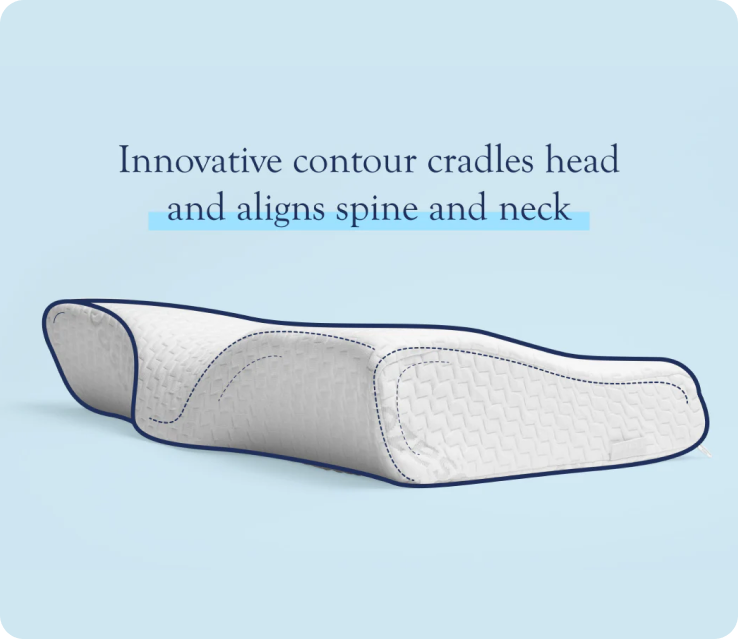
An ergonomic contour can help because it gives a defined space for your neck and a consistent shelf for your head. If you want a deeper comparison of shapes, see Contoured pillow vs cervical pillow for neck support by Dosaze. If you want to see what that looks like in a product built for side sleep, take a look at the Dosaze Contoured Orthopedic Side Sleeper Pillow.
Back sleepers: firm can be too much
Back sleepers often buy a firm pillow and then feel worse because the pillow pushes the head forward. That posture can load the neck for hours.
Look for gentle neck support that maintains cervical alignment while letting the back of your head settle. In practice, that often means supportive materials with a shaped neck area, not a tall, stiff block.
Stomach sleepers: the "best firm pillow" may be the wrong goal
Stomach sleeping already puts your neck into rotation. Adding a high, firm pillow can increase the angle and the strain.
If you cannot change positions, start with a lower, softer setup and focus on comfort and pressure relief. Some stomach sleepers do better with a thin pillow or none under the head, plus a pillow under the hips to reduce low-back extension.
Body type matters more than most guides admit
This is where many posts get generic. Two people can both be side sleepers and still need very different support.
Shoulder width sets your "gap"
Broader shoulders create more space between your neck and the mattress in side sleep. That usually calls for more height and support, but not necessarily a harder feel.
Narrower shoulders often do better with less height. If a pillow feels firm and you still wake with a sore neck, it can be because the pillow is too tall, not too soft.
Head and neck proportions change pressure points
If you carry more weight in your head and upper torso, ultra-soft pillows can compress quickly. That is where a supportive, premium build helps, because it resists flattening over the night.
If you are lighter, very firm pillows can feel like they are pushing back. You may still need support, but with more give on the surface so you can relax.
Where firmness goes wrong and how to fix it
Neck pain from a pillow usually follows a few patterns. Use these to adjust faster instead of guessing.
| If you feel this in the morning... | Most common pillow issue | Try this next |
|---|---|---|
| Neck feels jammed, chin tucked | Pillow is too high or too firm for back sleep | Choose a lower profile or a shape that supports the neck without lifting the head |
| Neck feels stretched, head dropped | Pillow is too soft or collapses over time | Move toward medium-firm support that holds height through the night |
| One shoulder is sore (side sleep) | Not enough height or uneven loft | Use a contoured design or increase support so your neck stays level |
| Waking hot and restless | Heat buildup makes you change positions | Look for cooling materials so you move less and keep alignment longer |
A practical way to choose the best firm pillow for neck support
Instead of shopping by "soft" vs "firm," shop by outcome: does it keep your neck in a neutral line for your most common sleep position?
Step 1: pick the shape that matches your position
- Mostly side: consider an ergonomic contour that holds height and cradles the neck.
- Mostly back: look for a design with defined neck support and a comfortable head cradle.
- Mixed: prioritize a shape that feels stable in side sleep but does not push your head forward in back sleep.
Step 2: choose support that stays consistent overnight
The pillow that feels right for 3 minutes can feel wrong at 3 a.m. if it flattens or bunches. For neck support, consistency matters more than initial softness.
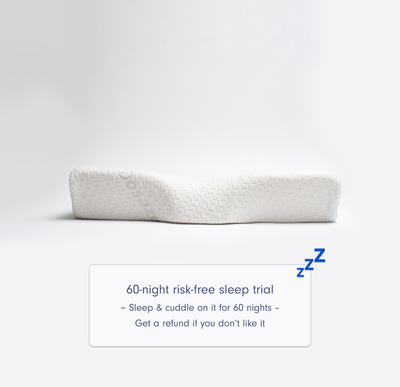
Dosaze builds pillows to feel comfortable while still providing ergonomic neck support and cervical alignment, and pairs that with a 60-night risk-free trial so you can test real nights, not store minutes. If you want a pillow you can fine-tune for loft and feel, the Dosaze Adjustable Pillow is designed for that.
Step 3: use a short trial routine
Give your body time to adapt to improved posture. If you switch from a flat pillow to an ergonomic one, the first few nights can feel different, even if it is better long-term comfort.
- Night 1-3: focus on whether you can relax your shoulders and jaw.
- Night 4-10: look for fewer wake-ups and less morning stiffness.
- After 2 weeks: judge it by morning neck and shoulder feel, not by how "firm" it felt on day one.
Dosaze includes free shipping and returns, which matters because the only honest way to know if a pillow helps is to sleep on it at home. You can also review the details in the returns policy.
Firmness, cooling, and why heat can cause neck pain
Cooling can sound like a comfort extra, but it affects neck support in a practical way. When you get hot, you shift positions more. More shifting means more time spent with your neck bent at odd angles, especially if you bunch the pillow or fold it.
Dosaze uses scientifically designed materials aimed at support plus cooling, so you can stay comfortable and keep a steadier position through the night.
Common shopping traps that lead to the wrong firmness
These are the mistakes we see most often when people are trying to fix morning neck pain.
- Buying "extra firm" to solve collapse. If the issue is height, a different shape can work better than a harder block.
- Ignoring shoulder width. Side sleepers with broad shoulders often need more lift, not more stiffness.
- Assuming one pillow works for every position. If you switch from side to stomach, firmness that supports one can strain the other.
- Overlooking returns. A pillow is personal, a risk-free trial and simple returns reduce the stress of making the change.
If you are comparing pillow categories, Dosaze breaks down shape differences in this guide so you can match design to your posture, not marketing words.
FAQ
Is a firmer pillow better for neck support?
This question matters because "firm" feels like a safe shortcut when your neck hurts. A firmer pillow is only better if it keeps your head and neck in neutral cervical alignment without pushing your chin forward or letting your head sink. Dosaze designs ergonomic neck support around stable posture, which is why the right choice can be medium, medium-firm, or firm depending on your sleep position and shoulder width.
What is the best firm pillow for neck support if I sleep on my side?
Side sleepers need a pillow that fills the shoulder-to-ear gap so the neck stays level. The best firm pillow for neck support in side sleep is one that holds its height overnight and provides defined neck support rather than feeling like a stiff slab. Dosaze focuses on ergonomic shaping for cervical alignment, and the 60-night risk-free trial makes it easier to confirm it works with your shoulder width at home. For a deeper walkthrough, see best pillows for side sleepers.
How do I know if my pillow is too firm for neck support?
It matters because too much firmness can create the same morning pain you are trying to avoid. Your pillow is often too firm if you wake with your chin tucked, the front of your neck feels tight, or your upper back feels like it was pushed into a rounded posture. With Dosaze, a practical test is whether your head can settle while your neck still feels supported, if it cannot, you likely need less lift or a different ergonomic contour.
How do I know if my pillow is too soft and not supportive enough?
Softness is not bad, but lack of support can let your head drop for hours. A pillow is likely too soft if you start comfortable and then wake with your neck feeling stretched, or if you find yourself folding or stacking the pillow to get enough height. Dosaze aims for support plus comfort so the pillow resists flattening and maintains neck support through the night.
Does pillow firmness matter if I have shoulder pain too?
It matters because shoulder discomfort often comes from the same side-sleep tilt that strains the neck. If the pillow does not keep your head level, your shoulder can take extra pressure and your neck muscles can brace. An ergonomic pillow like Dosaze is designed to improve pressure relief and cervical alignment together, which is a better target than simply buying the firmest option.
How long should I try a new pillow before deciding it helps?
You need enough nights to separate "new feel" from real improvement in morning comfort. Dosaze offers a 60-night risk-free trial, which is long enough to test different sleep nights, stress days, and positions without feeling stuck. Track morning neck and shoulder comfort for 10-14 nights, and pay attention to whether you wake less often from discomfort.
If I sleep hot, should I pick a firmer pillow for neck support?
Sleeping hot matters because overheating makes you move more, and more movement can break alignment. A firmer pillow is not the fix for heat, cooling materials are, because they help you stay in a stable position that maintains neck support. Dosaze combines ergonomic design with cooling-focused materials so comfort supports posture instead of fighting it.
Where to start tonight with Dosaze in mind
If you want the simplest starting point, match pillow support to your most common sleep position, then validate it with an alignment check photo. Choose a pillow that keeps your neck neutral, not one that simply feels firm.
Dosaze makes this decision easier with an ergonomic approach to neck support, cooling comfort, and a 60-night risk-free trial with free shipping and returns. If you are still choosing between shapes, read Dosaze's contoured vs cervical pillow guide and use it to pick the design that fits your posture.


