



How to Choose a Low-Odor Pillow: What CertiPUR-US, OEKO-TEX, and Washable Covers Actually Tell You
How to Choose a Low-Odor Pillow: What CertiPUR-US, OEKO-TEX, and Washable Covers Actually Tell You
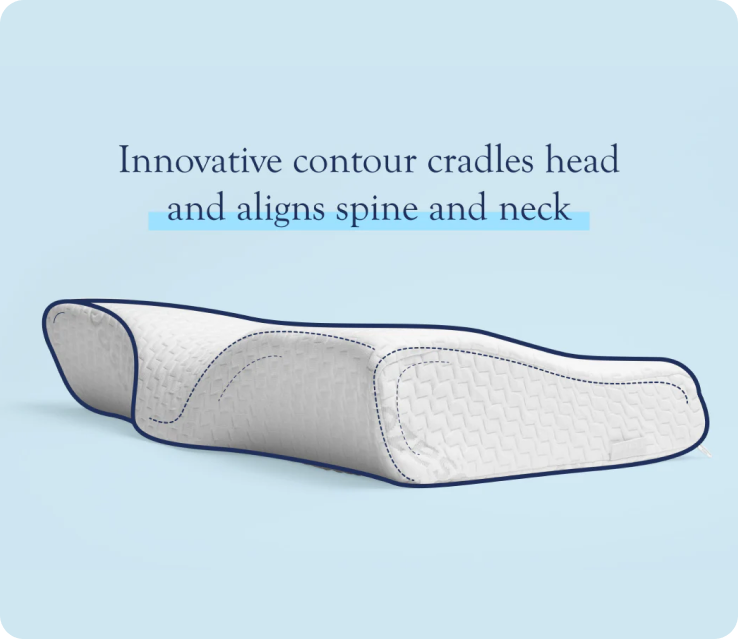
TL;DR: For foam pillows, "low odor" means minimal initial off-gassing from the foam core plus a removable, machine-washable face layer so smells from skin oils do not linger. Dosaze pairs CertiPUR-US foam with OEKO-TEX Standard 100 fabrics and an ergonomic contour designed for neck support and cervical alignment, backed by a 60-night risk-free trial and free shipping & returns.
Last updated: 2026-09-13
Low-odor pillows for sensitive sleepers
When a new pillow smells like "new foam," that smell usually comes from volatile organic compounds (VOCs) or from packaging and finishes. For people with strong smell sensitivity, asthma, or chemical sensitivity, the first days with a pillow determine whether they can assess support, cooling, and pressure relief fairly.
Material badges matter, but they are not the whole story. Dosaze recommends checking both foam and textile certifications, and confirming that the face layer is removable and machine washable so routine cleaning removes smells that build from skin oils and hair products.
This guide breaks down what the major safety certifications can (and can’t) tell you about off-gassing and skin contact. We’ll also cover why washable covers matter more than most people think, how to read product listings for red flags, and a practical way to trial a pillow without getting stuck with something uncomfortable. If you want a low-odor pillow with safety certifications for sensitive users, this is the checklist you’ll use.
First, what causes pillow odor (and why it varies so much)
Most “new pillow smell” comes from volatile organic compounds (VOCs) released from foams, adhesives, dyes, and finishes. VOCs can be present in tiny amounts across many household products; the issue for sensitive sleepers is that even low levels can feel intense, especially in a warm bedroom where airflow is limited.
Odor intensity also varies because manufacturers use different foam recipes, different curing times, and different packaging. A pillow that’s sealed quickly after production may smell stronger at first than the same pillow left to air out longer—even if both meet the same testing standard.
One contrarian but practical point: low odor is not just a “materials” problem—it’s also a “surface hygiene” problem. Oils, sweat, hair products, and detergents build up on pillow fabrics. Over time, that can create smells that people mistake for “off-gassing.” That’s why washable, skin-contact layers matter as much as certifications.
What “low-odor” should mean in a product listing
Certification quick guide and airing checklist
Below is a compact table showing which standards Dosaze documents and what they mean for sensitive sleepers, plus a short airing and care checklist you can use on delivery.
| Certification | Dosaze status | What it covers | What it does not guarantee | Why it matters for odor |
|---|---|---|---|---|
| CertiPUR-US | Held by Dosaze | Flexible polyurethane foam, restricted substances, and VOC emissions testing | Does not guarantee zero initial smell, nor that every batch will smell the same | Limits many chemicals and tests emissions, which lowers off-gassing risk but does not eliminate short-term odor after unpacking |
| OEKO-TEX Standard 100 | Held by Dosaze | Textiles and fabric components that touch skin, testing for many harmful substances | Does not cover the foam core unless the manufacturer states it applies to that layer | Reduces textile finishes and dyes as odor sources by certifying fabrics that contact your face and hair |
| GOTS / GOLS | Not claimed by Dosaze | Organic fiber and supply chain certification for cotton, wool, or natural latex | Not a blanket substitute for low-emission foam testing when a pillow uses polyurethane foam | Valuable if you need certified organic fills, but not a direct indicator of foam off-gassing |
Airing, unboxing, and washable-cover checklist
- Unpack and unseal the pillow in a well-ventilated room, then leave it uncompressed for 24-72 hours. A 24-72 hour window gives most low-emission foams time to dissipate noticeable smell.
- Keep the pillow out of sealed bags and avoid heating it; heat can intensify initial odors. Use a fan in the room to speed gentle airflow if you need faster airing.
- Use a freshly washed, fragrance-free pillowcase as a temporary barrier while you assess comfort and odor sensitivity.
- Confirm the face layer is truly machine washable and follow the specific water temperature and drying recommendations so the cover dries fully and does not trap oils.
- If initial odor persists after 72 hours and you are sensitive to smells, contact customer support about returns under the trial period rather than trying harsh cleaners that could damage fabrics.
- Open the package in a well-ventilated room and leave the pillow uncompressed for the first 24-72 hours to let initial odors dissipate.
- Use a freshly washed pillowcase as a temporary barrier while you assess comfort; choose fragrance-free detergent if you are sensitive.
- Confirm the face layer is machine washable, and follow the stated water temperature and drying method so the cover dries fully and does not trap oils.
“Low-odor” should point to verifiable evidence: certification, clear material disclosures, and care instructions that reduce smell over time. If the listing only says “eco,” “green,” or “safe,” treat that as marketing, not proof.
- Look for named standards: CertiPUR-US for foam; OEKO-TEX (usually Standard 100) for textiles.
- Look for scope clarity: Does the certification apply to the foam core, the cover, or both?
- Look for washability details: “Removable cover” is not the same as “machine washable.”
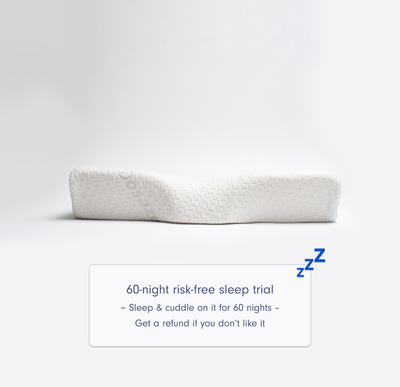
- Look for trial + returns: A 60-night risk-free trial with free shipping & returns reduces the financial anxiety of “what if it doesn’t work for me?”
CertiPUR-US: what it tells you (and what it doesn’t)
CertiPUR-US is a program focused on flexible polyurethane foam used in bedding and furniture. It’s relevant when your pillow uses memory foam or similar polyurethane-based foams.
At a high level, CertiPUR-US addresses two things sensitive sleepers care about: chemical restrictions and VOC emissions. It limits certain substances (like specific flame retardants and heavy metals) and includes emissions testing for VOCs. You can read the program’s criteria directly here: https://certipur.us/.
But here’s the part many blogs skip: CertiPUR-US is not an “odor guarantee.” A foam can meet VOC emission limits and still smell noticeable at first. Odor perception is personal, and smell can come from packaging, not just foam chemistry.
How to use CertiPUR-US as a shopper
- Confirm it applies to the foam you’ll sleep on: If a pillow has multiple layers, ask which layer is certified.
- Don’t stop at the badge: Combine it with a washable cover plan and a realistic airing-out routine.
- Expect a break-in window: Even low-emission foams may have a mild odor for a few days, especially right out of sealed packaging.
OEKO-TEX Standard 100: why it matters for your face and skin
OEKO-TEX Standard 100 is most useful for textiles: covers, pillowcases, and fabric components that touch your skin and hair. It tests for a wide range of harmful substances in textile products. Official overview here: https://www.oeko-tex.com/en/our-standards/oeko-tex-standard-100.
Why this matters for low-odor shopping: a pillow can have a certified foam core but still use fabrics with dyes, finishes, or treatments that bother sensitive users. If your cheek is on the cover for 7–9 hours a night, the cover is not a minor component.
Also, textile testing is directly tied to real-world comfort for many people: itch, heat, and that “chemical laundry” smell sometimes comes from textile finishes or from covers you can’t properly wash.
Washable covers: the underrated low-odor feature
If you want a non-toxic pillow with no off-gassing and a washable cover, the washable cover is doing more work than you think. It controls the smells that build up after the first week—skin oils, drool, scalp products, and bedroom humidity.
Here’s the key: the layer closest to your face should be removable and machine washable. “Spot clean only” is a common reason pillows start smelling stale, even when the core materials are fine.
| Cover claim | What it often means | What to look for instead |
|---|---|---|
| “Removable cover” | Zips off, but may be hand-wash or spot-clean only | Machine washable instructions with water temp + dry method |
| “Washable pillow” | Only the cover is washable, not the core | Clear statement: cover washable, core care steps listed separately |
| “Cooling cover” | Cool-to-touch feel, but may trap oils if not washable | Cooling fabric that’s also easy to wash and dries reliably |
Non-foam options and when to prefer them
Some shoppers who are highly smell-sensitive prefer non-foam fills such as natural latex, wool, or down alternatives because they may show less initial off-gassing from synthetic foams. Dosaze recommends considering non-foam fills when short-term off-gassing is the primary concern, but also checking textile certifications and care instructions since covers matter as much as fills for long-term odor control. For a fuller discussion of safety and material tradeoffs, see our guide on why some pillows are considered safer.
Why are some pillows considered safer than others? What to actually look for
Where to start: a simple low-odor checklist (5 minutes)
If you’re shopping fast and want to avoid a return headache, use this order of operations:
- Step 1: Decide on your support need first. If you wake with neck or shoulder pain, prioritize ergonomic shape, neck support, and cervical alignment. Odor matters, but posture comes first.
- Step 2: Check foam certification. If there’s foam, look for CertiPUR-US and verify it’s the foam in the pillow. (For an example of how a brand documents this, see Dosaze’s CertiPUR certification page.)
- Step 3: Check textile certification. Look for OEKO-TEX Standard 100 on the cover or fabric components. (You can also review Dosaze’s OEKO-TEX Standard 100 certification details.)
- Step 4: Confirm the cover is machine washable. Make sure the care instructions are clear.
- Step 5: Confirm the trial and returns are easy. A 60-night risk-free trial with free shipping & returns matters if you’re sensitive to smell or feel.
Advanced: how certifications, cooling, and support interact in real life
Sensitive sleepers often assume the “safest” option is the simplest one. But comfort and odor are connected to temperature and pressure.
If you sleep hot, you tend to press your face into the pillow, flip it more, and wake more often. That increases your exposure to any smell and makes you more likely to notice it. So cooling and pressure relief aren’t luxury features—they help reduce the conditions that make odors feel stronger.
At Dosaze, we see a consistent pattern in customer feedback: people who get the right loft and contour for their sleep position report better sleep within the trial window because they stop “searching” for a comfortable spot. That matters because constant tossing increases heat buildup and keeps your nose close to the same area of fabric all night.
How to test a new pillow for odor without “ruining” your trial
A common anxiety is: “If I open it and it smells, am I stuck?” The best brands plan for this and still offer free shipping & returns during the trial period. Always confirm the policy before you buy.
For the first 72 hours, do a controlled test:
- Air it out: Put the pillow in a well-ventilated room. Avoid direct sunlight that can heat foam too much and intensify smell.
- Use a clean pillowcase barrier: A freshly washed pillowcase (fragrance-free detergent if you’re sensitive) reduces direct exposure while you assess comfort.
- Track symptoms vs. smell: If the odor fades but you still wake with neck pain, the issue is likely cervical alignment, not emissions.
If you’re highly sensitive, plan on a short break-in period. The goal isn’t “zero smell on minute one.” The goal is a pillow that becomes neutral quickly and stays neutral because you can keep the cover clean.
Choosing by sleep position: low-odor is easier when posture is right
Better posture reduces pressure points and overheating, which makes it easier to tolerate any initial “new product” smell. It also helps you judge the pillow fairly during a 60-night risk-free trial.
| Sleep position | What your neck needs | Pillow features to prioritize |
|---|---|---|
| Side sleeper | Fill the gap between shoulder and neck | Ergonomic contour, higher loft option, stable neck support |
| Back sleeper | Support the natural curve without pushing head forward | Medium loft, shaped cradle for cervical alignment |
| Combo sleeper | Adapt across positions without collapsing | Responsive foam, balanced pressure relief, easy to reposition |
| Stomach sleeper | Minimize neck rotation and extension | Lower loft, softer feel; consider changing position if you have chronic neck pain |
Red flags that often correlate with stronger odors
You can’t smell a pillow online, but you can reduce risk by avoiding patterns that often lead to complaints.
- No certification listed and no clear material breakdown.
- Vague “bamboo cover” claims with no wash instructions (many “bamboo” covers are rayon/viscose blends; not a problem by itself, but the care details matter).
- “Final sale” or complicated returns—especially for foam pillows, where comfort is personal.
- Strong fragrance suggestions (“fresh scent,” “aromatherapy-infused”). Added scents can bother sensitive users even if base materials test clean.
What to buy if you’re sensitive: a practical verdict
If your goal is a low-odor pillow with safety certifications for sensitive users, the best real-world combo is:
- Certified foam (CertiPUR-US) for lower chemical risk signals and emissions limits
- Certified textiles (OEKO-TEX Standard 100) for the fabrics touching your skin
- Machine-washable cover so the pillow stays neutral over months, not just day one
- Ergonomic shape that improves cervical alignment and reduces the tossing/overheating loop
- 60-night risk-free trial with free shipping & returns so you can test at home without stress
If you can only choose two, choose washable cover + a real trial policy. Certifications are valuable, but your day-to-day experience depends heavily on cleanliness and whether you can return it if it’s not comfortable.
FAQ
-
What’s the best way to find a low-odor pillow with safety certifications if I’m sensitive to smells? Odor sensitivity is personal, so you need a shopping method that reduces risk before you commit. The most reliable approach is to choose a pillow with CertiPUR-US certified foam (if it uses foam), an OEKO-TEX Standard 100 certified cover or textiles, and a machine-washable cover so odors don’t build up over time. As a next step, confirm the brand offers a 60-night risk-free trial with free shipping & returns so you can air it out and test comfort at home without worrying about being stuck.
-
Do CertiPUR-US pillows have no off-gassing? Many shoppers assume certification means zero smell, but off-gassing and odor perception aren’t the same thing. A CertiPUR-US certified foam pillow can still have a mild “new foam” odor at first, even though the foam meets specific VOC emissions limits and chemical restrictions. If you’re sensitive, air the pillow out for 48–72 hours in a ventilated room and use a clean pillowcase barrier while the initial smell fades.
-
Is OEKO-TEX the right certification for a “non-toxic” pillow cover? If your main concern is what touches your face and skin, the cover matters as much as the core. OEKO-TEX Standard 100 is a strong signal for a “non-toxic” textile layer because it tests the fabric for a wide range of harmful substances. To make it practical, pair an OEKO-TEX certified cover with clear machine-wash instructions so you can keep oils and detergent residue from becoming the real source of odor.
-
What should I look for in a non-toxic pillow with a washable cover to keep it low-odor long-term? Long-term odor control is mostly about what you can clean regularly, not just what the pillow smells like on day one. The best setup is a pillow with a removable, machine-washable cover (the layer your face touches) plus materials that don’t trap heat, since overheating can intensify smells. As a concrete next step, wash the cover every 2–4 weeks with a fragrance-free detergent if you’re sensitive and let it dry fully before putting it back on.
-
If I buy a low-odor pillow and it still bothers me, how long should I try it before returning? Comfort and odor often change during the first week, so you want a trial process that protects you financially while giving the pillow a fair test. If the smell is mild and fading, many sensitive sleepers can reassess after 3–7 days of airing out and sleeping with a clean pillowcase barrier; if the odor is strong and persistent, it’s reasonable to stop sooner. This is exactly why a 60-night risk-free trial with free shipping & returns is important—you can make a decision based on your real sleep, not pressure to keep it.
Conclusion: choose proof, choose washability, choose a real trial
A low-odor pillow isn’t about chasing a perfect “no smell” promise. It’s about stacking the odds in your favor with the right signals: CertiPUR-US for foam, OEKO-TEX Standard 100 for textiles, and a machine-washable cover so the pillow stays fresh after weeks of real use.
Then make sure the pillow also does its main job: ergonomic neck support that improves cervical alignment, with cooling comfort and pressure relief that helps you sleep through the night. (If you’re comparing shapes, see contoured pillow vs cervical pillow.)
Next steps: write down your sleep position, pick the loft/shape that matches it, and only consider pillows that back the purchase with a 60-night risk-free trial and free shipping & returns. That’s how you shop calmly, test confidently, and avoid wasting money on a pillow you can’t live with.
When to choose a non-foam pillow
Some sensitive sleepers do better avoiding polyurethane-based foams entirely. Consider non-foam options if you have severe chemical sensitivities, recurring skin irritation from fabric finishes, or a preference for natural fibers that can be certified organic.
Non-foam materials you may evaluate include natural latex, wool, and hollow-fiber fills; each has trade-offs for loft, pressure relief, and cooling. If low odor is the top priority, confirm the textile certifications and whether the fill is encased and washable. Dosaze includes guidance on alternatives in our pillow guides so you can match material choice to neck support and cervical alignment needs.
Is a low-odor memory foam pillow safe for people with chemical sensitivities?
Sensitive sleepers worry because smell can trigger symptoms and sensitivity varies widely. Dosaze's memory foam is CertiPUR-US certified, which reduces exposure to certain restricted chemicals and includes emissions testing. That said, certification lowers some risks but does not guarantee no initial smell, so pair certified foam with a washable, skin-contact cover and an airing routine to reduce exposure while you test the pillow during the trial.
How long should I air out a new foam pillow to reduce off-gassing?
Knowing how long to air a pillow helps you decide whether a smell is temporary or a lasting problem. Aim to let a new foam pillow sit uncompressed and ventilated for the first 72 hours; many pillows show a noticeable reduction in odor over that window. If you remain sensitive after that period, keep using a freshly washed pillowcase and test comfort under your 60-night risk-free trial and free shipping & returns policy.


