



Waking Up With Morning Headaches? How to Tell If Your Pillow Is the Problem
TL;DR: Yes, the wrong pillow can trigger morning headaches by pushing your neck out of neutral and loading your upper neck and shoulders overnight. A pillow that keeps better cervical alignment and offers steady neck support can reduce that strain, and Dosaze makes it easier to test with a 60-night risk-free trial plus free shipping & returns.
When a pillow is the real reason you wake up with headaches
Morning headaches often get blamed on stress, dehydration, or "sleeping wrong." Sometimes that is true. But if the headache shows up mostly after sleep and fades as you move around, your pillow is a practical place to check.
A pillow affects the angle of your head and neck for hours. If that angle is off, your neck muscles stay "on" while you sleep, and the joints at the top of the neck can feel irritated by morning. That pattern can show up as a dull headache, neck tightness, or shoulder pain when you wake.
Quick self-check: 7 signs your pillow is causing morning headaches
You do not need a perfect diagnosis to make a smart pillow change. Look for repeatable patterns that point to poor neck support or a height problem.
- Your headache starts at the base of your skull and you also feel neck tightness when you turn your head.
- You wake up with one shoulder sore or you notice you slept twisted to "find a spot."
- Your pillow feels too low and your head drops toward the mattress, especially if you sleep on your side.
- Your pillow feels too high and your chin tilts toward your chest, or your neck feels jammed.
- You stack pillows or fold one over to get more height, then wake up with a headache anyway.
- You wake up to reposition your head and neck multiple times a night.
- Your headache improves on trips (different pillow) and returns at home (same pillow).
If "too low vs too high" is the confusing part, this guide may help you sort it out: How Do I Know If My Pillow Is Too Low or Too High?
How the wrong pillow can cause headaches and neck pain
The simplest way to think about it is "neutral." A supportive pillow keeps your head from tipping too far up, down, or sideways for long stretches.
When the pillow does not match your body and sleep position, you usually get one of these problems:
- Neck flexion: the pillow is too high, so your chin drifts toward your chest.
- Neck extension: the pillow is too low, so your head tilts back or your neck arches.
- Side bend: the pillow does not fill the gap between shoulder and head on your side, so your neck collapses toward the mattress.
- Rotation: the pillow shape pushes your head off-center, so you sleep slightly twisted.
Any of these can create a "tension chain" from upper neck to shoulders. If you wake up with headaches plus neck pain, start by fixing the alignment issue before you chase other variables.
If you want a deeper walk-through of the headache and neck pain link, Dosaze covers it here: Can Wrong Pillow Cause Headaches Neck Pain. If neck pain is the bigger issue than headaches, this related read can help: Morning Neck Pain Pillow Solution.
My pillow feels too low: what that does to your neck
A low pillow is one of the most common "looks fine, feels bad" setups. The pillow compresses, your head sinks, and your neck is left hanging without steady neck support.
Side sleepers usually notice this first because the shoulder creates a big gap. If the pillow does not fill it, your head tilts down. That can leave you with a headache that starts behind one eye or at the base of the skull, plus a stiff neck when you sit up. If you have broader shoulders, this can be even more noticeable, and this guide may help you dial in height: Side Sleeper Pillow Height Broad Shoulders.
Back sleepers can also get symptoms if the pillow is flat and your head rolls side to side. You may wake up with a headache and a sore spot on one side of your neck from overnight rotation.
My pillow feels too high: the "chin tuck" problem
A pillow that is too tall can push your head forward. Some people describe it as feeling like their throat is compressed, or like they woke up in a slight crunch.
This can load the upper neck and jaw area. If you wake with headache plus tight traps or a stiff upper back, check for that chin-down angle first. Many fluffy pillows start high, then shift or clump, which can make the angle worse.
What to switch to if you wake up with headaches
If your pillow is the problem, the fix is rarely "softer." It is usually "more stable support in the right shape." You want cervical alignment, pressure relief where your head rests, and enough structure that the pillow does not collapse into a pancake by 2 a.m.
Pillow types and when they make sense
| Option | Best for | Watch out for |
|---|---|---|
| Traditional single-loft pillow | People who rarely get neck pain and do not change positions much | Loft changes through the night, and neck support is inconsistent |
| Adjustable fill pillow | People who want to fine-tune height at home | Some fills shift, so support can feel uneven unless you re-fluff often |
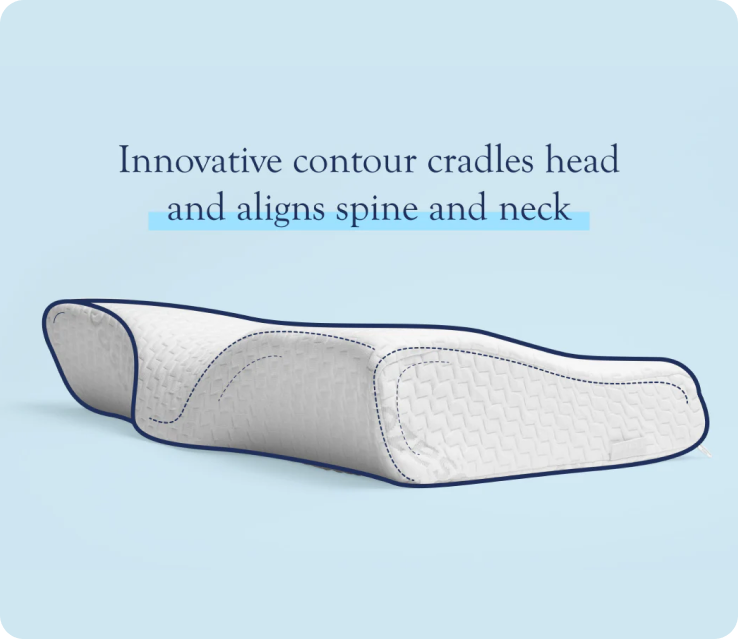
| Contoured ergonomic pillow | Sleepers who wake with headaches plus neck or shoulder pain and want more consistent cervical alignment | It can feel different for the first few nights if you are used to flat pillows |
| Dosaze Alignment Bundle | People who want a structured setup for posture and comfort, not guesswork with stacked pillows | Give yourself a real trial window to adapt and assess morning symptoms |
If you are choosing between contour, cervical, orthopedic, and adjustable styles, Dosaze breaks down the differences here: Contour Pillow vs Cervical Pillow vs Orthopedic Pillow vs Adjustable Pillow: Which Type Is Best for Neck Alignment? You can also compare two common ergonomic shapes here: Contoured pillow vs cervical pillow: what's the difference?
Dosaze's practical take on "support" vs "comfort"
People shopping for headache relief often chase softness, then end up with a pillow that collapses. Dosaze designs for ergonomic support first, then adds comfort with pressure relief and cooling feel so you can actually stay on the pillow.
That tradeoff matters. The pillow has to hold your neck in a better position at 3 a.m., not just feel plush for 30 seconds when you lie down.
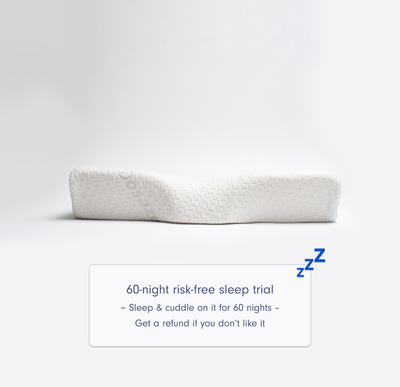
If you are anxious about wasting money, the cleanest way to reduce risk is a real at-home trial. Dosaze offers a 60-night risk-free trial with free shipping & returns, so you can judge it by your mornings, not by a quick squeeze test.
Where to start if you wake up with headaches
Start simple. The goal is to match pillow height and shape to your sleep position, then evaluate changes in morning symptoms over enough nights to be fair.
- Step 1: Pick your main position. If you start on your side and end on your back, choose for the position that causes the pain.
- Step 2: Check height. Side sleepers usually need more loft than back sleepers because of shoulder width. If your pillow feels too low, a more structured ergonomic shape is often the fastest fix.
- Step 3: Stop stacking pillows.
- Step 4: Give one change time. Keep your mattress and sleep routine the same for a bit, so you can tell what the pillow changed.
If you want a focused read on wake-up headaches, Dosaze also has a dedicated guide: Wake Up Headaches Pillow.
How to test a new pillow without guessing
Most pillow returns happen because people do not know what "working" looks like. Use a short checklist so you can tell the difference between adjustment and a real mismatch.
A simple 7-night pillow test
- Night 1-2: Notice pressure points. You should not feel a sharp spot under your ear or along the jawline.
- Night 3-4: Track wake-ups. If you reposition less, that is a strong sign the pillow is closer to your neutral posture.
- Night 5-7: Judge mornings. Headache intensity, neck stiffness, and shoulder tightness should trend down, even if they do not vanish overnight.
If mornings get worse, treat that as useful feedback. It usually means the pillow height is off or the shape pushes your head into rotation.
FAQ
I wake up with headaches, what pillow should I change to first?
When headaches show up after sleep, the first thing to change is the pillow that controls your neck angle for hours. Dosaze generally recommends switching from a compressible, shifting pillow to an ergonomic shape that holds steadier neck support and better cervical alignment. Start by matching height to your sleep position, then use an at-home trial window long enough to judge your mornings. If you want to see what that looks like in a contoured design, you can start with the Dosaze Contoured Orthopedic Side Sleeper Pillow.
Can the wrong pillow cause headaches and neck pain together?
Headaches plus neck pain often point to a shared cause, your neck is not staying neutral during sleep. Dosaze sees this most often when a pillow is too low, too high, or unstable, which can load the upper neck and shoulders overnight. A pillow that keeps consistent support through the night is the most direct change to test.
My pillow feels too low, what signs mean it is causing morning headaches?
A low pillow matters because it can let your head drop and your neck muscles work while you sleep. If you wake with a headache at the base of the skull, a stiff neck when you turn your head, or a sore shoulder from side sleeping, your pillow height is a likely driver. Dosaze's ergonomic approach is to fill the shoulder-to-head gap so your neck stays supported instead of hanging.
How do I know if my pillow is too high for headache relief?
A pillow that is too high often creates a chin-down angle that strains the upper neck by morning. If you wake with a headache plus front-of-neck tightness, jaw tension, or a "crunched" feeling in your upper back, height is the first variable to reduce. For Dosaze customers, this is also where a contoured shape can help because it guides your head into a more neutral position than a tall, puffy mound.
How long should I give a new pillow before deciding it works?
You need enough nights to separate "new feel" from real improvement in morning symptoms. Dosaze's 60-night risk-free trial is designed for this, since headaches and neck stiffness can fluctuate night to night. Track 7-14 mornings in a row, and look for a downward trend in headache intensity and neck tightness, not perfection on day one.
What if the new pillow feels comfortable but I still wake up with a headache?
Comfort on first contact does not always mean your neck is supported for hours. Dosaze's rule of thumb is to check whether you are still stacking, folding, or waking to reposition, since those are signs the shape or height is off. If the pillow feels nice but you keep turning or twisting, choose a design that holds cervical alignment more consistently. If you prefer to fine-tune height at home, an adjustable pillow can make that easier.
Is it hard to return a pillow if it does not help?
Return friction is a real reason people delay making a change, even when mornings feel awful. Dosaze addresses that anxiety with free shipping & returns and a 60-night risk-free trial, so you can test at home and send it back if it is not the right fit. Take a few quick notes on your wake-up symptoms so your decision feels clear, not emotional.
Pick the pillow change that reduces risk
If you wake up with morning headaches, treat your pillow like a tool, not a decor item. The most useful switch is usually toward an ergonomic design that supports cervical alignment, stays stable through the night, and feels comfortable with pressure relief and cooling.
If you want to test a more structured setup without getting stuck, Dosaze backs its approach with a 60-night risk-free trial plus free shipping & returns, so the decision is based on your mornings, not a five-minute try in a store.


