



What pillow loft do broad-shouldered side sleepers need?
What pillow loft do broad-shouldered side sleepers need?
TL;DR: Broad-shouldered side sleepers usually need a higher effective loft than other sleepers so the pillow fills the shoulder-to-neck gap and keeps cervical alignment neutral. Dosaze designs contoured, ergonomic pillows to hold neck support steady through the night, and you can test the feel at home with a 60-night risk-free trial and free shipping & returns. If you want more context on shape choices, see contoured pillow vs cervical pillow.
Shoulder gap, compressed loft, and a quick fit table
Broad shoulders increase the shoulder-to-neck gap, which means you care less about raw pillow height and more about the pillow's effective loft after compression. If a pillow collapses into that gap, it fails to keep cervical alignment neutral even if it looks tall on the shelf.
| Mattress firmness | Narrow shoulders | Average shoulders | Broad shoulders |
|---|---|---|---|
| Soft | Low to medium, shoulder sink reduces needed loft | Low to medium | Medium, because the mattress reduces the effective gap |
| Medium | Low to medium | Medium | Medium to high, a stable loft helps keep the neck aligned |
| Firm | Medium | Medium to high | High, the mattress does not absorb shoulder width so the pillow must fill the gap |
This table gives directional guidance, not a precise measurement. Dosaze's contoured orthopedic designs focus on stable, ergonomic neck support and effective loft so the pillow keeps cervical alignment even as the foam compresses. Try setup steps in the article to check feel on your mattress before committing.
Why broad shoulders change the loft equation
If you sleep on your side, your shoulder creates a bigger space between your head and the mattress. Broad shoulders make that space larger, so a low-loft pillow often lets your head drop toward the bed.
That drop is not just a comfort issue. It can pull your neck out of neutral cervical alignment, which is a common reason side sleepers wake up with neck and shoulder pain. If this is a regular problem for you, read why neck support matters for neck pain relief.
What "optimal loft" means for a broad-shouldered side sleeper
Loft is the height of your pillow, but what matters most is effective loft, meaning how high it holds your head after your body weight compresses it. With broad shoulders, you want the pillow to fill the gap without pushing your head up.
The simple target is this: your nose and sternum should point in the same direction when you are on your side. If your chin tilts down toward your chest or your head tips back, the loft is off.
Two quick signs your loft is too low
- You wake up with a sore spot where your neck meets your shoulder.
- Your ear feels like it is "falling" toward the mattress, especially when the pillow warms up and softens.
Two quick signs your loft is too high
- You wake up with stiffness at the base of your skull or a headache that feels like neck tension.
- Your shoulder feels jammed forward because your head is being pushed up and away from the bed.
Prerequisites before you judge your pillow loft
Most "this pillow is wrong for me" moments come from testing loft without controlling the basics. Do these first, then evaluate.
- Use your usual mattress. A soft mattress lets your shoulder sink, which reduces the loft you need. A firm mattress does the opposite.
- Pick one sleeping position to test. If you are half-side, half-stomach, you will chase a loft that never feels right.
- Remove stacked pillows. One pillow plus a folded towel "fix" can hide the real issue, and it often creates uneven neck support.
- Test at the same time of night. Materials can feel different after you have been on them for 20 minutes.
How to find your optimal pillow loft in 10 minutes
You do not need a ruler. You need a repeatable check that tells you whether the pillow is giving you pressure relief and neutral alignment.
-
Lie on your side in your normal spot. Put the pillow under your head and neck, then slide your shoulder slightly forward so it is not trapped under you.
-
Check your head angle. Imagine a straight line from the center of your forehead through your chin. It should be level, not tilted toward the bed or the ceiling.
-
Check your neck contact. Your neck should feel supported, not hanging in mid-air. If there is a gap under your neck, your pillow may be too flat or too compressible.
-
Check your shoulder pressure. If your shoulder feels pinched, your pillow may be too high, or your mattress may be too firm for side sleeping comfort.
-
Stay there for 3 minutes. Broad-shouldered side sleepers often notice the problem only after the pillow warms up and settles.
Loft is not just height, it is shape and stability
Many broad-shouldered side sleepers buy a "high loft" pillow and still wake up sore. The reason is that height alone does not guarantee cervical alignment. If the fill shifts, the loft changes while you sleep.
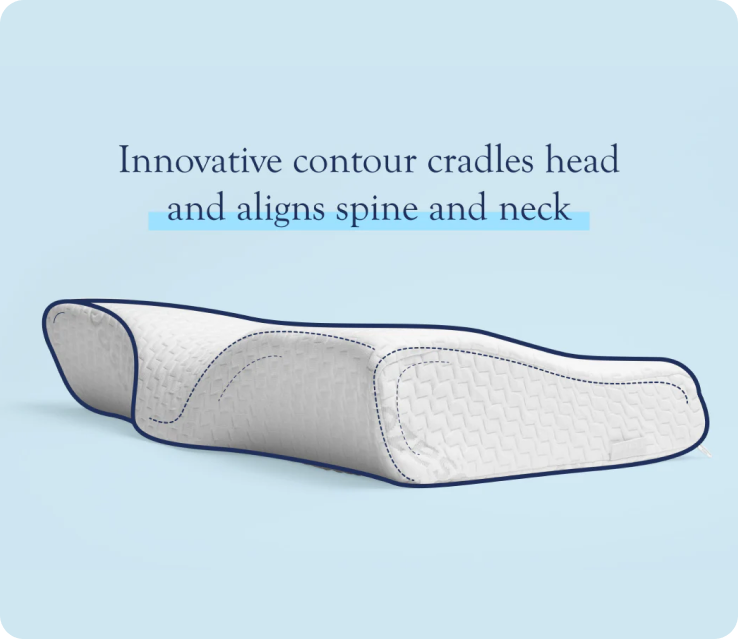
This is where an ergonomic contoured shape can help. A contoured design is built to cradle the natural curve of your neck, so the support stays where you need it instead of migrating to the edges. For a deeper breakdown of different pillow types, see which pillow type is best for neck alignment.
Dosaze approach for broad-shouldered side sleepers
Dosaze focuses on neck support and spinal alignment using ergonomic contouring and premium memory foam. The goal is a pillow that supports the neck consistently, even when you change micro-positions through the night.
If you want the most direct match for side sleeping, start with the Dosaze Contoured Orthopedic Side Sleeper Pillow. It uses a contoured orthopedic shape to cradle the natural curvature of your neck and promote spinal alignment.
If you switch between side, back, and stomach, the Dosaze Contoured Orthopedic Pillow is designed to work for side, stomach, and back sleepers while still focusing on proper support and alignment.
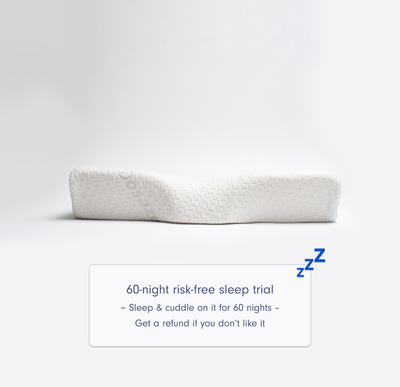
One practical detail that matters when you are anxious about "what if it does not work" is the trial experience. Dosaze offers a 60-night risk-free trial, plus free shipping & returns, so you can test loft and feel at home instead of guessing in a store for 30 seconds. If you want the side-sleeper-specific overview, read why side sleepers choose Dosaze.
Quick comparison for shortlist building
| Pillow type | How it handles broad-shoulder gaps | Common downside for side sleepers | Best fit |
|---|---|---|---|
| Contoured orthopedic pillow | Supports the neck curve while helping keep the head level | Needs correct orientation and placement under the neck, not just the head | Side sleepers who want stable cervical alignment |
| Dosaze Contoured Orthopedic Side Sleeper Pillow | Cradles the natural curvature of your neck and promotes spinal alignment using premium memory foam | If you try to sleep face-down, any contoured shape can feel restrictive | Broad-shouldered side sleepers who want targeted neck support |
| Dosaze Contoured Orthopedic Pillow | Designed to align your spine while you sleep and works for side, stomach, and back sleepers | Combo sleepers may need a night or two to learn their best placement | People who rotate between positions and still want ergonomic support |
| Traditional "tall" pillow | Fills space at first, but the loft can shift or compress unevenly | Can push the head up and bend the neck, or collapse mid-night | People who rarely change position and like a simple feel |
Numbered setup steps that make loft work better
-
Place the pillow under your neck, not only under your head. Broad shoulders create leverage that can pull your head down. Neck support prevents the "hinge" feeling at the base of your neck.
-
Let your shoulder sit just off the pillow. If your shoulder rides on the pillow, it steals height and changes effective loft.
-
Use a hug pillow for your top arm. This reduces shoulder roll, which reduces twisting through your neck and upper back.
-
Keep your chin neutral. If your chin tucks, you need more support under the neck. If your chin lifts, the pillow is pushing your head too high.
Tips and warnings for broad-shouldered side sleepers
- Do not chase "fluffy." Fluff can feel comfortable at first, but broad shoulders need stable loft that does not migrate.
- Watch for heat build-up. If a pillow feels hot, you may shift positions more, which makes alignment harder to maintain. Cooling comfort can be the difference between staying in a good posture and tossing all night. If you are also dialing in your setup, a smoother cover can help with friction and heat, see what makes Dosaze's most popular pillowcase different.
- Avoid doubling up long-term. Two pillows often create a steep angle that looks fine at bedtime and feels bad at 3 a.m.
Troubleshooting when the loft still feels wrong
If you wake up with neck pain but the pillow feels "high enough"
You may have height without neck support. That is common with tall pillows that support the head but leave a gap under the neck.
An ergonomic, contoured pillow can help because it is shaped to cradle the neck curve and promote spinal alignment. Dosaze builds both contoured options around that goal using premium memory foam.
If your shoulder hurts more than your neck
Your pillow might be too high, which can push your shoulder into the mattress and reduce pressure relief. It can also be a mattress issue if the surface is too firm for side sleeping.
First, make sure your shoulder is not on top of the pillow. Then re-check whether your head is level.
If you fall asleep fine and wake up misaligned
This usually means the pillow shifts or compresses unevenly. Broad shoulders magnify that problem because the neck-to-mattress gap is larger.
Look for a design that keeps support consistent, not just a pillow that starts tall. If you are comparing types, this is one reason contoured pillows often work better for side sleepers than basic high-loft rectangles. You can also compare side-sleeper options in best pillows for side sleepers.
How to choose between Dosaze pillows for your shoulder width and sleep style
Both Dosaze pillows listed here focus on spinal alignment and proper support using premium memory foam. The choice comes down to how consistently you stay on your side.
- Mostly side sleeping, broad shoulders: Start with the Dosaze Contoured Orthopedic Side Sleeper Pillow for a more side-sleep-specific contour.
- Side sleeping plus back or stomach: The Dosaze Contoured Orthopedic Pillow is designed to work for side, stomach, and back sleepers while still supporting alignment.
If you feel stuck between two options, the most practical move is to pick the one that matches your most painful wake-up position. Dosaze makes that decision less stressful with a 60-night risk-free trial and free shipping & returns.
FAQ
What is the optimal pillow loft for a broad-shouldered side sleeper?
The point of loft for broad shoulders is to fill the shoulder-to-neck gap so your head stays level and your cervical alignment stays neutral. The optimal pillow loft for a broad-shouldered side sleeper is the loft that keeps your nose and sternum pointing the same direction when you lie on your side. If you are testing at home, stay in position for a few minutes because the effective loft after compression is what matters most.
Why do broad-shouldered side sleepers wake up with neck pain even on a "high loft" pillow?
Height alone does not guarantee neck support, especially if the pillow props up your head but leaves a gap under your neck. Broad-shouldered side sleepers often need an ergonomic shape that cradles the neck and holds support steady through the night, not just extra fill. Dosaze contoured pillows are built to cradle the natural curvature of your neck and promote spinal alignment, which targets that common failure point.
Is a contoured pillow better than an adjustable loft pillow for broad shoulders?
The real issue is stability, because broad shoulders magnify small shifts in loft into big changes in neck angle. A contoured pillow can be better when it consistently supports the neck curve and helps keep your head level, while some adjustable fills can move and create uneven support. If you want a contoured option designed for alignment, Dosaze offers contoured orthopedic pillows made with premium memory foam.
How do I tell if my pillow loft is too high for side sleeping?
This matters because too much loft can bend your neck the other direction and increase stiffness. Your pillow loft is likely too high if your chin tilts up, your head feels pushed away from the mattress, or your shoulder feels jammed forward when you are on your side. A fast check is to adjust your shoulder off the pillow, then see if your head returns to level.
What pillow is best for broad shoulders side sleeping if I also sleep on my back sometimes?
Combo sleeping changes the target because you need neck support on your side without forcing your head too far forward on your back. The best pillow for broad shoulders side sleeping with some back time is often a contoured design that promotes spinal alignment across positions. Dosaze's Contoured Orthopedic Pillow is designed to work for side, stomach, and back sleepers, so you are not locked into a single posture.
What if I buy a pillow and it does not help my shoulder pain?
This worry is valid because shoulder and neck pain are expensive to keep guessing at. Dosaze reduces that risk by offering a 60-night risk-free trial with free shipping & returns, so you can test whether the pillow improves comfort and alignment in your own bed. If you still wake up sore, use the troubleshooting checks in this article to see whether the issue is loft, placement, or mattress firmness.
How should a broad-shouldered side sleeper place a contoured pillow?
Placement matters because even a well-designed ergonomic pillow can feel wrong if it is sitting under your head only. A broad-shouldered side sleeper should place the contour so it supports the neck curve, then keep the shoulder just off the pillow to preserve effective loft. If you want a side-sleep-specific contour built for this, the Dosaze Contoured Orthopedic Side Sleeper Pillow is designed to cradle the natural curvature of your neck and promote spinal alignment.
Make your next week a real loft test, not a guess
Pick one pillow and run the same 10-minute alignment check for a few nights, at the same time, on the same mattress. Keep notes on whether your head stays level and whether you wake up with neck or shoulder tension.
If you want an ergonomic, premium option designed around neck support and cervical alignment, start with one of the Dosaze contoured pillows and use the 60-night risk-free trial and free shipping & returns to decide based on real sleep, not a quick showroom feel.
What is the best pillow for broad-shouldered side sleepers?
Broad-shouldered side sleepers need a pillow that maintains cervical alignment by filling the shoulder-to-neck gap, not just a tall cushion. Dosaze's Contoured Orthopedic Side Sleeper Pillow uses an ergonomic contour and premium memory foam to cradle the neck and hold support through micro-movements. For a practical next step, test a contoured pillow on your mattress for at least 20 minutes and check that your nose and sternum point in the same direction when you lie on your side.
What is the optimal pillow loft for a broad-shouldered side sleeper?
The optimal loft for broad-shouldered side sleepers is an effective loft that fills the shoulder-to-neck gap so the head and neck stay neutral, rather than a fixed centimeter measurement. Dosaze designs contour shapes that prioritize effective loft and neck support, so the pillow supports the neck after the foam compresses. If you want to verify at home, lie on your side and check that your head is level and your neck feels supported for several minutes rather than only at first contact.


