



Is a Pillow a Good Gift? How to Choose a Gift-Safe Pillow for Neck Support, Easy Returns, and Less Guesswork
Introduction
A pillow seems like an easy gift. Everyone sleeps, and most people want better sleep. But pillows are also personal. The wrong height can leave someone with a sore neck. The wrong feel can make the pillow end up in a closet by week two.
So yes, a pillow can be a great gift—if you choose it like a “gift-safe” purchase, not like a random home item. The safest choice is the one that reduces guesswork: ergonomic shape for neck support, materials that stay comfortable through the night, and a return policy that protects both you and the person you’re gifting.
This guide gives you a clear way to pick a pillow for someone with neck and shoulder pain (or for a mixed sleeper who switches positions). You’ll learn what actually matters—cervical alignment, pressure relief, cooling—and what matters less than most gift guides claim. You’ll also get a simple starting checklist, a comparison table, and a practical “if they sleep like this, choose that” framework that keeps the decision calm and confident.
Is a pillow a good gift (or secretly a risky one)?
A pillow is a good gift when it solves a real, daily problem: waking up with neck tightness, shoulder tension, headaches from awkward sleep posture, or overheating at night. It’s risky when it’s chosen based on hype (“hotel pillow,” “cloud feel”) without matching the person’s sleep position and body needs.
The good news: you can make a pillow gift-safe by focusing on three things that reduce regret.
- Fit: the pillow should support the neck and keep the head level for healthy cervical alignment.
- Feel that lasts: supportive materials that don’t collapse at 2 a.m., plus cooling features if they run hot.
- Low-stakes trial: a real trial window and simple returns, so they can test it at home.
In our experience with ergonomic pillows, the “gift success rate” goes up when the giver treats the first week as an experiment. The right pillow often feels different at first because it changes posture. That’s normal. What’s not normal is pain that worsens or numbness—those are signs the loft or shape is wrong.
Where to start (the 3-minute “gift-safe” checklist)
If you only do one thing, do this: match pillow height and shape to how they sleep most nights. Everything else is secondary.
- Ask (or observe) their main sleep position: side, back, stomach, or mixed sleeper.
- Notice shoulder width: broader shoulders usually need more pillow height for side sleep.
- Check their mattress feel: a softer mattress lets the body sink more, often needing slightly less pillow height.
- Ask about heat: if they wake up warm, prioritize cooling materials.
- Make returns easy: only gift a pillow with a real trial and clear return process.
If you can’t ask them directly (surprise gift), choose a design that’s forgiving for more positions and includes a long trial. That’s the simplest way to reduce money stress and “what if they hate it?” anxiety.
What makes a pillow “gift-safe” for neck and shoulder pain?
People usually blame “stiff neck” on stress or the workday. But sleep posture matters. A pillow that keeps the head too high or too low can strain the neck for hours.
A gift-safe pillow is built to support posture first, comfort second—and then it adds cooling so comfort lasts all night. Here’s what to look for.
1) Ergonomic shape that supports cervical alignment
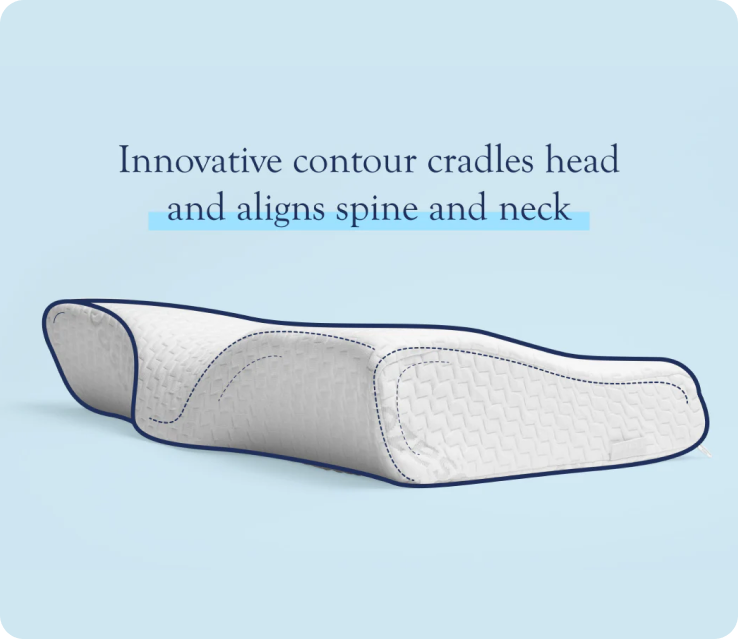
For neck and shoulder pain, a flat rectangle is often a gamble. An ergonomic pillow uses contouring to support the curve of the neck so your head doesn’t “fall” into an angle.
The goal is simple: your nose should generally point up (back sleeping) or straight out (side sleeping), not toward the ceiling or down toward the mattress. That’s the easiest mental check for cervical alignment.
2) Stable support (so it doesn’t collapse by morning)
Many plush pillows feel great for 10 minutes and then compress. That’s when people wake up with their head tilted and shoulders tight.
Supportive foam can hold shape longer through the night, which is why it’s common in pillows designed for neck support. The key is balancing support with pressure relief, so it feels firm but not harsh.
3) Pressure relief for the side sleeper’s shoulder
Side sleepers often need two things at once: enough height to fill the gap between head and mattress, and enough give so the cheek and ear feel comfortable.
Look for a structure that supports the neck while still offering pressure relief on contact points. If a side sleeper wakes up and their ear hurts, the pillow is often too firm on the surface or too high.
4) Cooling that actually helps at 2 a.m.
“Cooling” is one of the most overused words in bedding. A cool-to-the-touch cover can feel nice at bedtime, but people usually wake up hot because heat gets trapped over hours.
A more gift-safe approach is cooling by design: breathable covers and materials that don’t hold as much heat. If the person flips their pillow at night to find the “cool side,” prioritize cooling features.
5) A real trial period and simple returns
This is what makes a pillow a low-risk gift. A short return window pressures the recipient to decide before their body adapts.
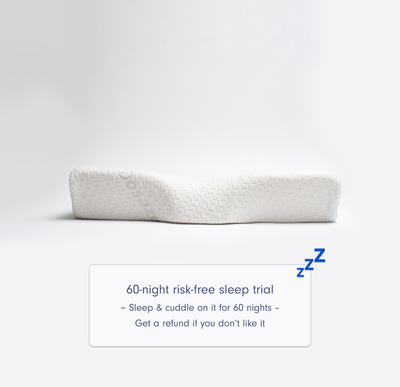
Dosaze offers a 60-night risk-free trial plus free shipping & returns, which is the kind of policy that makes pillow gifting feel safe instead of stressful (see Dosaze’s returns policy).
Choosing by sleep style: the least-guessy way to pick
If you’re gifting a pillow to reduce morning neck or shoulder pain, sleep position is your anchor. Use this as your decision guide.
| Sleep style | Common morning complaint | What the pillow must do | What to avoid |
|---|---|---|---|
| Side sleeper | Shoulder tightness, stiff neck | Higher loft + stable neck support + pressure relief at cheek | Pillows that collapse; too-low loft |
| Back sleeper | Neck ache, headaches | Medium loft + cervical support to keep chin neutral | Too-high loft that pushes head forward |
| Stomach sleeper | Neck twist, upper-back soreness | Very low loft or alternative positioning support | High or firm pillows (they increase neck rotation) |
| Mixed sleeper | “I can’t find a comfortable spot” | Adaptive support + shape that works on side and back | Overly tall, rigid shapes that only work one way |
One contrarian take from what we see with customers: the “best universally liked” pillow is rarely the softest one. It’s usually the pillow that keeps support consistent across positions, because mixed sleepers change position when their neck or shoulder starts to complain.
What to buy when you don’t know their preferences
Sometimes you can’t ask. Sometimes you’re buying for a coworker, a partner who loves surprises, or a parent who says “anything is fine.” In those cases, you’re not choosing the perfect pillow—you’re choosing the best odds.
- Pick a pillow designed around posture: ergonomic contouring is more predictable than a generic plush fill.
- Prioritize mixed-sleeper compatibility: many people start on their side and finish on their back.
- Make sure returns are painless: this protects the relationship and the wallet.
If you want to keep it simple, choose an ergonomic pillow with cooling features and a long trial window. That combination tends to be the most “gift-safe” for someone with neck and shoulder pain because it addresses alignment, pressure relief, and overheating—three common reasons people abandon a new pillow (and if you want a deeper breakdown of pillow types for neck alignment, see contoured vs. cervical pillows).
Dosaze pick: a premium, low-guesswork pillow gift
If your goal is a supportive, comfortable pillow that’s easier to gift than most, the Dosaze pillow is designed around sleep posture and comfort that lasts through the night.
- Ergonomic design for better sleep posture and neck support
- Materials engineered for both support and cooling
- 60-night risk-free trial so they can test it at home
- Free shipping & returns to reduce gift anxiety
- Premium construction built for durability
If you want to see the product details, you can start here: Dosaze Pillow.
How to gift a pillow without making it awkward
Pillows can feel personal, especially when the reason is pain. The easiest fix is to frame it as comfort and sleep quality, not a critique of their current setup.
- Use neutral language: “I wanted you to have better neck support,” not “Your pillow is terrible.”
- Include the trial info in the note: mention the 60-night trial and free returns so they feel safe trying it.
- Set expectations: the first few nights can feel different because posture changes.
A simple line that works: “Try it for a couple of weeks. If it’s not a fit, returns are free.” That removes pressure and makes the gift feel premium instead of risky.
Advanced: the small details that decide comfort
If you want to be extra confident, these are the details that usually separate a “nice idea” from a pillow someone keeps.
Loft + shoulder width (the hidden fit factor)
Side sleepers with broader shoulders often need more loft to keep the head level. Side sleepers with narrower shoulders often need less to avoid bending the neck away from neutral.
If the recipient often folds their current pillow in half, that’s usually a sign they want more height or firmer support.
Mattress softness changes the pillow requirement
On a soft mattress, the shoulder sinks in, which reduces the gap to fill. On a firm mattress, the gap is larger.
This is why two people can buy the same pillow and have different results. When you gift a pillow with a long trial, the person can test it on their exact mattress (the only test that matters).
Cooling isn’t just “cold fabric”
If someone runs hot, pair cooling materials with breathable bedding habits. Even the best cooling pillow can’t fully fix heavy comforters or an overheated room.
For reference, the National Sleep Foundation notes that a cooler room temperature supports sleep quality, with many recommendations landing around the mid-60s °F for adults (preferences vary). See: National Sleep Foundation.
Quick comparison: what type of pillow is best for a gift?
This table helps you make a decision fast, especially if you’re choosing between a classic pillow and an ergonomic one.
| Pillow type | Gift risk level | Best for | Main drawback |
|---|---|---|---|
| Traditional down/alt-down | Medium–high | People who love soft, squishy feel | Often collapses; neck support varies night to night |
| Shredded foam | Medium | People who want adjustable feel | Can shift; adjustment takes time and patience |
| Solid foam block | Medium | People who want stable support | Can feel too firm or warm without cooling design |
| Ergonomic contoured foam | Low (with a long trial) | Neck/shoulder pain, mixed sleepers, posture support | Feels different at first because alignment improves |
If the recipient has neck and shoulder pain, the most logical gift is an ergonomic pillow with cooling and a trial. It’s the most direct match to the problem, and it’s easier to “undo” if it’s not a fit.
FAQ
What’s the safest pillow gift for someone with neck and shoulder pain?
Neck and shoulder pain usually comes from hours of poor head and neck positioning, so the safest gift is the one that reduces posture guesswork. A gift-safe choice is an ergonomic pillow designed for neck support and cervical alignment, paired with a long in-home trial and easy returns. For example, choosing a pillow with a 60-night risk-free trial and free shipping & returns lets the person test it on their own mattress and keep it only if morning comfort improves (Dosaze also answers common shipping/returns questions in its Dosaze Contour Pillow FAQ).
Is there a “universally liked” pillow for a mixed sleeper?
Mixed sleepers change positions because comfort needs change during the night, so a pillow has to work in more than one posture. The best universally liked option for a mixed sleeper is typically an ergonomic pillow that supports both side and back sleeping without collapsing, because consistent support reduces midnight readjusting. If you’re unsure, pick a design known for stable support plus cooling comfort and back it with a long trial so the recipient can confirm it works for their exact sleep style.
How do I know if a pillow will be too high or too low for them?
Pillow height matters because it can bend the neck for hours, which is a common reason people wake up sore. A simple rule is that the pillow should keep the head level—nose pointing up for back sleepers and straight out for side sleepers—so the neck stays close to neutral. If they have broad shoulders or sleep on a firmer mattress, they often need more loft; if they have narrow shoulders or a softer mattress, they often need less.
Will an ergonomic pillow feel uncomfortable at first?
It can feel different at first because an ergonomic shape changes how the head and neck rest compared to a flat pillow. A well-designed ergonomic pillow should feel supportive and comfortable within a few nights, with the most meaningful test being whether morning neck and shoulder tension improves over 1–2 weeks. That’s why an in-home trial matters: it gives enough time to adjust while still keeping the purchase risk low.
What should I look for in return policies when gifting a pillow?
Return policies matter more with pillows than with most gifts because comfort is personal and hard to predict. A gift-safe pillow should offer a long trial window and straightforward, no-hassle returns so the recipient can test it at home without pressure. Policies like a 60-night risk-free trial with free shipping & returns remove the awkwardness of “What if it doesn’t work?” and make the gift feel premium and considerate.
Conclusion: a pillow can be a great gift—if you reduce the guesswork
A pillow is a smart gift when it’s chosen for posture, comfort, and low risk. Focus on ergonomic shape for cervical alignment, stable support for real neck support, pressure relief for side sleeping, and cooling that stays comfortable through the night.
Then protect the recipient with a trial and easy returns. That’s what turns a “hope you like it” gift into a confident, premium pick.
Next steps: If you want a gift-safe option built for support and cooling—backed by a 60-night risk-free trial and free shipping & returns—start with the Dosaze Pillow.


