



Pillow height guide for side sleepers with broad shoulders
TL;DR: For broad-shouldered side sleepers, pillow height matters because your shoulder width creates a larger gap between your head and the mattress. Dosaze focuses on ergonomic neck support and cervical alignment, so you can reduce morning neck and shoulder pain without guessing, and you can test the feel at home with a 60-night risk-free trial and free shipping & returns.
Why broad shoulders change the pillow height equation
When you sleep on your side, your shoulder takes the weight and lifts your upper body off the mattress. If your shoulders are broad, that lift is bigger, so the space between your head and the mattress is bigger too.
Your pillow height (and how much it compresses) has one job: fill that space so your neck stays in a neutral line with your spine. If it does, you get better cervical alignment and more consistent neck support through the night.
What a height mismatch feels like
Too low usually feels like your head is dropping toward the mattress. The common next-day pattern is neck stiffness on the side you sleep on, plus a feeling that your shoulder is doing extra work.
Too high often feels like your head is being pushed up and away from the bed. That can show up as soreness at the base of the skull, tight upper traps, or waking up to readjust your pillow.
Start with the goal, not the number
People often search for a single best pillow height in inches. The problem is that the usable height is the height after the pillow compresses under your head and neck, and compression changes with pillow design and materials.
A better starting point is a simple target: when you are on your side, your nose and sternum should point in the same direction, and your neck should not bend up or down. If you can keep that position without tensing your shoulder, you are close.
Where to start in 5 minutes at home
You can get a practical answer quickly, without measuring tools or buying anything first. Use this as your baseline before you compare pillow options.
- Step 1: Lie on your side in your normal spot, on your normal mattress, with your normal shoulder position.
- Step 2: Stack or remove a thin folded towel under your current pillow until your head feels level, not tipped.
- Step 3: Pay attention to your shoulder. If you feel like you have to shrug it up toward your ear to get comfortable, your setup is still off.
- Step 4: Hold the position for 2 minutes. If you start to fidget or your jaw clenches, treat that as a sign you are not supported yet.
This does not give you a perfect number. It gives you a feel for whether you need more loft, less loft, or a pillow that holds its shape better under load.
Pillow height is not just height, it is height after compression
Two pillows can look the same height on the bed and feel totally different once you put your head down. For broad shoulders, that difference is often the whole story.
| What changes your effective height | What you feel at night | What to do about it |
|---|---|---|
| How much the pillow compresses | You start supported, then sink lower over 10-20 minutes | Look for more structured, ergonomic support that resists bottoming out |
| Where the pillow supports you | Your head feels fine but your neck feels unsupported | Choose a shape that supports the neck, not only the back of the head |
| Mattress softness under your shoulder | Some nights you need "more pillow" even with the same pillow | Account for mattress sink, especially on softer beds |
| Arm position | One arm under pillow changes everything | Pick one default arm position and fit the pillow height to that habit |
How to choose pillow height if you have broad shoulders
Broad shoulders usually mean you need more effective height than an average side sleeper. But "higher" is not the same as "better". The right choice keeps your neck neutral while giving pressure relief at your shoulder and ear.
Use this quick decision guide
- If your neck feels bent down toward the mattress: you likely need more effective height or a pillow that compresses less.
- If your chin feels tilted up: you likely need less effective height or a pillow that lets your head settle without lifting your neck.
- If your shoulder feels jammed: you may be forcing your shoulder forward to "make room". Try a pillow with an ergonomic shape that supports the neck while leaving space for the shoulder line.
- If you wake up with ear pressure: you may be on a pillow that is too firm at the surface. Consider a design that balances support with pressure relief.
Dosaze's approach for broad-shouldered side sleepers
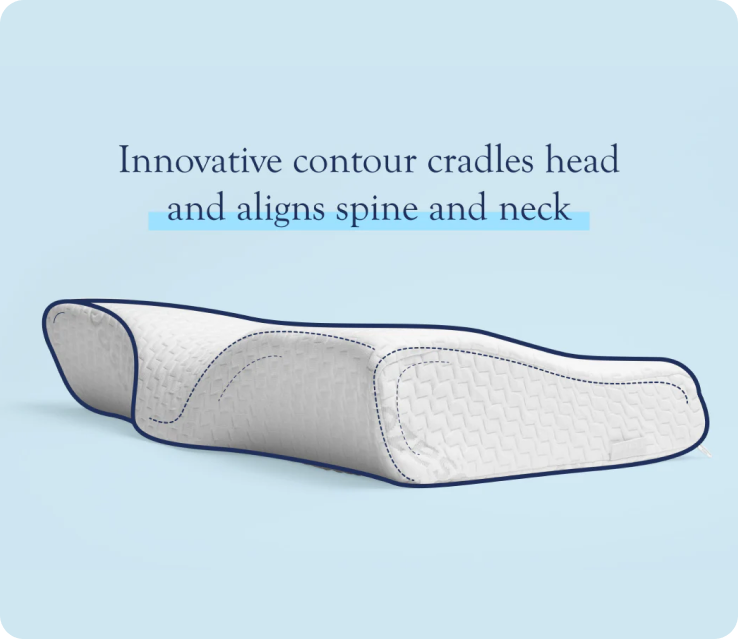
Dosaze designs for ergonomic neck support and cervical alignment first, because side sleepers usually do not need more softness. They need stable support that holds a consistent shape when the pillow takes real load.
Cooling matters too, especially for side sleepers whose face stays in contact with the pillow for longer stretches. Dosaze focuses on cooling comfort alongside support, so you are not choosing between a supportive pillow and a comfortable one. If cooling is a priority, Dosaze Thermacool Adjustable Pillow is built for that.
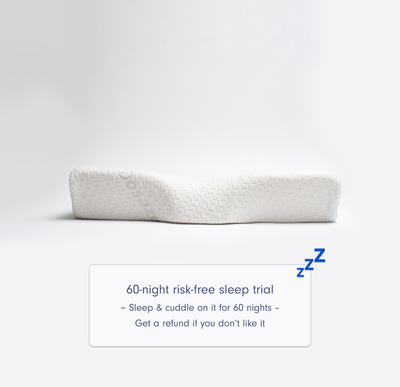
If you are anxious about spending money and getting no improvement, Dosaze reduces that risk with a 60-night risk-free trial and free shipping & returns. That gives you time to test the pillow across normal nights, not just the first 10 minutes. (You can review the details on the returns policy page.)
Common mistakes broad-shouldered side sleepers make
Most pillow height problems are not caused by "bad posture". They are caused by a setup that cannot stay consistent after you relax and fall asleep.
- Picking loft by looking at the pillow. What matters is the height after compression, not the shelf height.
- Ignoring the mattress. If your shoulder sinks a lot, you may need less pillow height than you think, because your head gets closer to the bed.
- Stacking two pillows to go higher. It often creates a hinge point under the neck and increases tension. If you need more effective height, a single ergonomic pillow is usually steadier, like an adjustable pillow that lets you dial in loft.
- Chasing softness to fix pain. Too much sink can remove neck support and reduce cervical alignment, even if it feels cozy at first.
A simple alignment check you can repeat every week
Your body and habits change. Travel, training, a new mattress topper, or even a new side-sleeping arm position can change your ideal pillow height.
Once a week, do a 30-second check: lie on your side, relax your shoulder, then notice if your head feels "propped" or "dropped". If you feel either, adjust before it turns into a pattern of morning stiffness.
Side-to-back sleepers with broad shoulders need a compromise
If you fall asleep on your side but wake up on your back, you need a pillow that can support both positions. Too high is often the problem on the back, and too low is often the problem on the side.
In that case, prioritize a pillow that keeps neutral cervical alignment on your side without forcing your chin toward your chest on your back. Many people solve this by choosing a supportive ergonomic shape and then fine-tuning with how they position the pillow under the neck rather than just adding height.
How to judge improvement without overthinking it
Do not grade a pillow by one night. Broad-shouldered side sleepers often need a short adjustment period because your neck and shoulder finally get consistent support instead of bracing.
Track two simple signals for a week: how often you reposition the pillow at night, and whether morning neck or shoulder pain is trending down. A pillow that fits tends to reduce both, even if it does not feel dramatically different at bedtime.
FAQ
How do I know if my pillow is too low for broad shoulders?
This matters because a low pillow can pull your neck down and strain the side of your neck through the night. For broad-shouldered side sleepers, a pillow is often too low when your head feels like it is dropping toward the mattress and you wake with neck stiffness on the sleeping side. A quick check is to add a folded towel under your current pillow and see if your neck relaxes within a minute.
Is a higher pillow always better if I have broad shoulders?
It matters because too much height can push your head up and irritate the base of your skull and upper traps. A higher pillow is only better if it keeps neutral cervical alignment, otherwise it can create the opposite problem. Dosaze focuses on ergonomic neck support so you get effective height where you need it, without forcing your chin to tilt up. If you are comparing styles, see contoured pillow vs cervical pillow.
Why does my pillow feel right at first but hurt my neck later?
This matters because many pillows change height after you have been on them for a while. The most common reason is compression, the pillow sinks as materials warm and settle, so you lose neck support mid-sleep. If that pattern sounds familiar, Dosaze's emphasis on stable ergonomic support and a 60-night risk-free trial helps you test whether the pillow stays consistent over full nights, not just at bedtime.
Does my mattress affect the pillow height I need as a side sleeper?
This matters because your shoulder can sink into the mattress, which changes the gap your pillow must fill. A softer mattress usually reduces the needed pillow height because your upper body sits lower, while a firmer mattress often increases it. When you evaluate a pillow like Dosaze, always test it on your actual mattress so you are judging real cervical alignment, not an idealized setup.
What if I sleep with my arm under my pillow?
This matters because putting your arm under the pillow adds height and can twist your shoulder forward. If you keep that habit, you often need less pillow height to avoid lifting your head too far. If you are trying to stop doing it, an ergonomic pillow with clear neck support, like the approach Dosaze uses, can make it easier to keep your arm in a more neutral position.
How long should I test a new pillow before deciding it works?
This matters because your body may need a few nights to stop bracing and start relaxing into better support. A fair test is long enough to include normal stress, workouts, and different sleep nights, which is why Dosaze offers a 60-night risk-free trial. During the test, track morning neck and shoulder comfort and how often you wake up to reposition the pillow.
What is the safest way to try a new pillow if I am worried about returns?
This matters because return friction keeps many people stuck with a pillow that does not support them. Dosaze reduces that anxiety with free shipping & returns, so you can evaluate comfort and neck support at home without feeling locked in. Before you order, decide on 2-3 simple pass-fail checks, like less morning stiffness and fewer pillow adjustments at night.
Your next step tonight
Run the towel test for two minutes in your normal side-sleep position, then write down what you changed and how your neck felt. If you learned you need more stable support rather than just more fluff, Dosaze is built around ergonomic neck support, cervical alignment, and cooling comfort, with a 60-night risk-free trial and free shipping & returns so you can confirm the fit at home. If you want more options to compare, see Dosaze pillows for side sleepers.
For related reading, see Best Pillow For Side Sleepers A Complete Guide To Waking Up Without Pain.


