



Pillow height guide for side sleepers with broad shoulders
TL;DR: If you are a side sleeper with broad shoulders, your pillow usually needs more height than a typical side sleeper to keep your neck in neutral cervical alignment. Dosaze designs ergonomic pillows to support that posture while staying comfortable, and the 60-night risk-free trial with free shipping & returns reduces the stress of getting the height wrong.
Why broad shoulders change the pillow height math
Side sleeping creates a gap between your head and the mattress. Your shoulder width largely sets the size of that gap.
If your pillow is too low, your head tilts down toward the mattress. If it is too high, your head tilts up away from the mattress. Either way, your neck spends hours out of neutral, which can show up as morning neck or shoulder pain.
Broad shoulders make the gap bigger, so the pillow usually needs more loft or a shape that holds height under load. This is why a pillow that felt fine on your back can fail the moment you roll to your side.
Prerequisites before you measure anything
Pillow height is not a single number. It depends on what is under your pillow and how much the pillow compresses.
- Your mattress firmness: A softer mattress lets your shoulder sink more, which can reduce the pillow height you need. A firmer mattress does the opposite.
- Your sleep style: True side sleepers need different height than people who are half-side, half-stomach.
- Your pillow fill behavior: Some fills spring back. Others pack down. That changes overnight neck support.
- What you do with your arm: If you sleep with your lower arm under the pillow, you have already added height and changed your neck angle.
If you want a simple goal, use this: when you are on your side, your nose should point straight out, not up or down. That is the visual check for neutral cervical alignment.
Step-by-step: find the right pillow height for broad-shouldered side sleeping
Step 1: Set up your bed like a normal night
Use your usual mattress topper, sheets, and the position you fall asleep in. If you test pillow height on a bare mattress or in a different room, the result is often wrong.
Wear a thin shirt, not a hoodie. Bulky clothing changes how your shoulder sits and can trick you into choosing the wrong loft.
Step 2: Do the quick alignment check
Lie on your side with your head on the pillow and your shoulders stacked. Keep your chin neutral, not tucked.
Now look at a fixed point ahead of you, like the edge of a nightstand. If you feel like you are looking slightly down, your pillow height is likely too low. If you feel like you are looking up or your chin is lifted, it is likely too high.
Step 3: Confirm with the towel test
This is a practical way to estimate how much extra height you need without buying a new pillow first.
- Fold a bath towel into a long rectangle.
- Place it inside your pillowcase under your current pillow, closer to the side that supports your neck (not under your shoulder).
- Lie on your side again and re-check your nose direction and neck comfort.
- Add or remove folds until your head feels level and your neck feels supported, not pushed.
When the towel setup feels right, you have learned something useful: you do not just need "a better pillow", you need a different effective height under your head and neck.
Step 4: Check pressure relief at the shoulder and ear
Broad shoulders often lead people to chase height and ignore pressure. That backfires.
If you feel pressure at your ear, jaw, or the side of your face, your pillow may be too firm or not shaped to spread load. If you feel shoulder pressure that makes you roll forward, your pillow might be too high, forcing your upper body to rotate.
Step 5: Repeat in your second-most common position
Many side sleepers spend part of the night slightly rotated toward their back. Test that position too.
If you choose a pillow height that only works in one exact pose, you will fight it all night. A well-chosen ergonomic pillow should feel stable across small changes in posture.
What "too high" and "too low" feel like for broad shoulders
| What you notice | Most likely cause | What to try tonight |
|---|---|---|
| Neck feels stretched on the top side | Pillow is too high | Remove height, or move added towel folds toward the back of the pillow so the neck is not forced up |
| Neck feels compressed on the bottom side | Pillow is too low | Add a thin towel layer under the neck zone only |
| Waking with shoulder tension on the pillow side | Head drops down or you roll forward | Increase height slightly, then re-check that your chest stays stacked instead of twisting |
| Jaw or ear feels sore | Too much pressure, often from firmness or shape mismatch | Try a pillow with better pressure relief, or reduce height so your head is not being pushed into the pillow |
| Head feels like it slides off during the night | Pillow does not hold shape under movement | Use a pillow with ergonomic contours that "catch" the head and support the neck consistently |
Choosing a pillow type when you have broad shoulders
Loft alone is not the full story. How the pillow holds its height under the weight of your head matters more for neck support.
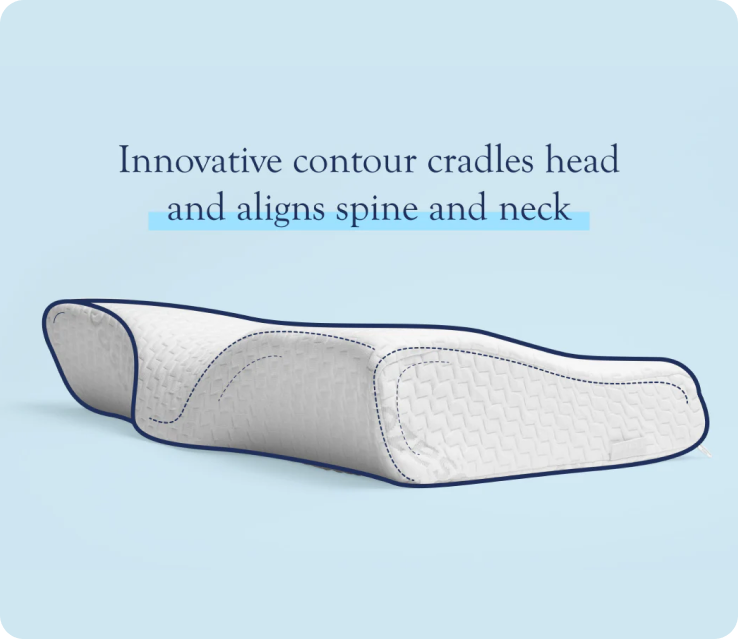
Dosaze focuses on ergonomic neck support and stable cervical alignment, because broad-shouldered side sleepers often need a pillow that does not collapse in the neck zone halfway through the night. If you are comparing shapes, contoured vs cervical pillows is a useful place to start.
| Pillow approach | How it usually behaves for broad shoulders | Best for |
|---|---|---|
| High-loft, soft, overstuffed pillow | Feels tall at first, can compress unevenly and let the neck drift | People who want plush feel and do not need consistent cervical alignment |
| Adjustable fill pillow | Lets you change height, but you may have to keep tuning it as fill shifts | People who enjoy customizing and do not mind occasional tweaks |
| Ergonomic contoured pillow | Uses shape to support the neck and maintain alignment with less "puff" | Broad-shouldered side sleepers who wake with neck or shoulder pain |
| Dosaze ergonomic pillow | Designed around neck support, cervical alignment, and pressure relief, with cooling comfort in mind | People who want a premium feel and want the safety net of a 60-night risk-free trial with free shipping & returns |
A practical Dosaze fitting mindset for broad shoulders
Most people test a pillow by pressing it with their hand. That is not the real test.
At Dosaze, we think about the "loaded height", meaning how the pillow holds you up after your head has been on it for a while. Broad shoulders need enough effective height to bridge the shoulder-to-head gap, but the neck also needs a stable surface so it does not sag as the pillow warms and compresses.
If you have tried tall pillows that still leave you sore, the problem is often not that the pillow was not tall enough. It is that it lost support where your neck needed it most.
Tips and warnings that prevent common mistakes
- Do not stack two pillows to "make it high enough". Stacking often creates a hinge point that pushes your head forward and strains the neck.
- Do not sleep with your arm under the pillow if you are testing height. It changes your shoulder position and masks the real fit.
- Keep your shoulder on the mattress. If your shoulder rides up onto the pillow, it shortens the gap and forces your neck into a new angle.
- Cooling matters if you run warm. Overheating makes people shift positions, and more shifting usually means less consistent neck support. If you need help staying cooler, the Dosaze Therapeutic Cooling Wedge Pillow is built for cooling comfort and supported positioning.
Troubleshooting: when the "right height" still feels wrong
If your neck hurts but your head looks level
Your pillow may be level but still not supporting the neck curve. A contoured ergonomic shape can help by giving neck support without having to raise the whole head higher.
Also check your chin. A subtle chin tuck can create neck strain even with perfect height.
If your shoulder hurts on the mattress side
That is often a mattress pressure issue more than a pillow issue. If your shoulder cannot sink at all, you may feel pinched even with correct pillow height.
Try a small hug pillow in front of your chest. It can stop you from rolling forward, which reduces shoulder load and helps keep cervical alignment steady.
If you wake up on your stomach with your pillow shoved away
Your body may be avoiding pressure or heat. Look for better pressure relief and a cooler feel so side sleeping stays comfortable long enough to stick.
If stomach sleeping is your default, choosing a very tall pillow for broad-shouldered side sleeping can backfire, because it will feel too high on your stomach.
If the pillow feels good for 20 minutes, then gets worse
That pattern often points to compression and loss of neck support as the pillow warms and settles. You want a pillow that keeps its ergonomic shape through the night, not just at first contact.
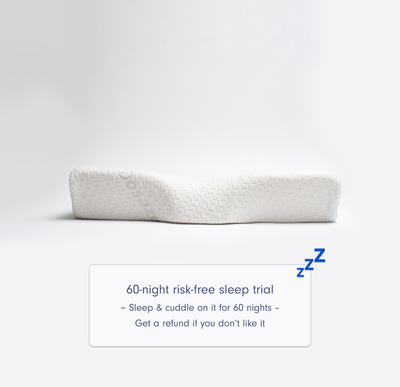
This is where a risk-free at-home test matters more than a quick store squeeze. Dosaze includes a 60-night risk-free trial, with free shipping & returns, so you can judge real overnight comfort and support.
How to test a new pillow at home without overthinking it
Give it a fair test, but do not spend 60 nights guessing.
- Nights 1-3: Focus on obvious red flags, like jaw pressure, chin tilt, or numbness in the arm.
- Nights 4-10: Track morning neck and shoulder feel for 2 minutes after you wake up. If you wait until lunch, the signal gets noisy.
- Nights 11-21: Notice sleep continuity. If you wake less to re-fluff or re-position, you are closer to the right fit.
If a pillow is clearly wrong, return it. Dosaze makes that less stressful by offering free shipping and returns, so you are not paying extra just to correct a mismatch.
FAQ
How high should a pillow be for a side sleeper with broad shoulders?
This matters because broad shoulders increase the gap your pillow must fill to keep your neck neutral. A side sleeper with broad shoulders generally needs a higher effective pillow height than average so the head stays level and the neck keeps neutral cervical alignment. The best check is simple: when you lie on your side, your nose should point straight out, and your neck should feel supported rather than pushed up.
Is a higher pillow always better if I have broad shoulders?
Broad shoulders often need more height, but too much height can tilt your head up and strain the neck. Dosaze's approach is to prioritize ergonomic neck support and cervical alignment, not maximum loft. If you feel jaw or ear pressure, or your chin lifts, reduce height or switch to a contoured shape that supports the neck without over-raising the head.
What is the fastest way to tell if my pillow is too low?
This question matters because "too low" often feels like general shoulder tightness, not obvious neck pain. If your pillow is too low, your head will drop toward the mattress and you will often wake with tension on the pillow-side shoulder or a stiff neck. Try the towel test by adding a thin folded towel under the neck zone inside the pillowcase, then re-check that your nose points straight out.
Can an ergonomic pillow help with morning neck and shoulder pain from side sleeping?
It matters because pain is often a posture issue that repeats for hours, not a one-time strain. An ergonomic pillow can help by supporting the neck curve and keeping cervical alignment steadier through the night, especially for broad-shouldered side sleepers. Dosaze designs for neck support and pressure relief, and the 60-night risk-free trial gives you time to see if your mornings improve. For a product built specifically for side sleeping support, see the Dosaze Contoured Orthopedic Side Sleeper Pillow.
How do I choose between a contoured pillow and an adjustable fill pillow?
This choice matters because broad shoulders need both height and stability. An adjustable fill pillow is best if you want to tune loft by removing or adding fill, while a contoured ergonomic pillow is best if you want consistent neck support without re-fluffing and re-leveling. If you get soreness after the pillow compresses, a contoured design is often the better direction.
Why does my pillow feel right at bedtime but wrong when I wake up?
This matters because overnight compression can change your neck angle for hours without you noticing. If a pillow loses support as it warms and settles, your head can sink and your neck can drift out of alignment even if it felt fine at first. A longer home test helps, and Dosaze backs that with a 60-night risk-free trial and free shipping & returns so you can judge real overnight performance.
What sleep position habits make pillow height problems worse?
Small habits matter because they change shoulder height and neck angle more than people expect. Sleeping with your arm under your pillow, letting your shoulder creep onto the pillow, or twisting your chest forward can all make a good pillow feel wrong and a wrong pillow feel "okay" for a while. Keep your shoulder on the mattress and hug a small pillow in front to stay stacked and stable.
Your next step for a better-fitting pillow
Do the towel test tonight and write down what changed: less chin lift, less shoulder tension, fewer wake-ups to re-position. That tells you whether you need more height, a different shape, or better pressure relief.
If you want an option designed around ergonomic neck support and cooling comfort, Dosaze is built for that use case, and the 60-night risk-free trial with free shipping & returns takes the financial risk out of getting the fit wrong. If you want the Dosaze approach in one place, read why side sleepers choose Dosaze for pain-free, restful sleep.


