



How to Tell If Your Pillow Loft Is Too High or Too Low for Your Neck and Shoulders
TL;DR: If your pillow loft is wrong, your neck will bend up, down, or sideways instead of staying in neutral cervical alignment, and you will often feel it as morning neck or shoulder pain. The fastest way to check is to look for specific position cues (chin tipped up or down, shoulder jammed forward, frequent re-fluffing) and do a simple photo test from the side. Dosaze designs ergonomic pillows to keep neck support consistent, and backs them with a 60-night risk-free trial and free shipping & returns so you can confirm the feel at home.
Why pillow loft changes your neck and shoulders more than you think
Loft is pillow height under load, not just how tall it looks on your bed. When the loft is right, your head stays stacked over your shoulders and your neck holds a neutral curve with steady neck support.
When loft is wrong, your body compensates. You may shrug one shoulder up, rotate your head, or push your chin forward to find pressure relief. Those small adjustments can add up to stiffness by morning.
Quick signs your pillow loft is too high
A pillow that sits too high usually bends your neck toward your chest or pushes your head forward. That can load the upper traps and the base of the skull.
- You wake up with tightness at the base of your skull or a sore upper neck that eases after you are up.
- Your chin feels tucked when you settle in, like your head is being pushed forward.
- Side sleepers: your neck bends sideways toward the mattress, or you feel your top shoulder creeping toward your ear.
- You build "pillow towers" or fold the pillow to get comfortable, then still wake up stiff.
- You keep sliding down the pillow to get your head lower.
Quick signs your pillow loft is too low
A pillow that is too low lets your head drop back or sideways. The muscles in your neck often do the work that the pillow should be doing.
- You wake up with front-of-neck strain or feel like you slept with your head tilted back.
- Side sleepers: your head "falls" toward the mattress and your neck feels stretched on the top side.
- You shove your hand under the pillow to add height, or you bunch up the bottom edge for support.
- You wake up with shoulder pain because your shoulder is taking pressure that your head and neck should be sharing.
- You keep scooting upward to find the thickest part of the pillow.
Does pillow height matter for shoulder alignment?
Yes, because your shoulder position and your pillow height interact. On your side, your shoulder creates "distance" between your head and the mattress. If the pillow does not fill that gap, your neck bends down. If it overfills the gap, your neck bends up.
On your back, the goal is different. You are not filling a shoulder gap, you are supporting the natural curve of your neck while keeping your face pointed toward the ceiling, not your toes.
The 3 simple tests to tell if your pillow loft is wrong
These checks take a few minutes and give you clearer feedback than guessing based on pillow labels.
Test 1: The side-view photo test
Have someone take a photo of you lying in your usual sleep position, from the side. Keep your shoulders relaxed, and do not "pose" your head into place.
- Side sleeping pass: your nose lines up with the center of your chest and your neck looks straight, not kinked.
- Side sleeping fail: your head tilts toward the mattress (too low) or away from it (too high).
- Back sleeping pass: your chin is level, not tipped up or tucked hard down.
If you only do one thing from this guide, do this. It shows cervical alignment problems you may not notice while half asleep.
Test 2: The "reset" test after 10 minutes
Settle in for 10 minutes without adjusting the pillow. Then check in with three cues: jaw, shoulders, and breath.
- If your jaw feels pressed back or you feel a tucked chin, the loft is often too high.
- If your throat feels stretched or your chin points up, the loft is often too low.
- If one shoulder is creeping upward, the loft and shape are not matching your shoulder width.
Test 3: The "hand under pillow" habit
This is a real-world tell because it is unconscious. If you reliably put your hand under the pillow, you are trying to add loft or create a firmer neck support ledge.
If you reliably push the pillow away or slide down it, you are trying to subtract loft.
Choosing the right pillow loft for neck pain depends on sleep position
Neck pain is not only about softness. Many people feel "comfortable" at first, then wake up sore because the pillow lets them drift out of neutral cervical alignment over hours.
If you sleep on your side
Side sleepers usually need enough loft to fill the gap between the mattress and the side of the head, without lifting the head higher than the spine line.
- If your shoulder is broad or you sink deep into your mattress, you often need more height under your head and steady neck support.
- If your mattress is firm and you do not sink much, you often need less height than you think.
What matters most is consistency across the night. If your pillow collapses, you start neutral and end the night too low.
If you sleep on your back
Back sleepers usually do best with moderate loft and a shape that supports the neck curve, not just the back of the head. Too much height tends to push the head forward. Too little height tends to tip the chin up.
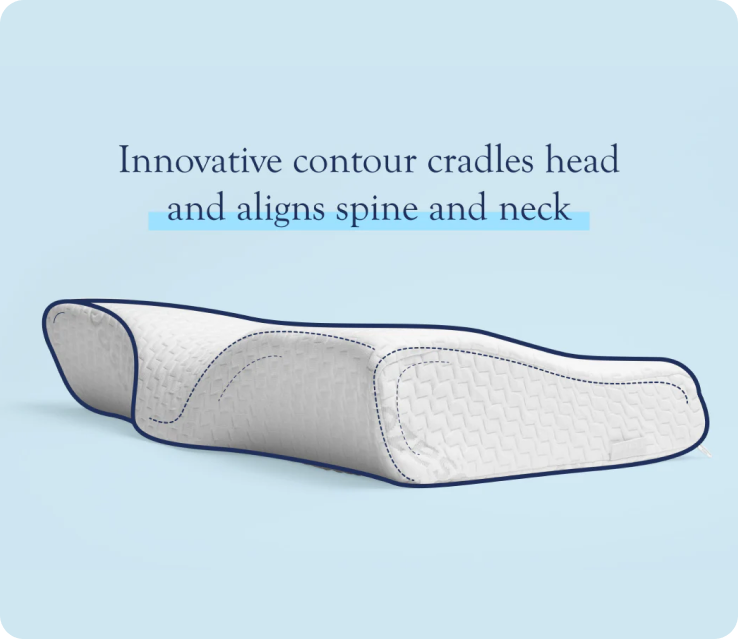
An ergonomic, contoured shape can help because it gives the neck its own support zone instead of making your head do all the work.
If you sleep on your stomach
Stomach sleeping often drives neck rotation, even with a low pillow. If you cannot change positions yet, use the lowest loft you can tolerate and consider hugging a pillow to reduce shoulder twist.
Dosaze customers who are transitioning off stomach sleeping often start by spending the first part of the night on their side with a pillow that keeps the head from collapsing inward.
Where to start if you are not sure
If you feel stuck between "too high" and "too low," start by observing what you do at night, not what you think you should do. Your habits show the direction your body wants to correct.
- If you fold, stack, or hand-boost your pillow, you are seeking more loft or firmer neck support.
- If you push the pillow away, slide down it, or wake up with a tucked chin, you are seeking less loft.
- If you wake up with one-sided shoulder pain, check whether your head is tilted in your side-sleeping photo.
Then choose a pillow design that can hold its shape, because loft that changes overnight is a common reason neck pain comes back.
A practical, slightly contrarian take on "adjustable loft"
Adjustable fill sounds like the safest choice if you are anxious about buying the wrong pillow. In practice, many people do not re-tune it after the first week, even when their mattress, shoulder soreness, or sleep position changes.
Dosaze takes a different path with an ergonomic shape that is meant to guide cervical alignment without nightly tweaking. The point is less time "engineering" your pillow at 11 pm, and more consistent pressure relief night after night.
If you want a deeper comparison of shapes, Dosaze breaks down the difference between contoured and cervical designs here: Contoured pillow vs cervical neck pillow.
What to look for in an ergonomic pillow when loft is the problem
Loft is only one number. Shape and material decide whether that loft stays stable under your head and whether you get cooling comfort or heat buildup.
- Defined neck support zone: helps maintain cervical alignment instead of forcing your neck to "float."
- Pressure relief without collapse: you want the pillow to compress comfortably but stop compressing before your neck bends.
- Cooling feel: overheating can make you toss and re-position, which often turns a good loft into a bad angle at 3 am.
Dosaze designs its pillows around ergonomic support and cooling comfort, and it removes a lot of the purchase anxiety with a 60-night risk-free trial plus free shipping & returns. That matters because the real test is how your neck and shoulders feel after multiple full nights, not five minutes on the couch.
Loft troubleshooting table
| What you notice | Most likely loft issue | Try this tonight |
|---|---|---|
| Chin feels tucked, upper neck feels compressed | Too high | Use a thinner pillow or avoid stacking; aim for a level chin on your back |
| Hand goes under pillow to feel supported | Too low | Add height or switch to a shape with a firmer neck support zone |
| One shoulder creeps up toward your ear on your side | Usually too high, sometimes shape mismatch | Re-check with a side photo; look for a straighter neck line |
| Head falls toward mattress on your side | Too low | Increase loft enough to fill the shoulder gap without tilting the head up |
| You keep sliding down the pillow to get comfortable | Too high | Lower loft or choose a contour that stops the head from riding up |
FAQ
How do I tell if my pillow loft is too high or too low?
This matters because even a small neck angle held for hours can show up as morning stiffness. A simple way to tell is that a too-high pillow often tucks your chin and makes you slide downward, while a too-low pillow makes you put your hand under it or lets your head fall toward the mattress on your side. For a clearer answer, take a side-view photo in your normal sleep position and check whether your neck stays straight on your side or level on your back.
Choosing the right pillow loft for neck pain, should I base it on my height?
People ask this because pillow packaging often pushes body height as the main rule. The better rule is that loft should match your sleep position, shoulder width, and how much you sink into your mattress, because those decide the gap your pillow needs to fill. Dosaze focuses on ergonomic neck support and cervical alignment rather than a height-only shortcut, since two people the same height can need different loft on different mattresses.
Does pillow height matter for shoulder alignment if I am a side sleeper?
It matters because your shoulder sets the space between your head and the bed when you lie on your side. Pillow height should fill that space so your neck stays straight, not bent down (too low) or up (too high). If you wake with one-sided shoulder pain, a side-view photo can confirm whether your head is tilting and loading that shoulder all night.
Why does my pillow feel fine at bedtime but I wake up with neck pain?
This happens because comfort at 10 pm does not guarantee stable support at 4 am. The most common reason is that the pillow loses loft under steady pressure, so you start in neutral and drift into a bent-neck position that strains muscles and joints. Dosaze addresses this by designing for consistent neck support and offering a 60-night risk-free trial so you can judge results over real nights, not quick tests. If you are trying to match your symptoms to a pillow style, this neck pain guide on the Dosaze cervical pillow can help.
Is a firmer pillow always better for neck support?
People ask this because firmness feels supportive in the moment, especially if they are sore. A firmer pillow is only better if it keeps your head and neck in neutral cervical alignment without creating pressure points, since too-firm can push your head up and act like too much loft. A good check is whether you feel pressure relief at the cheek and shoulder while your neck stays steady and relaxed.
How long should I give a new pillow before deciding the loft is wrong?
This matters because your neck often needs a few nights to settle into a new posture. If you wake with consistent, repeatable signs like a tucked chin, front-of-neck strain, or one-sided shoulder pain, the loft is likely wrong even if the pillow feels "plush." Dosaze makes this easier with a 60-night risk-free trial and free shipping & returns, so you can assess morning symptoms across multiple weeks.
What is the easiest way to test pillow loft by myself?
Many people sleep alone and still need a reliable check. The easiest solo test is to prop your phone on a dresser and record a short clip of you lying down in your normal position, then pause on a true side view to see your neck line. If your head is tilted up or down relative to your spine, adjust loft or switch to an ergonomic contour designed for cervical alignment.
A simple plan for better loft in the next week
Tonight, do the side-view photo test and write down one clear cue you saw, like "chin tucked" or "head falling inward." Tomorrow, make a single change that matches that cue, lower loft if you are tucking and sliding down, raise loft or add better neck support if you are hand-boosting and collapsing.
Then give the change a few nights and judge it by morning neck and shoulder feel, not by how fluffy it looks. If you want a lower-anxiety way to confirm the right ergonomic feel at home, Dosaze pairs supportive, cooling design with a 60-night risk-free trial and free shipping & returns so the decision does not have to be final on night one. Side sleepers who want a dedicated shape can look at the Dosaze contoured orthopedic side sleeper pillow, and if you sleep hot, you may also like this guide on a cooling pillowcase for a contour pillow.


