



Why does my neck hurt every morning? Find the right pillow
TL;DR: Morning neck pain often comes from how your pillow holds your head and neck through the night, especially if it bends your neck up, down, or to the side for hours. Dosaze pillows focus on ergonomic neck support and cooling comfort, plus a 60-night risk-free trial with free shipping & returns so you can test real sleep, not just a quick feel test. (See Dosaze's returns policy for details.)
Why morning neck pain is so common
If your neck hurts when you wake up, your body is giving you feedback about your sleep posture. Nighttime is long, and small alignment problems can add up by morning.
A pillow can help or hurt because it sets the starting position for your head, neck, and shoulders. When the pillow height or shape does not match your sleep position, your neck muscles can stay "on" all night, even if you feel like you slept.
What your neck is reacting to while you sleep
Most morning neck pain patterns come back to three mechanics: cervical alignment, pressure relief, and temperature. You can troubleshoot your pillow by thinking in those buckets.
Cervical alignment: the position you hold for hours
Your cervical spine has a natural curve. A pillow works when it supports that curve without forcing your chin to tilt up or down.
If the pillow is too high, your chin can tip toward your chest. If it is too low, your head can drop back and strain the front of your neck. Either way, you can wake up stiff or sore.
Neck support: support in the right place, not just more loft
More pillow is not the same as better support. A pillow can feel plush and still leave the space under your neck unsupported.
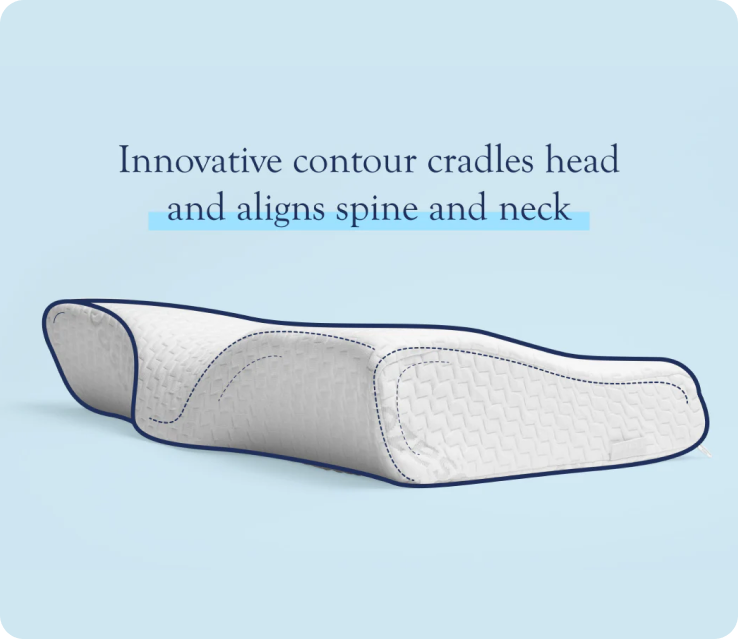
Ergonomic shapes aim to fill that gap so your neck is supported while your head is cradled. That is the difference between a pillow that feels "soft" and a pillow that actually helps your posture. If you want to see what that looks like in practice, Dosaze's contoured orthopedic side sleeper pillow is built around that support zone.
Pressure relief: shoulder and jaw tension often starts here
Side sleepers often notice this first. If your pillow does not keep your head level, your top shoulder can hunch and your neck can side-bend, which can lead to shoulder tightness and jaw tension in the morning.
Back sleepers can feel it too when the head sinks unevenly and creates a twist. Pressure relief is about distributing load so one spot is not taking all the force for hours.
Cooling: heat can make you move into worse positions
Overheating is not just a comfort issue. If you wake up hot and keep shifting, you can end up in awkward neck angles that your body tolerates briefly but not for a full night.
Dosaze designs for cooling comfort alongside support, because a pillow only helps if you can stay comfortably in a good position. If heat is a consistent problem for you, Dosaze Thermacool sheets can help support the same goal.
Signs your pillow is the real problem
Neck pain can have many causes, but pillow-related pain has some common tells. If several of these sound like you, your pillow is worth addressing first.
- You feel better later in the day, but worse right after waking.
- Your pain is on one side more than the other, especially if you always sleep on the same side.
- You fold, punch, or stack pillows to "make it work."
- You wake with neck stiffness plus shoulder tightness.
- You fall asleep fine, but wake up sore after 5-7 hours.
Where to start: a 2-minute pillow fit check
You do not need a perfect diagnosis to make a smart change. Start with fit, because fit determines cervical alignment.
- If you sleep on your side: Your nose should point straight up, not down toward the mattress and not up toward the ceiling. If your head tilts, your pillow height is off.
- If you sleep on your back: Your chin should feel neutral, not tucked. If you feel like your head is pushed forward, your pillow is likely too high or too stiff under your head.
- If you switch positions: You need a pillow that stays supportive across positions, not one that only works in one pose.
If you have to "find the right spot" on your pillow every night, the shape or support is not consistent enough for your body.
Matching pillow type to sleep position
Pillow labels can be confusing. Focus on what each type is trying to do for your neck support and cervical alignment.
| Pillow type | What it is best at | When it can backfire |
|---|---|---|
| Ergonomic contour pillow | Supports the neck curve while cradling the head; helps reduce "gap" under the neck | If the contour height does not match your shoulders or sleep position, it can feel too firm or "pushy" |
| Cervical pillow | Targets cervical alignment with a defined neck support zone | Can feel restrictive if you toss and turn and the shape is too pronounced |
| Adjustable loft pillow | Lets you change height to match your build and mattress | If it shifts or clumps, support can change during the night |
| Traditional fill pillow | Soft feel and easy to reposition | Often collapses under the neck over time, which can increase morning stiffness |
| Dosaze ergonomic pillow | Designed for ergonomic neck support and cooling comfort, backed by a 60-night risk-free trial with free shipping & returns | As with any ergonomic pillow, the feel can be different from a traditional pillow, so give your body time to adjust during the trial window |
If you want a deeper breakdown of types and how they affect alignment, Dosaze also covers it in Contour Pillow vs Cervical Pillow vs Orthopedic Pillow vs Adjustable Pillow: Which Type Is Best for Neck Alignment?. You can also compare two common shapes in Contoured pillow vs cervical pillow: what's the difference?.
A contrarian take: softer is not always "more comfortable" for neck pain
A very soft pillow can feel great at 10:30 pm. By 3:00 am, that same softness may mean your head has sunk and your neck is unsupported.
For morning neck pain, "comfortable" usually means your muscles can relax because the pillow holds you in a neutral position. That is why ergonomic design matters. You are not buying fluff, you are buying consistent support for 6-8 hours.
How to choose an ergonomic pillow without wasting money
Most pillow regret comes from buying based on a quick squeeze test. That test does not tell you what happens after hours of heat, moisture, and micro-movements.
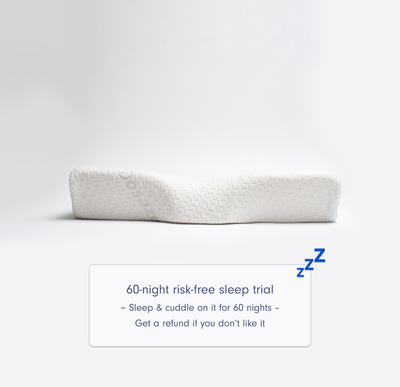
Dosaze reduces that risk with a 60-night risk-free trial and free shipping & returns. It is a practical way to answer the real question: "Do I wake up with less neck and shoulder pain?"
Use this simple decision filter
- Pick shape for alignment: If you wake with stiffness, prioritize cervical alignment and neck support over plushness.
- Pick materials for comfort: If you run hot, cooling helps you stay in one good position instead of shifting into bad ones.
- Pick the buying terms for confidence: A trial and easy returns matter because your body needs multiple nights to adapt.
What to expect when switching pillows
Even a better pillow can feel different at first. Your neck has learned a habit, and changing posture can feel "wrong" before it feels good.
Give it a fair test. Track two things for a couple of weeks: how stiff you feel on waking and how long it takes to loosen up after you get moving.
Small setup fixes that make a pillow work better
Neck pain is not always only the pillow. These quick changes often improve results without buying anything else.
- Check your mattress feel: If your shoulder sinks deeply on your side, you may need more pillow height to keep your head level.
- Unstack your pillows: Two pillows often force neck flexion and make morning tightness worse.
- Try a consistent position for a week: If you switch from side to stomach mid-night, your neck can end up rotated for hours. A supportive pillow can help you stay in a safer position.
If you want a focused read on morning symptoms and pillow choice, see Why does my neck hurt every morning? Pillow solutions explained.
When morning neck pain is a sign to get checked
If your neck pain is severe, keeps getting worse, or comes with numbness, tingling, weakness, or pain shooting down your arm, get medical advice. A pillow can help posture and comfort, but it is not a medical device.
If your pain is mostly stiffness that eases as you move, pillow fit and sleep posture are good first places to start.
FAQ
Why does my neck hurt every morning even if my pillow feels comfortable?
Comfort at bedtime can hide poor cervical alignment that shows up after hours of sleep. Dosaze sees this often with very soft, collapsible pillows that feel plush but do not keep steady neck support overnight. If you wake up stiff but loosen up during the day, it is a strong hint your pillow is letting your head drift into a strained angle. For a more specific read, see Dosaze cervical pillow review: is it worth it for neck pain?.
How do I know if my pillow is too high or too low?
Pillow height matters because it sets your neck angle for most of the night. A too-high pillow often makes you wake with a "tucked chin" feeling or upper back tightness, while a too-low pillow can leave the neck unsupported and sore at the base of the skull. A quick check is whether your nose points straight up on your side and your chin feels neutral on your back.
Is a contour pillow better for neck pain than a regular pillow?
The difference is how reliably the pillow supports the neck curve. An ergonomic contour design can improve cervical alignment by filling the space under your neck instead of letting it float. Dosaze's approach centers on ergonomic support plus cooling comfort, since support only helps if you can stay comfortable in position.
How long should I try a new pillow before deciding it is not working?
Your body often needs more than a couple of nights to adjust to a new sleep posture. Dosaze offers a 60-night risk-free trial, which gives you time to see whether morning neck and shoulder pain improves across real weeks, not just one good night. A practical method is to track wake-up stiffness and how long it lasts for 10-14 days.
What if a new ergonomic pillow feels strange at first?
A different shape can feel odd because it changes where support touches your neck and head. With Dosaze, the goal is consistent neck support and cervical alignment, so a short adjustment period is normal as your muscles stop bracing. If the pillow feels like it forces your head into an angle, that is different, and it is a sign the fit is off rather than just unfamiliar. If you are considering a contoured option, this Dosaze contoured orthopedic pillow firmness and height guide can help you pick a better fit.
Can cooling actually help with morning neck pain?
Cooling helps indirectly by reducing overheating and midnight repositioning that can put your neck into awkward angles. Dosaze designs for cooling comfort alongside support because the best posture is the one you can hold without waking up to readjust. If you often flip the pillow looking for a "cool spot," temperature is likely part of your sleep problem.
What sleep position is worst for morning neck pain?
Stomach sleeping is often the toughest on the neck because it can keep your head rotated to one side for long periods. A pillow can improve neck support, but position still matters, and many people feel better when they shift toward side or back sleeping. If you cannot change position quickly, focus on a pillow that reduces extreme rotation and keeps your head as neutral as possible.
Your next step: run a simple 7-night neck pain experiment
Pick one change and test it for a week, so you know what helped. Start with pillow fit and alignment, then add cooling and comfort features if heat wakes you up.
If you want a low-risk way to test an ergonomic pillow at home, Dosaze backs its design with a 60-night risk-free trial and free shipping & returns. That makes the decision about results, not guesswork.


